{
"schema_version": "1.1",
"id": 500787,
"slug": "brazil-investor-visa-vs-real-estate-residency-2026",
"title": "Brazil Investor Visa vs Real Estate Residency 2026",
"excerpt": "Brazil investor visa needs R$ 500,000 in a company; real estate residency needs R$ 1,000,000 (R$ 700,000 in the North/Northeast). Compare costs and risks.",
"content_primary": "markdown",
"available_formats": [
"markdown"
],
"content_markdown": "Both routes work, and both lead to permanent residence and, after four years, eligibility to apply for Brazilian naturalisation. But they fail for completely different reasons, and that is the part almost nobody researches before wiring the money.\n\nIf you are comparing the Brazil investor visa (business investment, minimum R$ 500,000) with Brazil real estate residency (property investment, minimum R$ 1,000,000, reduced to R$ 700,000 in the North and Northeast), the honest answer is that the “better” option depends less on the amount and more on one question: which set of denial risks can you actually control?\n\nLeia também:\n[Brazilian Naturalization Timeline 2026: How Long It Takes](https://www.ribeirocavalcante.com.br/brazilian-naturalization-timeline-2026/)\n\nThe business route is cheaper on paper and more expensive in reality, because you must keep a real operating company alive. The property route costs roughly twice as much upfront but asks almost nothing of you afterwards, as long as the paperwork behind the purchase is flawless. And that is where files get rejected: not on the merits of the investment, but on the money trail, the property registration and the timing of the documents.\n\nThis guide sets out the rule first, then spends the second half on exactly where each route breaks down, including the strongest argument the Brazilian authorities can make against your file.\n\n\n## What Exactly Are Brazil’s Two Investment Residency Routes?\n\nBrazil has no single “golden visa”. It has two distinct investment-based residence authorisations built on the same statute, Law 13.445/2017 (the Brazilian Migration Law) and Decree 9.199/2017: one for investment in a Brazilian company (minimum R$ 500,000, roughly US$ 98,000) and one for investment in urban real estate (minimum R$ 1,000,000, roughly US$ 196,000).\n\nLeia também:\n[Open Company Brazil Chinese Citizen: R$150K Residency](https://www.ribeirocavalcante.com.br/open-company-brazil-chinese-citizen-2026/)\n\nBoth are regulated in detail by Normative Resolutions issued by the National Immigration Council (CNIg) and applied by the Ministry of Labour’s immigration coordination unit. The business route is commonly associated with CNIg Normative Resolution 13 and the real estate route with Normative Resolution 36. Because these resolutions are amended regularly, always confirm the version in force on the Ministry of Justice’s [Migration Portal\r\n\r\n](https://portaldeimigracao.mj.gov.br/) before you commit funds.\n\nThe legal logic is the same in both cases. You bring external capital into Brazil, register it with the Central Bank, prove the capital was applied to a qualifying asset, and receive a residence authorisation linked to that asset. Keep the asset, keep the residence. Dispose of the asset without replacing it, and the legal basis for your status disappears.\n\nA third route exists and is constantly confused with the first: the manager or director visa, where a foreign company transfers capital (commonly around R$ 600,000, or R$ 150,000 combined with a commitment to create ten jobs in two years) and appoints you as an officer of its Brazilian subsidiary. That is not an investor visa. Your residence is tied to the corporate mandate, not to money you personally own.\n\n**Important:** Brazil is a Civil Law country. Officials apply the written text of the resolution, not precedent or “the spirit of the deal”. If a document is missing, discretion to overlook it is far narrower than in Common Law systems. Assume nothing will be waived.\n\n\n## Who Qualifies for Each Route?\n\nAny foreign national of any nationality can apply for either route. There is no quota, no nationality restriction and no language test. The qualifying conditions are financial and documentary: R$ 500,000 of external capital into the equity of a Brazilian company, or R$ 1,000,000 (R$ 700,000 in the North and Northeast) into urban property held in your personal name.\n\nFor the **business investor visa**, you generally need:\n\n- A Brazilian company (usually a Sociedade Limitada) with a CNPJ (corporate taxpayer number)\n- R$ 500,000 of foreign capital transferred into that company’s share capital and registered with the Central Bank\n- A written investment plan showing planned economic activity, jobs and technology transfer\n- A clean criminal record certificate from your countries of residence in the last five years\n- A CPF (Brazilian individual taxpayer number) in your own name\n\nA reduced threshold of R$ 150,000 (around US$ 29,400) applies to innovation, research or technology startups, provided the project is supported by an incubator, accelerator, technology park or a public innovation programme. This is the route we detail in our guide on [investing R$ 150,000 in a Brazilian startup in 2026](https://www.ribeirocavalcante.com.br/brazil-residency-for-algerians-2026/).\n\nFor **real estate residency**, you generally need:\n\n- Urban property, built or under construction, purchased with your own external funds\n- Title registered in your personal name (pessoa física), not a company\n- Definitive purchase deed (escritura) registered on the property’s matrícula at the competent cartório (notary and land registry office)\n- Central Bank registration of the incoming foreign capital\n- CPF, valid passport, criminal record certificate\n\nBoth routes allow you to include a spouse or partner and dependent children as family reunification applicants, normally filed alongside or immediately after the principal application.\n\n\n## Investor Visa vs Real Estate Residency: How Do They Compare Side by Side?\n\nThe business route costs less than half as much in capital but carries ongoing operational duties and real risk of total loss. The property route requires roughly R$ 1,000,000 but is passive, with transaction taxes of about 5% to 7% of the purchase price on top. Both lead to residence of indefinite duration and to naturalisation eligibility after four years of residence.\n\n| Feature | Investor Visa (business) | Real Estate Residency |\n| --- | --- | --- |\n| Minimum investment | R$ 500,000 (≈ US$ 98,000) | R$ 1,000,000 (≈ US$ 196,000) |\n| Reduced threshold | R$ 150,000 for innovation/tech projects with institutional support | R$ 700,000 (≈ US$ 137,000) for property in the North or Northeast |\n| Asset held by | Brazilian company you own | You personally |\n| Must you operate a business? | Yes, activity and job creation are the point | No, passive ownership is enough |\n| Ongoing reporting | Company accounting, tax filings, payroll if you hire | Keep ownership; annual property tax (IPTU) |\n| Additional taxes on entry | Minimal on capital injection | ITBI transfer tax (2%-3%) + registry fees (≈1%-1.5%) |\n| Main risk | Business fails, investment lost, company dissolved | Illiquidity; selling ends the legal basis for residence |\n| Residence term | Indefinite, subject to compliance review | Commonly issued as a four-year term convertible to indefinite |\n| Time to naturalisation | 4 years of residence + Portuguese proficiency | 4 years of residence + Portuguese proficiency |\n| Best for | Entrepreneurs who want to operate in Brazil | Passive investors and retirees who want a base |\n\n**Practical example:** A German couple with €200,000 available compares both. Option A: R$ 700,000 (≈ €130,000) into an apartment in Fortaleza (Northeast), plus roughly R$ 45,000 in ITBI and registry costs, plus R$ 30,000 in legal fees. Total outlay about R$ 775,000, and the asset is still theirs. Option B: R$ 500,000 (≈ €93,000) into a Brazilian company, plus around R$ 40,000 in incorporation and legal fees, plus an accountant at R$ 1,200 per month for as long as the company exists. Option B leaves more cash free, but the couple must actually run something.\n\n\n## Where Do These Applications Actually Get Denied?\n\nAlmost never on the amount. In our experience, the overwhelming majority of investor and real estate residency refusals in Brazil come from three defects: the foreign capital was not properly registered with the Central Bank, the money did not travel in a straight line from the investor to the asset, or the property purchase was not yet definitively registered on the matrícula when the file was submitted.\n\n\n### Defect 1: the broken money trail\n\nThe rule that surprises most buyers is that the funds must be traceable from your foreign account to the seller or to the company’s capital, in your own name, through a formal exchange contract with a Brazilian institution and registered as foreign direct investment with the [Banco Central do Brasil](https://www.bcb.gov.br/).\n\n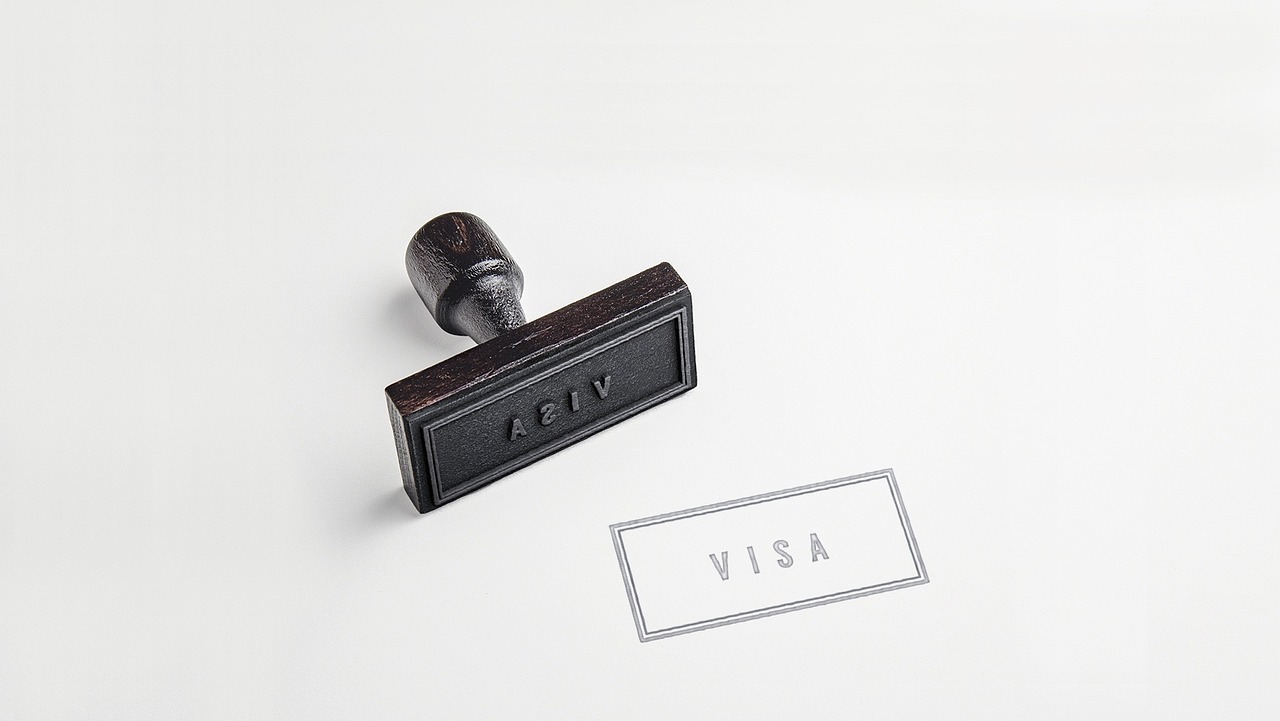\n*What exactly are brazil's two investment residency routes? — foto: jaydeep_*\n\nCommon breaks in the chain that trigger refusal:\n\n- Money wired by a relative, a business partner or an offshore company rather than by you\n- Funds brought in as a personal transfer to your own Brazilian account and then used to buy, with no investment registration\n- Cash accumulated in Brazil from local income (this is not external capital)\n- Cryptocurrency converted through an exchange with no documented origin\n- Payment split across several transfers with no consolidated closing statement\n\n**Warning:** Paying the seller from money you first parked in your own Brazilian account is the single most common way to destroy an otherwise perfect real estate residency file. The exchange operation must be classified correctly at the moment of conversion. It cannot be reclassified afterwards.\n\n\n### Defect 2: the property does not qualify\n\nThe resolution refers to urban property. Rural land, and in particular rural land near international borders, falls under separate restrictions on foreign ownership and will not support this route. Off-plan units where you hold only a private purchase contract, with no registered deed, are also refused, because you cannot prove ownership until the matrícula shows it.\n\nOther frequent problems: the seller’s title has an unresolved inheritance, the building has no habite-se (occupancy certificate), or the declared deed value is lower than the amount actually transferred, which creates an immediate mismatch between the exchange contract and the qualifying investment.\n\n\n### Defect 3: the wrong holder\n\nThe real estate route is written for individuals. Buying through a Brazilian holding company, a common tax planning move, keeps the tax benefits but breaks the immigration logic, because the investor is then the company, not you. If a holding is genuinely necessary, the file has to be built around a different resolution from the start, not adapted afterwards.\n\nCo-ownership raises the same issue. Two buyers who each put in R$ 500,000 to reach a R$ 1,000,000 property do not each qualify. The qualifying amount is assessed per investor. Practically, one spouse holds the qualifying share and the other applies as a family member.\n\n\n### Defect 4 (business route only): the paper company\n\nOn the R$ 500,000 route, the investment plan is not a formality. Files with a generic plan, no plausible revenue projection and no hiring commitment are the ones that come back with a diligence request or a refusal. A company with capital paid in but no address, no activity and no accounting is the clearest possible signal that the investment is a means to a visa rather than an investment.\n\nThat includes the basics: you cannot register a CNPJ without a valid registered address, which is why many foreign founders use a compliant [fiscal address in Brazil](https://address.ribeirocavalcante.com.br/) rather than a residential address they do not yet have.\n\n\n## What Is the Government’s Strongest Argument Against Your File?\n\nThe strongest argument the analyst can make is not that your money is dirty. It is this: that the investment has no economic substance in Brazil, and that the resolution grants residence in exchange for capital that genuinely enters and stays in the national economy, not for a transaction engineered to reach a threshold. Under Law 13.445/2017, residence is a benefit conditioned on the purpose declared.\n\nStated in its strongest form, the objection sounds like this. You bought a R$ 1,000,000 apartment you have never slept in, you rent it out through a manager, you spend three weeks a year in Brazil, and your only connection to the country is a land registry entry. Meanwhile you hold Brazilian residence, a CPF, banking access and a four-year clock running toward a passport. Why should the State treat a land registry entry as immigration merit?\n\nThat is a serious argument, and it is worth answering properly rather than dismissing it.\n\n[\n\n\n\n](https://www.ribeirocavalcante.com.br/web-stories/brazil-investor-visa-vs-real-estate-residency-2026/)\n\n⚡ Web Story\n[Brazil Investor Visa vs Real Estate Residency 2026](https://www.ribeirocavalcante.com.br/web-stories/brazil-investor-visa-vs-real-estate-residency-2026/)\n[Ver história visual ›](https://www.ribeirocavalcante.com.br/web-stories/brazil-investor-visa-vs-real-estate-residency-2026/)\n\n\nThe answer is that the legislature already made this choice, explicitly and with conditions attached. Brazilian migration policy chose to reward capital inflow into urban property because that capital converts into construction activity, ITBI and IPTU revenue for municipalities, and registered foreign investment tracked by the Central Bank. The condition is ongoing: you must retain the asset. The moment you sell without replacement, the basis for residence ends. It is not a one-off purchase of status, it is a continuing obligation.\n\nWhere the objection does bite is on naturalisation. Residence obtained by investment does not, on its own, produce citizenship. Naturalisation under the Migration Law requires actual residence in Brazil, Portuguese language proficiency and no disqualifying criminal record. An investor who visits three weeks a year has residence on paper and no realistic naturalisation claim. That is the real gap between the marketing and the law, and it is covered in more depth in our analysis of the [R$ 500,000 path to Brazilian citizenship in four years](https://www.ribeirocavalcante.com.br/brazil-citizenship-by-investment-2026/).\n\n**Important:** Investment gives you residence. Only presence, time and Portuguese give you a passport. Any advisor who tells you otherwise is selling, not advising.\n\n\n## What Changed in 2026?\n\nThe statutory framework, Law 13.445/2017 and Decree 9.199/2017, remains unchanged. What has shifted in practice during 2025 and 2026 is administrative: heavier scrutiny of the origin of funds, wider use of the Ministry of Justice’s MigranteWeb electronic system for in-country applications, and increasingly common diligence requests on exchange documentation.\n\nThree trends matter for anyone applying this year.\n\n- **In-country filing is now the norm for real estate applicants.** If you are lawfully in Brazil, including as a visitor, you can request the residence authorisation from within the country under Article 151 of Decree 9.199/2017, using MigranteWeb, instead of applying for a VITEM XIV visa at a consulate abroad.\n- **Source-of-funds documentation is being requested more often.** Analysts increasingly ask for the underlying evidence behind the transfer: sale of a foreign property, dividend distributions, employment income, inheritance. Prepare this file before you transfer, not after.\n- **Minimum amounts have not increased.** The R$ 500,000 and R$ 1,000,000 thresholds (R$ 150,000 and R$ 700,000 in the reduced scenarios) remain in force, but the real dollar cost fluctuates with the exchange rate, which favours investors converting strong currencies.\n\n**Tip:** Because the threshold is fixed in reais, the exchange rate on the day you close your currency contract decides how much foreign currency you actually need. Converting when the real is weak can reduce the real cost of the same R$ 1,000,000 apartment by tens of thousands of dollars.\n\n\n## How Do You Apply, Step by Step?\n\nExpect four to nine months from first transfer to CRNM card in hand, depending on route and region. The sequence below is deliberately front-loaded: the documents that most often cause refusal are prepared before any money moves, not after.\n\n1. **Obtain a CPF.** Free, requestable abroad through a Brazilian consulate or online via [Receita Federal](https://www.gov.br/receitafederal/pt-br). Nothing works without it.\n2. **Legalise your foreign documents.** Apostille your birth certificate, marriage certificate and criminal record certificate in the country of origin, then have them sworn-translated into Portuguese in Brazil.\n3. **Structure the investment before transferring.** Confirm the property title (or incorporate the company) and decide whose name holds what. Reversing this later is expensive.\n4. **Transfer the capital correctly.** Use a formal exchange contract in your name with the correct classification, and ensure Central Bank registration of the foreign investment.\n5. **Complete the acquisition.** Sign the escritura at the cartório and register it on the matrícula (real estate route), or file the amended articles of association at the Junta Comercial (business route).\n6. **File the residence application.** Either through MigranteWeb from inside Brazil, or via a VITEM XIV visa application at a Brazilian consulate abroad, following the guidance on the [Itamaraty consular portal](https://www.gov.br/mre/pt-br).\n7. **Respond to any diligence request (exigência).** You typically have a short deadline. Missing it can close the file.\n8. **Register with the Federal Police.** After approval, book an appointment through the [Polícia Federal](https://www.gov.br/pf/pt-br) portal, give biometrics and collect your CRNM (National Immigration Registration Card).\n\n\n## What Documents and Costs Should You Budget For?\n\nBudget 6% to 9% of the investment amount in taxes and fees on the real estate route, and roughly R$ 30,000 to R$ 60,000 in professional costs on the business route. Government immigration fees themselves are small: Federal Police CRNM registration is in the region of R$ 200, and consular visa fees vary by post and nationality.\n\n\n### Core documents (both routes)\n\n- Valid passport with at least six months’ validity\n- CPF\n- Birth certificate, and marriage certificate if applicable, apostilled and sworn-translated\n- Criminal record certificates from countries of residence in the last five years\n- Proof of the origin of the invested funds\n- Exchange contracts and Central Bank investment registration\n- Proof of address in Brazil (deed, lease or utility bill)\n\n\n### Route-specific documents\n\n- **Real estate:** registered escritura, updated matrícula certificate (issued within 30 days), municipal property tax (IPTU) records, negative certificates for the property and the seller\n- **Business:** articles of association registered at the Junta Comercial, CNPJ card, investment plan with job creation projections, proof of paid-in capital\n\n\n### Indicative cost simulation\n\n| Item | Real estate (R$ 1,000,000 property) | Business (R$ 500,000 company) |\n| --- | --- | --- |\n| Investment | R$ 1,000,000 | R$ 500,000 |\n| ITBI transfer tax (approx. 2%-3%, municipal) | R$ 20,000 – R$ 30,000 | Not applicable |\n| Cartório deed + registration | R$ 10,000 – R$ 15,000 | Not applicable |\n| Incorporation + Junta Comercial | Not applicable | R$ 2,000 – R$ 5,000 |\n| Legal fees (immigration + due diligence) | R$ 25,000 – R$ 45,000 | R$ 25,000 – R$ 45,000 |\n| Translations + apostilles | R$ 2,000 – R$ 5,000 | R$ 2,000 – R$ 5,000 |\n| Federal Police CRNM registration | ≈ R$ 200 | ≈ R$ 200 |\n| Ongoing annual cost | IPTU + condo fees | Accountant from ≈ R$ 1,200/month + taxes |\n\n**Practical example:** An investor buying a R$ 700,000 apartment in Natal (Northeast, reduced threshold) should budget roughly R$ 17,500 in ITBI at 2.5%, about R$ 9,000 in cartório and registry fees, plus legal and translation costs. Total transaction overhead lands near R$ 60,000, about US$ 11,700, on top of the purchase price.\n\n\n*What exactly are brazil's two investment residency routes? — foto: foundry*\n\n\n## Frequently Asked Questions\n\n\n### Can I sell the property or close the company after getting residence?\n\nNot without consequences while your residence still depends on the investment. Both routes are conditional: the residence authorisation is granted because the qualifying asset exists and remains yours. Selling the property or dissolving the company can lead to revocation, especially during the initial period before the residence becomes definitive. If you need to sell, the safe approach is to replace the qualifying investment with another that meets the same threshold, and to document the substitution before completing the sale.\n\n\n### Do I have to live in Brazil to keep investor residence?\n\nTo keep the residence, no minimum stay is imposed by the investment resolutions themselves, though extended absence of two years or more can jeopardise your status. To naturalise, yes: naturalisation under the Brazilian Migration Law requires genuine residence in Brazil, generally four years for ordinary naturalisation, plus Portuguese proficiency. Many investors hold residence for years without ever qualifying for citizenship, simply because they never actually lived here. Decide upfront which of the two you are buying.\n\n\n### Can my spouse and children get residence too?\n\nYes. A spouse or stable partner and dependent children can apply for residence based on family reunification, filed alongside or shortly after the principal investor’s application. You will need apostilled and sworn-translated marriage and birth certificates, plus criminal record certificates for adult dependents. Family members receive their own CRNM cards and the same access to public healthcare, schooling and banking. Note that only the principal investor’s residence is tied to the asset; dependents’ status is tied to the principal’s.\n\n\n### Can I buy an off-plan apartment and apply before delivery?\n\nGenerally no, and this is a frequent cause of refusal. The residence file must prove ownership, and ownership in Brazil is proven by the registration of the deed on the property’s matrícula at the cartório, not by a private purchase contract with a developer. Property under construction can qualify in some scenarios, but only where the investment and title position are properly registered. Verify the registration status with a lawyer before transferring funds, not after.\n\n\n### Which route is faster to approval?\n\nReal estate is usually faster, because the analysis is largely documentary: deed, matrícula, exchange contracts, Central Bank registration. Business investor files add a layer of merit analysis on the investment plan and job creation projections, which invites diligence requests. Realistically, budget four to seven months for a clean property file and six to nine months for a business file, measured from submission to CRNM issuance. Regional Federal Police appointment backlogs can add weeks.\n\n\n### Does nationality affect my chances?\n\nThe thresholds and requirements are identical for every nationality. What differs is document legalisation: applicants from countries outside the Hague Apostille Convention must use consular legalisation instead, which adds time. Applicants from jurisdictions subject to enhanced financial scrutiny should expect more detailed source-of-funds questions. Our country-specific guides, including [the R$ 500,000 rules for Vietnamese business owners](https://www.ribeirocavalcante.com.br/brazil-investor-visa-vietnamese-business-owners-2026/) and [the four-year residency path for Sri Lankans](https://www.ribeirocavalcante.com.br/brazil-residency-for-sri-lankans-2026/), cover these practical differences.\n\n\n## Choosing Between the Brazil Investor Visa and Real Estate Residency: Your Next Step\n\nIf you want a passive base in Brazil and have R$ 1,000,000 (or R$ 700,000 in the Northeast) available, real estate residency is the lower-maintenance route, provided the money trail and the matrícula are built correctly from day one. If you intend to actually operate in Brazil, the R$ 500,000 business route costs less capital and buys you a working structure, but it will keep asking things of you every month. Detailed figures for that route are set out in our guide to [the R$ 500,000 investor visa rule and the passport timeline](https://www.ribeirocavalcante.com.br/brazil-investor-visa-kazakh-2026/).\n\nWhichever you choose, the decision that determines approval is made before the first wire transfer, not at the application counter. Our bilingual team, registered with the OAB (Brazilian Bar Association), reviews the structure, the title and the currency route before you commit money.\n\nSend us the property listing or the business plan you are considering, along with the country your funds will come from, and we will tell you which route your specific file actually qualifies for before you transfer anything.\n\nTalk to a specialist lawyer now\n[ Talk to a Lawyer on WhatsApp](https://www.ribeirocavalcante.com.br/ads/wpp.html)",
"content_hash": {
"algo": "sha256",
"scope": "content_markdown",
"value": "536933106cfc1842510f90bbd0c183de0a3137d456435201067a50c0ca3bd3fc"
},
"date_published": "2026-07-29T13:39:41-03:00",
"date_modified": "2026-07-29T13:39:41-03:00",
"author": {
"name": "Lucas Ribeiro Cavalcante",
"url": "https://www.ribeirocavalcante.com.br/autor/lucas/"
},
"canonical_url": "https://www.ribeirocavalcante.com.br/brazil-investor-visa-vs-real-estate-residency-2026/",
"json_url": "https://www.ribeirocavalcante.com.br/brazil-investor-visa-vs-real-estate-residency-2026.json",
"word_count": 3484,
"reading_time": 18,
"robots": {
"index": true,
"follow": true
},
"license": {
"name": "CC BY-NC-ND 4.0",
"url": "https://creativecommons.org/licenses/by-nc-nd/4.0/deed.pt-br",
"notice": "Conteúdo protegido. Cite a fonte com link para a URL canônica. Reprodução integral proibida."
},
"publisher": {
"name": "Ribeiro Cavalcante Advocacia",
"url": "https://www.ribeirocavalcante.com.br/"
},
"publisher_ref": "https://www.ribeirocavalcante.com.br/org.json",
"language": "pt-BR",
"site": "Ribeiro Cavalcante Advocacia",
"categories": [
{
"id": 4609,
"name": "Immigration Law",
"slug": "immigration-law",
"url": "https://www.ribeirocavalcante.com.br/english/immigration-law/"
}
],
"tags": [
{
"id": 7180,
"name": "brazil golden visa",
"slug": "brazil-golden-visa",
"url": "https://www.ribeirocavalcante.com.br/tag/brazil-golden-visa/"
},
{
"id": 6641,
"name": "brazil investor visa",
"slug": "brazil-investor-visa",
"url": "https://www.ribeirocavalcante.com.br/tag/brazil-investor-visa/"
},
{
"id": 8071,
"name": "brazil permanent residency by investment",
"slug": "brazil-permanent-residency-by-investment",
"url": "https://www.ribeirocavalcante.com.br/tag/brazil-permanent-residency-by-investment/"
},
{
"id": 6798,
"name": "brazil real estate residency",
"slug": "brazil-real-estate-residency",
"url": "https://www.ribeirocavalcante.com.br/tag/brazil-real-estate-residency/"
},
{
"id": 8070,
"name": "brazil-investor-visa-vs-brazil-real-estate-residency:-which-one-is-better?",
"slug": "brazil-investor-visa-vs-brazil-real-estate-residency-which-one-is-better",
"url": "https://www.ribeirocavalcante.com.br/tag/brazil-investor-visa-vs-brazil-real-estate-residency-which-one-is-better/"
},
{
"id": 8072,
"name": "buy property in brazil foreigner visa",
"slug": "buy-property-in-brazil-foreigner-visa",
"url": "https://www.ribeirocavalcante.com.br/tag/buy-property-in-brazil-foreigner-visa/"
}
],
"featured_image": {
"url": "https://cdn.ribeirocavalcante.com.br/2026/07/brazil-investor-visa-vs-brazil-real-estate-residency-which-one-is-better-500787-1785343217.webp",
"width": 1400,
"height": 788,
"alt": "Imagem representando Brazil Investor Visa vs Brazil Real Estate Residency: Which One Is Better? — Ribeiro Cavalcante Advocacia"
},
"faq": [
{
"question": "How much do you need to invest for a Brazil investor visa?",
"answer": "The Brazil investor visa requires a minimum of R$ 500,000 (about US$ 98,000) invested in a Brazilian company, with the capital registered at the Central Bank."
},
{
"question": "Does Brazil have a golden visa?",
"answer": "Brazil has no single golden visa. It offers two investment residence routes under Law 13.445/2017: business investment from R$ 500,000 and urban real estate investment from R$ 1,000,000."
},
{
"question": "Can buying property in Brazil get you residency?",
"answer": "Yes. Buying urban real estate worth at least R$ 1,000,000 (R$ 700,000 in the North and Northeast) can qualify you for a residence authorisation, provided the funds are registered with the Central Bank."
},
{
"question": "Is the Brazil investor visa permanent?",
"answer": "The Brazil investor visa leads to permanent residence, but it stays linked to the investment. If you dispose of the asset without replacing it, the legal basis for your status ends."
},
{
"question": "How long until you can apply for Brazilian citizenship as an investor?",
"answer": "After four years of legal residence in Brazil, investors may apply for naturalisation, subject to Portuguese language proficiency and other legal requirements."
}
],
"table_of_contents": [
{
"level": 2,
"text": "What Exactly Are Brazil’s Two Investment Residency Routes?",
"anchor": "what-exactly-are-brazils-two-investment-residency-routes"
},
{
"level": 2,
"text": "Who Qualifies for Each Route?",
"anchor": "who-qualifies-for-each-route"
},
{
"level": 2,
"text": "Investor Visa vs Real Estate Residency: How Do They Compare Side by Side?",
"anchor": "investor-visa-vs-real-estate-residency-how-do-they-compare-side-by-side"
},
{
"level": 2,
"text": "Where Do These Applications Actually Get Denied?",
"anchor": "where-do-these-applications-actually-get-denied"
},
{
"level": 3,
"text": "Defect 1: the broken money trail",
"anchor": "defect-1-the-broken-money-trail"
},
{
"level": 3,
"text": "Defect 2: the property does not qualify",
"anchor": "defect-2-the-property-does-not-qualify"
},
{
"level": 3,
"text": "Defect 3: the wrong holder",
"anchor": "defect-3-the-wrong-holder"
},
{
"level": 3,
"text": "Defect 4 (business route only): the paper company",
"anchor": "defect-4-business-route-only-the-paper-company"
},
{
"level": 2,
"text": "What Is the Government’s Strongest Argument Against Your File?",
"anchor": "what-is-the-governments-strongest-argument-against-your-file"
},
{
"level": 2,
"text": "What Changed in 2026?",
"anchor": "what-changed-in-2026"
},
{
"level": 2,
"text": "How Do You Apply, Step by Step?",
"anchor": "how-do-you-apply-step-by-step"
},
{
"level": 2,
"text": "What Documents and Costs Should You Budget For?",
"anchor": "what-documents-and-costs-should-you-budget-for"
},
{
"level": 3,
"text": "Core documents (both routes)",
"anchor": "core-documents-both-routes"
},
{
"level": 3,
"text": "Route-specific documents",
"anchor": "route-specific-documents"
},
{
"level": 3,
"text": "Indicative cost simulation",
"anchor": "indicative-cost-simulation"
},
{
"level": 2,
"text": "Frequently Asked Questions",
"anchor": "frequently-asked-questions"
},
{
"level": 3,
"text": "Can I sell the property or close the company after getting residence?",
"anchor": "can-i-sell-the-property-or-close-the-company-after-getting-residence"
},
{
"level": 3,
"text": "Do I have to live in Brazil to keep investor residence?",
"anchor": "do-i-have-to-live-in-brazil-to-keep-investor-residence"
},
{
"level": 3,
"text": "Can my spouse and children get residence too?",
"anchor": "can-my-spouse-and-children-get-residence-too"
},
{
"level": 3,
"text": "Can I buy an off-plan apartment and apply before delivery?",
"anchor": "can-i-buy-an-off-plan-apartment-and-apply-before-delivery"
},
{
"level": 3,
"text": "Which route is faster to approval?",
"anchor": "which-route-is-faster-to-approval"
},
{
"level": 3,
"text": "Does nationality affect my chances?",
"anchor": "does-nationality-affect-my-chances"
},
{
"level": 2,
"text": "Choosing Between the Brazil Investor Visa and Real Estate Residency: Your Next Step",
"anchor": "choosing-between-the-brazil-investor-visa-and-real-estate-residency-your-next-step"
}
],
"internal_links": [
{
"anchor_text": "Brazilian Naturalization Timeline 2026: How Long It Takes",
"url": "https://www.ribeirocavalcante.com.br/brazilian-naturalization-timeline-2026/"
},
{
"anchor_text": "Open Company Brazil Chinese Citizen: R$150K Residency",
"url": "https://www.ribeirocavalcante.com.br/open-company-brazil-chinese-citizen-2026/"
},
{
"anchor_text": "investing R$ 150,000 in a Brazilian startup in 2026",
"url": "https://www.ribeirocavalcante.com.br/brazil-residency-for-algerians-2026/"
},
{
"anchor_text": "Brazil Investor Visa vs Real Estate Residency 2026",
"url": "https://www.ribeirocavalcante.com.br/web-stories/brazil-investor-visa-vs-real-estate-residency-2026/"
},
{
"anchor_text": "R$ 500,000 path to Brazilian citizenship in four years",
"url": "https://www.ribeirocavalcante.com.br/brazil-citizenship-by-investment-2026/"
},
{
"anchor_text": "the R$ 500,000 rules for Vietnamese business owners",
"url": "https://www.ribeirocavalcante.com.br/brazil-investor-visa-vietnamese-business-owners-2026/"
},
{
"anchor_text": "the four-year residency path for Sri Lankans",
"url": "https://www.ribeirocavalcante.com.br/brazil-residency-for-sri-lankans-2026/"
},
{
"anchor_text": "the R$ 500,000 investor visa rule and the passport timeline",
"url": "https://www.ribeirocavalcante.com.br/brazil-investor-visa-kazakh-2026/"
}
],
"cta": [
{
"label": "Talk to a Lawyer on WhatsApp",
"url": "https://www.ribeirocavalcante.com.br/ads/wpp.html",
"type": "whatsapp"
}
],
"external_references": [
{
"title": "Migration Portal",
"url": "https://portaldeimigracao.mj.gov.br/"
},
{
"title": "Banco Central do Brasil",
"url": "https://www.bcb.gov.br/"
},
{
"title": "fiscal address in Brazil",
"url": "https://address.ribeirocavalcante.com.br/"
},
{
"title": "Receita Federal",
"url": "https://www.gov.br/receitafederal/pt-br"
},
{
"title": "Itamaraty consular portal",
"url": "https://www.gov.br/mre/pt-br"
},
{
"title": "Polícia Federal",
"url": "https://www.gov.br/pf/pt-br"
}
],
"related_posts": [
{
"title": "Brazil Investor Visa: R$500,000 Rule and Passport 2026",
"url": "https://www.ribeirocavalcante.com.br/brazil-investor-visa-kazakh-2026/",
"json_url": "https://www.ribeirocavalcante.com.br/brazil-investor-visa-kazakh-2026.json",
"relationship": "cluster"
},
{
"title": "Brazil Residency for Sri Lankans: Passport in 4 Years",
"url": "https://www.ribeirocavalcante.com.br/brazil-residency-for-sri-lankans-2026/",
"json_url": "https://www.ribeirocavalcante.com.br/brazil-residency-for-sri-lankans-2026.json",
"relationship": "cluster"
},
{
"title": "Brazil Citizenship by Investment: R$500k Path, 4 Years",
"url": "https://www.ribeirocavalcante.com.br/brazil-citizenship-by-investment-2026/",
"json_url": "https://www.ribeirocavalcante.com.br/brazil-citizenship-by-investment-2026.json",
"relationship": "cluster"
},
{
"title": "Brazil Investor Visa for Vietnamese Owners: R$500k Rules",
"url": "https://www.ribeirocavalcante.com.br/brazil-investor-visa-vietnamese-business-owners-2026/",
"json_url": "https://www.ribeirocavalcante.com.br/brazil-investor-visa-vietnamese-business-owners-2026.json",
"relationship": "cluster"
},
{
"title": "Brazil Residency for Algerians: Invest R$150,000 in 2026",
"url": "https://www.ribeirocavalcante.com.br/brazil-residency-for-algerians-2026/",
"json_url": "https://www.ribeirocavalcante.com.br/brazil-residency-for-algerians-2026.json",
"relationship": "cluster"
}
]
}