{
"schema_version": "1.1",
"id": 214961,
"slug": "contracts-in-brazil-for-foreigners-2026",
"title": "Contracts in Brazil for Foreigners: Legal Guide 2026",
"excerpt": "Contracts in Brazil for foreigners explained: how Civil Law works, enforcement, court costs, timelines and arbitration tips to avoid costly disputes in 2026.",
"content_primary": "markdown",
"available_formats": [
"markdown"
],
"content_markdown": "*Reference year: 2026 | Last updated: 16 June 2026*\n\n\n## Introduction: Why This Guide Matters\n\nIf you are a foreigner or a foreign company signing a contract or facing a lawsuit in Brazil, you are entering a legal world that is fundamentally different from what you may know. Brazil operates under a **Civil Law system** (Roman-Germanic tradition), **not Common Law**. This single fact changes everything: judges rely heavily on written statutes and codes rather than precedent, contracts are interpreted by what the law dictates as much as by what the parties wrote, and many procedural steps you take for granted abroad simply do not apply here.\n\nLeia também:\n[Enforce Foreign Judgment Brazil 2026: STJ Guide](https://www.ribeirocavalcante.com.br/enforce-foreign-judgment-brazil-2026/)\n\nForeign investors, expats, and digital nomads regularly arrive in Brazil with international contract templates that simply do not work under Brazilian civil law. The result? Costly litigation, unenforceable agreements, and deals that fall apart precisely when you need them most. This pillar guide gives you the practical map: how contracts are governed and enforced, how the court system is structured, what it costs, how long it takes, and the bureaucratic quirks that catch foreigners off guard.\n\n\n## 1. The Brazilian Legal System: How It Actually Works\n\nBrazil is a **federation**, and its court system runs on two parallel tracks plus specialized branches. Understanding where your dispute will land is the first step in estimating both cost and timeline.\n\n\n### Court Hierarchy: Contracts in brazil for foreigners\n\n- **First Instance** — where lawsuits begin. The *Justiça Estadual* (State Courts / TJ) handles most civil and contract disputes. The *Justiça Federal* (Federal Courts) handles cases involving the federal government, federal agencies, or certain international matters.\n- **Second Instance (Appeals)** — Tribunais de Justiça at state level, or Tribunais Regionais Federais at federal level.\n- **Superior Courts** — the **STJ** (Superior Tribunal de Justiça) is the highest court for federal, non-constitutional matters, where most contract appeals end. The **STF** (Supremo Tribunal Federal) is reserved for constitutional questions.\n\n\n### Specialized Branches Relevant to Foreigners\n\n- **Justiça do Trabalho (Labor Courts)** — extremely active. Any employment relationship in Brazil falls here, and the rules are strongly protective of the worker.\n- **Juizados Especiais (Small Claims Courts)** — for disputes up to 40 minimum wages (roughly R$ 60,000 in 2026), with a faster, simplified procedure.\n\n**Practical takeaway:** a simple contract dispute usually starts in a State Court. A sophisticated international commercial deal often ends up in arbitration — which most experienced foreign parties prefer, for reasons we explain below.\n\nLeia também:\n[How Long Does a Court Case Take in Brazil? 2026](https://www.ribeirocavalcante.com.br/how-long-does-a-court-case-take-in-brazil-2026/)\n\n\n## 2. Key Laws Every Foreigner Should Know\n\nYou do not need to memorize the statutes, but you should recognize the names your lawyer will reference:\n\n- **Código Civil (Lei 10.406/2002)** — the master rulebook for contracts, obligations, property, and liability. Articles 421–480 cover contract formation, good faith, and termination.\n- **Código de Processo Civil – CPC (Lei 13.105/2015)** — governs how lawsuits proceed: deadlines, procedures, appeals. The 2015 CPC modernized litigation and actively encourages mediation.\n- **Lei de Arbitragem (Lei nº 9.307/1996)**, amended by Lei 13.129/2015 — makes arbitration clauses fully enforceable and lets parties bypass the public courts entirely.\n- **Lei nº 10.192/2001** — governs monetary correction and indexation, critical when calculating how much a debt or contract value has grown over years of litigation.\n- **LINDB** (Introduction to the Rules of Brazilian Law) — establishes that Brazil prioritizes **territoriality**, a principle that directly affects whether your foreign-law clause will hold up.\n\nThat territoriality principle is one of the biggest traps for foreigners. Choosing New York or English law in your contract does not guarantee a Brazilian court will apply it. To understand the limits, read our dedicated analysis on [contracts in Brazil for foreigners and the 5 most common mistakes](https://www.ribeirocavalcante.com.br/contracts-in-brazil-for-foreigners-mistakes-2026/).\n\n\n## 3. What Changed in 2026: Digital Signatures and Contract Validity\n\nThe most important practical update is the full rollout of the **Sistema Brasileiro de Assinatura Digital** (Brazilian Digital Signature System), completed in 2025. Contracts signed with **ICP-Brasil certified digital signatures** are now equivalent to notarized documents for most purposes.\n\nFor a foreigner, this is genuinely good news. You can now execute enforceable Brazilian contracts remotely, without flying in to sign before a notary. But there is a catch: a signature from a foreign platform (such as a generic e-signature tool that is not ICP-Brasil certified) does **not** carry the same legal weight. If enforceability matters — and it always does in a dispute — insist on an ICP-Brasil certificate, or have the document notarized through a Brazilian cartório.\n\nYou will also need the basic documentary kit recognized by Brazilian institutions: a **CPF** (the taxpayer ID that virtually every legal and financial act requires), identification (RG for residents, passport for non-residents), the contract itself, and, where official fees apply, the relevant **guia de recolhimento** (payment slip).\n\n\n## 4. The Four Routes to Resolve a Dispute in Brazil\n\nWhen a contract goes wrong, you generally have four paths. Each has its own requirements, costs, and timeline. Choosing the right one before you sign — not after the dispute erupts — is what separates a recoverable deal from a lost one.\n\n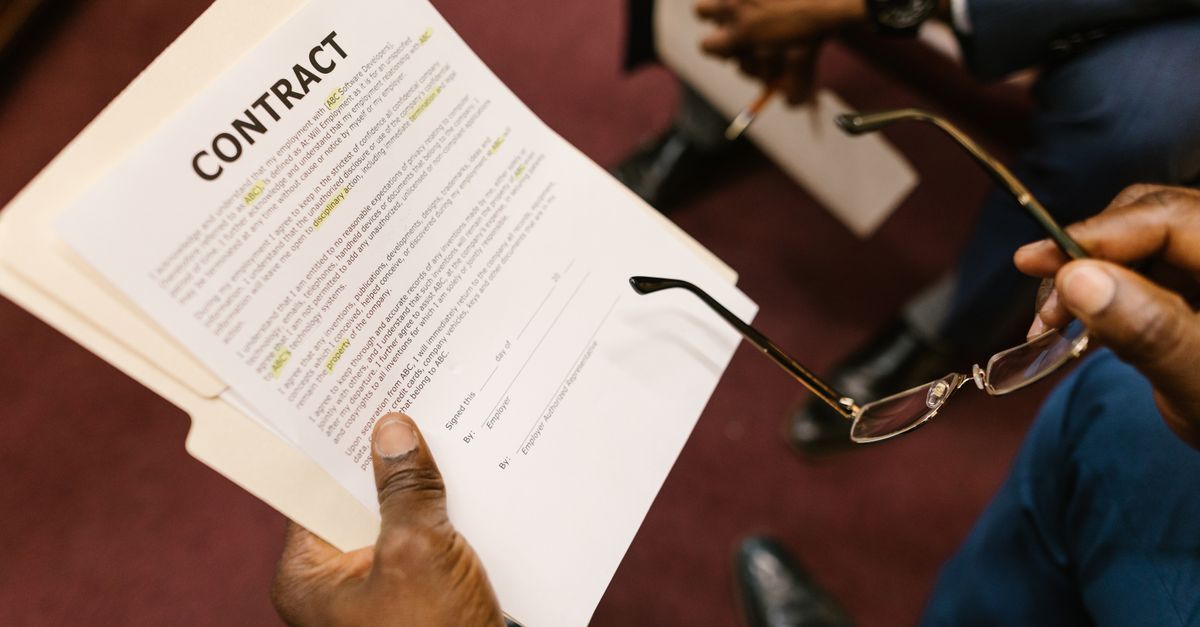\n*Introduction: why this guide matters — foto: rdne stock project*\n\n\n### Option A — Juizado Especial Cível (Small Claims Court): The Fastest Path, but Strictly Limited\n\n**How it works:** the Small Claims Court is designed for speed and simplicity. Hearings are informal, the judge encourages settlement, and the procedural rules are stripped down compared to ordinary litigation.\n\n**Requirements and limits:** claims are capped at 40 minimum wages (around R$ 60,000 in 2026). Below 20 minimum wages, a lawyer is technically optional — though for a foreigner navigating Portuguese-language proceedings, going without one is rarely wise. Court costs at this level are low, often in the R$ 150 range for filing-related fees, and many initial filings are exempt.\n\n**Timeline (realistic 2026):** a Small Claims case can reach a first hearing in 2–4 months and a judgment within 6–12 months — dramatically faster than the ordinary courts.\n\n**Pros:** fast, cheap, settlement-oriented. **Cons:** the value cap excludes most commercial deals, and complex evidence (such as expert technical reports) fits poorly into the simplified format.\n\n\n### Option B — State Court (Justiça Estadual – Vara Cível): Full Remedies, but Years of Procedure\n\n**How it works:** this is the standard venue for most contract and commercial disputes that exceed the small claims cap. You get the full toolkit — preliminary injunctions, expert evidence, document discovery, witness testimony — and the full procedural weight that comes with it.\n\n**Requirements and costs:** filing fees (custas) are typically calculated as a percentage of the claim value and vary by state. On a R$ 200,000 claim, expect filing costs plus expert fees and attorney fees that together can run into the tens of thousands of reais. If you lose, Brazil applies the *sucumbência* rule: the losing party generally pays the winner’s legal fees, often set between 10% and 20% of the claim value.\n\n**Timeline by phase:** filing and service can take 2–6 months; the evidence phase (especially when a court-appointed expert is involved) commonly adds 6–18 months; a first-instance judgment often arrives 2–3 years after filing; and a full appeal cycle through the TJ and then the STJ can extend the case to 5–8 years total. For a realistic, phase-by-phase breakdown, see our guide on [how long a court case takes in Brazil in 2026](https://www.ribeirocavalcante.com.br/how-long-does-a-court-case-take-in-brazil-2026/).\n\nState Court litigation is the right choice when the amounts justify the cost, when you need coercive remedies, or when there is simply no arbitration clause to fall back on. For a deeper look at strategy in business disputes, our [complete updated guide to commercial litigation in Brazil](https://www.ribeirocavalcante.com.br/commercial-litigation-in-brazil-2026/) is essential reading.\n\nTalk to a specialist lawyer now\n[ Talk to a Lawyer on WhatsApp](https://www.ribeirocavalcante.com.br/ads/wpp.html)\n\n\n### Option C — Federal Court (Justiça Federal): When the Government Is Involved\n\nThe Federal Court track applies when the dispute involves the **federal government, a federal agency, a federal public company, or certain international and treaty matters**. As a foreigner, you may land here in disputes touching immigration authorities, federal tax claims, or contracts with federal entities.\n\nProcedurally, Federal Court resembles State Court — full evidence, full appeals — but it has its own structure (Tribunais Regionais Federais on appeal) and its own pace. Timelines are comparable to, and sometimes longer than, State Court, given the volume of public-sector litigation. If the federal government is on the other side, expect a defendant with deep resources and a structural advantage in deadlines.\n\n\n### Option D — Arbitration under Lei nº 9.307/1996: Bypassing the Public Courts\n\nIf your contract contains an **arbitration clause**, you can avoid the public courts entirely. For sophisticated international parties, this is usually the preferred route, and for good reason.\n\n**How it works:** the parties appoint arbitrators (or an arbitral institution administers the case), proceedings can be conducted in English, and the decision — the *sentença arbitral* — has the same enforceability as a court judgment under Brazilian law. The Arbitration Law, reinforced by the 2015 amendments, makes valid arbitration clauses binding; a Brazilian court will, in principle, decline jurisdiction over a matter the parties agreed to arbitrate.\n\n[\n\n\n\n](https://www.ribeirocavalcante.com.br/web-stories/contracts-litigation-brazil/)\n\n⚡ Web Story\n[Contracts in Brazil for Foreigners: Legal Guide 2026](https://www.ribeirocavalcante.com.br/web-stories/contracts-litigation-brazil/)\n[Ver história visual ›](https://www.ribeirocavalcante.com.br/web-stories/contracts-litigation-brazil/)\n\n\n**Why foreigners favor it:** confidentiality, specialized arbitrators familiar with commercial and cross-border matters, neutrality, and speed. A typical arbitration resolves in 1–2 years rather than the half-decade an ordinary lawsuit can demand.\n\n**The cost:** arbitration is not cheap. Administrative fees, arbitrator fees, and venue costs can run from tens of thousands to hundreds of thousands of reais depending on the institution and claim size — which is why arbitration makes sense for higher-value disputes (think R$ 500,000 and up) rather than small claims.\n\n**Critical warning:** if your contract does **not** contain an arbitration clause, you can still attempt a post-contractual arbitration agreement, but the Brazilian court will first decide whether arbitration was truly intended — often a lengthy preliminary battle. The lesson is simple: negotiate the arbitration clause *before* you sign, not after the relationship sours.\n\n\n## 5. Choosing Foreign Governing Law: What Actually Holds Up\n\nOne of the most persistent myths among foreign investors is that inserting “this contract is governed by the laws of [your home country]” fully protects them. Because of Brazil’s territoriality principle under the LINDB, the reality is more nuanced. A Brazilian court applying Brazilian procedure will scrutinize foreign-law clauses carefully, and certain mandatory provisions of Brazilian law — consumer protection, labor rules, and public-order norms — cannot be contracted around regardless of the chosen governing law.\n\nArbitration gives you far more freedom to apply foreign substantive law than the public courts do. This is yet another reason the arbitration route appeals to international parties. The interaction between governing law, venue, and enforcement is technical enough that getting it wrong can render your protections meaningless when you need them most.\n\n\n## 6. Enforcing a Foreign Judgment or Award in Brazil\n\nWinning abroad is only half the battle. A judgment or arbitral award issued outside Brazil is not automatically enforceable here. Foreign court judgments must go through **homologation before the STJ** — a recognition procedure that checks formal requirements such as proper service, finality, and consistency with Brazilian public order. Foreign arbitral awards follow a parallel path under the New York Convention, which Brazil has ratified, generally making award recognition smoother than court-judgment recognition.\n\n\n*Introduction: why this guide matters — foto: www. Kaboompics. Com*\n\nThis recognition stage is technical, document-heavy, and unforgiving of errors in translation or certification. Before you assume your foreign win can reach a debtor’s Brazilian assets, read our detailed [STJ guide to enforcing a foreign judgment in Brazil in 2026](https://www.ribeirocavalcante.com.br/enforce-foreign-judgment-brazil-2026/).\n\n\n## 7. Appeals: Why a First-Instance Loss Is Rarely the End\n\nBrazil’s appeal system is broad, and that cuts both ways. If you lose at first instance, you generally have a strong right to a full appellate review by the TJ or TRF, where a panel of judges reconsiders both facts and law. From there, further appeals to the STJ (on legal grounds) and, exceptionally, the STF (on constitutional grounds) are possible.\n\nThe flip side: even after you *win*, the other side can appeal, delaying actual recovery by years. This is precisely why arbitration — which sharply limits appeals — is so attractive for parties who value finality. If you are weighing whether to challenge a decision, our [complete guide to appealing a court decision in Brazil](https://www.ribeirocavalcante.com.br/appeal-court-decision-brazil-2026/) walks through the deadlines and grounds in detail.\n\n\n## 8. Costs and Timelines: A Realistic 2026 Snapshot\n\nForeigners are frequently caught off guard by the gap between what a lawyer optimistically promises and what actually happens. Set your expectations accordingly:\n\n- **Small Claims:** 6–12 months, minimal cost, capped at ~R$ 60,000.\n- **State / Federal Court (first instance):** 2–3 years; with appeals, 5–8 years.\n- **Arbitration:** 1–2 years, higher upfront cost, limited appeals.\n- **Enforcement of a foreign judgment/award:** add 6–18 months for the STJ recognition stage before you can even begin collection.\n\nRemember the *sucumbência* rule: losing in the public courts means paying the other side’s attorney fees, typically 10%–20% of the claim. On a R$ 500,000 dispute, that exposure alone can exceed R$ 55,000 — a number worth weighing before you file.\n\n\n## 9. Practical Checklist Before You Sign or Sue\n\n- Have your CPF and identification documents in order before any transaction.\n- Use ICP-Brasil certified digital signatures for enforceability.\n- Negotiate the dispute-resolution clause (arbitration vs. courts) *before* signing.\n- Confirm whether your chosen governing law will actually be respected.\n- Translate and certify foreign documents properly to avoid enforcement failures.\n- Budget realistically for both time and *sucumbência* risk.\n- Engage a bilingual Brazilian lawyer early — not after the dispute erupts.\n\n\n## Conclusion: Build the Right Structure Before the Conflict\n\nBrazil rewards foreigners who plan and punishes those who improvise. The difference between an enforceable contract and an expensive disappointment usually comes down to decisions made **before** signing: the right governing law, the right dispute-resolution route, proper documentation, and realistic expectations about cost and time.\n\nWhether you are an investor structuring a major deal, an expat protecting a property purchase, or a digital nomad signing a service contract, the principles in this guide apply. The next step is matching them to your specific situation — and that is where qualified, bilingual counsel makes the decisive difference.\n\n**Ribeiro Cavalcante Advocacia** advises foreign individuals and companies on contracts, litigation, arbitration, and enforcement in Brazil. If you are entering a deal or facing a dispute, contact us before problems escalate — early advice is almost always the cheapest advice.\n\n*This article is for informational purposes only and does not constitute legal advice. Laws and values cited reflect 2026 references and may change. Always consult a qualified attorney about your specific situation.*",
"content_hash": {
"algo": "sha256",
"scope": "content_markdown",
"value": "2cedaeb2216572f3907f2f3daa856f4cfaa423d8b3186908a5b5d3063012daec"
},
"date_published": "2026-06-16T06:31:22-03:00",
"date_modified": "2026-06-16T06:31:22-03:00",
"author": {
"name": "Lucas Ribeiro Cavalcante",
"url": "https://www.ribeirocavalcante.com.br/autor/lucas/"
},
"canonical_url": "https://www.ribeirocavalcante.com.br/contracts-litigation-brazil/",
"json_url": "https://www.ribeirocavalcante.com.br/contracts-in-brazil-for-foreigners-2026.json",
"word_count": 2501,
"reading_time": 13,
"robots": {
"index": true,
"follow": true
},
"license": {
"name": "CC BY-NC-ND 4.0",
"url": "https://creativecommons.org/licenses/by-nc-nd/4.0/deed.pt-br",
"notice": "Conteúdo protegido. Cite a fonte com link para a URL canônica. Reprodução integral proibida."
},
"publisher": {
"name": "Ribeiro Cavalcante Advocacia",
"url": "https://www.ribeirocavalcante.com.br/"
},
"publisher_ref": "https://www.ribeirocavalcante.com.br/org.json",
"language": "pt-BR",
"site": "Ribeiro Cavalcante Advocacia",
"categories": [
{
"id": 4614,
"name": "Contract Law",
"slug": "contract-law",
"url": "https://www.ribeirocavalcante.com.br/english/contract-law/"
}
],
"tags": [
{
"id": 6450,
"name": "brazil arbitration foreigners",
"slug": "brazil-arbitration-foreigners",
"url": "https://www.ribeirocavalcante.com.br/tag/brazil-arbitration-foreigners/"
},
{
"id": 6448,
"name": "brazil contract law",
"slug": "brazil-contract-law",
"url": "https://www.ribeirocavalcante.com.br/tag/brazil-contract-law/"
},
{
"id": 4867,
"name": "contracts in brazil for foreigners",
"slug": "contracts-in-brazil-for-foreigners",
"url": "https://www.ribeirocavalcante.com.br/tag/contracts-in-brazil-for-foreigners/"
},
{
"id": 6447,
"name": "contracts-and-litigation-in-brazil-for-foreigners:-complete-guide",
"slug": "contracts-and-litigation-in-brazil-for-foreigners-complete-guide",
"url": "https://www.ribeirocavalcante.com.br/tag/contracts-and-litigation-in-brazil-for-foreigners-complete-guide/"
},
{
"id": 4732,
"name": "enforce contract brazil",
"slug": "enforce-contract-brazil",
"url": "https://www.ribeirocavalcante.com.br/tag/enforce-contract-brazil/"
},
{
"id": 6449,
"name": "litigation in brazil",
"slug": "litigation-in-brazil",
"url": "https://www.ribeirocavalcante.com.br/tag/litigation-in-brazil/"
}
],
"featured_image": {
"url": "https://cdn.ribeirocavalcante.com.br/2026/06/contracts-and-litigation-in-brazil-for-foreigners-complete-guide-214961-1781602333.webp",
"width": 1400,
"height": 788,
"alt": "Imagem representando Contracts and Litigation in Brazil for Foreigners: Complete Guide — Ribeiro Cavalcante Advocacia"
},
"faq": [
{
"question": "Are international contract templates valid in Brazil?",
"answer": "Often not. Brazil's Civil Law system interprets contracts by statute, so foreign templates may be unenforceable. Always adapt contracts to the Código Civil with a local lawyer."
},
{
"question": "Where do contract disputes get resolved in Brazil for foreigners?",
"answer": "Simple disputes start in State Courts (Justiça Estadual), claims up to ~R$60,000 go to Small Claims Courts, while complex commercial deals often go to arbitration."
},
{
"question": "How long does litigation in Brazil take?",
"answer": "Court litigation can take several years due to multiple appeal levels, while arbitration is usually faster, making it the preferred route for foreign companies."
},
{
"question": "Can foreigners enforce a contract in Brazil?",
"answer": "Yes, foreigners can enforce contracts in Brazil, but the agreement must comply with the Código Civil and Brazilian procedural law to be valid in court."
},
{
"question": "Is arbitration better than court for contracts in Brazil for foreigners?",
"answer": "For sophisticated commercial deals, yes. Arbitration offers speed, confidentiality and recognized awards, which is why most experienced foreign parties choose it."
}
],
"table_of_contents": [
{
"level": 2,
"text": "Introduction: Why This Guide Matters",
"anchor": "introduction-why-this-guide-matters"
},
{
"level": 2,
"text": "1. The Brazilian Legal System: How It Actually Works",
"anchor": "1-the-brazilian-legal-system-how-it-actually-works"
},
{
"level": 3,
"text": "Court Hierarchy: Contracts in brazil for foreigners",
"anchor": "court-hierarchy-contracts-in-brazil-for-foreigners"
},
{
"level": 3,
"text": "Specialized Branches Relevant to Foreigners",
"anchor": "specialized-branches-relevant-to-foreigners"
},
{
"level": 2,
"text": "2. Key Laws Every Foreigner Should Know",
"anchor": "2-key-laws-every-foreigner-should-know"
},
{
"level": 2,
"text": "3. What Changed in 2026: Digital Signatures and Contract Validity",
"anchor": "3-what-changed-in-2026-digital-signatures-and-contract-validity"
},
{
"level": 2,
"text": "4. The Four Routes to Resolve a Dispute in Brazil",
"anchor": "4-the-four-routes-to-resolve-a-dispute-in-brazil"
},
{
"level": 3,
"text": "Option A — Juizado Especial Cível (Small Claims Court): The Fastest Path, but Strictly Limited",
"anchor": "option-a-juizado-especial-civel-small-claims-court-the-fastest-path-but-strictly-limited"
},
{
"level": 3,
"text": "Option B — State Court (Justiça Estadual – Vara Cível): Full Remedies, but Years of Procedure",
"anchor": "option-b-state-court-justica-estadual-vara-civel-full-remedies-but-years-of-procedure"
},
{
"level": 3,
"text": "Option C — Federal Court (Justiça Federal): When the Government Is Involved",
"anchor": "option-c-federal-court-justica-federal-when-the-government-is-involved"
},
{
"level": 3,
"text": "Option D — Arbitration under Lei nº 9.307/1996: Bypassing the Public Courts",
"anchor": "option-d-arbitration-under-lei-no-9-307-1996-bypassing-the-public-courts"
},
{
"level": 2,
"text": "5. Choosing Foreign Governing Law: What Actually Holds Up",
"anchor": "5-choosing-foreign-governing-law-what-actually-holds-up"
},
{
"level": 2,
"text": "6. Enforcing a Foreign Judgment or Award in Brazil",
"anchor": "6-enforcing-a-foreign-judgment-or-award-in-brazil"
},
{
"level": 2,
"text": "7. Appeals: Why a First-Instance Loss Is Rarely the End",
"anchor": "7-appeals-why-a-first-instance-loss-is-rarely-the-end"
},
{
"level": 2,
"text": "8. Costs and Timelines: A Realistic 2026 Snapshot",
"anchor": "8-costs-and-timelines-a-realistic-2026-snapshot"
},
{
"level": 2,
"text": "9. Practical Checklist Before You Sign or Sue",
"anchor": "9-practical-checklist-before-you-sign-or-sue"
},
{
"level": 2,
"text": "Conclusion: Build the Right Structure Before the Conflict",
"anchor": "conclusion-build-the-right-structure-before-the-conflict"
}
],
"internal_links": [
{
"anchor_text": "Enforce Foreign Judgment Brazil 2026: STJ Guide",
"url": "https://www.ribeirocavalcante.com.br/enforce-foreign-judgment-brazil-2026/"
},
{
"anchor_text": "How Long Does a Court Case Take in Brazil? 2026",
"url": "https://www.ribeirocavalcante.com.br/how-long-does-a-court-case-take-in-brazil-2026/"
},
{
"anchor_text": "contracts in Brazil for foreigners and the 5 most common mistakes",
"url": "https://www.ribeirocavalcante.com.br/contracts-in-brazil-for-foreigners-mistakes-2026/"
},
{
"anchor_text": "complete updated guide to commercial litigation in Brazil",
"url": "https://www.ribeirocavalcante.com.br/commercial-litigation-in-brazil-2026/"
},
{
"anchor_text": "Contracts in Brazil for Foreigners: Legal Guide 2026",
"url": "https://www.ribeirocavalcante.com.br/web-stories/contracts-litigation-brazil/"
},
{
"anchor_text": "complete guide to appealing a court decision in Brazil",
"url": "https://www.ribeirocavalcante.com.br/appeal-court-decision-brazil-2026/"
}
],
"cta": [
{
"label": "Talk to a Lawyer on WhatsApp",
"url": "https://www.ribeirocavalcante.com.br/ads/wpp.html",
"type": "whatsapp"
}
],
"related_posts": [
{
"title": "Enforce Foreign Judgment Brazil 2026: STJ Guide",
"url": "https://www.ribeirocavalcante.com.br/enforce-foreign-judgment-brazil-2026/",
"json_url": "https://www.ribeirocavalcante.com.br/enforce-foreign-judgment-brazil-2026.json",
"relationship": "cluster"
},
{
"title": "Commercial Litigation in Brazil in 2026: Complete Updated Guide",
"url": "https://www.ribeirocavalcante.com.br/commercial-litigation-in-brazil-2026/",
"json_url": "https://www.ribeirocavalcante.com.br/commercial-litigation-in-brazil-2026.json",
"relationship": "cluster"
},
{
"title": "How Long Does a Court Case Take in Brazil? 2026",
"url": "https://www.ribeirocavalcante.com.br/how-long-does-a-court-case-take-in-brazil-2026/",
"json_url": "https://www.ribeirocavalcante.com.br/how-long-does-a-court-case-take-in-brazil-2026.json",
"relationship": "cluster"
},
{
"title": "Appeal Court Decision Brazil 2026: Complete Guide",
"url": "https://www.ribeirocavalcante.com.br/appeal-court-decision-brazil-2026/",
"json_url": "https://www.ribeirocavalcante.com.br/appeal-court-decision-brazil-2026.json",
"relationship": "cluster"
},
{
"title": "Contracts in Brazil for Foreigners 2026: 5 Common Mistakes",
"url": "https://www.ribeirocavalcante.com.br/contracts-in-brazil-for-foreigners-mistakes-2026/",
"json_url": "https://www.ribeirocavalcante.com.br/contracts-in-brazil-for-foreigners-mistakes-2026.json",
"relationship": "cluster"
}
]
}