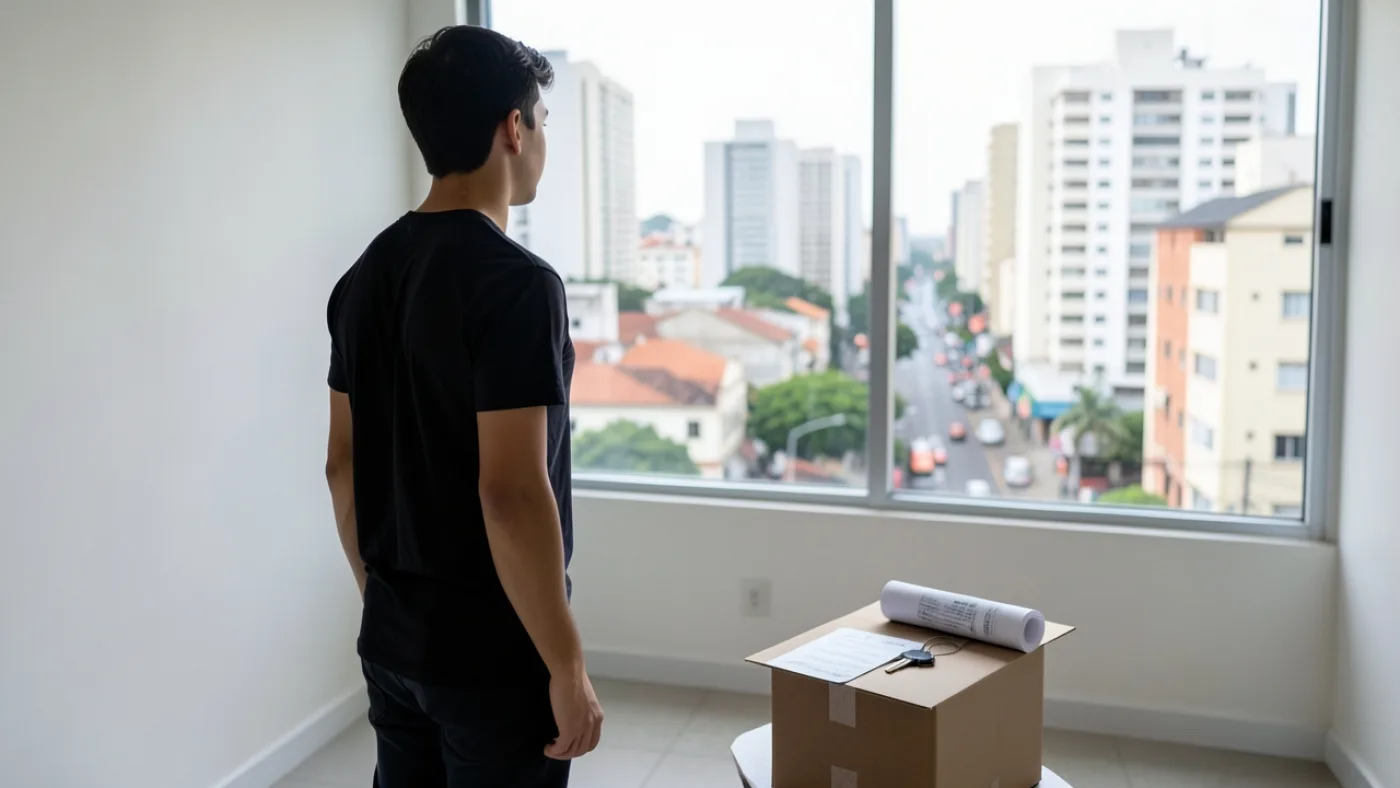

The costliest mistake foreigners make when choosing where to live in Brazil is signing a 30-month lease in a neighborhood they visited for three days. It usually ends the same way: month five, you cannot stand the two-hour commute, the noise or the isolation, and you try to leave. Then you discover Article 4 of Lei 8.245/1991 (the Brazilian Tenancy Law), which allows the landlord to charge an early termination penalty of up to three months’ rent, reduced proportionally to the time you already served. On a R$ 8,000 apartment in Leblon, leaving in month five can cost you around R$ 20,000 once you add the penalty, the broker’s commission you already paid, the moving costs and the deposit the landlord withholds for wall repairs.
The fix is not legal. It is geographic. Pick the right neighborhood the first time and the penalty clause never activates. This guide compares the neighborhoods where expats actually stay in São Paulo, Rio de Janeiro and Florianópolis, and shows you exactly where these rental arrangements fall apart.
Watch out: The penalty is proportional, not negotiable after the fact. Under Article 4 of Lei 8.245/1991, only one situation cancels it entirely: your employer transfers you to another locality and you give 30 days’ written notice. A change of heart about the neighborhood is not covered.
On this page
Can Foreigners Legally Rent in Any Neighborhood in Brazil?
Yes. Brazilian law places no nationality restriction on renting urban residential property. Lei 8.245/1991 applies identically to Brazilians and foreigners, whether you hold a tourist stamp, a CRNM (National Immigration Registration Card) or a digital nomad visa. The only real-world barrier is documentary: agencies want a CPF (Brazilian taxpayer number), and most reject applications without one.
The restriction people confuse this with concerns rural land purchases inside the 150-kilometre border security strip, regulated under Brazilian rural land legislation. That zone does not touch São Paulo, Rio de Janeiro or Florianópolis, and it has nothing to do with renting an apartment in Ipanema.
So where do foreign tenants actually get denied? Three places, consistently:
- No CPF. Without it, you cannot be entered into the agency’s credit analysis system. You can obtain one abroad through a Brazilian consulate or in Brazil at Receita Federal. See our guide on what you can do without a CPF in Brazil.
- No income proof in reais. Agencies typically require documented monthly income of 3x the rent. Foreign payslips in euros or dollars are frequently refused by automated systems.
- No fiador (guarantor) who owns property in the same city. This is the classic wall. The legal alternatives are covered in our article on renting in Brazil without a guarantor.
Notice something important: none of these denials are about the neighborhood. But the neighborhood determines how strict the analysis is. High-end buildings in Leblon and Jardins use traditional agencies with rigid guarantor requirements. Newer digital platforms operating heavily in Pinheiros, Vila Madalena and central Florianópolis accept deposit-based or insurance-based guarantees far more readily. Your neighborhood choice is, in practice, also a choice about which guarantee system you will face.
Which São Paulo Neighborhoods Work Best for Expats?
Itaim Bibi and Pinheiros are the two safest bets for foreigners in São Paulo, with indicative asking rents on Brazilian listing platforms of roughly R$ 4,500 to R$ 8,000 per month for a well-located one or two-bedroom apartment. Jardins offers prestige at a premium, and Vila Madalena suits younger arrivals who prioritize nightlife over quiet.
Itaim Bibi: the corporate expat’s safe harbor
If your office is on Avenida Faria Lima or Avenida Brigadeiro Faria Lima’s corporate corridor, Itaim Bibi eliminates the commute that destroys most first-year expat experiences. Buildings are newer, doormen work 24 hours, and English is spoken in restaurants and gyms. Indicative rent for a modern two-bedroom: R$ 5,000 to R$ 8,000, plus condominium fees that often add R$ 1,200 to R$ 2,000.
The downside is honest: it empties on weekends and it is expensive relative to what you get in square metres. Traditional agencies dominate here, meaning stricter guarantee demands.
Pinheiros: the bohemian sweet spot
Pinheiros is where a large share of self-employed foreigners and remote workers end up staying past their first lease. Two metro lines, walkable streets, independent cafés, and rents around R$ 3,500 to R$ 6,000 for a one or two-bedroom. Digital rental platforms are strong here, which usually means a deposit-based guarantee instead of a fiador.
Jardins and Vila Madalena
Jardins is elegant, close to Avenida Paulista and cultural institutions, with older, larger apartments and high condominium fees. Expect R$ 7,000 upward for a family-sized unit. Vila Madalena is loud, creative and cheaper, with rents from R$ 3,000, but street noise on weekends is genuinely disruptive if you work early hours.
Example: A German engineer relocating to Itaim Bibi signs a 30-month lease at R$ 6,000. Fifteen months in, his company moves him to Curitiba. Because Article 4 of Lei 8.245/1991 exempts employer-transferred tenants, he gives 30 days’ written notice with a letter from HR and pays zero penalty, saving roughly R$ 9,000. A freelancer in the identical apartment leaving at month 15 would owe about R$ 9,000 in proportional penalty.
Where Should You Live in Rio de Janeiro as a Foreigner?
Leblon and Ipanema are Rio’s premium expat neighborhoods, with indicative asking rents from R$ 7,000 to well beyond R$ 12,000 for two bedrooms near the beach. Copacabana offers similar infrastructure from around R$ 3,000 to R$ 5,000 and is the most underrated option for foreigners on a realistic budget.
Ipanema: iconic, but check the building
Ipanema delivers exactly what you imagine: beach in five minutes, excellent restaurants, metro access, walkability. What listings do not tell you is that much of the housing stock dates from the 1960s and 1970s. Plumbing, electrical capacity and elevator reliability vary wildly building to building.
This matters legally. Under Lei 8.245/1991, structural repairs are the landlord’s obligation, while the tenant covers ordinary maintenance. Foreigners regularly lose this argument because they never documented the property’s condition at move-in. A written, photographed vistoria (inspection report) attached to the contract is your only real defence when the landlord later blames you for a R$ 4,000 pipe replacement.
Leblon: Rio’s most exclusive enclave
Leblon is quieter, more residential and considered the safest of the Zona Sul beach neighborhoods. It attracts diplomats and executive families. It is also where the fiador requirement is most rigidly enforced, and where condominium fees of R$ 2,000 or more are normal on top of rent.
Copacabana: classic and affordable
Copacabana has more foreigners, more short-term rentals, more metro stations and roughly half the rent of Leblon. Ask specifically which street and which block: the difference between a unit near Rua Bolívar and one near the Túnel Novo is significant in terms of noise and perceived safety.
Important: In Rio, always ask whether the advertised rent includes IPTU (municipal property tax) and condominium fees. Many listings quote only base rent. A R$ 5,000 Copacabana apartment can cost R$ 6,800 monthly once IPTU and condominium are added, and under Lei 8.245/1991 both can legally be passed to the tenant if the contract says so.
Is Florianópolis Really the Best Choice for Digital Nomads?
Florianópolis offers the lowest rents of the three cities, with indicative bands of R$ 2,000 to R$ 4,000 for a good one or two-bedroom in Centro, Trindade or Lagoa da Conceição. Its trap is seasonality: high-season rents in beach districts can double between December and February, and annual leases are scarce in the most touristic areas.
Jurerê Internacional is the neighborhood foreign arrivals hear about first: gated, upscale, beachfront, with rents from R$ 4,000 for a standard unit and far more in season. It works for families with a car and a solid budget. It does not work if you want walkable urban life or reliable public transport.
- Lagoa da Conceição: the classic digital nomad hub. Coworking spaces, restaurants, lagoon and beach access. Rents from R$ 2,500. Traffic in summer is severe.
- Centro and Agronômica: best for hospitals, banks and consular services. Least “island lifestyle”, most practical. From R$ 2,000.
- Campeche: growing fast with young international families, quieter beaches, from around R$ 2,800. Needs a car.
- Trindade: university district, cheapest well-serviced option, from R$ 1,800, younger population.
Watch out: Many Florianópolis beach properties are marketed as temporada (seasonal/short-term) rentals. Seasonal leases under Lei 8.245/1991 are limited to 90 days and follow different rules: no 30-month protection, no renewal right, and the landlord may demand rent in advance. If you intend to stay a year, insist on a standard residential lease, not a temporada contract.
How Do These Three Cities Compare Side by Side?
São Paulo offers the widest inventory and the most flexible guarantee options, Rio the highest premium for beach proximity, and Florianópolis the lowest cost with the highest seasonal volatility. All three are governed by the same federal Tenancy Law, so your legal rights are identical; only the market conditions differ.
| Criterion | São Paulo | Rio de Janeiro | Florianópolis |
|---|---|---|---|
| Top expat areas | Itaim Bibi, Pinheiros, Jardins, Vila Madalena | Leblon, Ipanema, Copacabana, Botafogo | Jurerê Internacional, Lagoa da Conceição, Centro, Campeche |
| Indicative rent, 2-bedroom | R$ 4,500-8,000 | R$ 3,000-12,000+ | R$ 2,000-4,000 (double in season) |
| Typical condominium fee | R$ 1,200-2,000 | R$ 1,200-2,000+ | R$ 500-1,200 |
| Guarantee usually demanded | Deposit or insurance widely accepted | Fiador still common in prime areas | Deposit common, fiador in traditional agencies |
| Car needed? | No (metro-served areas) | No in Zona Sul | Yes, outside Centro/Trindade |
| Main risk for foreigners | Long commute if you pick wrong | Old buildings, hidden condominium costs | Temporada contracts disguised as annual leases |
| Standard lease term | 30 months | 30 months | 12-30 months |
What Is the Strongest Argument on the Landlord’s Side?
The landlord’s best argument is genuinely strong: a foreign tenant with no Brazilian assets, no local credit history and no property in the country is nearly impossible to enforce a judgment against. Brazilian collection lawsuits routinely take two to four years in state courts, and if you leave the country, the landlord recovers nothing.
That is not paranoia. It is arithmetic. If you stop paying a R$ 6,000 rent and fly home, the landlord faces an eviction action, months of vacancy, lawyer fees, and a judgment enforceable only against assets you do not have in Brazil. Insisting on a property-owning guarantor in the same city is a rational response to a real risk, not xenophobia.
Here is the answer. The risk is real, but the fiador is not the only instrument that neutralizes it, and Lei 8.245/1991 expressly recognizes alternatives. Article 37 lists the accepted guarantee forms: caução (security deposit, capped at three months’ rent when paid in cash), fiança (guarantor), seguro de fiança locatícia (rental surety insurance) and cessão fiduciária de quotas de fundo de investimento (assignment of investment fund shares). Article 37 also contains the sole paragraph forbidding the landlord from demanding more than one guarantee at the same time.
So when an agency asks for a fiador and a three-month deposit and six months’ rent in advance, that is not a tough negotiation. It is an illegal cumulative guarantee. Our detailed breakdown of tenant rights under the Brazilian rental law covers what you can refuse without losing the apartment.
Key point: The commercially persuasive counter-offer is rental surety insurance (seguro-fiança) or a documented deposit, combined with proof of income in reais or a Brazilian bank account. That gives the landlord an enforceable guarantee without requiring you to know a property owner in São Paulo.
What Changed for Foreign Tenants in 2026?
No amendment to Lei 8.245/1991 changed foreigners’ rental rights in 2026. What changed is practical: digital identity verification through the gov.br platform is now accepted by most large rental agencies, and electronic signatures on leases are standard, which removes the old need to be physically present in Brazil to sign.
Three practical developments matter for expats:
- Remote signing is normal now. Leases signed with qualified electronic certificates are valid. You can secure an apartment in Pinheiros before boarding your flight, provided you already hold a CPF.
- Digital nomad visa holders face less friction. Agencies increasingly accept the CRNM issued to digital nomads as proof of legal residence, paired with foreign income documentation.
- Short-term rental regulation is tightening. Several municipalities, including Rio, have moved to restrict short-stay rentals in residential condominiums. Condominium bylaws (convenção de condomínio) can legally prohibit subletting or short-stay use, so read them before assuming you can rent out a room.
Tip: Before signing anywhere, request the convenção de condomínio and the last three condominium meeting minutes (atas). They reveal pending building assessments, which can add thousands of reais in extraordinary fees. Under Lei 8.245/1991, extraordinary condominium expenses are the owner’s responsibility, not yours, but you need the paperwork to prove it.
How Do You Choose and Secure the Right Neighborhood, Step by Step?
Plan for 30 to 60 days from arrival to signed lease if you do not yet have a CPF, and 10 to 20 days if you do. The sequence below is the one that avoids the early-termination penalty, because it forces you to test the neighborhood before committing to 30 months.
- Step 1: Get your CPF first. Apply through a Brazilian consulate abroad or at Receita Federal in Brazil. Nothing in the rental market moves without it.
- Step 2: Rent short-term for 30-60 days in your top-choice neighborhood. Pay the premium. It is far cheaper than a broken 30-month lease.
- Step 3: Commute-test at rush hour. Do the actual trip to your office or coworking space at 8am on a Tuesday. In São Paulo this single test invalidates half of the shortlists people build online.
- Step 4: Check the block, not the neighborhood. Walk it at 10pm. Ask the doorman of neighbouring buildings about noise, water supply and building assessments.
- Step 5: Verify ownership. Request the property’s matrícula (title record) from the local Registro de Imóveis (real estate registry). It confirms the person signing is actually the owner and shows liens or foreclosure proceedings.
- Step 6: Negotiate the guarantee. Offer deposit or surety insurance. Refuse cumulative guarantees, citing Article 37 of Lei 8.245/1991.
- Step 7: Have the contract reviewed before signing. This is where our guide to rental contract clauses foreigners must check becomes practical.
- Step 8: Do a written, photographed vistoria. Attach it to the lease and keep a signed copy. It decides who pays for damage 30 months later.
How it works: Documents you will typically be asked for: passport, CRNM or valid visa, CPF, proof of income (last three payslips or six months of bank statements), proof of current address, and, if signing through a representative, a procuração (power of attorney) notarized at a cartório (Brazilian notary office with legal registration powers) or legalized abroad with an apostille.
Frequently Asked Questions
Can I rent an apartment in Brazil on a tourist visa?
Legally, yes. Lei 8.245/1991 does not require any particular immigration status to be a tenant. In practice, most agencies will refuse a 30-month lease to someone on a tourist stamp because your legal stay is shorter than the contract. The workable route is a short-term or temporada lease, or a direct agreement with a private owner using a larger deposit. Once you hold a CRNM, the standard market opens up immediately.
Which neighborhood is safest for a family with children?
For families, Leblon in Rio, Itaim Bibi or Jardins in São Paulo, and Jurerê Internacional or Campeche in Florianópolis are the most commonly chosen. The decisive factor is usually school proximity, not the neighborhood’s reputation. International schools in São Paulo cluster around Morumbi, Chácara Flora and Alto de Pinheiros, so families often prioritize those over the classic expat districts to avoid a daily one-hour school run.
Can the landlord raise my rent during the lease?
Not freely. Under Brazilian tenancy rules, rent may be adjusted once every 12 months, using the index stated in the contract, commonly the IGP-M or IPCA. Any clause allowing more frequent increases is void. Condominium fees and IPTU are different: those can rise whenever the condominium or the municipality decides, and if your contract passes them to you, your total monthly cost increases even though base rent stayed the same.
Do I need a Brazilian bank account to pay rent?
Not strictly, but it removes most friction. Payment by Pix or bank slip (boleto) is the norm, and both effectively require a Brazilian account, which requires a CPF and proof of address. Some agencies accept international card payments with a surcharge. Opening an account with a digital bank after obtaining your CRNM and CPF is usually faster than with traditional banks and is worth doing before your lease starts.
Is a lease valid if it is not registered at a cartório?
Yes. A written lease signed by both parties is fully valid without notarization. Registration at the Registro de Imóveis matters for two specific advantages: it gives you the right of first refusal if the owner sells, and it protects your occupancy against a new buyer. If you are investing in a long stay, registration is a low-cost safeguard. Our overview of Brazilian property taxes and cartório fees explains the typical costs.
Renting in São Paulo, Rio or Florianópolis: Have Your Lease Reviewed Before You Sign
Quick recap: Neighborhood choice is a legal decision disguised as a lifestyle one. Pick wrong and Article 4 of Lei 8.245/1991 makes leaving expensive. Test the block, verify the matrícula, refuse cumulative guarantees, and document the property’s condition at move-in.
Choosing between Itaim Bibi and Pinheiros, or between Leblon and Copacabana, is something only you can decide. Making sure the contract behind that choice does not cost you R$ 20,000 when your plans change is something a bilingual Brazilian lawyer does in a few days. Our team at Ribeiro Cavalcante Advocacia reviews leases, negotiates guarantee clauses and verifies ownership records in all three cities, including remotely before you land.
Send us the draft lease and the property address, and we will tell you what to change before you sign it.
Talk to a specialist lawyer now
Talk to a Lawyer on WhatsApp