

You have finally settled into your new life in Brazil. You have found the perfect apartment in Vila Madalena or a beachfront spot in Florianópolis. Your remote job or international investments are funding this tropical dream. But then, a nagging thought keeps you up at night: “How do I actually report this money to the Brazilian government without losing half of it to taxes or getting hit with massive fines?”
The frustration is real. You’ve likely tried to navigate the official Receita Federal (Brazilian IRS) website, only to find yourself lost in a sea of Portuguese acronyms like CPF, DARF, and Carnê-Leão. You might have heard horror stories about foreigners having their bank accounts blocked or being denied visa renewals because of “pendências” (pending issues) with the tax authorities. The fear of double taxation—paying tax once in your home country and again in Brazil—is enough to make anyone reconsider their residency.
Here is the good news: declaring your income in Brazil as a foreigner is not impossible, but it is highly procedural. In 2026, the process has become even more digital, allowing you to handle most obligations from your laptop. However, the integration of the Pix payment system and international banking data exchange means the Receita Federal is more vigilant than ever. This guide will walk you through exactly how to declare your foreign income, navigate the bureaucracy, and protect your assets while living in Brazil.
Why is Declaring Foreign Income So Complicated for Foreigners?
The core of the problem lies in the transition from being a “visitor” to a “tax resident.” In Brazil, the law does not care if you consider yourself a tourist; it cares about the calendar and your visa type. Under Lei nº 13.445/2017 (The Migration Law), your legal status is the first domino in your tax obligations. If you hold a residency visa (VITEM), you often become a tax resident the moment you step off the plane.
If you are on a tourist visa or a digital nomad visa, the “183-day rule” applies. Once you spend 184 days in Brazil within any 12-month period, you are automatically classified as a tax resident. From that moment on, Brazil claims the right to tax your worldwide income. This is a shock to many who assume they only owe taxes on money earned physically within Brazilian borders. If you have a rental property in London, a 401k in the US, or dividends from a German company, the Receita Federal expects a seat at the table.
The complexity is compounded by the “Carnê-Leão.” Unlike many countries where you only file once a year, Brazil requires residents receiving foreign income to calculate and pay taxes monthly. Failure to do this doesn’t just result in a small fine; it triggers interest rates and penalties that can reach 20% or more of the tax due, plus potential issues with the Polícia Federal (Federal Police) during visa extensions. Understanding tax residency in Brazil is the first step to avoiding these traps.
The Administrative Path: How to Declare Without a Lawsuit
Most tax issues for foreigners can be resolved through administrative channels if caught early. The goal is to establish a “Regular” status for your CPF (Taxpayer Registry). Here is the step-by-step administrative workflow for declaring foreign income in 2026:
Step 1: The Carnê-Leão (Monthly Declaration)
If you receive income from an individual or a company located outside of Brazil, you must use the Carnê-Leão system. This is now an online portal within the “e-CAC” (Virtual Tax Center). You must log in using your Gov.br account (which requires a high security level, usually Silver or Gold). Every month, you enter your gross income in the original currency, convert it to Brazilian Reais (BRL) using the official exchange rate provided by the Banco Central do Brasil (Central Bank), and the system calculates the tax due.
Step 2: Paying the DARF: Declare foreign income Brazil
Once the monthly calculation is done, the system generates a DARF (Documento de Arrecadação de Receitas Federais). This is a payment slip with a barcode. You must pay this by the last business day of the month following the receipt of the income. For example, if you earned $5,000 in January 2026, your DARF must be paid by the end of February 2026. In 2026, most foreigners pay this via Pix, which updates the Receita Federal’s system almost instantly.
Step 3: Annual Adjustment (DIRPF): Declare foreign income Brazil
Between March and May of each year, you must file the “Declaração de Ajuste Anual.” This is where you consolidate everything. You import the data from your monthly Carnê-Leão, declare your global assets (bank accounts, real estate, cars), and the system determines if you paid too much or too little. This is also where you claim credits for taxes paid abroad if Brazil has a treaty with your home country.
The Judicial Path: When You Need to Go to Court
Sometimes, the administrative path fails. Perhaps the Receita Federal has assessed a fine you believe is unfair, or they are refusing to recognize a tax credit from your home country. In these cases, a judicial intervention is necessary. Brazilian tax law is heavily based on the principle of “Strict Legality,” meaning the government cannot charge a cent more than what is written in the law.
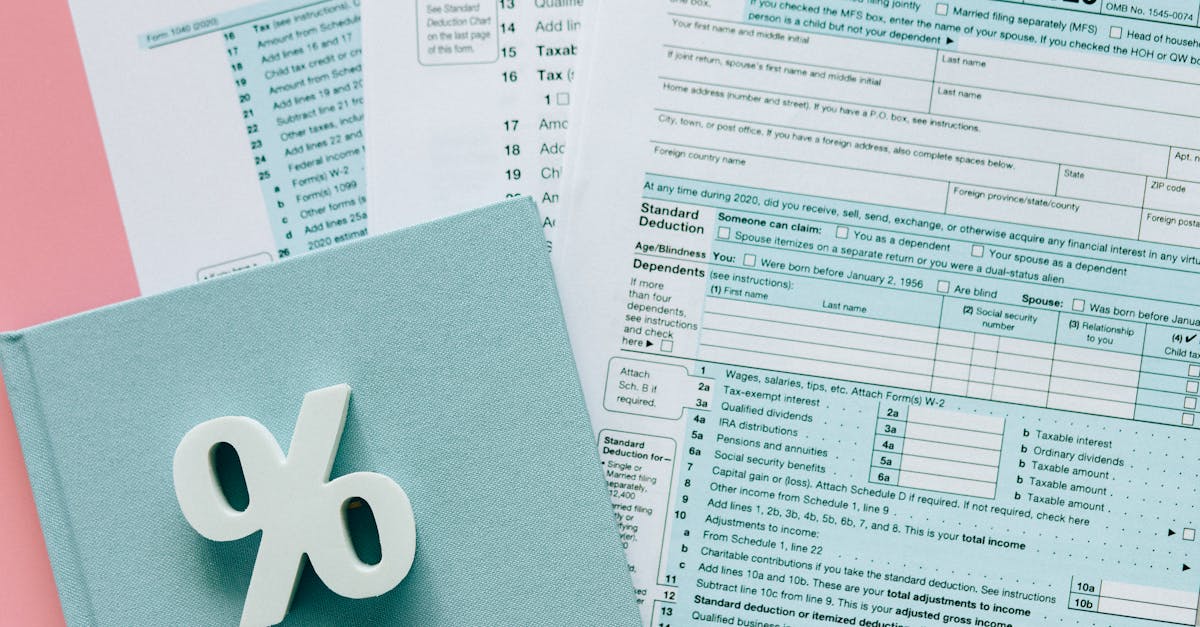
One common reason for a lawsuit is the “Double Taxation” dispute. While Brazil has treaties with many countries, it does not have a comprehensive income tax treaty with the United States, for example (though it does have a Tax Information Exchange Agreement). If the Receita Federal tries to tax income that has already been heavily taxed in a country with “reciprocal treatment,” a lawyer can file a “Mandado de Segurança” (Writ of Mandamus) to prevent the double charge or to unblock a CPF that was suspended due to these discrepancies.
A judicial case in the Federal Court typically takes 12 to 24 months for a first-instance decision. However, your lawyer can request an “Injunction” (Liminar) to suspend the tax debt immediately while the case is being argued. This ensures your CPF remains clean, allowing you to keep your bank account active and your residency visa valid while the legal battle continues. The costs involve court fees (usually 1% of the disputed amount) and lawyer fees, but this is often much cheaper than paying 27.5% tax on your entire global fortune plus a 75% penalty for “tax evasion.”
Case Law: Real Court Decisions in Favor of Foreigners
The Brazilian courts have a history of protecting taxpayers against overreach by the Receita Federal. One significant area of “Jurisprudência” (Case Law) involves the Retroactive Residency trap. The Receita Federal often tries to claim a foreigner became a tax resident earlier than they actually did to collect back taxes.
In several cases, the Superior Tribunal de Justiça (STJ) has ruled that if a foreigner can prove their “center of vital interests” remained abroad during a specific period (even if they spent more than 183 days in Brazil due to unforeseen circumstances like a health crisis or flight cancellations), they should not be taxed as a resident for that specific period. This is a powerful tool for digital nomads who got “stuck” in Brazil but didn’t intend to stay.
Another favorable trend in the courts involves the Taxation of Pensions. Many expats retire in Brazil and find the government trying to tax their foreign social security or private pensions. Courts have ruled in favor of applying the same exemptions to foreign pensions that are applied to Brazilian ones, ensuring that the foreigner isn’t discriminated against simply because their retirement fund is located in another country.
Common Mistakes That Hurt Your Tax Case
When dealing with the Receita Federal, small errors lead to big headaches. Here are the most frequent blunders we see foreigners make:
- Ignoring the 183-Day Rule: Thinking that if you don’t have a “Work Visa,” you don’t have to pay taxes. If you are here physically, the clock is ticking.
- Mixing Personal and Business Expenses: If you are a freelancer, failing to separate your business costs can lead the Receita to tax your gross revenue instead of your net income.
- Missing the Carnê-Leão Deadline: Waiting until the end of the year to declare everything. The system will hit you with a “Multa de Mora” (Late Fee) for every single month you missed.
- Inaccurate Currency Conversion: Using Google or a random app for exchange rates. You must use the specific “Ptax” rate from the Central Bank for the last business day of the first fortnight of the previous month. It sounds crazy because it is—which is why using the official software is non-negotiable.
- Forgetting the “Exit” Process: If you leave Brazil, you must file a “Comunicação de Saída Definitiva.” If you don’t, Brazil will keep expecting you to pay taxes on your global income forever, even after you’ve moved to Japan.
Income Tax Brackets in Brazil for 2026
To help you plan your finances, here is the current 2026 progressive tax table. Note that these values are in BRL. If you earn USD, EUR, or GBP, you must convert them first to see which bracket you fall into.
| Monthly Income (BRL) | Tax Rate (%) | Deduction Amount (BRL) |
|---|---|---|
| Up to R$ 2,259.20 | Exempt | R$ 0.00 |
| R$ 2,259.21 to R$ 2,826.65 | 7.5% | R$ 169.44 |
| R$ 2,826.66 to R$ 3,751.05 | 15% | R$ 381.44 |
| R$ 3,751.06 to R$ 4,664.68 | 22.5% | R$ 662.77 |
| Above R$ 4,664.68 | 27.5% | R$ 896.00 |
Example: If you earn R$ 10,000 per month (roughly $1,800 USD), you don’t pay 27.5% on the whole amount. You pay 0% on the first bracket, 7.5% on the next, and so on. The “Deduction Amount” is a shortcut used to calculate this quickly.
What Changed in 2026 for Foreigners?
The year 2026 brought the full implementation of Lei nº 14.973/2024, which introduced a new regime for the “Update of Assets Abroad.” For a limited time, the government allowed taxpayers to declare the current market value of their foreign assets at a reduced tax rate (around 15% instead of the usual capital gains rates). If you missed this window, you must now declare assets at their historical cost, which can lead to higher capital gains taxes when you eventually sell them.
Additionally, the Receita Federal has improved its “Malha Fina” (Tax Audit) algorithms. They now automatically cross-reference bank transfers from international platforms like Wise, Revolut, and Nomads with your declared income. If you are receiving R$ 20,000 a month via Wise but declaring zero income, you can expect an automated notification via the e-CAC portal within months.
Step-by-Step Practical Guide to Staying Compliant
If you are a foreigner living in Brazil right now, follow this checklist to ensure you are protected:
- Check your Days: Look at your passport stamps. Have you been here for more than 183 days in the last 12 months? If yes, you are a tax resident.
- Verify your Visa: If you have a permanent residency visa (VITEM), you are a tax resident from day one.
- Apply for a CPF: If you don’t have one, get it at a Receita Federal office or a post office (Correios).
- Register for e-CAC: Create a Gov.br account and increase your level to Silver or Gold using your bank login or facial recognition.
- Download the Carnê-Leão: Access the “Meu Imposto de Renda” section in e-CAC and start logging your foreign monthly income.
- Consult a Bilingual Lawyer: Tax treaties are complex. A lawyer can check if you can deduct the taxes you already paid in your home country (e.g., UK, Portugal, Germany) to avoid paying twice.
Frequently Asked Questions (FAQ)
Do I have to pay tax in Brazil if I already paid in my home country?
It depends. Brazil has “Double Taxation Treaties” with over 30 countries. If your country is on that list, you can usually use the tax paid there as a credit to offset your Brazilian tax bill. If Brazil does not have a treaty (like with the USA), you can still often claim a credit if there is “reciprocal treatment” between the nations. However, you still must declare the income even if the final tax due is zero.

What happens if I just don’t declare my foreign income?
In 2026, this is very risky. The Receita Federal can block your CPF, which instantly freezes your Brazilian bank accounts and prevents you from buying property, getting a phone plan, or renewing your visa. Fines for non-declaration can range from 75% to 150% of the tax owed, plus interest. In extreme cases of large amounts, it can be classified as tax evasion, which is a criminal offense.
Can I use my business expenses from abroad to lower my Brazilian tax?
Only if you are registered as a “Professional Liberal” (Individual Professional) and the expenses are essential to your work (like office rent or specialized software). You must keep all receipts and they must be translated if audited. For most digital nomads, it is often simpler to open a Brazilian company (PJ) to pay a lower flat tax rate, but this requires a specialized legal setup.
How long does it take to fix a blocked CPF due to tax issues?
Administratively, once you file the missing declarations and pay the fines, it usually takes 3 to 5 business days for the system to update. If there is a mistake in the Receita’s data, it can take months of back-and-forth. This is when a judicial “Liminar” (Injunction) is the fastest way to get your CPF back in “Regular” status while the details are sorted out.
Do I need a Brazilian bank account to pay these taxes?
Technically, you need a way to pay a DARF. While some international platforms now support Brazilian bill payments, having a local bank account (like Itaú, Bradesco, or a digital one like Nubank) is much easier. To open a bank account, you will definitely need a “Regular” CPF and proof of residency.
Foreign Income Tax in Brazil: Take the Next Step with Confidence
Living as an expat in Brazil should be about enjoying the culture, the weather, and the opportunities—not about stressing over spreadsheets and tax codes. The Brazilian tax system is aggressive, but it is also predictable if you have the right guidance. Whether you are a digital nomad trying to stay legal or an investor moving significant capital into the country, being proactive is the only way to avoid the “Malha Fina.”
At Ribeiro Cavalcante Advocacia, we specialize in helping foreigners navigate the intersection of migration and tax law. Our bilingual team understands the nuances of international treaties and the specific challenges of the Brazilian bureaucracy. We don’t just give you a list of laws; we provide a roadmap to financial peace of mind in Brazil.
If you are worried about your tax status, have a blocked CPF, or simply want to ensure you are declaring your foreign income correctly for 2026, let’s talk. We can review your situation and ensure you are fully compliant while paying the minimum tax legally required.
Fale agora com um advogado especialista
Falar com Advogado no WhatsApp