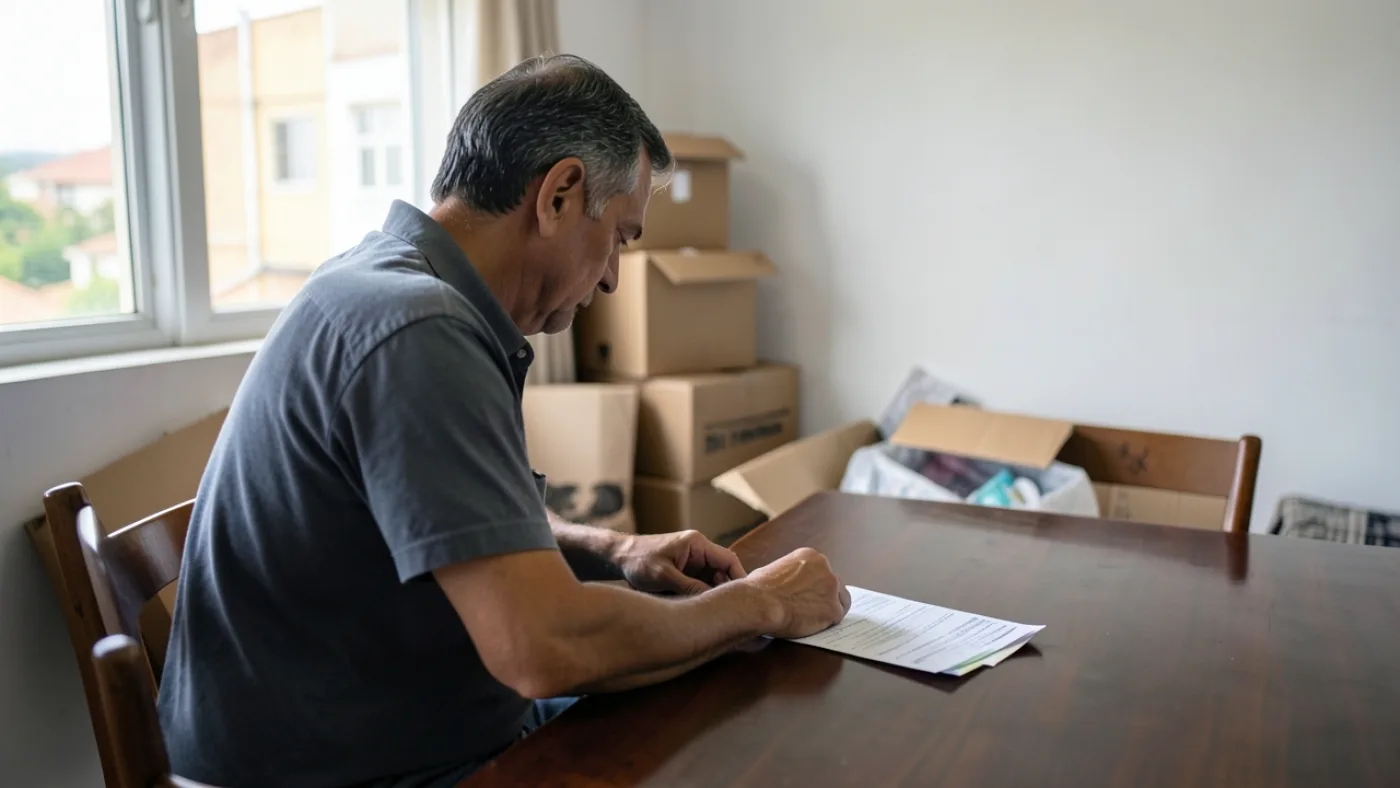

The most expensive mistake foreigners make with Brazilian tax residency is assuming the famous 183-day rule applies to them. It often does not. And that wrong assumption is exactly where Receita Federal (the Brazilian IRS) assessments start.
Here is how it plays out. A Canadian engineer lands in São Paulo in March with a residence authorization tied to a Brazilian employment contract. He keeps receiving dividends and rental income from Toronto. He tells himself he has a six-month grace period, so he declares nothing. Two years later a notice arrives: he was a Brazilian tax resident from the day he stepped off the plane. Every dollar of Canadian income from that date should have been taxed in Brazil.
The bill is not just the tax. Receita Federal applies a 75% penalty on unreported taxable income (raised to 150% in fraud cases), plus SELIC interest running from each original due date. On R$ 300,000 of unreported foreign income taxed at 27.5%, that is roughly R$ 82,500 in tax, R$ 61,875 in penalty and interest on top. A five-figure problem created by one wrong date.
This guide rebuilds the rule from that mistake. You will learn exactly which arrival triggers immediate tax residency, how the 184-day counter really works, where foreigners lose the argument in front of Receita Federal, and how to fix the date before it costs you.
On this page
Why Does the 183-Day Rule Not Apply to Most Expats?
Because the day-count is only one of several triggers. Under Normative Instruction SRF 208/2002, the rule that governs foreigners’ tax residency, a person who arrives in Brazil with an indefinite residence authorization, or with a temporary residence to work under a Brazilian employment contract, becomes a tax resident on the date of arrival. Day one, not day 184.
Brazil, as a civil law country, defines residency by written administrative rule rather than case-by-case judicial tests. Receita Federal reads that rule literally. The 183-day count is the residual trigger, the one that applies only when no other trigger has already fired.
These are the main situations in which a foreigner becomes a Brazilian tax resident:
- Arrival with an indefinite (permanent) residence authorization and CRNM (National Immigration Registration Card): residency starts on the arrival date.
- Arrival with a temporary residence permit to work under a contract with a Brazilian employer: arrival date.
- Arrival with any other temporary status (tourist, digital nomad, student, business visitor, pending investor or family reunion process): residency starts on the day you complete 184 days of presence within a 12-month window.
- Acquiring a residence authorization while already in Brazil: the date the authorization is granted.
- Naturalization as a Brazilian citizen: from naturalization.
- A former resident who returns to Brazil permanently: date of return.
Watch out: the difference between a work permit sponsored by a Brazilian company and a digital nomad permit for a foreign employer is not cosmetic. The first makes you a resident on arrival. The second normally does not, because the employer is abroad. Assessments frequently turn on precisely this distinction.
Once residency starts, Brazil taxes your worldwide income (tributação em bases universais): your salary in London, rent from a Miami condo, dividends from a Portuguese company, interest from a Singapore bank. Non-residents, by contrast, are taxed only on Brazilian-source income, generally by withholding at source.
How Do You Count the 184 Days, and Where Does the Count Break?
You add up every day of physical presence inside a rolling 12-month period, and both your arrival day and your departure day count as full days. Residency begins on the day you complete day 184. If you leave Brazil before reaching 184 days, a new 12-month counting period starts on your next arrival.
Three details decide most disputes.
First, the days do not need to be consecutive. Three separate 70-day stays inside the same 12 months add up to 210 days and make you a resident on the day you pass 183.
Second, residency is not retroactive to your arrival. It begins on the 184th day. Foreign income received before that date generally stays outside Brazilian taxation. This split-year effect is the single most valuable planning tool available to nomads and pre-retirees.
Third, the reset only works if you actually leave before day 184. Leaving on day 190 does not undo anything.
Example: An Irish developer arrives in Florianópolis on 10 February 2026 on a digital nomad residence permit, employed by a Dublin company earning the equivalent of R$ 31,000 per month. She never leaves. Her day 184 falls on 12 August 2026. Income received from February to 11 August is outside Brazilian tax. From 12 August she owes Brazilian tax on it, roughly R$ 7,629 per month under the 27.5% bracket. Getting the date right saved her about R$ 45,700 in that first year.
Key point: keep documentary proof of every entry and exit: boarding passes, passport stamps, airline receipts. If Receita Federal challenges your residency start date and you cannot prove your movements, the burden falls on you, not on the tax authority.
What Do You Actually Owe Once You Become a Resident in 2026?
Resident individuals pay progressive income tax from 0% to 27.5%. Under the monthly table published by Receita Federal, income above R$ 4,664.68 per month falls in the top 27.5% bracket, with a deduction of R$ 896.00 applied to the calculation. Financial investments held abroad follow a separate flat 15% annual regime.
The monthly progressive table used for 2026 calculations is structured as follows, according to Receita Federal:
| Monthly income (R$) | Rate | Deduction (R$) |
|---|---|---|
| Up to 2,259.20 | Exempt | 0.00 |
| 2,259.21 to 2,826.65 | 7.5% | 169.44 |
| 2,826.66 to 3,751.05 | 15% | 381.44 |
| 3,751.06 to 4,664.68 | 22.5% | 662.77 |
| Above 4,664.68 | 27.5% | 896.00 |
Two mechanics matter for foreign income specifically.
How it works: salary, pension, rent and professional fees paid from abroad to a Brazilian resident are taxed monthly through the carnê-leão system. You convert the amount into reais using the Central Bank’s selling rate for the month of receipt, apply the table above, and pay the DARF by the last business day of the following month. Late payment carries 0.33% per day, capped at 20%, plus SELIC interest, per Receita Federal rules.
Financial assets and controlled companies abroad follow Law 14.754/2023, which taxes offshore financial investments and profits of controlled foreign entities at a flat 15% on an annual basis for Brazilian tax residents. If you own a holding company in Delaware, Portugal or the UAE, read our explanation of the Brazilian CFC rules for foreign companies before your first filing.
Everything then converges into the annual DIRPF (individual income tax return), whose filing window normally runs from mid-March to the end of May. Late filing triggers a fine of 1% per month of the tax due, minimum R$ 165.74, capped at 20% of the tax. Our step-by-step walkthrough of how to declare foreign income in Brazil covers the form itself.
What Is Receita Federal’s Strongest Argument Against Your Non-Residency Claim?
Their strongest argument is not the calendar. It is your behavior. Receita Federal will argue that you acted as a resident: you obtained a CRNM, signed a Brazilian lease, enrolled your children in school, moved money through Pix, and filed a DIRPF in an earlier year. Under that reading, your day-count is irrelevant.
Take that argument seriously, because in most audits it is well built. The auditor typically shows a package like this: a residence authorization with an indefinite term, a Brazilian bank account opened with proof of address, monthly Pix inflows funding local living costs, a CPF used to buy a car and property, dependents declared in a previous return, and health insurance contracted in Brazil. Then comes the conclusion: this person did not visit Brazil, this person lived in Brazil, and residency began on arrival.
The answer is precise, not rhetorical. Normative Instruction SRF 208/2002 does not create residency out of lifestyle. It lists closed triggers, and the trigger for a foreigner holding a temporary status without a Brazilian employment contract is the 184-day count. A lease, a CPF and a Pix key are not residency triggers. Brazil’s tax code taxes facts defined by law, and the law defines those facts by immigration category and physical presence.
So where do these claims actually get denied? In three places:
- Wrong immigration category. The taxpayer claims the 184-day rule while holding an indefinite residence authorization. The claim fails on the face of the CRNM.
- No evidence of absences. The taxpayer swears he left Brazil for four months but produces no boarding passes, no stamps, no foreign lease. Federal Police entry records fill the gap against him.
- Contradictory prior filings. The taxpayer filed a DIRPF as a resident for an earlier year, or never filed a tax exit declaration after a previous stay, and now claims non-resident status. Receita Federal treats the earlier filing as an admission.
Watch out: if you were a Brazilian tax resident before and left without filing the exit declaration, Receita Federal still considers you a resident, and your worldwide income kept accruing Brazilian tax. Our guide on the tax exit declaration and its deadlines explains how to close that door properly.
Which Residency Scenario Applies to You?
Compare your immigration status against the start date and the scope of taxation. A digital nomad who leaves Brazil on day 170 pays nothing on foreign income, while a person on the same flight with a Brazilian employment contract owes tax from day one on up to 27.5% of worldwide income.
| Your situation in 2026 | Tax residency starts | What Brazil taxes | Main filing duty |
|---|---|---|---|
| CRNM with indefinite residence (family, retirement, investor approved) | Date of arrival | Worldwide income | Carnê-leão monthly plus annual DIRPF |
| Temporary residence to work for a Brazilian employer | Date of arrival | Worldwide income | Payroll withholding plus annual DIRPF |
| Digital nomad permit, foreign employer, stays 200 days | Day 184 | Worldwide income from day 184 onward | Carnê-leão from that month plus DIRPF |
| Digital nomad or tourist who leaves on day 170 | Does not start | Brazilian-source income only | None on foreign income |
| Non-resident owning a rented apartment in Rio | Does not start | Brazilian rental income | 15% withholding at source via Brazilian representative |
| Foreigner who converts tourist stay into residence permit | Date the permit is granted | Worldwide income from that date | Carnê-leão plus DIRPF |
Note the fourth line. Leaving before day 184 is not a loophole, it is the rule working as written. It is also fragile: one extra week in Brazil, and the whole year’s foreign income enters the Brazilian tax base from the day the counter tips.
What Changed for Tax Residency in Brazil in 2026?
The residency rule itself did not change. Enforcement did. Receita Federal’s 2026 systems cross-reference Pix transaction data, e-Financeira bank reporting and CRS international exchange of financial account information against your declared status, which means an undeclared foreign resident is now identified by data matching rather than by audit luck.
Three practical developments matter for foreigners:
- Lifestyle cross-checking. Instant payment data now feeds tax monitoring. A person spending R$ 20,000 per month through a Brazilian account while declaring no income is a visible inconsistency.
- Automatic exchange of financial data. Brazil receives account balances and income data from partner jurisdictions. Your Swiss or Portuguese account is not invisible.
- The expanded exemption band. The law approved in late 2025 raising the effective exemption ceiling toward R$ 5,000 per month applies to resident individuals and does not change residency triggers. Confirm the current parameters on the Receita Federal portal before calculating.
Key point: the practical consequence of 2026 is timing. Voluntary correction before a notice arrives (denúncia espontânea) lets you pay tax and interest without the 75% penalty. After the notice, that door closes.
How Do You Fix or Set Your Residency Date Step by Step?
Most of this is administrative, no court needed. You need a CPF, a documented immigration status, a defensible residency start date, and monthly carnê-leão payments from that date. Registration with the Federal Police must happen within 90 days of arrival for residence permit holders, per the Brazilian Migration Law.
Step 1: Get your CPF and confirm your immigration category
The CPF (individual taxpayer number) can be requested online through Receita Federal or at a Brazilian consulate abroad. Then read your own residence authorization: is the term definite or indefinite? Is it tied to a Brazilian employment contract? That single line determines your start date. Registration and the CRNM are handled through the Federal Police migration system.
Step 2: Build the presence file
Create a spreadsheet with every entry and exit date, and store the supporting documents: passport pages, boarding passes, foreign leases, foreign utility bills. Ten minutes per trip today replaces months of argument later.
Step 3: Start carnê-leão from the correct month
Use the carnê-leão module inside Receita Federal’s e-CAC system. Convert each foreign receipt at the Central Bank rate, deduct what is allowed, and generate the DARF. Keep proof of foreign tax paid, since it supports your credit claim later.
Step 4: File the DIRPF and report assets abroad
Report foreign bank accounts, real estate, shares and crypto in the assets section, at acquisition cost in reais. Separately, Brazilian residents holding foreign assets above the Central Bank’s reporting threshold must file the CBE declaration with the Banco Central do Brasil.
Step 5: If you invoice through a Brazilian company
Many nomads and consultants eventually open a CNPJ to invoice clients. That requires a registered fiscal address in Brazil, a service Ribeiro Cavalcante provides for foreigners who do not have commercial premises here: see fiscal address in Brazil. Note that a CNPJ does not change your personal residency date.
When Does This Become a Court Case, and What Does It Cost?
Only after the administrative route fails. You have 30 days from receiving an assessment (auto de infração) to file an administrative defense, free of charge, which suspends collection while it is analyzed. Administrative review commonly takes 2-5 years. Judicial challenges add another 3-6 years, with court fees typically around 1% of the disputed amount.
The sequence in practice is: written defense to the local Receita Federal office, then appeal to CARF (the administrative tax appeals council), and only then a lawsuit before the federal courts. Residency cases are strong candidates for administrative victory because they hinge on documents (immigration category, entry records) rather than on interpretation, and administrative judges are used to reading Normative Instruction 208/2002 literally.
Judicial action becomes worthwhile in two situations: when the assessment ignores a double taxation treaty and demands tax already paid abroad, or when the 75% penalty is applied to a taxpayer who filed everything but classified income differently. Brazilian courts, including the Superior Court of Justice, have repeatedly held that penalties require an actual failure to pay or report, not a debatable classification.
Fees for this kind of work usually run as a fixed amount for the administrative defense plus a success fee on the amount cancelled. All lawyers acting for you must be registered with the OAB (Brazilian Bar Association), and you should confirm the registration number before signing.
Where Do Double Taxation Relief Claims Get Denied?
Usually for lack of proof, not lack of right. Brazil allows residents to offset foreign income tax against Brazilian tax on the same income where a treaty exists, or where the other country grants reciprocal treatment. Brazil has treaties with more than 30 countries and recognizes reciprocity with the United States, the United Kingdom and Germany.
The credit is capped: you can offset only up to the Brazilian tax due on that same foreign income. If Portugal taxed your rent at 28% and Brazil would charge 27.5%, the excess 0.5% is not refunded.
Claims collapse when the taxpayer brings a bank statement instead of a tax document. What Receita Federal expects is an official proof of tax paid issued by the foreign tax authority, and when required, translated by a sworn translator and legalized or apostilled. Withholding shown on a payslip is often accepted, a screenshot of a transfer is not. Our comparison of filing routes in the 183-day rule and filing guide shows how the credit is entered in the return.
Quick recap: your residency start date defines what Brazil can tax, your documents define what Brazil actually collects, and your foreign tax receipts define what you get credited. Lose any of the three and the claim is denied.
Which Mistakes Trigger Assessments Most Often?
Five recurring errors account for most cases we see, and four of them relate to dates rather than amounts. Missing the carnê-leão deadline alone adds 0.33% per day plus SELIC interest, capped at 20% of the tax.
- Assuming a 183-day grace period while holding an indefinite residence authorization.
- Paying only once a year and skipping monthly carnê-leão on foreign salary, pension or rent.
- Declaring foreign income but omitting foreign assets, which triggers inconsistency flags against CRS data.
- Returning to Brazil after an earlier stay without ever having filed the exit declaration.
- Converting foreign currency at the wrong rate or the wrong date instead of the Central Bank rate for the month of receipt.
Frequently Asked Questions About Brazilian Tax Residency
Does having a CPF make me a Brazilian tax resident?
No. The CPF is a taxpayer identification number, not a residency status. Non-residents routinely hold a CPF to buy property, open a bank account or receive dividends, and remain taxed only on Brazilian-source income. Tax residency depends on the triggers in Normative Instruction SRF 208/2002: your immigration category and your physical presence. Receita Federal may use CPF activity as circumstantial evidence, but the CPF alone never creates residency.
I hold a digital nomad permit. When exactly do I start paying tax?
On the day you complete 184 days of presence within a 12-month window, provided your employer or clients are abroad and you have no Brazilian employment contract. From that date, your foreign salary becomes subject to Brazilian tax through carnê-leão, at up to 27.5%. Income received before that date generally stays outside Brazilian taxation. Arrival and departure days both count as full days, so keep a precise travel log.
Can I reset the 183-day count by taking a short trip abroad?
Only if you leave before completing 184 days. In that case, a new 12-month counting period starts on your next arrival in Brazil. Short trips taken after you have already crossed the threshold change nothing, because residency has already begun. Also note that leaving for a weekend does not reduce your accumulated days: the counter adds days of presence, it does not subtract days of absence.
My country has no tax treaty with Brazil. Will I be taxed twice?
Not necessarily. Beyond its treaty network, Brazil recognizes reciprocity of treatment, which allows a credit for income tax actually paid in countries that would grant the same relief to Brazilians, including the United States and the United Kingdom. The credit is limited to the Brazilian tax due on the same income, and you must produce official proof of payment from the foreign tax authority, translated when required.
I lived in Brazil for two years and never declared foreign income. What now?
Act before Receita Federal contacts you. Filing late returns and paying the tax plus interest voluntarily avoids the 75% penalty, since spontaneous correction removes the punitive charge. The late filing fine of 1% per month (minimum R$ 165.74, capped at 20% of the tax) still applies, which is far cheaper. Once an assessment notice is issued, the voluntary correction benefit is lost and your only route is defense.
Confirm Your Brazilian Tax Residency Date With a Bilingual Tax Lawyer
Brazilian tax residency turns on one date, and that date is decided by documents you already have: your residence authorization, your passport stamps, your employment contract. Our bilingual team reads those documents, fixes the date, calculates what is genuinely due, and files any correction before Receita Federal reaches you first.
Next step: send us your residence permit, your entry and exit dates for the last 24 months, and a summary of your foreign income sources. We will tell you the exact day your Brazilian tax obligations started and what to file.
Talk to a specialist lawyer now
Talk to a Lawyer on WhatsApp