In 2026, there are three practical paths for a foreigner to legally control rural land in Brazil. You can purchase it directly as an individual, acquire it through a Brazilian company you control, or bypass ownership entirely with a long-term rural lease. Each road has its own legal engine, its own paperwork, and its own price tag. This guide compares them side by side so you can decide with confidence.
On this page
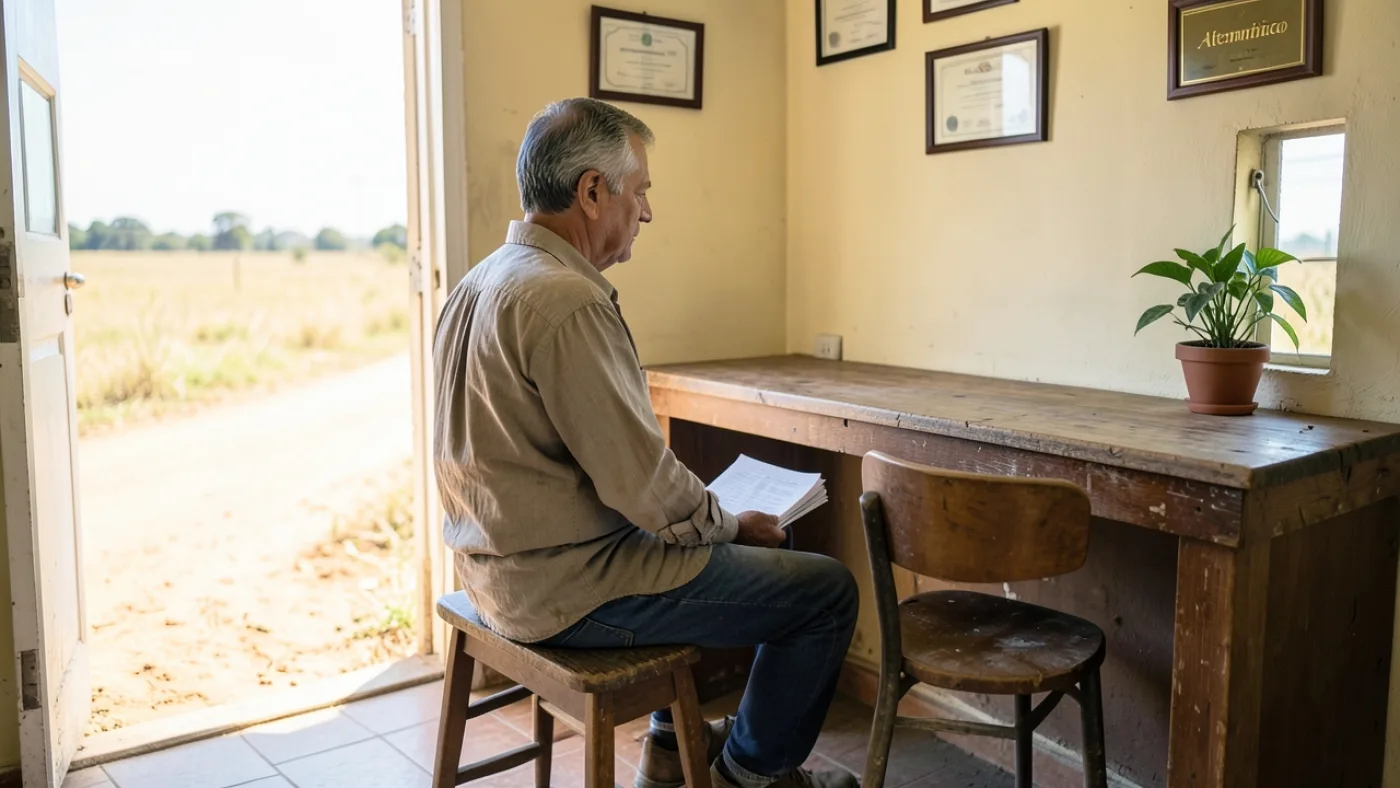
Option A: Direct Purchase as a Foreign Individual
This is the most intuitive route: you, a foreign national, appear as the owner on the deed registered at the cartório de registro de imóveis (land registry office). It is legal, but only if you navigate a specific federal law.
Law 5.709/1971 and its regulations set the ground rules. For individuals, the acquisition is limited by the módulo fiscal (fiscal module) — a variable unit defined by INCRA for each municipality. You may not own, directly or indirectly, an area larger than 50 fiscal modules in sum across all your rural properties in the country. In some regions, that means a maximum of 250 hectares; in others, it could exceed 5,000 hectares. The core restriction is not the absolute size but the connection to the local fiscal module.
You must also respect the 150-kilometer border strip prohibition: non-Brazilians cannot acquire rural land in the border zone without prior authorization from the National Security Council, which is rarely granted for individuals.
How the Individual Purchase Works: Buy rural land in brazil foreigner
First, you must have a CPF (Cadastro de Pessoa Física), Brazil’s individual tax ID. It’s free and can be obtained online through the Receita Federal. With CPF in hand, you’ll need to secure INCRA authorization. The process requires you to submit a formal application with supporting documents: passport, proof of residency or legal stay (CRNM if resident), a sworn statement that the total area you own in the municipality does not exceed 25% of its territory, and a project for the land’s use. INCRA reviews and issues a Certidão de Autorização de Aquisição. Only then can you go to the notary and sign the escritura pública (public deed), which is later registered at the land registry.
Costs beyond the purchase price include ITBI (2–3% of the property’s value), land registration fees (about 1–1.5%), sworn translations of foreign documents (roughly R$ 80–R$ 120 per page), and legal fees. A straightforward individual acquisition with full due diligence and INCRA authorization typically incurs R$ 8,000 to R$ 15,000 in total third-party costs.
Pros and Cons: Buy rural land in brazil foreigner
- Pro: Clear, direct ownership. You are the titled owner, which simplifies inheritance and resale.
- Pro: No need to incorporate or maintain a Brazilian company.
- Con: Strict area limits tied to the fiscal module. You cannot aggregate multiple adjacent plots if it breaches the ceiling.
- Con: INCRA authorization can take 4 to 8 months, and any missing document resets the clock.
- Con: The border strip blockade kills many dream locations.
Option B: Purchase Through a Brazilian Company
Foreign investors often turn to a Brazilian legal entity to hold rural land. The company is incorporated in Brazil, with you as the quota holder or shareholder. However, Brazilian law does not let you simply hide behind a corporate veil. When a company is controlled by foreigners — meaning more than 50% of its capital is held by non-resident individuals or foreign entities — it is treated, for rural land acquisition purposes, exactly like a foreign individual under Law 5.709/71.
This means the same fiscal module limit applies, and INCRA authorization is still required. But the corporate path offers unique operational and tax advantages that often make it the preferred choice for active farming, forestry, or investment operations.
How the Corporate Structure Works
You incorporate a Brazilian limited liability company (sociedade limitada or S.A.). You register the foreign capital at the Banco Central do Brasil via the RDE-IED (Electronic Declaratory Registry of Foreign Direct Investment). The company obtains its own CNPJ, CPF-equivalent for legal entities. Then, the company applies for INCRA authorization to acquire the rural property, presenting its corporate documents, evidence of foreign capital registration, and a detailed project for land use. Once approved, the deed is signed by the company’s legal representative.

Costs are higher. Incorporating a limitada costs around R$ 3,000–R$ 5,000 including legal and registration fees. Annual maintenance (accounting and tax filings) runs at least R$ 6,000–R$ 12,000 per year. The INCRA process itself adds another R$ 5,000–R$ 8,000 in legal and translation costs. Still, for properties worth several hundred thousand reais or more, the corporate route often pays for itself through tax planning.
Pros and Cons
- Pro: Tax flexibility: rural activity carried out by a legal entity can benefit from specific regimes, such as Funrural on gross revenue instead of personal income tax on profit.
- Pro: Easier to structure a multi-investor project. You can sell shares of the company instead of fractioning the property itself.
- Pro: Liability protection: the land is owned by the company, shielding personal assets.
- Con: More bureaucracy: you’ll need a registered accountant, annual corporate filings, and foreign exchange compliance.
- Con: The company must present an exploitation project that proves a social and economic benefit. Speculative land holding is scrutinized and may be rejected.
- Con: If the company is foreign-controlled, the same 50-module rule applies, and you cannot escape the border strip restriction just by using a company.
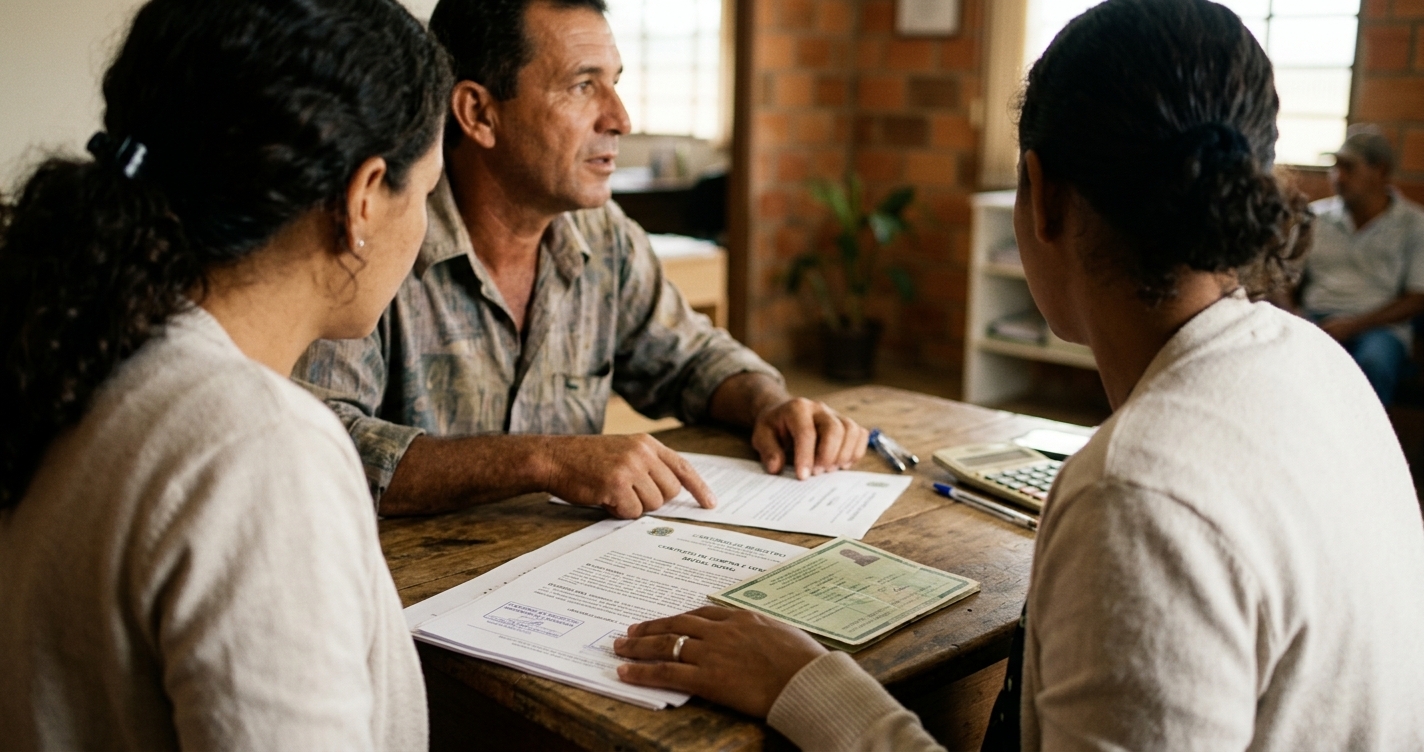
Option C: Long-Term Rural Lease (Arrendamento Rural)
What if you need to plant, graze, or simply enjoy a rural property right away without wading through the months-long INCRA gate? A rural lease contract, known in Brazil as arrendamento rural, can be your legal and practical alternative. You don’t own the land, but you acquire the right to use it — often for periods of 3 to 10 years, renewable.
The law applicable is the Land Tenure Statute (Law 4.504/1964) and its subsequent amendments. A foreigner can enter into a rural lease contract without INCRA authorization, as long as the lease does not lead to foreign control over the area that indirectly surpasses the legal limits. The contract is registered at the land registry to produce effects against third parties, but the registration process is vastly simpler than a purchase deed.
How a Rural Lease Works
You and the Brazilian landowner negotiate a private instrument or public deed specifying the term, rent (which can be in cash or a share of production), and permitted uses. The contract must respect minimum terms for agricultural cycles: for instance, a lease for temporary crops has a minimum of one agricultural year, and for permanent crops, a minimum of three years. You register the contract at the cartório de registro de imóveis. No ITBI is due, only a small registration fee.
Costs are moderate. Legal review of the lease contract runs around R$ 2,500–R$ 4,500. Registration fees are minimal, often under R$ 500. You need a CPF to register the contract in your name. Financial protection: the lease is not a purchase, so you preserve capital and test the land before committing to a purchase later, often with a right of first refusal built into the contract.
Pros and Cons
- Pro: No INCRA authorization, no area limit tied to the fiscal module. You can lease any size, provided the owner can legally lease it.
- Pro: Quick start: you can sign and begin farming in weeks, not months.
- Pro: Foreign capital is not blocked; you pay rent from abroad with proper foreign exchange documentation.
- Con: You do not own the land. At the end of the lease, the owner may not renew, and you lose improvements unless the contract says otherwise.
- Con: Complex tax treatment: if you run a farming business, you may need a CNPJ; otherwise, the rent is subject to withholding income tax.
- Con: Lease contracts over 10 years may be scrutinized as disguised purchases, triggering INCRA review.
Direct Comparison: Individual, Company, or Lease
| Criterion | Option A: Individual Purchase | Option B: Corporate Purchase | Option C: Rural Lease |
|---|---|---|---|
| Legal basis | Law 5.709/71, INCRA Normative | Law 5.709/71 + BCB rules | Law 4.504/64 (Lease Statute) |
| Maximum area | 50 fiscal modules (total owned in your name) | 50 fiscal modules (company’s total rural area) | No fixed ceiling; limited by landowner’s capacity |
| INCRA authorization required? | Yes — mandatory before deed | Yes — mandatory before deed | No |
| Border strip allowed? | Practically impossible for individuals | Same restriction as individuals | Usually possible if landowner is allowed |
| Typical third-party costs (excluding purchase price) | R$ 8,000 – R$ 15,000 | R$ 12,000 – R$ 25,000 + annual maintenance | R$ 3,000 – R$ 6,000 (no large upfront) |
| Time to start using land | 4–8 months | 6–10 months (incorporation + INCRA) | 2–4 weeks |
| Key documents | CPF, passport, CRNM (if resident), sworn translations, INCRA application | CNPJ, corporate acts, foreign capital registration, INCRA project | CPF, lease contract, proof of landowner’s ownership, registration form |
| Tax implications | ITBI (2–3%), personal income tax on rural activity | ITBI (2–3%), corporate tax on profit, possible Funrural | No ITBI; withholding income tax on rent (15% for non-resident) |
| Ownership? Can resell? | Yes, full ownership | Company owns, you own company shares | No ownership; only right to use |
| Liability | Personal liability tied to land | Corporate veil limits personal exposure | Personal liability under contract |
Which Path Should You Choose?
Your personal situation dictates the winner. If you are a digital nomad or retiree looking for a small organic farm to live on and eventually pass to your children, Option A — direct individual purchase — gives you the cleanest title. The fiscal module limit rarely bothers someone buying fewer than 50 hectares. You’ll face the INCRA wait, but once approved, the property is yours with no corporate strings attached.
If you are an active investor planning a scalable agricultural operation with business partners, or you want to compartmentalize risk, Option B — the Brazilian company — is the professional choice. Yes, it costs more to set up and maintain, but the tax architecture and liability shield are real. Make sure you hire a firm that can prepare the INCRA project convincingly; vague “future development” plans get denied.
If you need to test the soil, or the property sits inside the 150 km border strip (a common scenario in the South and Amazon regions), then Option C — the rural lease — is your legal gateway. You can live on the land, cultivate it, and build a relationship with the owner. Many foreigners eventually negotiate a purchase after the lease, but you must structure the lease-to-buy clause carefully so it isn’t treated as an illicit evasion of INCRA rules.
Avoid the all-too-common mistake of mixing paths without advice. Trying to purchase through a “friendly” Brazilian nominee (a laranja) is illegal and can lead to nullification of the sale, as recent court decisions from the Superior Tribunal de Justiça (STJ) have confirmed. Always choose a transparent, documented route.
Frequently Asked Questions
Can I buy rural land in Brazil if I do not have a permanent visa?
Yes. Brazilian law does not require you to be a resident. You can be a tourist or live abroad and still purchase, as long as you have a CPF. However, if you live abroad, all documents must be notarized and apostilled in your home country, then sworn-translated in Brazil. INCRA will still analyze your application based on the same criteria.

How long does INCRA authorization actually take in 2026?
Realistically, 4 to 8 months. The process starts at the local INCRA unit, which checks the area quota and documentation, then moves to the regional superintendence. Any error — an incomplete project description or a missing CPF of a spouse — triggers a suspension that adds months. A well-prepared file delivered by a specialized lawyer can significantly shorten the timeline.
If I buy rural land through a Brazilian company, does the company have to prove it generates jobs?
INCRA requires a projeto de exploração (exploitation project) that demonstrates the land will be put to productive use. Job creation is not a formal quota, but a project that only shows passive holding or speculative intent is likely to be refused. If you present a credible plan for cultivation, livestock, or agroforestry, even small-scale, chances of approval rise dramatically.
Is leasing rural land safe if the owner later wants to sell?
Your lease contract registered at the cartório de registro de imóveis binds the new owner. If the land is sold, the buyer must respect the existing lease until its term expires. So include a clause giving you a right of first refusal or a purchase option. Without that, you are protected for the lease duration but cannot force a sale extension.
Do I always need a lawyer to acquire rural property in Brazil?
While it is not mandatory by law, it is extremely risky to proceed without one. An experienced real estate attorney verifies the property’s chain of title, confirms there are no embargoes or indigenous land overlays, and navigates the INCRA bureaucracy. The cost of a lawyer is a fraction of what you stand to lose if the acquisition is later declared null. As we covered in our Property Due Diligence Brazil 2026 Checklist, skipping legal review is the most common source of catastrophic deals.
Take the Next Step with a Bilingual Legal Team
Brazil’s rural land rules are a maze of fiscal modules, INCRA committees, and registries that can drain your energy and put your investment at risk. But you don’t have to navigate it alone. Our team at Ribeiro Cavalcante Advocacia guides foreigners through individual, corporate, and lease structures every day. We speak your language, understand your goals, and work to make the process predictable. Whether you are ready to buy or just exploring options, a conversation with us costs nothing and can save you years of regret.
Talk to a specialist lawyer now
Talk to a Lawyer on WhatsApp