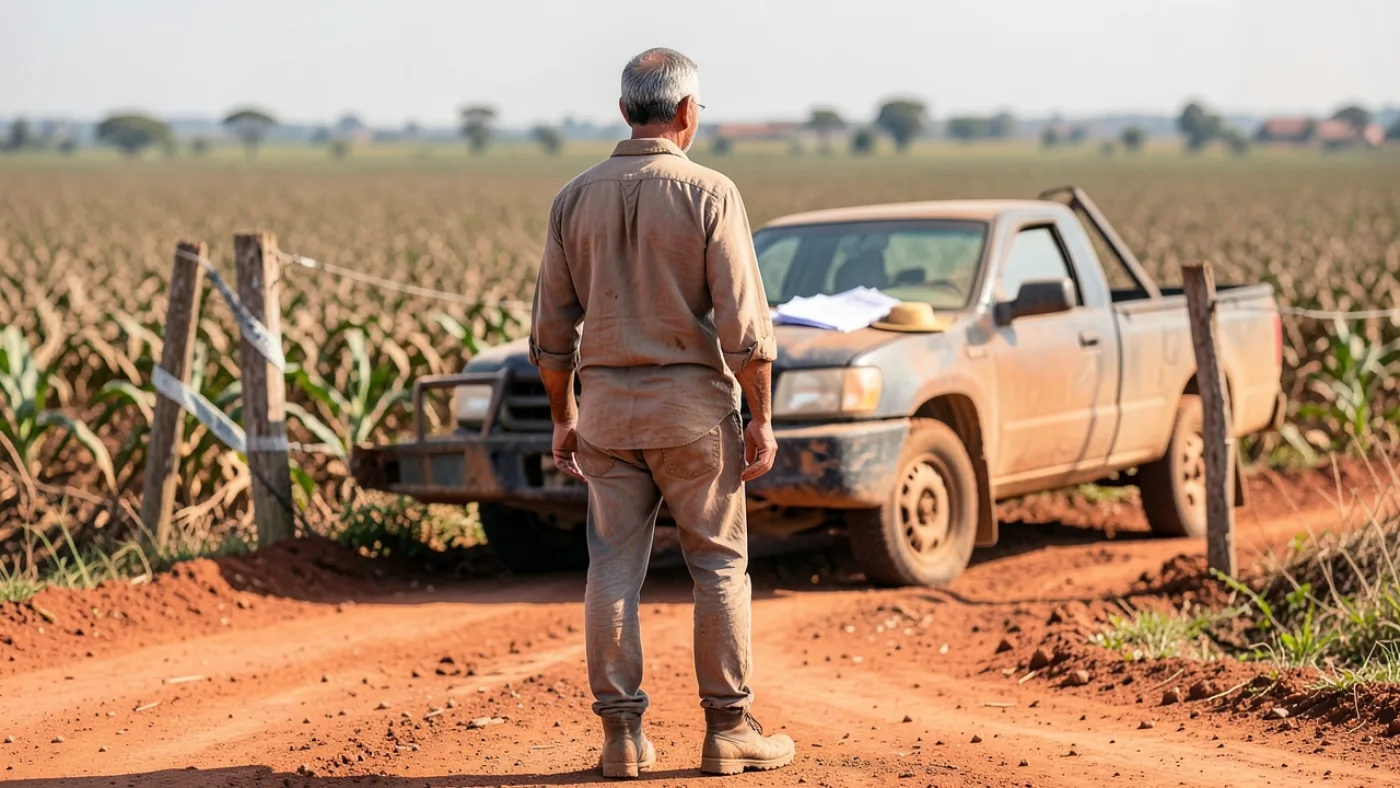

You’ve found the perfect piece of land in Brazil—a farm, a ranch, a slice of paradise for your dream home. But as a foreigner, you’ve heard rumors that buying rural property is forbidden or impossibly complex. This fear stops many international investors in their tracks. The reality is governed by a specific, often misunderstood law: Law 5.709 of 1971. It doesn’t ban you from buying, but it sets clear, non-negotiable restrictions. Navigating these rules alone is a direct path to legal and financial peril. This guide breaks down exactly what Law 5.709/71 means for you in 2026, the concrete steps to compliance, and how to secure your investment with confidence.
On this page
What is Law 5.709/71? The Foundation of Foreign Land Ownership
Enacted in 1971, Law No. 5.709 is the cornerstone legislation regulating the acquisition of rural property by foreigners in Brazil. Its primary goal is to control foreign ownership of agricultural and frontier land for national security and development reasons. A critical misconception is that it’s a blanket prohibition. It is not. Instead, it establishes a system of area limits and mandatory government authorization.
The law applies to two main groups: foreign individuals (like you) and foreign-controlled legal entities. A company is considered foreign-controlled if more than 50% of its capital is held by non-Brazilians residing abroad. The law also covers Brazilian companies where foreign capital holds majority control. The key takeaway is that you cannot simply buy a rural property at a cartório (notary office) like an urban apartment. You must first navigate a federal approval process to ensure your purchase respects the national limits.
Who Can Buy Rural Land in Brazil? The Key Requirements
To even begin the process, you must meet specific prerequisites. Failure to comply with any of these will result in the transaction being blocked at the notary office, potentially causing you to lose your deposit.
- Valid Legal Residency & Tax ID: You must possess a permanent or temporary residency visa registered with the Federal Police, evidenced by your CRNM (National Migration Registration Card). A tourist visa is insufficient. You must also have a Brazilian CPF (Cadastro de Pessoas Físicas) tax number.
- Residency in Brazil: The law explicitly states it applies to foreigners residentes no País (resident in the country). Your primary residence must be in Brazil.
- Purpose Compliance: The land must be used for purposes compliant with its agricultural or forestry zoning. Purely speculative acquisition can be challenged.
- Source of Funds: You must prove the funds for purchase originate from abroad and were brought into Brazil through official banking channels, registered with the Central Bank (Banco Central do Brasil – BACEN).
- INCRA Authorization: Prior approval from the National Institute for Colonization and Agrarian Reform (INCRA) is the central, mandatory step for almost all purchases.
The Core Restrictions: Area Limits and the “Border Strip”
Law 5.709/71 uses a unique measurement system to limit how much land you can own. Understanding this is crucial to evaluating any property.
1. The “Módulo Fiscal” (Fiscal Module) Limit
The law does not use a simple hectare or acre limit. Instead, it ties the restriction to a local unit called the Módulo Fiscal (MF). The size of one MF is defined by INCRA for each municipality based on land type, use, and region. It can range from as little as 5 hectares to over 100 hectares.
- For a Foreign Individual: You may not acquire, directly or indirectly, rural property that exceeds an area equivalent to 50 (fifty) Módulos Fiscais.
- For a Foreign-Controlled Company: The limit is 100 (one hundred) Módulos Fiscais.
Practical Example: If you want to buy land in a municipality where 1 MF = 20 hectares, your individual limit is 50 MF x 20 ha = 1,000 hectares. If the MF there is 80 hectares, your limit jumps to 4,000 hectares. You must verify the MF size for the specific municipality with INCRA or your lawyer before making an offer.
2. The 150-Kilometer “Border Strip” Prohibition
This is an absolute, critical restriction. Article 12 of Law 5.709/71 prohibits foreign individuals or companies from acquiring any interest in rural property located within 150 kilometers of Brazil’s national borders (the faixa de fronteira). This rule is based on national security. Exceptions are extremely rare and require approval from the National Defense Council, a process that is lengthy and granted only in specific strategic investment cases. Do not assume you can get an exception.
The Step-by-Step Process for Approval and Purchase
Buying rural land is a two-track process: securing government authorization, then executing the sale. Doing them in the wrong order is a costly mistake.

Phase 1: The INCRA Authorization Process
This is your first and most important legal hurdle. According to Decree 85.064/1980, authorization is required for any acquisition that brings your total holdings above 3 MF. In practice, legal advisors recommend seeking authorization for any rural purchase to guarantee future title validity.
- Engage a Brazilian Lawyer: This is non-negotiable. Your lawyer will conduct a preliminary title check and gather all necessary documents.
- Prepare the Application: Your lawyer will prepare a formal petition for you, including:
- Your identification (CRNM, CPF, passport).
- Proof of legal residence in Brazil.
- Declaration of all rural property you currently own in Brazil.
- Details of the target property (matrícula number, location, area).
- Certificate from the local land registry confirming the seller’s ownership and that the property’s area is within the legal limit for a foreign buyer.
- Proof of foreign currency entry for the purchase (Central Bank registration).
- Submit via SIGEF: The application is submitted electronically through INCRA’s Sistema de Gestão Fundiária (SIGEF) portal.
- INCRA Analysis: INCRA will verify the property’s area against the local MF, check if it’s in the border strip, and confirm you are within your personal quota. This process can take 30 to 90 days.
- Receive Authorization: If approved, INCRA issues an Authorization Act (Portaria). This document is mandatory for the next phase.
Phase 2: The Property Transaction: Foreigners buying rural land brazil
Only with the INCRA Authorization Act in hand should you proceed to close the deal. This phase involves intense property due diligence in Brazil.
- Final Due Diligence: Your lawyer performs a deep dive on the property title, environmental status, and debts. For rural land, this is more complex than for urban property (see section below).
- Sign the Purchase Agreement (Contrato de Compra e Venda): This legally binds both parties. It must be carefully drafted to include the INCRA authorization as a suspensive condition.
- Pay the Taxes: As the buyer, you pay the Municipal Property Transfer Tax (ITBI), typically 2-3% of the property’s registered value.
- Execute the Deed (Escritura Pública): Both parties sign the final deed at the notary office (cartório de notas). You must present the original INCRA Authorization Act.
- Register the Deed: The signed deed is then registered at the local Real Estate Registry Office (cartório de registro de imóveis). This step, which incurs a fee of ~1-1.5% of the property value, is what formally transfers ownership to you.
What Are the Costs and Fees for Foreign Buyers?
Beyond the property’s price, budget for these mandatory costs (estimates in BRL for 2026, with approximate USD equivalents).
| Fee / Tax | Responsible Party | Estimated Cost (BRL) | Approx. USD/EUR* | Notes |
|---|---|---|---|---|
| Legal & Due Diligence Fees | Buyer (You) | 1% – 3% of property value | Varies | Essential for navigating INCRA and title checks. Higher for complex cases. |
| INCRA Process Admin Costs | Buyer (You) | R$ 2,000 – R$ 5,000 | $400 – $1,000 | No official “fee,” but covers legal prep, documentation, and filings. |
| Municipal Transfer Tax (ITBI) | Buyer (You) | 2% – 3% of property value | Varies | Paid to the city hall where the property is located. |
| Deed Registration Fee | Buyer (You) | ~1% – 1.5% of property value | Varies | Paid to the cartório de registro de imóveis. |
| Notary Deed Fee (Cartório de Notas) | Typically split | R$ 1,500 – R$ 4,000 | $300 – $800 | Fee for drafting and authenticating the public deed. |
| Real Estate Brokerage | Typically Seller | 3% – 6% of sale price | Varies | Commission, usually paid by the seller but can influence price. |
*Conversion based on approximate exchange rate of BRL 5.00 = USD 1.00. Actual rates will vary.
Buying as an Individual vs. Through a Brazilian Company
Many foreigners consider buying through a Brazilian company (LLC – LTDA or Corporation – SA). This has different implications under Law 5.709/71.
Registering the company requires a fiscal address in Brazil, which foreigners can secure without owning physical property.
| Scenario | Legal Treatment Under Law 5.709/71 | Key Implications |
|---|---|---|
| Foreign Individual You buy in your own name. |
Directly subject to the law. Limit: 50 MF. | Simpler structure. Direct liability. Full transparency with authorities. |
| Brazilian Company with Foreign Control You own >50% of a Brazilian company that buys the land. |
Treated as a “foreign entity.” Limit: 100 MF. Requires INCRA authorization. | Higher area limit. Potential liability shielding. Adds corporate compliance (taxes, filings). Still subject to all other restrictions (border strip). |
| Brazilian Company with Foreign Minority Stake You own ≤50% of a Brazilian company that buys the land. |
Not directly subject to Law 5.709/71 for the acquisition.* | May avoid INCRA authorization. Complex shareholder agreements needed. Your control over the asset is diluted. |
*Extreme caution is needed. If authorities determine the structure was created to circumvent the law (fraude à lei), they can nullify the purchase and impose penalties.
What Changed in 2026? Stricter Enforcement and Digital Focus
The core of Law 5.709/71 remains unchanged. However, enforcement priorities and ancillary processes have evolved, making thorough compliance more critical than ever.
- Tighter Environmental Enforcement (CAR): The Cadastro Ambiental Rural (CAR) is a mandatory national registry for all rural properties. In 2026, INCRA and environmental agencies cross-check CAR data rigorously. An incomplete, pending, or irregular CAR will halt your INCRA authorization and transaction. Resolving CAR issues can take months. Your due diligence must now start with a CAR validity check.
- Full Digital Integration via SIGEF: INCRA’s SIGEF system is now the primary and often sole channel for authorization requests. Paper-based submissions are largely obsolete. Your lawyer must be proficient with this platform.
- Clarity on Foreign Investment Streams: While there is political discussion about easing foreign investment in specific sectors like infrastructure, the restrictions of Law 5.709/71 for general rural land acquisition remain fully in effect and are strictly applied. Do not base decisions on speculation about future legal changes.
Rural vs. Urban Property Due Diligence: The Critical Differences
Checking an urban apartment’s title is one thing. Rural land requires a much deeper investigation. Here are the key additional checks your lawyer must perform:
- 1. INCRA’s CCIR Certificate: The Certificado de Cadastro de Imóvel Rural proves the property is properly registered with INCRA and contains its official area measurement, crucial for the MF calculation.
- 2. Environmental Rural Registry (CAR): As noted, verify the CAR is valid, definitive, and consistent with the property’s boundaries and land use. Check for any environmental liabilities or embargoes.
- 3. ITR (Rural Land Tax) Clearance: Obtain certificates from the Receita Federal proving all Rural Land Tax is paid up to date.
- 4. Access Rights & Servitudes: Physically verify legal, deeded access to the property. A landlocked farm is worthless. Check for any rights of way (servidões) for neighbors, utilities, or pipelines.
- 5. Water Rights & Usage Permits: If the property includes water sources (rivers, springs, wells), verify the necessary water usage permits from the state environmental agency.
Your Realistic Due Diligence and Purchase Timeline
Set realistic expectations. Brazilian bureaucracy, especially involving federal agencies like INCRA, takes time. Rushing leads to errors.
| Phase | Activity | Realistic Timeframe |
|---|---|---|
| Pre-Offer | Initial legal consultation, preliminary title and CAR check. | 1-2 weeks |
| INCRA Authorization | Document preparation, submission via SIGEF, agency analysis. | 45 – 120 days |
| Final Due Diligence | Deep-dive title search, environmental checks, tax clearances. | 2-4 weeks (can run parallel to INCRA) |
| Closing & Registration | Signing deed, paying taxes, registering title. | 2-3 weeks |
| TOTAL ESTIMATE | From offer to registered ownership | 4 to 7 months |
Frequently Asked Questions (FAQ)
Can I just form a Brazilian company to bypass the restrictions?
No. Law 5.709/71 explicitly covers Brazilian companies controlled by foreigners. If you own more than 50% of the company’s capital, it is treated as a foreign entity and subject to the 100-MF limit and INCRA authorization. Structuring with minority ownership is legally complex and risks being declared a “fraud on the law,” leading to nullification.

What happens if I buy without INCRA authorization?
The notary office (cartório) is legally prohibited from registering the deed in your name without the INCRA Authorization Act. If a mistake occurs and it is registered, the transaction is voidable. INCRA or the Public Prosecutor’s Office can file a lawsuit to annul the sale. You could lose the property and your investment, with no recourse against the seller.
Is financing (a mortgage) available for foreigners buying rural land?
It is extremely rare. Most Brazilian banks are reluctant to offer rural mortgages to foreigners due to the legal complexity and potential difficulty in enforcing foreclosure under Law 5.709/71. Purchase is typically done with cash or international financing. For more on this, see our guide on mortgages in Brazil for foreigners.
Can I inherit rural land from a Brazilian relative?
Yes, inheritance is a permitted form of acquisition under the law. However, as a foreign heir, you must still regularize the situation with INCRA after probate. If the inherited area exceeds your 50-MF limit, you will have a grace period (typically 3 years) to sell the excess portion to a Brazilian national or a qualified entity.
Are there any exceptions to the 150-km border strip rule?
Exceptions are exceedingly rare and granted only by the National Defense Council for projects deemed of national interest (e.g., major infrastructure, strategic energy). They are not granted for individual residential or agricultural purposes. You should operate under the assumption that buying land in the border strip is impossible.
Secure Your Brazilian Land Investment with Expert Guidance
Navigating Law 5.709/71 is a precise legal exercise where a single miscalculation in the Módulo Fiscal or an oversight in the CAR registry can collapse your entire investment months into the process. The Brazilian notary system acts as a final gatekeeper—without perfect documentation, your deed will not be registered, and you will not become the owner. This is not a process for generalists or non-legal advisors.
Our bilingual legal team specializes in guiding international clients through the intricacies of Brazilian agrarian law. We handle the full spectrum: from the initial feasibility analysis and INCRA authorization via SIGEF to the comprehensive due diligence and final deed registration. We ensure your dream of owning land in Brazil is built on a foundation of absolute legal security.
Talk to a specialist lawyer now
Talk to a Lawyer on WhatsApp