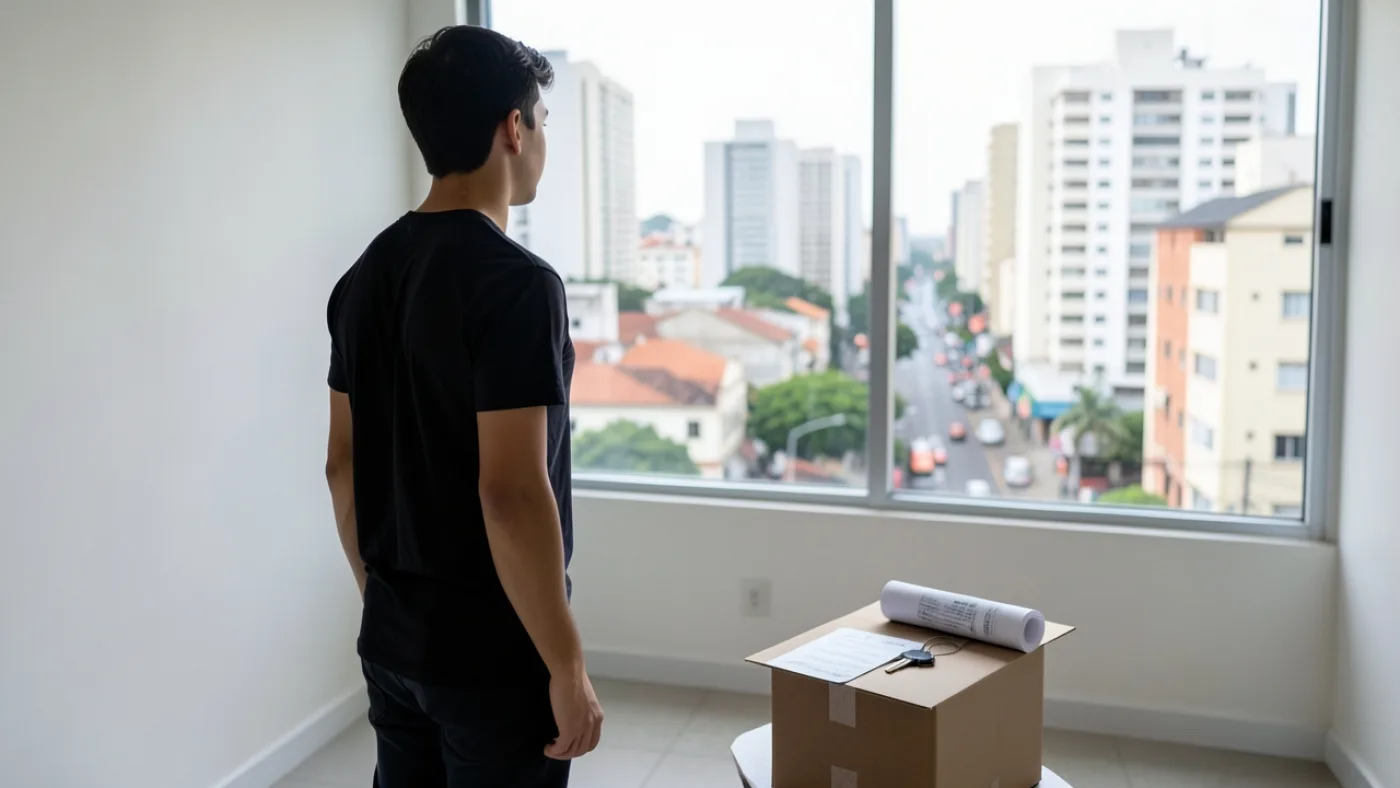

You’ve found the perfect apartment in São Paulo or Rio de Janeiro. The landlord loves your application. Then comes the dreaded question: “Who will be your fiador?” If you’re a foreigner in Brazil without a property-owning Brazilian friend or family member willing to guarantee your rent, this moment can feel like hitting a brick wall. The traditional fiador (guarantor) system—where a Brazilian citizen with real estate assets personally backs your lease—dominates the rental market. But you have alternatives. This article explains the three main options foreigners actually use in 2026: security deposit (caução), rental insurance (seguro fiança), and surety bonds (título de capitalização). We’ll break down real costs, acceptance rates among landlords, and which option fits your situation—whether you’re a digital nomad staying six months or an executive relocating long-term.
On this page
What Changed in Brazil’s Rental Law in 2026?
Brazil’s Lei do Inquilinato (Tenancy Law 8.245/1991) governs residential leases nationwide. While the core law remains stable, 2026 brought regulatory clarifications from the Superior Court of Justice (STJ) regarding deposit limits and insurance coverage disputes. The most significant practical change: increased acceptance of rental insurance by landlords, driven by insurance companies expanding their coverage for foreigners with valid work visas or investor residency.
The law still caps security deposits at three months’ rent maximum (Article 37). Any landlord demanding more violates federal law. Courts consistently rule such excess deposits unenforceable. The law also requires deposits to be held in interest-bearing savings accounts (poupança) in the tenant’s name—though enforcement of this rule varies in practice.
Recent STJ decisions (REsp 1.202.077/SP) confirmed that landlords cannot require multiple simultaneous guarantees unless explicitly agreed in writing. You cannot be forced to provide both a fiador AND a three-month deposit, for example. However, landlords retain full discretion to reject your application if you cannot provide their preferred guarantee type. This creates the practical challenge foreigners face: many landlords simply won’t consider alternatives to the traditional fiador.
For official legal text, see Lei do Inquilinato on planalto.gov.br (Portuguese).
How Does the Security Deposit (Caução em Dinheiro) Work for Foreigners?
The caução is the most straightforward option: you pay three months’ rent upfront as a cash deposit. This money sits in a bank account throughout your lease and is returned when you move out, minus any deductions for damages or unpaid bills. Unlike the fiador system, the caução requires no third-party involvement and no credit checks beyond basic identity verification.
Real Costs and Requirements: Rent apartment brazil without guarantor
For a typical São Paulo apartment renting at R$ 3,500/month, you’ll need R$ 10,500 as deposit plus R$ 3,500 for the first month’s rent—totaling R$ 14,000 upfront (approximately US$ 2,400 or €2,250 at April 2026 exchange rates). Add another R$ 800-1,200 for condominium fees (condomínio) and utilities setup, and your move-in cost reaches R$ 15,000-16,000.
The deposit must legally be placed in a savings account earning Brazil’s standard poupança interest rate (currently around 6.17% annually in 2026). This interest belongs to you, not the landlord. However, many landlords informally hold deposits in regular checking accounts—technically illegal but rarely challenged. If you want to enforce the savings account rule, include explicit language in your lease contract specifying the account type and requiring quarterly interest statements.
When your lease ends, the landlord has 30 days to return the deposit after a property inspection. Deductions are allowed only for documented damages beyond normal wear-and-tear or unpaid utility bills. If the landlord refuses to return your deposit without valid cause, you can file a small claims case (Juizado Especial Cível) for amounts up to 60 minimum wages (approximately R$ 84,720 in 2026). These cases typically resolve within 3-6 months.
Advantages for Foreigners: Rent apartment brazil without guarantor
- No credit history required in Brazil
- No need to find a Brazilian guarantor
- Accepted by approximately 70% of landlords (higher than insurance)
- Full refund if you maintain the property well
- Transparent process with clear legal limits
Disadvantages and Risks
- Large upfront cash requirement (often US$ 2,000-4,000)
- Money locked for entire lease duration (12-30 months typically)
- Landlord disputes over “damages” can delay refunds
- No coverage if you lose income and cannot pay rent mid-lease
- Currency risk if you’re transferring USD/EUR to BRL for the deposit
The caução works best for foreigners with stable income who can afford the upfront cost and plan to stay the full lease term. It’s less suitable if you need flexibility to leave early or cannot tie up significant cash.
What Is Rental Insurance (Seguro Fiança) and How Much Does It Cost?
Seguro fiança is a rental insurance policy where an insurance company guarantees your rent payments to the landlord. Instead of a large deposit or personal guarantor, you pay an annual premium—typically 1.5% to 3% of the total annual rent value. The insurance company covers unpaid rent, property damage, and legal costs if you default.
Cost Calculation for 2026
Let’s calculate real numbers for a R$ 4,000/month apartment in Rio de Janeiro:
- Annual rent value: R$ 4,000 × 12 = R$ 48,000
- Insurance premium at 2.3% (average rate): R$ 1,104/year
- Monthly cost: R$ 92 added to your rent (approximately US$ 16 or €15/month)
- Total first-year cost: R$ 1,104 + R$ 4,000 (first month) = R$ 5,104 upfront
Compare this to the caução option for the same apartment: R$ 12,000 deposit + R$ 4,000 first month = R$ 16,000 upfront. The insurance saves you R$ 10,896 in immediate cash outlay, though the premium is non-refundable.
Major insurance providers for foreigners in 2026 include Porto Seguro (1.8-2.8% rates), Liberty Seguros (2.0-3.0%), and Tokio Marine (1.5-2.5%). Digital platforms like QuintoAndar and Loft offer integrated insurance at 1.8-2.3%, often with faster approval for foreigners because they use alternative credit scoring models.
What the Insurance Covers
- Unpaid rent: up to 30 months of missed payments
- Property damage: typically up to 3 months’ rent value in repairs
- Unpaid utilities: water, electricity, gas, condominium fees
- Legal costs: lawyer fees and court costs for eviction proceedings
- Painting and minor repairs: coverage varies by policy (read the apólice carefully)
What is NOT covered: intentional damage, illegal activities, unauthorized subletting, and damage from pets (unless you pay an additional pet premium of 10-20%).
Requirements for Foreigners to Qualify
Insurance companies evaluate foreigners more strictly than Brazilians. You’ll need:

- Valid CPF (tax ID number)
- CRNM (National Immigration Registration Card) or RNE (older residency card)
- Proof of income: gross monthly income at least 3× the rent (some require 3.5×)
- Employment contract or business registration (if self-employed)
- Bank statements: last 3 months showing regular deposits
- Clean credit history: no entries in Serasa or SPC credit bureaus (defaulters list)
The biggest obstacle for foreigners: insufficient Brazilian credit history. If you arrived recently, you likely have no credit file in Brazil’s Serasa system. Some insurers automatically reject applications with “insufficient data.” Others charge higher premiums (3.5-4.5%) for new arrivals. QuintoAndar and similar platforms are more flexible, accepting foreign bank statements and employment letters with apostille certification.
Processing time: 3-7 business days after document submission. Rejection rate for foreigners: approximately 35-45%, compared to 15-20% for Brazilian citizens.
When Insurance Makes Sense
Rental insurance works best if you have stable documented income, have been in Brazil at least 6 months (to build some credit history), and want to preserve cash for other expenses. It’s particularly attractive for corporate relocations where your employer covers the premium. The monthly cost is tax-deductible as a rental expense if you’re self-employed or own a Brazilian company.
However, if you’re a digital nomad with irregular income patterns or paid in cryptocurrency, insurance approval becomes difficult. In that case, the cash deposit remains your most reliable option.
Surety Bonds (Título de Capitalização): The Least Common Option
The título de capitalização is a hybrid financial product: part insurance, part savings bond. You pay 4-7% of the annual rent value upfront to a financial institution (usually Caixa Econômica Federal or Bradesco). This money is held as a guarantee for the landlord. At the end of your lease, you receive approximately 80-85% back, minus administrative fees. The remaining 15-20% covers the insurance component and the institution’s profit.
For that same R$ 4,000/month apartment, a surety bond at 5% costs R$ 2,400 upfront (5% of R$ 48,000 annual rent). You’d receive roughly R$ 2,040 back after a 12-month lease, meaning your net cost is R$ 360—comparable to insurance but with more cash locked upfront.
Acceptance rate among landlords: only 15-20% accept surety bonds. Most prefer the caução or insurance because bonds involve more paperwork and longer payout times if you default. Banks typically require 10-15 business days to issue the bond, compared to immediate deposit or 3-7 days for insurance.
For foreigners, surety bonds offer no significant advantage over insurance or deposits. The partial refund doesn’t compensate for the complexity and limited landlord acceptance. This option is primarily used by Brazilians with poor credit who cannot qualify for insurance but have some savings for the upfront payment.
Can I Use a Professional Fiador Service?
Yes, “professional fiador” companies exist in major cities, charging approximately one month’s rent as a fee to provide a guarantor. However, these services operate in a legal gray area. The fiador must be a real person with verified property ownership—not a corporation. Many professional fiador services use straw men (laranjas) who nominally own properties but have no real liability. If you default, landlords often discover the “guarantor” is judgment-proof or the property is encumbered with debts.
Brazilian courts have invalidated professional fiador arrangements in multiple cases (TJSP Apelação 1023456-78.2023.8.26.0100), ruling them fraudulent when the guarantor lacks genuine financial capacity. Using such services puts you at risk: the landlord can terminate your lease immediately if they discover the fiador is fake, and you lose any deposits or advance rent paid.
Our firm strongly advises against professional fiador services. The cash deposit or legitimate insurance are far safer legally.
Comparison Table: Which Guarantee Option Should You Choose?
| Guarantee Type | Upfront Cost (R$ 4k/month rent) | Refundable? | Landlord Acceptance | Best For |
|---|---|---|---|---|
| Cash Deposit (Caução) | R$ 12,000 (3 months) | Yes, 100% minus damages | 70% of landlords | Foreigners with savings, no credit history |
| Rental Insurance (Seguro Fiança) | R$ 1,104/year (2.3%) | No | 60% of landlords | Stable income, 6+ months in Brazil |
| Surety Bond (Título de Capitalização) | R$ 2,400 (5%) | Partial (80-85%) | 15-20% of landlords | Limited use cases |
| Traditional Fiador | R$ 0 (if you have one) | N/A | 95% of landlords | Brazilians with family/friends |
Step-by-Step: How to Apply for Rental Insurance as a Foreigner
If you decide rental insurance is your best option, follow this process:
- Find an apartment: Use platforms like QuintoAndar, Loft, or VivaReal that integrate insurance options. Traditional real estate agents (imobiliárias) can also arrange insurance, but charge 10-15% commission on annual rent.
- Gather documents: Before viewing properties, prepare: CPF, CRNM/RNE, passport, proof of address in Brazil (utility bill or bank statement), last 3 months’ bank statements showing income, employment contract or business registration (CNPJ), and tax returns if self-employed.
- Submit insurance application: Most insurers have online portals. Porto Seguro: portoseguro.com.br. QuintoAndar: integrated in their app. Upload documents and answer questions about income source and residency status.
- Credit check: The insurer queries Serasa and SPC bureaus. If you’re new to Brazil with no credit file, they’ll request additional documentation—often a reference letter from your employer or a foreign credit report with apostille certification.
- Approval or rejection: 3-7 business days. If approved, you receive the apólice (insurance policy) via email. If rejected, the insurer must state the reason—usually “insufficient income documentation” or “insufficient time in Brazil.”
- Pay premium: Annual premium can be paid in full or split into monthly installments (usually 10-12 payments). Some insurers charge 5-8% more for installment plans.
- Sign lease: The insurance policy number must be included in your rental contract. The landlord receives a copy of the apólice as proof of coverage.
If your application is rejected, immediately pivot to the cash deposit option. Don’t waste time reapplying with multiple insurers—they share rejection data, and multiple applications can flag you as high-risk.
What Documents Do Foreigners Need to Rent in Brazil?
Regardless of which guarantee type you choose, landlords require these baseline documents:
Mandatory for All Foreigners
- Passport (original + notarized copy)
- CPF (Cadastro de Pessoas Físicas) – Brazil’s tax ID number
- CRNM or RNE (residency card) – temporary or permanent
- Proof of income: last 3 months’ bank statements or employment contract
- Proof of address in Brazil: utility bill, hotel invoice, or temporary accommodation contract
Additional for Employed Foreigners
- Employment contract (contrato de trabalho) with Brazilian company
- Last 3 payslips (holerites)
- Reference letter from employer
Additional for Self-Employed/Investors
- CNPJ (business registration number) if you own a Brazilian company
- Last 2 years’ tax returns (Declaração de Imposto de Renda)
- Bank statements showing regular business income
- Accountant letter (declaração contábil) confirming income
All foreign documents must have apostille certification under the Hague Convention if issued outside Brazil. Some landlords also require documents translated by a sworn translator (tradutor juramentado), though this is becoming less common in major cities where real estate agents handle foreign clients regularly.
How Long Does the Rental Process Take for Foreigners?
Expect 2-4 weeks from viewing to signing the lease:
- Property viewing and selection: 1-7 days (depends on market competition)
- Document submission: 1-2 days (gather and upload)
- Guarantee approval (insurance or deposit verification): 3-10 days
- Lease drafting and negotiation: 2-5 days
- Contract signing at cartório (notary office): 1 day
In hot markets like São Paulo’s Jardins or Rio’s Leblon, desirable apartments rent within 48-72 hours. Landlords favor Brazilian applicants with traditional fiadores because approval is faster. As a foreigner, you’re competing at a disadvantage. To improve your chances, have all documents ready before viewing properties, and consider offering 2-3 months’ rent upfront even if using insurance—this demonstrates financial stability and seriousness.
Brazilian rental contracts typically run 30 months for residential leases. Shorter-term furnished rentals (6-12 months) are more common for foreigners but cost 20-40% more per month. If you need flexibility, negotiate an early termination clause (cláusula de rescisão antecipada) allowing you to exit with 60-90 days’ notice and a penalty of 1-2 months’ rent.
What Happens If You Cannot Pay Rent?
Brazilian tenancy law protects landlords aggressively. If you miss one month’s rent, the landlord can issue a formal notice (notificação extrajudicial) demanding payment within 3 days. After 15 days of non-payment, they can file for eviction (ação de despejo) in court.

Eviction proceedings in Brazil are relatively fast compared to other legal processes: 60-120 days from filing to forced removal. However, you can delay by depositing the owed amount plus court costs (depósito judicial) before the hearing. This suspends the eviction but doesn’t erase your debt.
If you used rental insurance, the insurance company pays the landlord and then pursues you for reimbursement. Your name goes into Serasa/SPC credit bureaus, blocking future rentals, loans, and credit cards in Brazil. If you used a cash deposit, the landlord deducts owed rent but can still sue for any excess debt plus damages.
If you used a fiador, the guarantor becomes immediately liable. The landlord can seize the guarantor’s property to cover your debt. This is why finding a fiador as a foreigner is nearly impossible—Brazilians understand the enormous personal risk.
Prevention: If you face temporary income loss, communicate immediately with your landlord. Many will negotiate a payment plan or temporary rent reduction rather than pursue eviction, which costs them legal fees and lost rent during vacancy. Brazilian landlords are pragmatic—they prefer a paying tenant to an empty property.
Can Foreigners Rent Property Without a CRNM?
Technically, yes—but practically, very difficult. Most landlords require a CRNM (or older RNE card) as proof of legal residency. Tourists on 90-day visa waivers face near-universal rejection for traditional leases. Your options without a CRNM:
- Short-term furnished rentals: Airbnb, Booking.com, or local platforms like Temporada Livre. These accept passport-only but charge 30-50% premiums and have 30-day minimum stays typically.
- Hotel apartments: Extended-stay hotels (apart-hotéis) like Adagio or Blue Tree cater to foreigners, costing R$ 4,000-8,000/month for studio apartments in São Paulo/Rio.
- Sublets from other foreigners: Expat Facebook groups often have foreigners subletting apartments. This is legally risky—the original tenant remains liable, and landlords can terminate if they discover unauthorized occupants.
- Co-living spaces: Companies like Outsite or Selina offer flexible month-to-month rentals with no residency requirements, at R$ 3,500-6,000/month including utilities and internet.
If you’re waiting for your CRNM to be issued (which takes 30-90 days after approval), some landlords accept the protocol number (número de protocolo) from the Federal Police as temporary proof. However, you’ll likely need to provide the physical CRNM card before moving in.
For CRNM application guidance, see the Federal Police portal at gov.br/pf/imigracao (Portuguese with some English sections).
Regional Differences: São Paulo vs. Rio vs. Smaller Cities
Rental market practices vary significantly by region. São Paulo has the most developed rental insurance market—approximately 40% of new leases use insurance rather than traditional fiadores. Rio de Janeiro lags at 25-30%, with stronger preference for cash deposits. In smaller cities like Florianópolis, Curitiba, or Belo Horizonte, the fiador system dominates (70-80% of leases), making life harder for foreigners.
Rental prices in 2026 (1-bedroom apartment in good neighborhood):
- São Paulo (Pinheiros, Vila Madalena): R$ 3,500-5,500/month
- Rio de Janeiro (Ipanema, Botafogo): R$ 3,000-5,000/month
- Florianópolis (Centro, Lagoa): R$ 2,500-4,000/month
- Brasília (Asa Sul, Lago Sul): R$ 2,800-4,500/month
- Curitiba (Batel, Água Verde): R$ 2,200-3,500/month
Condominium fees (condomínio) add R$ 500-1,500/month depending on building amenities. IPTU (property tax) is usually the landlord’s responsibility but verify in your contract—some landlords illegally pass this cost to tenants.
In São Paulo and Rio, use digital platforms like QuintoAndar or Loft for easier foreigner-friendly processes. In smaller cities, you’ll need a local real estate agent (corretor) who can vouch for you to landlords—expect to pay 10-15% of annual rent as commission.
Frequently Asked Questions About Renting in Brazil as a Foreigner
Can I negotiate the rent amount in Brazil?
Yes, especially in slower markets or for longer leases. Landlords typically list properties 10-15% above their minimum acceptable price. If a property has been vacant for 30+ days, offer 5-10% below asking price. Highlight your stability: long-term employment contract, willingness to pay several months upfront, or offering a longer lease term (36 months instead of 30). Negotiation is normal in Brazil—landlords expect it. However, in hot markets like São Paulo’s Vila Madalena, expect little flexibility. Properties there rent at asking price within days.
What is “condomínio” and why is it so expensive?
Condomínio is the monthly fee for building maintenance and shared services: doorman (porteiro), cleaning, elevator maintenance, pool, gym, and administrative costs. In luxury buildings with extensive amenities, condomínio can equal or exceed the rent itself—R$ 2,000-3,000/month is common in upscale São Paulo buildings. Always ask for the condomínio amount before viewing a property. This fee is separate from rent and typically non-negotiable. Budget your total housing cost as rent + condomínio + utilities (água, luz, gás, internet), which often adds 40-60% to the base rent.
Do I need a Brazilian bank account to rent property?
Not legally required, but practically essential. Landlords expect rent paid via bank transfer (TED/PIX) from a Brazilian account. International wire transfers are too slow and expensive for monthly rent. Most banks require a CRNM to open an account, though some digital banks like C6 Bank or Nubank accept temporary visas. Open a bank account immediately after receiving your CRNM. Bring your passport, CRNM, CPF, and proof of address. Account opening takes 1-3 business days. For step-by-step guidance on Brazilian banking for foreigners, consult an immigration lawyer familiar with financial institution requirements.
Can I break my lease early if I need to leave Brazil?
Only if your contract includes a rescisão antecipada clause. Standard 30-month leases prohibit early termination—you’re liable for all remaining rent if you leave. However, you can negotiate a clause allowing exit after 12 months with 60-90 days’ notice and a penalty of 1-3 months’ rent. If your contract lacks this clause and you must leave, you have two options: find a replacement tenant acceptable to the landlord (they can refuse without reason), or negotiate a buyout—typically 3-6 months’ rent to release you from the contract. Never simply abandon the property—your deposit will be forfeited, and you’ll face debt collection and credit bureau reporting.
What happens to my deposit if the landlord sells the property?
Your lease remains valid—the new owner inherits all obligations, including returning your deposit. Brazilian law protects tenants strongly in this scenario. The sale does not give the landlord grounds to terminate your lease early. If the new owner wants you to leave, they must negotiate a buyout or wait until your lease expires. Your deposit legally transfers to the new owner, who must return it at lease end. However, disputes can arise if the previous owner already spent the deposit. To protect yourself, verify at contract signing that your deposit is in a savings account (poupança) in your name—this makes it legally untouchable by landlords.
Get Expert Legal Help for Renting Property in Brazil
Navigating Brazil’s rental market as a foreigner involves complex decisions about guarantees, contract terms, and legal protections. A poorly negotiated lease can cost you thousands of reais in lost deposits or leave you trapped in an unfavorable agreement. Ribeiro Cavalcante Advocacia specializes in real estate law for international clients. Our bilingual legal team reviews rental contracts, negotiates with landlords on your behalf, and ensures your rights are protected under Brazilian law. Whether you’re an executive relocating to São Paulo, a digital nomad settling in Florianópolis, or an investor managing Brazilian properties remotely, we provide clear guidance in English through every step of the rental process.
Talk to a specialist lawyer now
Talk to a Lawyer on WhatsApp