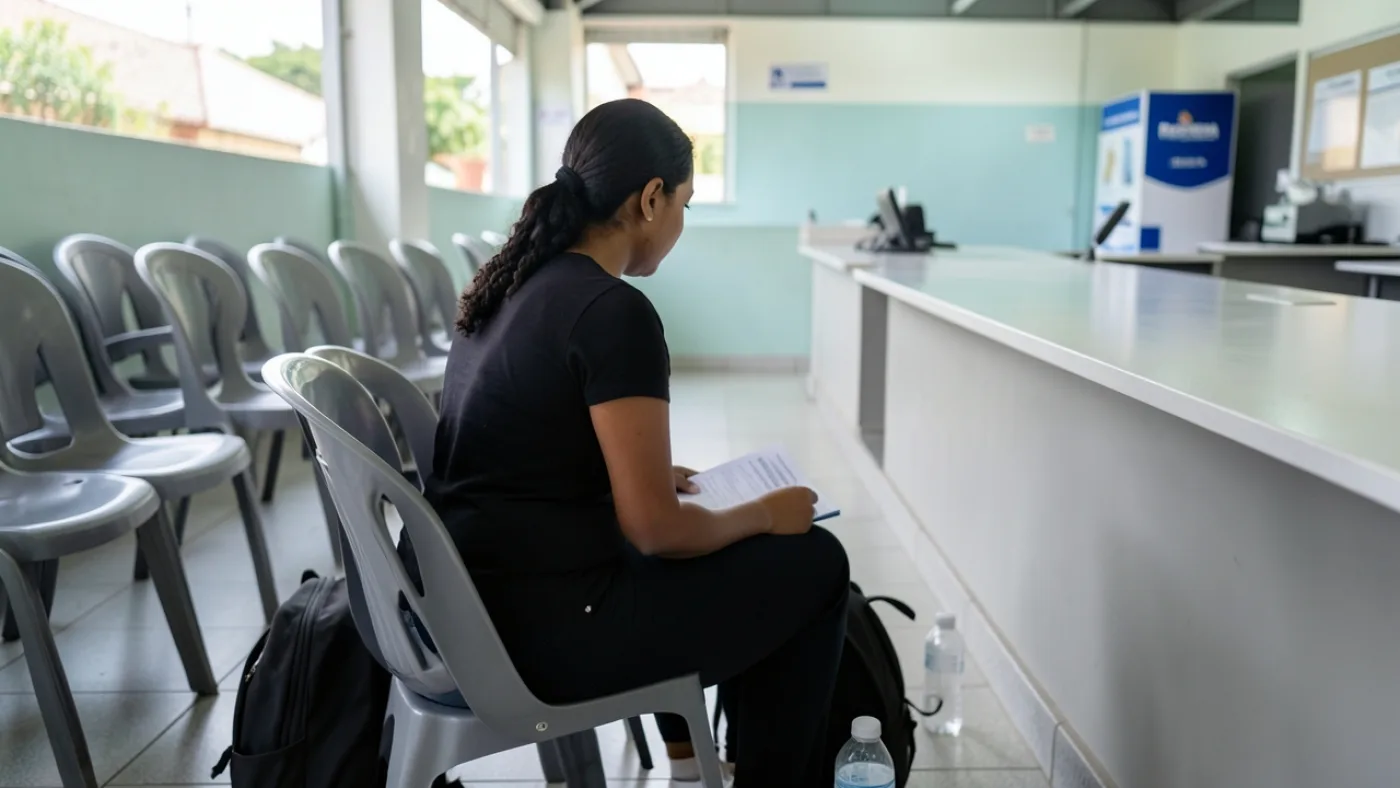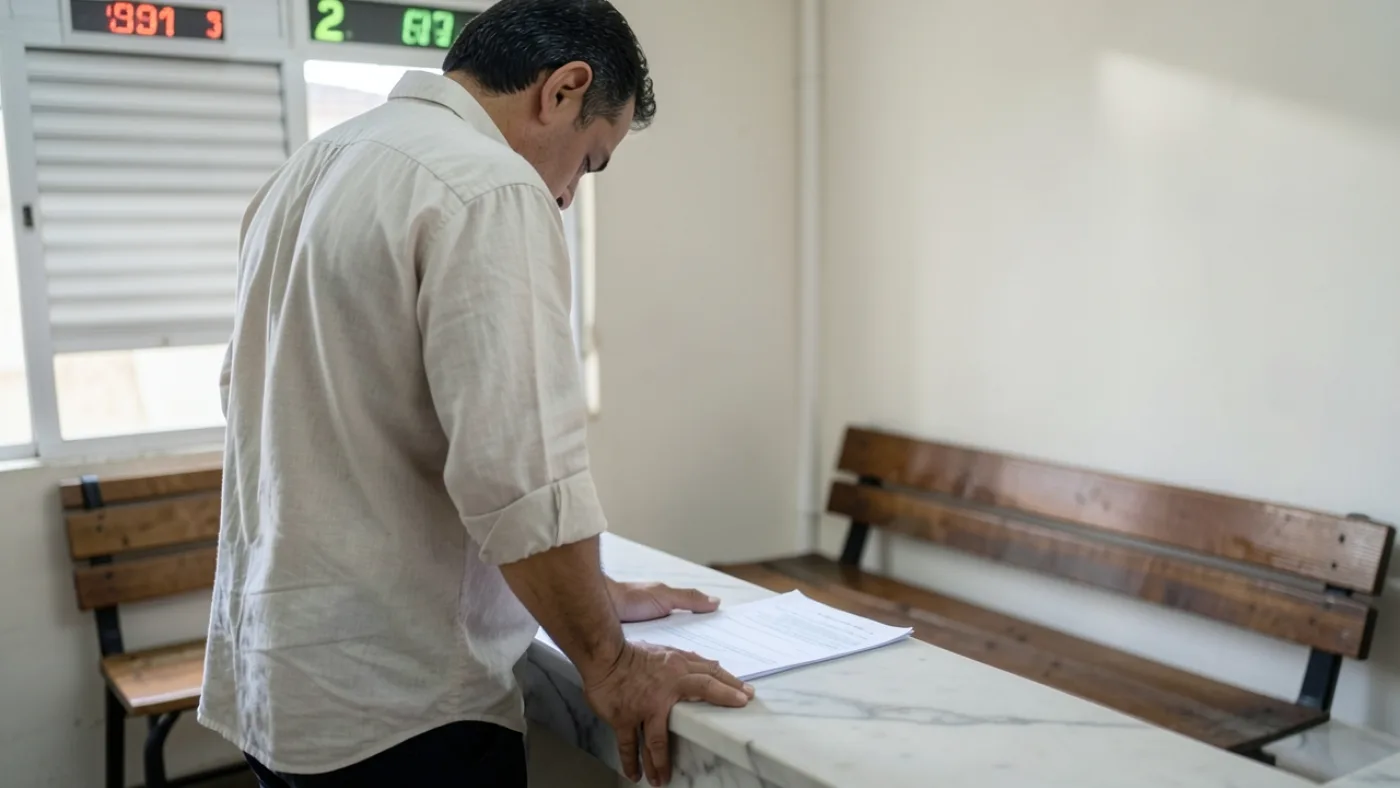

In this guide, we lay out all three options side by side. You’ll find real costs (we show them in both reais and dollars), the documents each method requires, and the truth about how long things actually take — including the bureaucratic delays that no official website will mention. By the end, you’ll know exactly which route fits your situation, whether you’re still in your home country, already in Brazil, or trying to get the CPF before your plane takes off. If you’re still unsure why the CPF is such a big deal, read our detailed breakdown in CPF for Foreigners Brazil 2026: Why You Need One. Let’s get your number sorted.
On this page
Option A: Applying at a Brazilian Embassy or Consulate (Abroad)
If you are still in your home country — or currently in a third country with a Brazilian diplomatic mission — this is often the most comfortable route. You deal with officials who understand the needs of foreigners, and you avoid the language barrier that can hit hard on a Brazilian government website.
How It Works: Get CPF as a foreigner in Brazil
Brazilian embassies and consulates are authorized to process first-time CPF registrations directly. The procedure varies slightly by country, but the general flow is:
- Download and fill out the FCPF form (Cadastro de Pessoas Físicas – Foreigner application form) from the consulate’s website or the Receita Federal portal.
- Gather color scans of your valid passport (full data page) and any additional document the specific consulate requires, such as a birth certificate if you are a minor, or a marriage certificate if your name differs from your passport due to marriage.
- Send the documents and forms by email to the consulate’s CPF processing address — many consulates now accept email submissions exclusively; some still require an appointment.
- Wait for the consulate to verify your data and forward it to the Receita Federal in Brazil.
- Receive your CPF number by email, typically as a digital document in PDF format.
Requirements and Documents: Get CPF as a foreigner in Brazil
- Valid passport (at least 6 months of remaining validity).
- Completed FCPF form (available on the Portal Consular service pages).
- For minors: birth certificate and the CPF and identification of a parent or legal guardian.
- For names that differ from the passport: official document proving the link (e.g., marriage certificate, apostilled and translated if not in Portuguese).
Cost and Timeline
Cost: Free. Consulates do not charge service fees for CPF issuance. Timeline: Officially, 5 to 15 business days. In practice, some consulates process within 48 hours if documents are flawless, while others may take up to 20 business days during peak seasons (like the months before the Brazilian summer). Always add a buffer of at least two weeks to your planning.
Pros and Cons
- Pros: Zero cost, support in your language (often English or your local language), no need to be in Brazil, and a human reviews your documents before submission — reducing the chance of rejection for a minor mistake.
- Cons: You depend on the consulate’s workload. Some missions require an in-person appointment that can be booked weeks in advance. The CPF you receive is only a number and a digital PDF; there is no physical card. You must keep the email safe forever.
Option B: Applying Online via the Receita Federal Website
The Receita Federal allows foreigners to request a CPF entirely online, without leaving their home. The system is in Portuguese, but we will walk you through it.
How It Works
- Access the official CPF registration page for foreigners at servicos.receita.fazenda.gov.br/Servicos/CPF/InscricaoPublica/inscricao.aspx (or through the consolidated services portal).
- Fill out the electronic FCPF form. You’ll need to select “Estrangeiro” as your status.
- Upload a clear scan or photo of your passport page (and birth or marriage certificate if your name in the passport doesn’t match your full legal name).
- Submit the request. The system generates a protocol number.
- Within 1 to 2 business days, you receive an email with your CPF number or a request for additional documentation. In rare cases, processing can take up to 30 days if the system flags your data for manual review.
Requirements and Documents
- Passport with data page clearly visible.
- Digital copies (PDF or JPG) of any supporting documents (birth certificate, marriage certificate). No apostille is required at this stage, but the name must exactly match your passport.
- Active email address that you check regularly.
- Brazilian phone number? Not mandatory; you can leave it blank if you don’t have one.
Cost and Timeline
Cost: Free. Timeline: Most approvals come within 48 hours. However, if the system cannot automatically validate your identity (for example, if your passport doesn’t match the ICAO standard or the photo is blurred), the request goes to a manual queue that can stretch from 5 to 30 days. Always apply online at least three weeks before you need to use the CPF for a critical transaction, like a property purchase or a visa application linked to it.

Pros and Cons
- Pros: Available 24/7, completely independent of consulate appointments, free, and often faster than consular processing. You can start immediately.
- Cons: The entire interface is in Portuguese. If you upload a document with a tiny error, the rejection message is generic and may not explain what went wrong. You have no human contact point — and if you end up in the manual queue, you simply wait. Also, if you already have a CPF that is “Pendente de Regularização” (suspended), the online system won’t issue a new one; you must regularize first through other means.
Option C: Applying in Person Inside Brazil
If you are already on Brazilian soil, you can walk into one of the Receita Federal’s partner institutions — Correios (post office), Banco do Brasil, or Caixa Econômica Federal — and leave with your CPF number in hand the same day. This is the fastest route if you have all your paperwork ready.
How It Works
- Locate a participating branch. Most Correios agencies in medium and large cities are equipped. Caixa and Banco do Brasil branches also offer the service, but you don’t need to be an account holder.
- Bring your original passport and one photocopy (some agents accept a digital photo on your phone if you ask nicely, but don’t rely on that).
- Tell the attendant “Quero fazer a inscrição de CPF para estrangeiro.” They will fill out the system using your passport data.
- Pay the service fee of R$7.00 (cash or debit card).
- Receive a printed receipt with your CPF number immediately. The official digital version appears on the Receita Federal database within a few hours.
Requirements and Documents
- Original passport (must be current and undamaged).
- If you already hold a CRNM (Carteira de Registro Nacional Migratório), bring it too — it can speed up the process, but it is not mandatory.
- For minors (under 18): the minor’s passport or birth certificate, plus the CPF and identification of the responsible parent or guardian.
- Exact cash or a Brazilian debit card. Credit cards are not always accepted at the counter.
Cost and Timeline
Cost: R$7.00, roughly US$1.30 or €1.20 at May 2026 exchange rates. Timeline: Instant — you walk out with the number. However, if the system detects that you already have a CPF from a previous visit, the attendant cannot override it; you must regularize it first. That regularization can take a few days and may require a visit to a Receita Federal unit, not just a conveniado.
Pros and Cons
- Pros: Immediate issuance, no language barrier sorting through online menus, you can combine it with other errands, and it’s cheap.
- Cons: You need to be physically in Brazil. The R$7.00 fee must be paid in reais. Some branches, especially in small towns, may not be familiar with the foreigner procedure and might initially refuse until you insist or show the official Receita Federal instructions. Queues can be long, and during the pandemic or health emergencies, hours may be restricted.
Comparison Table: At a Glance
| Criterion | Embassy/Consulate | Online (Receita Federal) | In Person (Brazil) |
|---|---|---|---|
| Cost | Free | Free | R$7.00 (~US$1.30/€1.20) |
| Typical Timeline | 5–15 business days | 1–2 business days (up to 30 days for manual review) | Same day, usually within minutes |
| Required Documents | Passport scan, FCPF form, possibly birth/marriage cert | Passport digital copy, electronic form | Original passport, photocopy, sometimes CRNM |
| Language Barrier | Low – staff often speak English/local language | High – Portuguese-only system | Medium – basic Portuguese needed, but attendant types for you |
| Physical Presence | Not in Brazil, but possibly at consulate if required | None | Required in Brazil |
| Risk of Rejection | Low – consulate vets documents first | Moderate – automatic validation can be strict | Low – if documents are in order, rejected only for prior CPF issues |
Which Option Should You Choose?
Your best path depends on where you are and how urgently you need the CPF.
- You are still in your home country and have at least three weeks before you travel to Brazil: Apply at the Brazilian consulate. It’s free, human-backed, and you arrive with the number already in your email. This also lets you start setting up bank accounts remotely via digital banks that accept a CPF before you land.
- You are abroad but need the CPF urgently (e.g., for a real estate purchase contract within days): Try the online route. It may succeed quickly if your passport data is clean and you carefully follow the portal’s instructions. Just have a backup plan to call a consulate if you get stuck in manual review.
- You are already in Brazil and need the CPF immediately for a lease, a large purchase, or a notary deed: Go to a Correios, Banco do Brasil, or Caixa branch with your passport and R$7.00. Walk out with your number in 15 minutes. If you encounter a clerk unfamiliar with the foreigner process, ask for the supervisor or show the page from the Receita Federal that lists the conveniados — it is their job.
- You once had a CPF but lost it or it is “Pendente de Regularização”: None of the three routes will issue a new CPF; the system prohibits duplicates. In this case, you must regularize the existing CPF first. The process can be started online (via e-CAC with a digital certificate or through a specific request form) or at a Receita Federal unit — but get professional help if the status is suspended due to tax filing omissions.
For those moving to Brazil with a family, note that each individual needs their own CPF — children included. The online and consulate routes work for minors too, but you will always need an adult’s CPF as the responsible party. If the parents don’t yet have a CPF, the consulate or the in-person agent can process the parent’s CPF first, then immediately the child’s.
What the Law Says: A Quick Legal Foundation
The CPF’s legal backbone for foreigners is the Normative Instruction RFB nº 1.548/2015. This rule states that any individual — Brazilian or foreigner — who owns assets, rights, or income taxable in Brazil, or who participates in legal acts that require registration, must have a CPF. In simple terms, if you rent an apartment, open a bank account, or buy a SIM card, you trigger the obligation. The same instruction allows the Receita Federal to delegate inscription services to embassies, consulates, and conveniados (Correios, banks), which is why you can get your number outside of a tax office.
There is no law from the Brazilian congress that says “foreigners need a CPF after a certain number of days.” The obligation arises from the act you perform. However, if you become a tax resident — typically by staying more than 183 days in a 12‑month period — you must have a CPF and file income tax returns. Failing to do so can lead to a “Pending Regularization” status that blocks any new CPF and complicates virtually every commercial transaction. Keep your CPF alive by updating your address and filing declarations when required, even if you have zero income.
Step-by-Step Practical Guide: Documents You Need, No Matter the Route
Regardless of the method you pick, prepare these essentials beforehand:
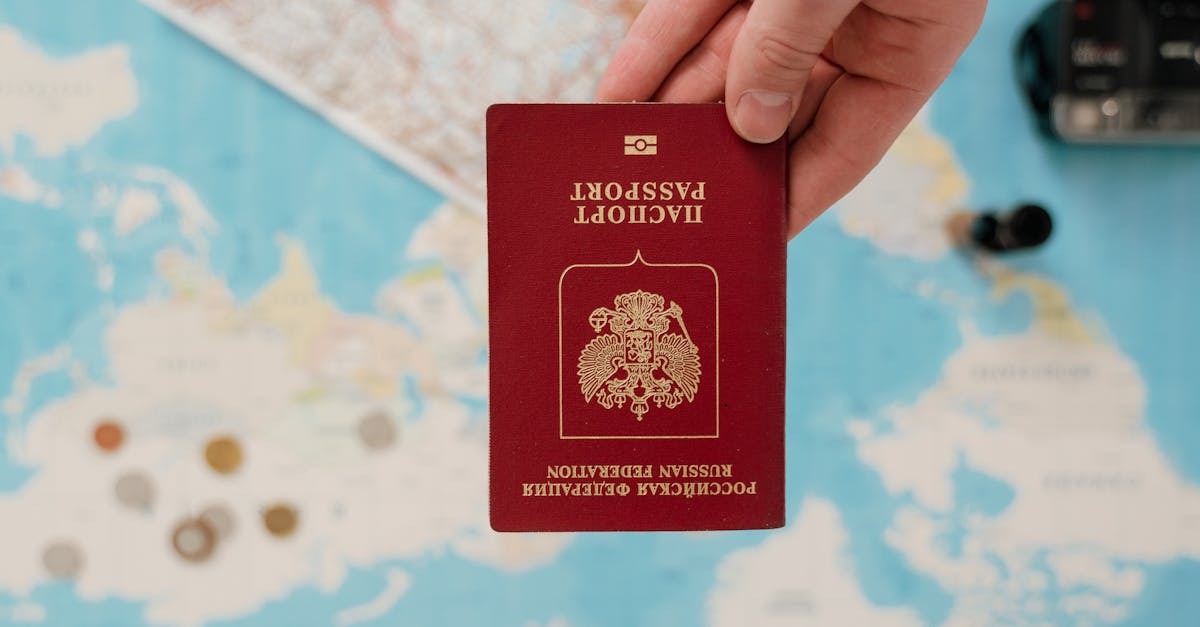
- Passport: Must be valid, with a clear machine-readable zone. If it is damaged or the photo is poorly laminated, replace it before applying.
- FCPF Form: The same fields appear online, at the consulate, and at the service counter. Key details: full name exactly as in your passport, date of birth, mother’s full name, and your foreign address. For online and consulate, you fill it yourself; at the counter, the attendant will type it, so bring your passport and a piece of paper with your mother’s name written down (they always ask, and you may not remember the spelling under pressure).
- Apostilled documents: If your name in the passport differs from your legal name in your birth certificate or marriage certificate, you may need those documents translated and apostilled. The online system sometimes accepts a simple marriage certificate, but consulates and in-person agents are stricter. If you have a complex name history, consult a lawyer before you apply — correcting a CPF can take months.
- Valid email address: The CPF number and the digital document (called “Comprovante de Inscrição no CPF”) arrive by email. Use a stable address you’ll keep for years.
Frequently Asked Questions
1. Can I get a CPF before I have a visa?
Absolutely. The CPF is a tax registration, independent of your immigration status. Many foreigners obtain their CPF while still in their home country, before they even apply for a visa. The consulate route and online route both allow this. You only need a valid passport. Once you enter Brazil, you’ll use the same CPF for all your legal acts.
2. I started the online application but got a message saying “CPF Pendente de Regularização.” What now?
This means a CPF already exists under your name (often from a previous trip, an investment, or even a typing error that matched your name). The online system cannot proceed. You must regularize the existing CPF. This can be done at a Receita Federal unit in Brazil, or in some cases through a Brazilian consulate if you are abroad. You’ll need to present a government ID and, if the CPF is suspended because of missing tax returns, file those first. A lawyer can check your CPF status on the Receita Federal website with your authorization and guide you through the regularization.
3. How long is the CPF valid? Does it expire?
The CPF number itself never expires. However, the registration status can become “Suspensa,” “Cancelada,” or “Pendente de Regularização” if you fail to file tax returns or update your address when requested. A regular CPF is a lifelong identifier. To avoid surprises, check your CPF status twice a year on the Receita Federal portal; if you are a tax resident, always file your annual declaration on time.
4. I’m a digital nomad staying only 3 months. Do I really need a CPF?
If you plan to rent an apartment on a formal contract, buy a local SIM card without a foreign passport, or open a bank account, yes. Many short-term rentals will accept a foreign passport for the reservation but require a CPF for the legally registered contract. Without one, you may be limited to informal arrangements. For more detail on what life looks like without a CPF, see our article on What Can I Do Without CPF Brazil 2026: Complete Guide. For a three-month stay, the easiest path is the online application from home, or a same-day in-person registration once you arrive.
5. Can I apply for a CPF for my newborn child born in Brazil?
Yes. Even a baby born in Brazil to foreign parents needs a CPF for health insurance registration, bank accounts, and the national vaccination system. The process is the same: bring the child’s Brazilian birth certificate (or foreign birth certificate, apostilled and translated) and the CPF and identification of one parent to a Correios or a consulate. The fee is the same R$7.00 if done inside Brazil. Note that the child’s CPF must be kept regular like any adult’s; the parent is responsible for eventual tax filings if the child receives inheritance or income.
Ready to Navigate Brazilian Law? Get Expert Help Now
Obtaining a CPF as a foreigner is straightforward on paper, but a single mismatch in your name, a forgotten old CPF, or a rejected online application can turn into a bureaucratic loop that eats weeks of your time. At Ribeiro Cavalcante Advocacia, our bilingual team handles CPF regularization, first-time applications, and all the connected legal steps — from real estate closings to tax residency planning. Don’t let a nine-digit number hold your life in Brazil hostage.
Talk to a specialist lawyer now
Talk to a Lawyer on WhatsApp