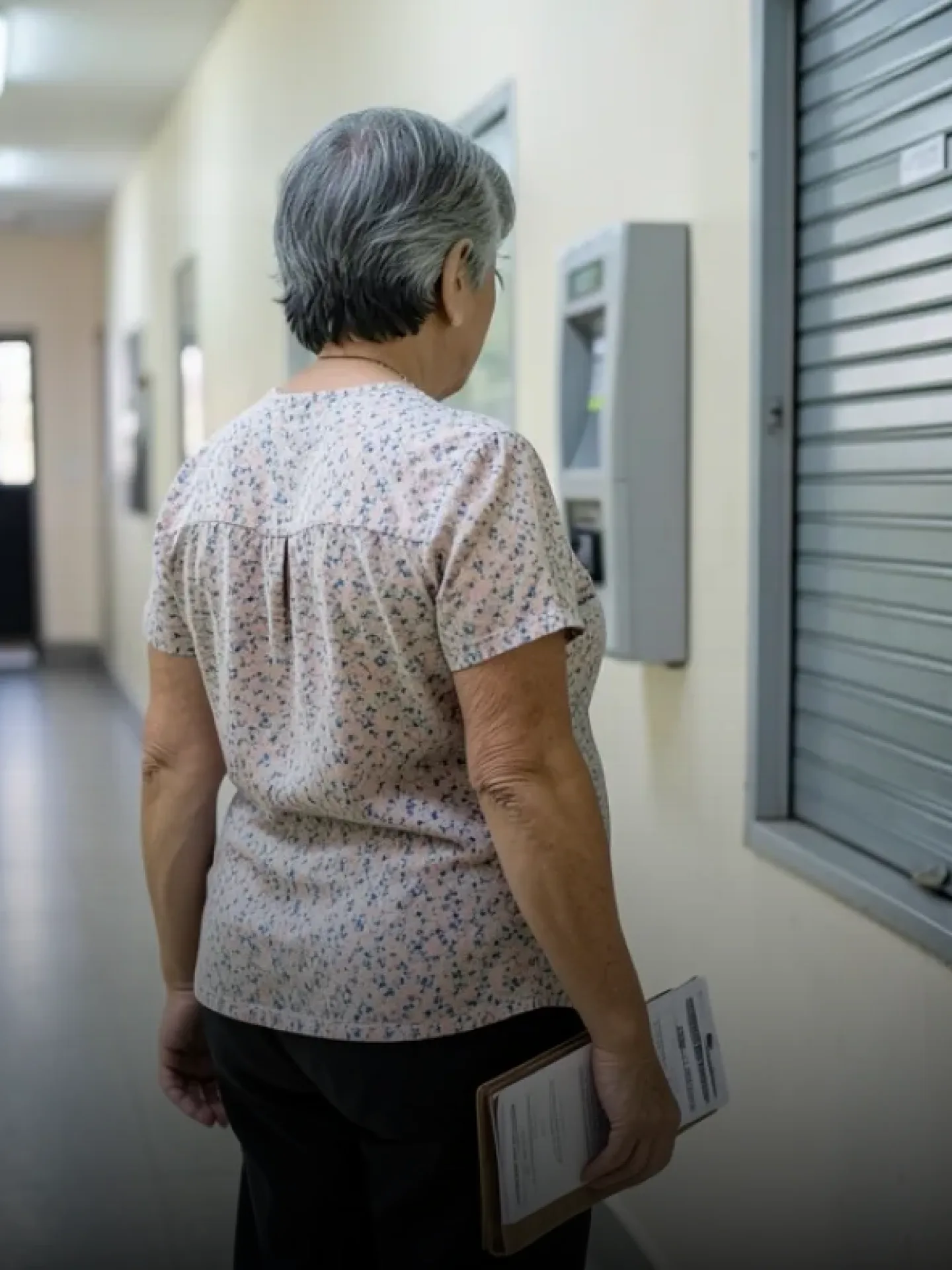
Yes, your first CRNM registration can be started online, and in most cases it costs exactly R$ 204.77 in federal fees. But the route you take, and the deadline that applies to you, depends on a detail most foreigners never check: whether your residence came from a visa issued abroad or from an authorization requested inside Brazil.
That single distinction decides when your 90-day clock starts, which documents the Federal Police will demand, and whether your card will be valid for two years or indefinitely. Get it wrong and you do not just pay a fine. You can end up holding a visa that is technically alive while your residence has quietly lapsed, with no card, no RNM number, no bank account and no formal job.
The CRNM (Carteira de Registro Nacional Migratório, National Migration Registry Card) is the Brazilian identity document for foreign residents, issued by the Polícia Federal (Federal Police). It replaced the old RNE after the Brazilian Migration Law (Lei 13.445/2017) came into force. Your visa gives you the right to live here. The CRNM is the proof of that right, and without it almost nothing in Brazilian civil life works.
This guide compares the three realistic routes to a first-time CRNM in 2026, side by side, and then spends the second half on the situations where the standard rule simply does not apply, which is precisely where people lose the right without realising it.
On this page
What Is the Rule That Governs Your First CRNM Registration?
The rule is simple: every foreigner holding a residence visa or a residence authorization must register with the Federal Police within 90 days, and pay a federal fee of R$ 204.77 for the first card. This obligation comes from the Brazilian Migration Law (Lei 13.445/2017) and its regulating Decree 9.199/2017.
You can read the statute itself on the Brazilian government’s official legislation portal: Lei 13.445/2017, the Migration Law. It is in Portuguese, but the structure is worth knowing: the law separates the visto (visa, granted by a Brazilian consulate abroad) from the autorização de residência (residence authorization, granted by the Ministry of Justice or the Federal Police inside Brazil). Both lead to a CRNM, but through different doors.
Three things follow from the rule, and all three trip people up:
- Registration is not automatic. Nobody at the airport registers you. No consulate does it for you. You must request it.
- The card is not the right. The right is the residence. The card is evidence. But without the card you cannot exercise the right in practice.
- The 90 days do not always start at the border. For a consular visa holder, the clock starts on the date of entry stamped in your passport. For someone who applied inside Brazil, it starts when the authorization is published or granted.
Important: The CRNM also carries your CPF (Cadastro de Pessoas Físicas, Brazilian tax ID) printed on the card. The CPF itself is free when requested directly at Receita Federal (the Brazilian IRS) and costs around R$ 7.00 when issued through Correios (the post office) or a Brazilian consulate abroad.
Brazil is a Civil Law country. That means the Federal Police officer in front of you has very little discretion to improvise around a written requirement. If the decree says “certified translation”, a photocopy of a Google translation will be refused, no matter how reasonable it looks to you.
Option A: How Does the First CRNM Work for Indefinite (Permanent) Residents?
If your residence is indefinite (family reunion with a Brazilian spouse or child, retirement, investor residence above the thresholds, or Mercosur conversion), your first CRNM is issued with no expiry date for the residence itself, and the card is valid for 9 years for most adults under current Federal Police practice. The fee is still R$ 204.77.
How it works in practice. Your residence is granted first, either by a consulate (VITEM XI family reunion visa, for example) or by the Ministry of Justice after an application filed in Brazil. Only then do you book the registration appointment through the Federal Police migration portal and upload your documents into SISMIGRA, the Migration Registry System.
Requirements typically include:
- Valid passport (original plus copies of the biographic page and the entry stamp)
- Proof of the residence grant: consular visa or the publication of the authorization
- Birth certificate, and marriage certificate where the residence is family-based, legalized by apostille and sworn-translated into Portuguese
- Proof of residential address in Brazil (utility bill, rental contract or a signed declaration)
- Paid GRU slip (Guia de Recolhimento da União, Federal Revenue Collection Slip) of R$ 204.77
Pros: you register once and are effectively done for years; the card unlocks a formal job contract, a CNH (driver’s licence), financing and property purchase without a proxy. Cons: the documentary burden is the heaviest of the three routes, because civil-status documents must be apostilled abroad and sworn-translated in Brazil, which can add 3-6 weeks and R$ 400-1,200 in translation costs depending on page count.
Tip: Order two certified copies of your apostilled birth and marriage certificates before you leave your home country. Getting an apostille from Brazil, by post, through a relative, is the single most common cause of a six-month delay in family reunion registrations.
Option B: How Does It Work for Temporary Residents (Work, Study, Digital Nomad)?
Temporary residents get a CRNM whose expiry date mirrors the residence permit, commonly up to 2 years and renewable. The 90-day registration deadline and the R$ 204.77 fee are identical to Option A, but the supporting proof changes: the Federal Police wants the contract, enrolment letter or remote-work evidence that justified the visa.
This is the route for the VITEM V work visa holder, the VITEM IV student, and, since 2022, the digital nomad visa holder working remotely for a foreign employer. The logic is the same for all three: your card expires when your underlying permission expires, and the card’s validity is never longer than the permit.
Requirements usually add:
- Employment contract or the Ministry of Labour work authorization (work route)
- Enrolment declaration from the Brazilian university or school (student route)
- Remote-work contract plus income evidence (digital nomad route)
- CPF, if you already have one, and the address proof
Pros: fewer apostilled civil documents, faster assembly, and you can usually complete the file in 2-4 weeks. Cons: the expiry date is a trap. Temporary residents must act before the card expires, not after, and a lapsed temporary residence is far harder to revive than a lapsed card. If you are already thinking ahead, our guide on CRNM renewal and the R$ 204 fee explains the extension versus conversion decision.
Practical example: A German software engineer enters Brazil on 10 March 2026 with a digital nomad visa. Her 90 days end on 8 June 2026. She pays R$ 204.77 for the GRU, R$ 0 for her CPF at Receita Federal, and roughly R$ 350 for a sworn translation of her remote-work contract. Total out of pocket: about R$ 555, around US$ 105. Her CRNM is issued valid until 10 March 2027, matching her one-year permit.
Option C: What About Mercosur, Family Reunion Filed in Brazil, and Refugee Applicants?
This third route is where the standard 90-day rule bends. Nationals of Mercosur and associated states, people filing family reunion inside Brazil, and asylum seekers do not start from a consular visa at all. Their registration deadline is counted from the grant or publication of the residence authorization, not from the border stamp.
Mercosur residence (Argentina, Uruguay, Paraguay, Bolivia, Chile, Peru, Colombia, Ecuador and others under the residence agreement) is requested directly at the Federal Police in Brazil. You typically receive a two-year temporary residence first, convertible to indefinite residence later. The registration and the authorization are often handled in the same appointment, which is why many Mercosur nationals never experience a separate “90-day countdown” at all.
Asylum seekers follow a different logic entirely. A refugee applicant receives a protocol from CONARE (the National Committee for Refugees) and, once protection is recognised, is registered and issued a CRNM. The deadline attaches to the decision, not to the entry. We explain the timeline in detail in our article on the CONARE refugee application process.
Pros: no consulate, no visa queue abroad, and often a lower documentary burden because regional civil documents may be accepted without apostille under bilateral arrangements. Cons: because there is no obvious border stamp triggering a countdown, people assume there is no deadline. There is. It simply starts somewhere else, and it is easy to miss.
Which First-Time CRNM Route Costs More, Takes Longer, and Carries More Risk?
All three routes share the same core federal fee of R$ 204.77 for the first CRNM, paid by GRU slip. What differs is the document burden, the validity of the card you receive, and the consequence of missing the deadline. The table below compares the three on the criteria that actually matter.
| Criterion | Option A: Indefinite resident | Option B: Temporary resident | Option C: Mercosur / family in Brazil / refugee |
|---|---|---|---|
| Where the right is granted | Consulate abroad or Ministry of Justice | Consulate abroad (VITEM) or Ministry of Labour | Federal Police or CONARE, inside Brazil |
| When the 90 days start | Entry stamp or grant date | Entry stamp date | Grant or publication of the authorization |
| Federal fee (first card) | R$ 204.77 | R$ 204.77 | R$ 204.77 (exemptions possible for refugees) |
| Typical extra costs | R$ 400-1,200 sworn translations plus apostille abroad | R$ 200-400 translation of contract or enrolment | Often lowest, regional documents sometimes accepted directly |
| Card validity | Indefinite residence, card usually 9 years for adults | Matches the permit, commonly up to 2 years | 2 years, convertible to indefinite |
| Realistic time from appointment to card in hand | 30-90 days | 30-90 days | 30-120 days |
| Main risk | Apostille delays from abroad | Letting the expiry date pass | Not realising a deadline exists at all |
According to the Federal Police, the registration protocol issued at the end of the appointment already serves as temporary proof of your regular status while the physical card is produced, which matters because the plastic card can take weeks to arrive at your chosen PF unit.
Which Route Fits Your Situation?
You rarely choose your route freely: it is determined by the legal basis of your residence. The practical choice is about sequencing, whether to apply abroad before travelling or inside Brazil after arriving, and that decision can change your waiting time by several months.
- If you are married to or have a child with a Brazilian and you are already in Brazil on a tourist entry: filing family reunion inside the country (Option C into A) is usually faster than returning home for a consular VITEM XI, because you avoid the consular queue entirely.
- If you have a signed Brazilian employment contract: Option B through the consulate is the cleanest path. Your employer handles the work authorization, and you arrive with the right to register immediately.
- If you are a digital nomad testing Brazil: Option B. Apply for the remote-work visa at a consulate, but budget for the fact that the card expires with the permit, so plan your renewal in month nine, not month twenty-three.
- If you hold a Mercosur or associated-state passport: Option C, always. It is the cheapest and least document-heavy door into Brazilian residence.
- If you are a Portuguese citizen: check equality-of-rights status and the shorter naturalisation path before committing to a standard CRNM route. See our note on Brazilian citizenship for Portuguese citizens.
Warning: Never attempt to “upgrade” a tourist stamp by simply staying and hoping to register later. Tourist entry is not a residence authorization, and the Federal Police cannot register you on that basis. Overstaying generates daily fines and can compromise a later residence application.
Why Do So Many Foreigners Lose This Right Without Knowing It?
Because the visa and the registration run on separate clocks, and only one of them is printed in your passport. A residence visa issued abroad typically has to be used within 90 days of issuance, and then the registration must happen within 90 days of entry. Miss the second and your visa looks valid while your residence is not.
Here is the strongest version of the Federal Police’s position, and it deserves to be taken seriously rather than dismissed. The authority will argue: the Migration Law and Decree 9.199/2017 impose registration as a personal obligation of the migrant. The deadline is published, the online portal is open 24 hours a day, the fee is modest, and the consulate hands over a visa document that states the registration requirement. Immigration systems cannot function if deadlines bind only those who happened to read them. If a foreigner sits on the right for a year without acting, the state is entitled to treat the residence as unexercised and to apply the fine the law provides for.
That argument is coherent. It is also incomplete, for three reasons.
First, the Migration Law expressly broke with the punitive philosophy of the old Estatuto do Estrangeiro. Its guiding principles include humane reception and non-criminalisation of migration. Late registration is an administrative irregularity with a financial penalty, not a loss of substantive right. In practice the Federal Police issues the fine and proceeds with the registration.
Second, the right itself derives from the underlying fact, a marriage, a child, an employment relationship, a recognised need for protection, not from the punctuality of a form. A residence grounded in family reunion does not evaporate because a card was requested in month eleven instead of month three.
Third, the obligation presupposes a functioning service. When appointment slots in a given city are unavailable for months, which happens routinely in São Paulo, Rio de Janeiro and Brasília, the delay is attributable to the administration, not to you. Documented evidence of your attempts to book, screenshots of the full calendar, dated protocol attempts, emails to the PF unit, is the practical answer to the authority’s argument.
Important: The fine for late registration is calculated per day of delay and is capped by the regulation. It is unpleasant but survivable. What is genuinely dangerous is letting a temporary residence expire without extension, because that removes the legal basis itself and can open the door to removal proceedings. If you are already receiving notifications, read our guide on deportation appeals and 60-day defence rights.
How Do You Complete Your First CRNM Registration Online in 2026?
Since SISMIGRA (the Migration Registry System) went fully live, you can no longer walk into a Federal Police station and fill in a paper form. In 2026 the process is: register on gov.br, fill the online form, generate and pay the R$ 204.77 GRU, book the appointment, then attend in person for biometrics.
Step 1: Create or upgrade your gov.br account
Almost every federal service now runs through gov.br, including the Federal Police service portal. Foreigners can create an account using their passport or CPF. If your account is at the lowest trust level, some services will refuse you, so raise it using internet banking validation or in-person validation.
Step 2: Get your CPF first if you do not have one
The CPF is free at Receita Federal and costs around R$ 7.00 at Correios or a Brazilian consulate. Do this before the CRNM form: it makes every subsequent field easier and the number will be printed on your card.
Step 3: Fill the online registration request
Select the service for first-time foreigner registration and issuance of the CRNM. Enter your passport data, entry date, address and the legal basis of your residence exactly as it appears in your visa or authorization. A mismatch between the form and the document is the number one cause of rejection at the counter.
Step 4: Generate and pay the GRU
The system generates the GRU slip for R$ 204.77. Confirm the revenue code the system shows you, choose your PF collection unit, and pay at Banco do Brasil, by internet banking, barcode or PIX. Clearance usually takes 1-2 business days before the appointment system recognises the payment.
Step 5: Book the appointment and attend
Slots open by PF unit and disappear fast in large cities. Check the calendar daily, including other units in your state. At the appointment you present originals, give fingerprints, a photo and a signature. You leave with a protocol number that proves your regular status until the card is ready.
Documents to bring in original
- Passport with the entry stamp, plus photocopies
- Visa or proof of residence authorization
- Birth certificate (and marriage certificate where relevant), apostilled and sworn-translated
- Proof of Brazilian address
- CPF
- Paid GRU receipt of R$ 204.77
- Proof of the basis of residence: contract, enrolment, remote-work evidence
Tip: Save a PDF of every screen: the submitted form, the GRU, the payment confirmation, the appointment confirmation and the final protocol. Keep them for at least 5 years. When a card goes missing or a renewal is questioned, these files are what rebuild your file quickly, as we explain in our guide on replacing a lost CRNM card.
What Changed in 2026 for First-Time CRNM Registration?
The headline change is procedural, not legal: SISMIGRA is now the only entry point, the R$ 204.77 fee held steady, and paper walk-in registration has effectively disappeared. No amendment to the Migration Law altered the 90-day deadline or the right to register itself.
Three practical shifts matter for anyone registering for the first time this year:
- Digital-first intake. With pre-registration done online, the in-person visit is reduced to biometrics and document verification, often under 30 minutes. The bottleneck has moved from the counter to the appointment calendar.
- Tighter form-to-document matching. Because the data is validated electronically before the appointment, small inconsistencies (name order, accents, passport number typos) now cause rejections that an officer would once have corrected by hand.
- Growing use of the protocol as proof. Banks and employers increasingly accept the registration protocol plus the RNM number while the card is produced. If a bank refuses, ask for the refusal in writing; it is usually resolved at a higher branch level.
For the full breakdown of the deadline mechanics and fee structure, see our companion article on the 90-day CRNM registration deadline and fees.
Frequently Asked Questions About Getting Your First CRNM
How long does the first CRNM take to arrive after the appointment?
Realistically 30 to 90 days from the appointment, though it can stretch to 120 days in high-demand units. The physical card is produced centrally and sent to the Federal Police unit where you registered, and you collect it in person. Meanwhile, your registration protocol and RNM number already prove your regular status. Track the production status through the Federal Police portal and do not travel internationally without checking which document your airline and the border will accept.
Can I open a bank account before the physical card arrives?
Often yes. With your CPF, your registration protocol and your RNM number, many Brazilian banks and digital banks will open an account, because the protocol evidences lawful residence. Policies vary by institution and even by branch manager. Digital banks tend to be more flexible than traditional branches. If you are refused, try another institution rather than waiting months, and keep the protocol PDF on your phone, since staff frequently ask to see the document rather than just the number.
What happens if I register after the 90-day deadline?
You pay an administrative fine calculated per day of delay, capped by the regulation, and the Federal Police proceeds with the registration. Late filing does not, by itself, cancel your residence. The Migration Law treats this as an administrative irregularity, not a crime. The genuine risk is different: if your residence was temporary and has already expired, there is no longer a valid basis to register, and you may need to request a new authorization or defend against removal proceedings.
Do I need a sworn translation of my documents, or is any translation enough?
You need a tradução juramentada (sworn translation) produced by a translator registered with a Brazilian Junta Comercial (Board of Trade). Translations done abroad or by non-registered translators are routinely refused. Foreign public documents also require an apostille from the issuing country if it is a party to the Hague Apostille Convention, or consular legalization if it is not. Budget R$ 80-150 per page for sworn translations, and more for urgent turnaround.
Do children need their own CRNM?
Yes. Every foreign resident, including minors, must be registered individually and receives their own CRNM with its own RNM number. A parent or legal guardian attends the appointment and signs on the child’s behalf, and biometric collection rules differ by age. Children’s cards carry shorter validity periods than adult cards and must be renewed as the child grows, so note the expiry date rather than assuming it follows the parent’s card.
Do I need a lawyer to get my first CRNM?
Not legally. A straightforward case, a work visa with a clean employment contract and documents already apostilled, is manageable alone. A lawyer registered with the OAB (Brazilian Bar Association) earns their fee in the difficult cases: missed deadlines, mismatched civil documents, rejected family reunion files, unavailable appointment slots, or residence applications filed inside Brazil from a tourist entry. Those are the situations where an error costs months rather than a resubmission.
Start Your First CRNM Registration With a Bilingual Brazilian Immigration Lawyer
Most foreigners who lose this right were not careless. They simply did not know that the visa in their passport and the registration with the Federal Police are two different clocks, and that only one of them is printed where they can see it. If you are holding a residence visa, your concrete next step is to open your passport, find the entry stamp, count 90 days forward and write that date down.
If that date is close, has already passed, or your documents are still sitting unapostilled in another country, send us the date and the type of residence you hold. We will tell you which of the three routes applies to you and exactly what to assemble next.
Talk to a specialist lawyer now
Talk to a Lawyer on WhatsApp