
The short answer is yes. Brazil’s Lei 13.445/2017 (the Brazilian Migration Law) replaced the old restrictive “Foreigner Statute” with a rights-based framework that actively welcomes investors, entrepreneurs, and skilled professionals. For South Africans specifically, Brazil offers something rare: a clear pathway from residency to naturalization to a powerful second passport — all through legitimate business activity.
But the process is layered. There are visa categories to choose from, investment thresholds to meet, documents to apostille, and a bureaucratic timeline that rewards patience and preparation. This guide cuts through the complexity and gives you a practical, step-by-step roadmap for 2026 — with real costs in BRL, USD, and South African Rand.
Whether you are planning to open a company in São Paulo, invest in Brazilian real estate, or build a long-term second residency base, this article explains exactly what you need to do, how much it costs, and how long it takes.
On this page
What Did Decreto nº 12.657/2025 Change for Foreign Entrepreneurs?
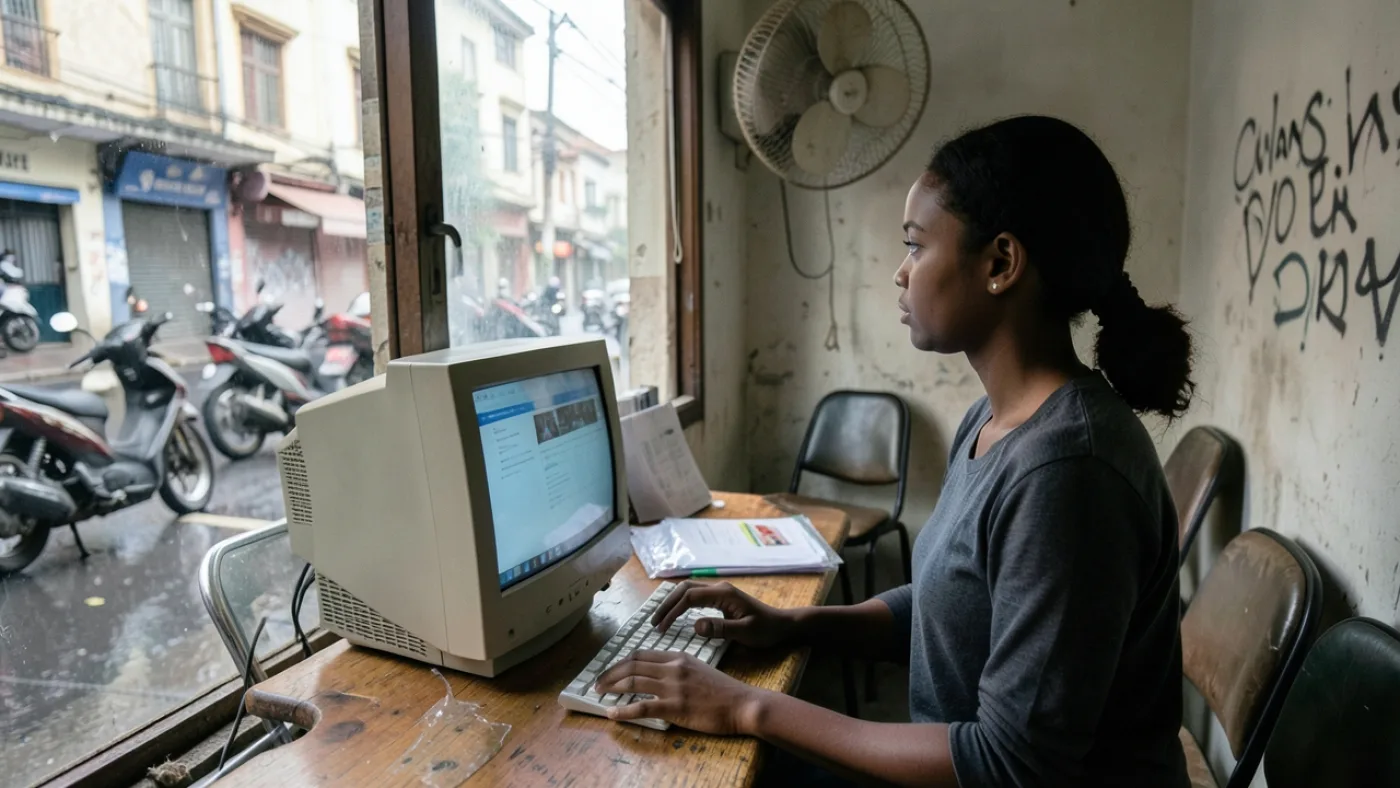
Decreto nº 12.657/2025, which came into force in late 2025, modernized the operational rules that implement the Brazilian Migration Law. In practical terms, it expanded digital processing, clarified investment thresholds for residency purposes, and introduced the Portal Migrante (accessible at gov.br/migrante) as the central hub for most residency applications. The biggest win for foreign entrepreneurs: fewer in-person visits to government offices.
Before the decree, applicants often had to deliver physical documents to multiple agencies at different stages. Now, most of the process is consolidated online. You upload your documents once, receive a protocol number, and only appear in person for biometrics — typically at a Federal Police (Polícia Federal) office after you arrive in Brazil.
The decree also reinforced the investment residency track. Foreign nationals who invest a qualifying amount in Brazil — either in a Brazilian company or in approved financial instruments — can apply for a temporary residency authorization that converts to permanent residency after two years of compliance. This is the primary route for South African entrepreneurs.
Importante: The decree does not replace the Migration Law — it operates under it. Any residency granted under Decreto nº 12.657/2025 is still governed by Lei 13.445/2017, which means you have the same rights as other foreign residents: the right to work, open a bank account, own property, and access public services.
Which Residency Route Is Right for South African Entrepreneurs?
Brazil offers four main residency pathways relevant to South African entrepreneurs in 2026: the investor visa, the digital nomad visa, the retirement/passive income visa, and the employment-based visa. Investment thresholds start at R$ 600,000 (approximately US$120,000 or R2,040,000 South African Rand) for Brazilian-owned companies hiring locals, and rise to R$ 1,500,000 (approximately US$300,000) for certain financial instrument investments, per current Federal Police guidance.
Here is a comparison of the four main routes:
| Route | Minimum Requirement | Processing Time | Path to Permanent Residency |
|---|---|---|---|
| Investor Visa (company) | R$ 600,000 investment + local jobs | 60–120 days | 2 years temporary → permanent |
| Investor Visa (financial instruments) | R$ 1,500,000 in approved assets | 60–120 days | 2 years temporary → permanent |
| Digital Nomad Visa | Monthly income ≥ R$ 30,000 (~US$6,000) | 30–60 days | 2 years → permanent (if renewed) |
| Retirement/Passive Income | Monthly income ≥ R$ 1,500 (~US$300) | 30–60 days | 2 years → permanent |
For most South African entrepreneurs actively running a business, the investor visa via company formation is the most strategic option. It lets you own and operate a Brazilian company, hire staff, generate local revenue, and build the residency clock toward naturalization. You can read more about the specific requirements in our detailed guide on Investor Visa Brazil: Requirements and Costs 2026.
Dica: If your investment falls below R$ 600,000, the digital nomad route may be a faster entry point — especially if you already earn income from a foreign business. You can later convert to an investor visa once your Brazilian operation is established.
How Does the Step-by-Step Application Process Work in 2026?
The application process for Brazilian residency in 2026 runs primarily through the Portal Migrante on gov.br, with one in-person biometrics appointment at the Federal Police (Polícia Federal). Most applicants complete the entire pre-arrival stage online in 4–6 weeks, then finalize registration within 90 days of entering Brazil, per Federal Police requirements.
- Step 1 — Create your Portal Migrante account: Go to gov.br/migrante, register with your passport number and a valid email address. This account is your single point of contact for the entire process.
- Step 2 — Select your visa/residency category: Choose “Residente — Investidor” or the appropriate category. The portal will generate a checklist of required documents specific to your situation.
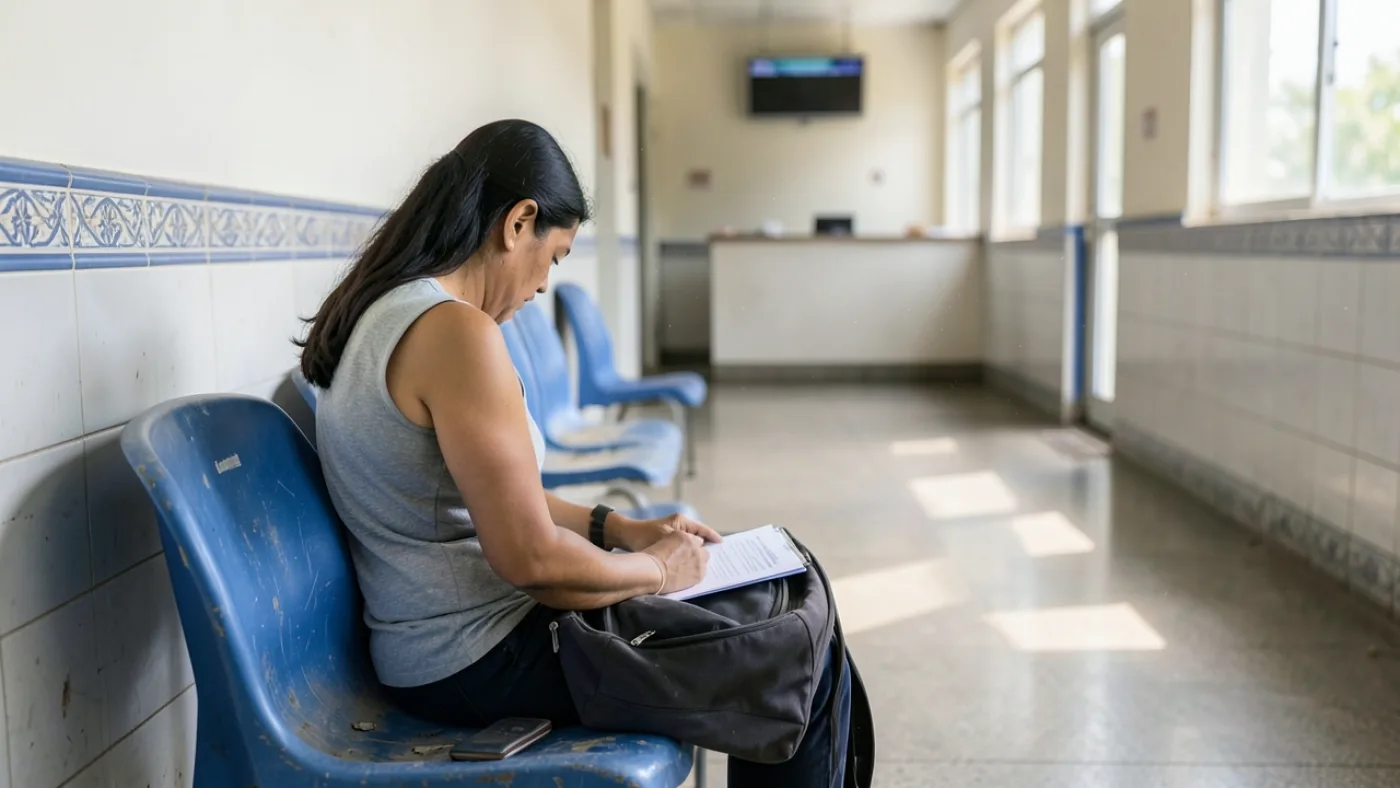
- Step 3 — Upload your documents: Scan and upload your passport, birth certificate, criminal background check (with apostille from South Africa), proof of investment funds, and company documents if applicable. All foreign documents must be apostilled under the Hague Convention — South Africa is a signatory, so this is straightforward.
- Step 4 — Pay the administrative fee: The residency authorization fee ranges from R$ 100 to R$ 300 (approximately US$20–60 or R340–R1,020 South African Rand), depending on visa type. Pay via boleto bancário (bank slip) generated on the portal, or at a Brazilian consulate if you are still in South Africa.
- Step 5 — Consulate verification (if applying from abroad): Many Brazilian consulates now accept mailed documents, but you may need to visit the Brazilian consulate in Pretoria or Johannesburg for passport verification. Check the current policy at portalconsular.itamaraty.gov.br before booking an appointment.
- Step 6 — Enter Brazil and register with the Federal Police: Once your authorization is approved, enter Brazil on your visa. Within 90 days, visit a Federal Police office to complete biometrics and receive your CRNM (Carteira de Registro Nacional Migratório — National Immigration Registration Card).
- Step 7 — Obtain your CPF: The CPF (Cadastro de Pessoas Físicas — individual taxpayer ID, equivalent to a tax file number) is free at the Receita Federal (Brazilian IRS). If you register abroad at a consulate or Correios (post office), the fee is R$ 7.00 (approximately US$1.40). You need the CPF to open a bank account, sign contracts, and register a company.
Exemplo prático: A South African entrepreneur investing R$ 700,000 in a São Paulo technology company applies via Portal Migrante from Cape Town. She apostilles her documents at the South African Department of International Relations, uploads them online, pays a R$ 204.77 CRNM fee, and visits the Brazilian consulate in Johannesburg once for passport verification. She enters Brazil on a temporary residency visa and registers with the Federal Police within 60 days of arrival.
What Documents Do South Africans Need to Prove Economic Solvency?
Brazilian immigration authorities require documentary proof that your investment funds are legitimate and that they have been — or will be — transferred to Brazil. The core documents are the same for all investor applicants, but the specific evidence varies depending on whether you are investing in a company or in financial instruments, per Federal Police guidance for 2026.

For the investor visa via company formation, you will need:
- Valid South African passport (minimum 6 months validity beyond your intended stay)
- Certified birth certificate with apostille
- South African Police Clearance Certificate (SAPS) with apostille — valid for 90 days at time of submission
- CNPJ (Cadastro Nacional da Pessoa Jurídica — company registration number) of the Brazilian company you are investing in or forming
- Articles of incorporation (contrato social) showing your ownership stake and investment amount
- Bank transfer records showing funds remitted to Brazil (SWIFT confirmation or Banco Central do Brasil — Brazilian Central Bank — registration of the capital inflow)
- Business plan demonstrating job creation or economic activity (required for the R$ 600,000 threshold with local hiring)
- Proof of Brazilian address (can be a rental contract or a letter from a registered fiscal address provider)
For the financial instrument route (R$ 1,500,000 threshold), replace the company documents with a statement from a Brazilian financial institution confirming the investment in approved assets.
Cuidado: All documents issued in South Africa must be apostilled before submission. Documents in languages other than Portuguese must also be translated by a sworn translator (tradutor juramentado) registered with a Brazilian cartório (notary office). Using an unofficial translation will result in rejection.
Opening a Brazilian bank account before you have your CRNM can be challenging. Some banks offer a “conta de domiciliado no exterior” (non-resident account) using only your passport and CPF, but the process is significantly easier once you hold your CRNM. Plan for this in your timeline.
What Are the Real Costs of Brazilian Residency for South Africans in 2026?
The total cost of obtaining Brazilian residency as a South African investor in 2026 ranges from approximately R$ 15,000 to R$ 40,000 BRL (US$3,000–8,000 or roughly R51,000–R136,000 South African Rand) in administrative and legal fees — separate from the investment itself. Here is a realistic breakdown based on official 2026 figures.
| Item | Cost (BRL) | Approx. USD | Approx. ZAR |
|---|---|---|---|
| CRNM first registration (per Federal Police) | R$ 204.77 | ~US$40 | ~R700 |
| CPF at consulate/Correios | R$ 7.00 | ~US$1.40 | ~R24 |
| Residency authorization fee | R$ 100–300 | ~US$20–60 | ~R340–1,020 |
| CNPJ company registration (via Portal do Empreendedor) | Free | Free | Free |
| Sworn translation (per document) | R$ 150–400 | ~US$30–80 | ~R510–1,360 |
| Apostille in South Africa (DIRCO fee) | Variable | ~US$10–30 | ~R170–510 |
| Legal/immigration lawyer fees | R$ 5,000–20,000 | ~US$1,000–4,000 | ~R17,000–68,000 |
| ITBI (property transfer tax, if buying property) | 2–3% of property value | Variable | Variable |
If you are buying property as part of your investment strategy, budget an additional 3–5% of the purchase price for ITBI (Imposto de Transmissão de Bens Imóveis — property transfer tax, which varies by city), land registry fees (Registro de Imóveis, approximately 1–1.5% of property value), and notary fees. On a R$ 1,000,000 property, that is R$ 30,000–50,000 in transaction costs alone.
For company formation, the CNPJ itself is free through the Portal do Empreendedor. However, depending on your business structure — MEI (individual micro-entrepreneur, up to R$ 169,200/year revenue), Simples Nacional (up to R$ 4.8 million/year), or LTDA (Sociedade Limitada — limited liability company) — you will have ongoing accounting and compliance costs. A qualified Brazilian accountant (contador) typically charges R$ 500–2,000/month for a small LTDA.
For a deeper comparison of how these costs compare to other nationalities going through the same process, see our guide for Chinese investors obtaining Brazilian residency in 2026.
How Does Brazilian Residency Lead to a Brazilian Passport?
Brazilian naturalization under Lei 13.445/2017 requires four years of permanent residency as the standard pathway, reduced to one year if you have a Brazilian spouse or child. For South African entrepreneurs who obtain permanent residency after two years on an investor visa, the total timeline to a Brazilian passport is typically five to six years from first arrival — assuming continuous residence and a clean criminal record.
The Brazilian passport is a significant asset. It grants visa-free or visa-on-arrival access to over 170 countries, including the entire Schengen Area, the United Kingdom, Japan, and most of Latin America — a substantial upgrade from the South African passport’s roughly 100-country access. For entrepreneurs who travel frequently, this alone justifies the investment in residency planning.
The naturalization process itself involves:
- Filing a naturalization petition (pedido de naturalização) with the Ministry of Justice (Ministério da Justiça)
- Demonstrating continuous residence in Brazil for the required period
- Proving basic proficiency in Portuguese (a practical interview, not a formal exam)
- Showing no criminal convictions in Brazil or abroad
- Demonstrating financial self-sufficiency
Brazil allows dual citizenship — you do not need to renounce your South African passport. South Africa also permits dual citizenship in most cases, though you should confirm your specific situation with the South African Department of Home Affairs before proceeding.
Dica: The clock for naturalization starts from the date your permanent residency is granted — not from when you first arrived in Brazil. Make sure your residency status is correctly classified as “permanent” in your CRNM before counting the years. Our article on Brazilian Passport Investment Visa Requirements 2026 covers this transition in detail.
For entrepreneurs who want to accelerate the timeline, having a Brazilian child or marrying a Brazilian national reduces the permanent residency requirement to just one year. This is not a planning tool to game the system — it is a legal provision under the Migration Law that reflects Brazil’s strong family reunification values.
What Are the Tax Implications for South African Entrepreneurs in Brazil?
Once you become a Brazilian tax resident — which happens when you obtain a permanent visa or stay in Brazil for more than 183 days in a 12-month period — you become subject to Brazilian income tax on your worldwide income, per Receita Federal (Brazilian IRS) rules. Brazil’s 2026 individual income tax brackets range from 0% (exempt up to R$ 2,259.20/month) to 27.5% (above R$ 4,664.68/month).

South Africa and Brazil do not currently have a comprehensive double taxation treaty (DTT). This means you could theoretically face taxation in both countries on the same income. In practice, South Africa uses a residence-based tax system and Brazil uses a worldwide income system — careful tax planning with advisors in both jurisdictions is essential before you establish Brazilian tax residency.
For your Brazilian company, the tax regime depends on annual revenue:
- MEI: Fixed monthly tax of R$ 70–75 (approximately US$14–15). Maximum annual revenue R$ 169,200. Cannot have foreign partners.
- Simples Nacional: Simplified tax ranging from approximately 4% to 33% depending on activity and revenue. Available up to R$ 4.8 million/year.
- Lucro Presumido (presumed profit): Corporate tax based on a presumed profit margin. Common for service companies with revenue above the Simples Nacional threshold.
- Lucro Real (actual profit): Tax on actual net profit. Required for companies above R$ 78 million/year or in certain regulated sectors.
Cuidado: Choosing the wrong tax regime at company formation is a costly mistake — you are locked in for the entire fiscal year. Always consult a Brazilian contador (accountant) and a tax lawyer before registering your CNPJ. The choice between Simples Nacional and Lucro Presumido alone can mean tens of thousands of reais in annual tax differences.
Frequently Asked Questions: South Africans and Brazilian Residency in 2026
Can a South African own 100% of a Brazilian company?
Yes. Under Brazilian company law, a foreign national can own 100% of a Brazilian LTDA (Sociedade Limitada — limited liability company) or S.A. (Sociedade Anônima — corporation) in most sectors. Restrictions apply to specific industries such as rural media, aviation, and rural land ownership. For most entrepreneurial activities — technology, services, retail, consulting — full foreign ownership is permitted. You will need a CPF (individual tax ID) and a Brazilian registered address to complete the CNPJ registration.
How long does it take to get the CRNM after arriving in Brazil?
According to the Federal Police, the CRNM (Carteira de Registro Nacional Migratório — residency card) is typically issued within 30 to 90 days of your biometrics appointment. You must schedule the appointment and appear in person at a Federal Police office within 90 days of entering Brazil. Delays are common in major cities like São Paulo and Rio de Janeiro — book your appointment as soon as you arrive. The fee is R$ 204.77 (approximately US$40 or R700 South African Rand), per Federal Police official data for 2026.
Do I need to invest in a Brazilian company, or can I invest in property?
Property purchase alone does not automatically qualify you for an investor visa in Brazil — unlike Portugal’s now-discontinued Golden Visa. The investment visa requires either a qualifying investment in a Brazilian legal entity (company) or in approved financial instruments. However, property ownership can support your residency application as evidence of ties to Brazil and financial solvency. Many South African entrepreneurs combine a company investment for visa purposes with property acquisition for lifestyle and asset diversification. Rural property purchases are subject to restrictions under Lei 5.709/1971 — urban property is generally unrestricted for foreign buyers.
What is the minimum investment to qualify for Brazilian residency as an investor?
Based on current Federal Police and Ministry of Justice guidelines for 2026, the minimum investment thresholds are: R$ 600,000 (approximately US$120,000 or R2,040,000 South African Rand) for investment in a Brazilian company that creates local employment; R$ 1,000,000 for investment in innovation or technology sectors; and R$ 1,500,000 for investment in approved financial instruments. These thresholds can be met individually or, in some cases, through a group of foreign investors collectively meeting the minimum. See also our overview of how Turkish entrepreneurs navigate the same investment thresholds for a comparative perspective.
Does Brazil allow dual citizenship with South Africa?
Brazil explicitly permits dual citizenship — the Brazilian Constitution does not require you to renounce your original nationality upon naturalization. South Africa also generally permits dual citizenship, but you must apply for permission to retain South African citizenship before acquiring a foreign nationality. Failure to do so can result in automatic loss of South African citizenship under the South African Citizenship Act. This is a step many people miss. Confirm your status with the South African Department of Home Affairs before submitting your Brazilian naturalization petition. Our article on Brazilian citizenship planning for non-EU nationals covers the dual citizenship mechanics in more detail.
Brazilian Residency for South African Entrepreneurs: Take the Next Step
Brazil’s investment residency pathway is genuinely accessible for South African entrepreneurs — but it rewards those who plan carefully. The investment thresholds are clear, the legal framework is solid under Lei 13.445/2017, and the 2025 decree has made the application process significantly more digital and efficient. The path to a Brazilian passport is real, and the strategic value of that passport for a globally mobile entrepreneur is substantial.
Your next practical step is to confirm which investment route matches your capital position and business goals, then begin the document apostille process in South Africa — that alone takes 2–4 weeks and is the most common bottleneck. A bilingual Brazilian immigration lawyer can map the exact sequence for your situation, identify the right visa category, and handle the Portal Migrante filing on your behalf.
Talk to a specialist lawyer now
Talk to a Lawyer on WhatsApp