You’ve just received the news. A family member has passed away, and you discover you are named as an heir to assets in Brazil—a beachfront apartment, a bank account, or shares in a company. Your mind races with questions. “Who else inherits? Do I have a right to this property? What if there’s no will? How do I even start this process from another country?”
The confusion is real. Brazilian succession law operates on principles that are often alien to those from common law countries like the US, UK, or Australia. The system is not based on your final wishes alone; it is governed by a mandatory legal order that dictates who must inherit, often regardless of what a will says. This article cuts through the complexity to answer one core question: Who inherits in Brazil, and in what order, when the heir is a foreigner? We will explain the rigid succession ladder, your rights as a foreign heir, and the practical steps to claim what is legally yours.
On this page
Why Does Brazil Have a Mandatory Order of Heirs?
Brazil is a civil law country, and its inheritance system is designed to protect the family unit. The core principle is forced heirship (herança necessária). The law, specifically Articles 1,829 to 1,856 of the Civil Code (Law 10.406/2002), establishes a default sequence of heirs that the law automatically calls to inherit. This order applies whenever there is no valid will or when a will attempts to disinherit those the law protects.
The logic is societal: assets are seen as partly belonging to the family lineage, not just the individual. This means your testamentary freedom is limited. You can only freely dispose of a portion of your estate—the other portion is legally reserved for specific family members. For foreigners used to total freedom in their wills, this is the first and most critical shock. The law intervenes to ensure spouses, children, and parents are not left destitute.
What Is the Exact Legal Order of Succession in Brazil?
The Brazilian Civil Code sets a strict ladder. If one rung is empty, the inheritance falls to the next. This is the ordem de vocação hereditária. Here is the exact sequence that determines who inherits when there is no will (sucessão legítima):
- Class 1: Descendants and the Surviving Spouse. Children (biological or adopted) and the spouse inherit together, in equal shares. If a child has predeceased but has children of their own (your grandchildren), those grandchildren represent their parent and split that share.
- Class 2: Ascendants and the Surviving Spouse. If there are no descendants, the inheritance goes to the parents (ascendants) of the deceased, together with the surviving spouse, in equal shares. If parents are deceased, it goes to grandparents.
- Class 3: The Surviving Spouse Alone. If there are no descendants and no ascendants, the entire estate goes to the spouse.
- Class 4: Collateral Relatives. Only if there is no spouse, no descendants, and no ascendants does the estate pass to brothers and sisters, followed by nieces/nephews, uncles/aunts, and cousins, in a defined order.
- Class 5: The State. If there is absolutely no heir in any of the above classes, the assets escheat to the State (União).
The surviving spouse is always a forced heir when competing with descendants or ascendants. They are not an heir “instead of” children or parents, but together with them. This is a key difference from many other systems.
Inheritance order brazil: How Does a Will Change This Order?
A will (testamento) does not override the forced heirship rules. It works within them. Brazilian law splits the estate into two halves:
- The Legitimate Portion (Legítima): 50% of the estate. This half is untouchable by your will. It is reserved by law for your “forced heirs” (herdeiros necessários): your descendants (children) or, if none, your ascendants (parents). The surviving spouse shares in this 50% alongside those relatives.
- The Available Portion (Quota Disponível): The remaining 50%. Only this half can you distribute freely in your will to anyone you choose—friends, charities, a non-marital partner, or to give one child more than another.
Therefore, a Brazilian will cannot disinherit a child or a surviving spouse from their guaranteed 50% share. Any clause that attempts to do so is legally null and void.
| Scenario (No Will) | Who Inherits & In What Proportion |
|---|---|
| Deceased leaves a spouse and two children. | Spouse + 2 children inherit 100% of the estate. Each gets 1/3 (33.33%). |
| Deceased leaves a spouse, no children, but both parents are alive. | Spouse + both parents inherit 100%. Each gets 1/3 (33.33%). |
| Deceased leaves a spouse only (no children, no parents). | Spouse alone inherits 100%. |
| Deceased leaves two children, but no spouse. | Two children inherit 100%. Each gets 1/2 (50%). |
| Deceased leaves only one sibling. | The sibling inherits 100%. |
I Am a Foreign Heir: What Laws Apply to My Inheritance?
This is where international conflict of laws arises. The rule is found in Article 10 of the Law of Introduction to Brazilian Law (LINDB). It is straightforward for real estate:
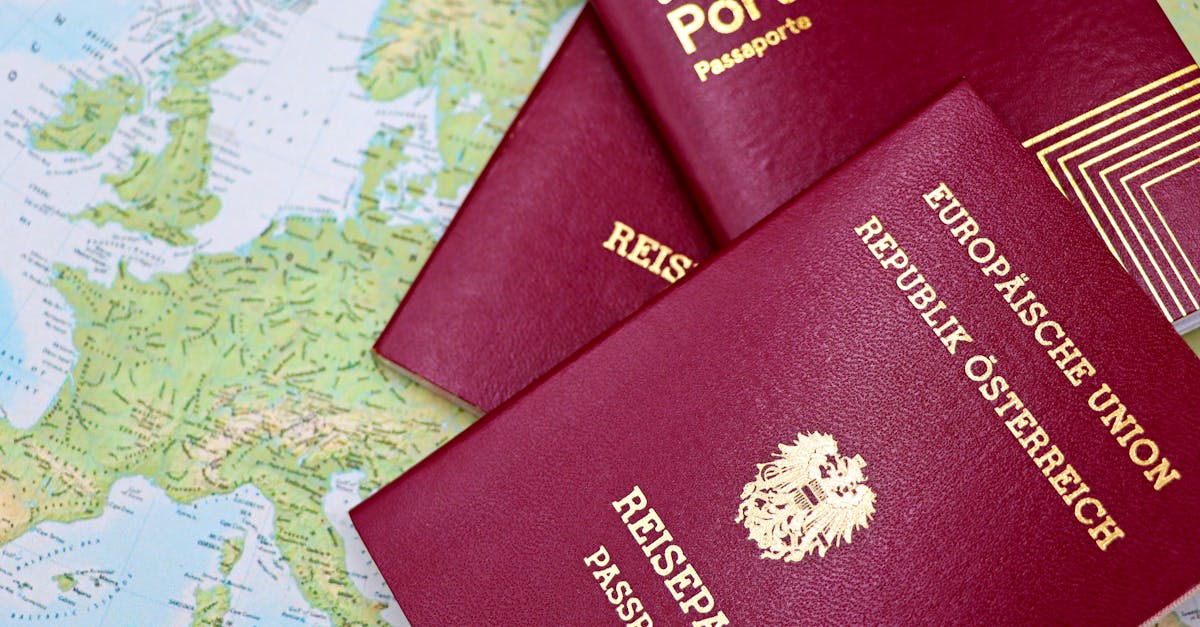
- Immovable Property (Real Estate): The law of the country where the property is located (lex rei sitae) governs its inheritance. Always. If the apartment, land, or house is in Brazil, Brazilian succession law applies—including its forced heirship rules—no matter where the deceased lived or was a citizen.
- Movable Assets (Bank accounts, stocks, cars, personal items): These are generally governed by the law of the deceased’s last domicile (lex domicilii).
Practical Example: A US citizen, domiciled in Florida, dies owning a condo in Rio de Janeiro and a brokerage account in Miami. The Rio condo succession is ruled by Brazilian law (50% legitimate portion, order of heirs). The Miami brokerage account succession is ruled by Florida law. Your family now faces two separate legal processes. This is why coordination is essential, as highlighted in our guide on Estate Planning for International Families.
What Are the First Practical Steps for a Foreign Heir?
Once you establish you are a legal heir under Brazilian order, you must initiate the probate process, called inventário. As a foreigner, your path involves specific documentation.
Step 1: Gather and Legalize Core Documents: Inheritance order brazil
- Foreign Death Certificate: Must be apostilled (per the Hague Convention) in the country of issuance and translated into Portuguese by a sworn translator (tradutor juramentado).
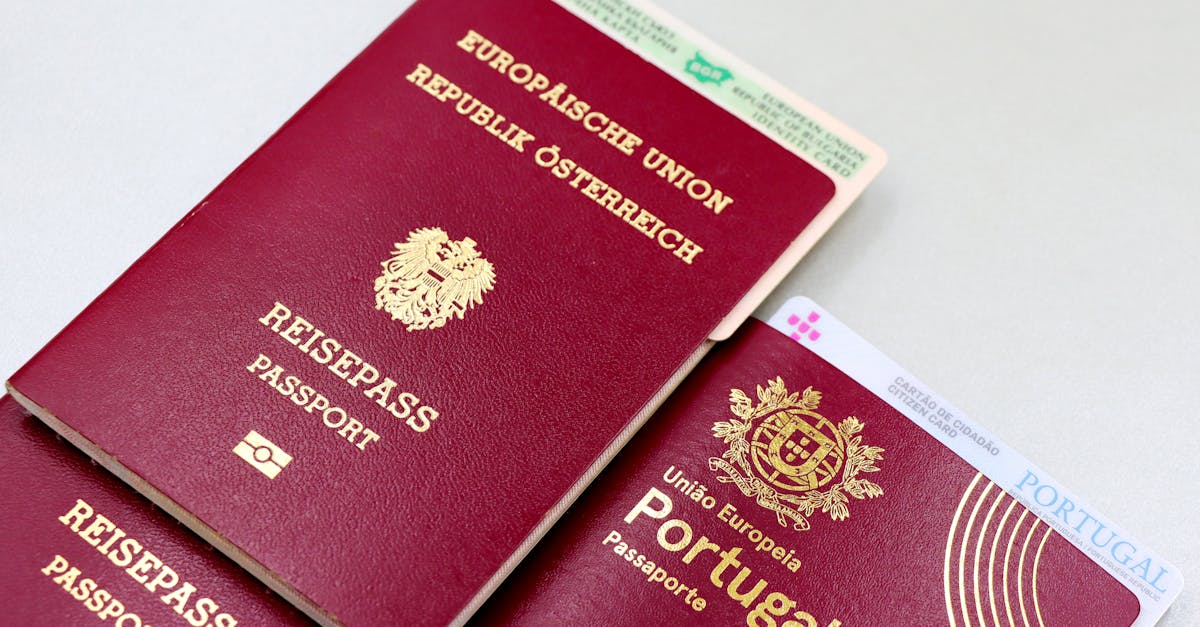
- Your Identification: Your valid passport. You will also need to obtain a Brazilian Tax ID (CPF) if you don’t have one, as it’s required for all financial and property transactions.
- Proof of Heirship: This depends on your class. A birth certificate (for children), marriage certificate (for spouse), or other familial proof. These foreign documents also need apostille and sworn translation.
- Foreign Will (if any): If a will exists from the deceased’s country of domicile, it must also be apostilled and translated. However, remember it only governs movable assets and cannot override Brazilian forced heirship for real estate.
Step 2: Choose the Probate Pathway
There are two main ways to proceed, depending on whether all heirs are in agreement.
- 1. Extrajudicial Probate (Inventário Extrajudicial): This is done at a cartório de notas (notary office). It is faster and cheaper (typically 60-180 days), but it has strict requirements:
- All heirs must be adults and in full agreement on the division.
- There must be no minors or incapacitated persons involved.
- There are no disputes over the assets or heirship.
- 2. Judicial Probate (Inventário Judicial): This is a lawsuit filed in a Brazilian court. It is mandatory if:
- There is any disagreement among heirs.
- A minor or legally incapacitated heir is involved.
- There is no will, and not all heirs are known or located.
- The estate includes certain complex assets.
What Taxes and Costs Will I Pay as a Foreign Heir?
Inheritance in Brazil is taxed at the state level on the heir, not on the estate. The key tax is the ITCMD (Imposto sobre Transmissão Causa Mortis e Doação).
- Rate: Varies by state. In São Paulo (Law 10.705/2000), it’s 4%. In Rio de Janeiro, it’s also 4%. Other states can range from 2% up to 8%.
- Exemption Threshold: Some states offer a small exempt amount. For example, in São Paulo in 2026, the tax is calculated on the value exceeding R$ 244,941.06 per heir. In Rio, there is no exemption—tax is due on the full value received.
- Calculation: If you, as a child, inherit a 1/3 share of a R$ 1,500,000 apartment in São Paulo, your share is R$ 500,000. Subtract the exemption: R$ 500,000 – R$ 244,941.06 = R$ 255,058.94. Your ITCMD is 4% of that: R$ 10,202.36 (approx. $1,900 USD).
Other Costs:
- Notary/Court Fees: Based on estate value, typically 1-4%.
- Sworn Translation: R$ 70-120 per page.
- Legal Fees: For extrajudicial, often a flat or hourly fee. For judicial, typically 1-3% of the estate value or hourly billing (R$ 500-1,500+).
What Are the Common Pitfalls Foreign Heirs Must Avoid?
- Assuming Your Foreign Will Controls Everything: This is the biggest mistake. Your foreign will has no power over Brazilian real estate’s forced heirship rules. It can lead to a will being partially invalidated in Brazil.
- Missing the ITCMD Payment Deadline: Each state sets a deadline (often 30-90 days from the probate deed). Late payment incurs heavy fines and interest.
- Not Obtaining a CPF: You cannot receive proceeds from a Brazilian bank account or be registered as a property owner without a CPF. Start this process early via the Receita Federal website.
- Selling the Asset Before Probate is Closed: The asset is legally “frozen” until the inventário is finalized and the new owners (heirs) are registered. Any sale attempt before this is null and void.
- Ignoring the Need for a Local Lawyer: Navigating the cartório or court system, understanding local state tax laws, and handling translations requires a Brazilian lawyer fluent in your language. Attempting this alone from abroad is impractical.
Has Brazilian Inheritance Law Changed in 2026?
As of 2026, the core forced heirship rules in the Civil Code remain unchanged. However, there is continuous evolution in how courts interpret these rules, especially for international families and non-traditional relationships.
A significant area of discussion is the rights of stable unions (união estável) and the potential for succession agreements. While the legal order is fixed, planning tools like doação com reserva de usufruto (donation with usufruct reserve) are increasingly used to structure assets within the legal framework. Furthermore, the Superior Court of Justice (STJ) frequently issues decisions on conflict of laws, reinforcing that the lex rei sitae rule for real estate is absolute. This underscores the non-negotiable need to plan Brazilian assets under Brazilian law.
Frequently Asked Questions: Foreign Heirs in Brazil
1. Can a Brazilian will disinherit a child?
No. Under Article 1,846 of the Civil Code, children (descendants) are forced heirs. They have an irrevocable right to at least 50% of the estate divided among them and the surviving spouse. A will cannot remove this right. The only exception is if a child is legally deemed unworthy to inherit (indignidade), such as for attempting the deceased’s life, which requires a specific court decision.

2. My parent died in the USA but owned a house in Brazil. Do I, as the only child, inherit it automatically?
No, inheritance is not automatic. You are the legal heir under Brazilian order (Class 1). However, to become the legal owner, you must go through the Brazilian probate process (inventário) in Brazil. Until the court or notary formally declares you the heir and transfers the title, the property remains in the deceased’s name. You cannot sell or rent it.
3. Does Brazil have an inheritance tax treaty to avoid double taxation?
Brazil does not have any tax treaties specifically covering inheritance tax (ITCMD). This means double taxation is a real risk. You may pay inheritance tax in Brazil on the Brazilian asset and again in your home country on your worldwide inheritance. Proactive planning is crucial to mitigate this. For a deep dive, see our article on Double Taxation on Inheritance.
4. What if the heirs are located in different countries and cannot travel to Brazil?
This is common. Heirs can grant a specific power of attorney (procuração) to a lawyer in Brazil to represent them in the entire probate process. This document must be executed at a Brazilian consulate in the heir’s country of residence, then apostilled and translated for use in Brazil. This allows the process to proceed without all heirs being physically present.
5. How is a foreign same-sex spouse treated under the succession order?
Brazilian law recognizes same-sex stable unions (união estável) and marriages performed in Brazil as fully equivalent to heterosexual unions for all legal purposes, including inheritance. A same-sex spouse is treated identically in the succession order: they are a forced heir, inheriting together with children or parents. If your marriage was abroad, you may need to register it in Brazil to streamline proof of heirship.
Secure Your Inheritance Rights in Brazil with Expert Guidance
Understanding who inherits in Brazil is the first step. The next—navigating the probate system, dealing with tax authorities, and managing cross-border logistics—is where experienced guidance becomes invaluable. The mandatory succession order is rigid, but the process of claiming your rightful share doesn’t have to be a labyrinth. With a bilingual legal team that understands both Brazilian civil law and the concerns of international heirs, you can ensure the process is completed correctly, efficiently, and in full compliance with Brazilian law.
Talk to a specialist lawyer now
Talk to a Lawyer on WhatsApp