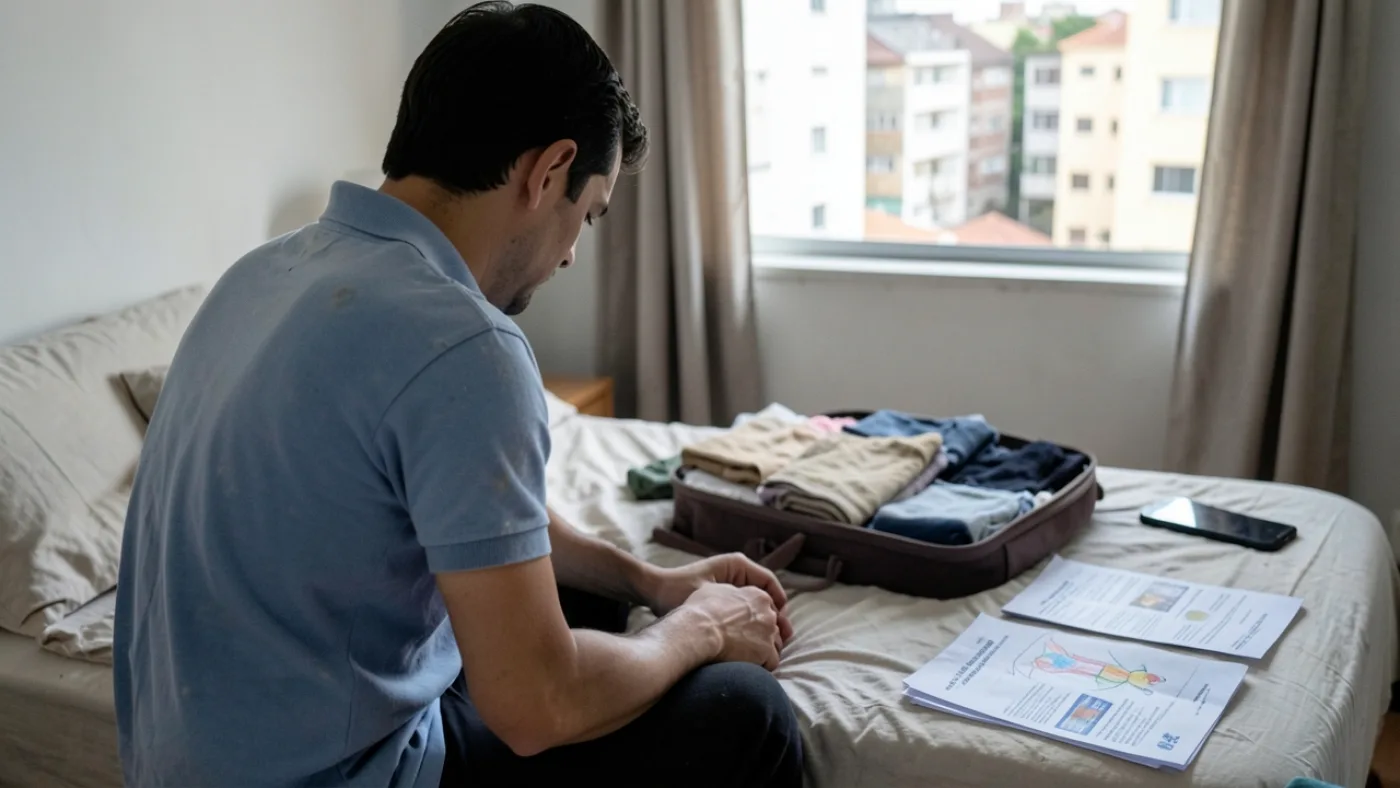

You’re raising your child in Brazil, but the other parent lives in another country and has stopped sending financial support. You feel stuck, wondering if the Brazilian legal system can reach someone abroad. The distance and different legal systems make the situation feel hopeless. Can you actually enforce a child support order across borders in 2026?
The answer is yes, but the path is complex. International child support enforcement is a specialized area of law that relies on treaties, bureaucratic coordination, and patience. This guide cuts through the confusion. We explain the exact process, costs, and legal framework for securing child support payments from a parent living abroad, giving you a clear roadmap to protect your child’s rights.
On this page
What Is International Child Support Enforcement?
International child support enforcement is the legal process of establishing or enforcing a child support obligation when the paying parent (the “debtor”) and the receiving parent/child live in different countries. In Brazil, child support is called pensão alimentícia. The core principle is that a parent’s duty to support their child does not end at the border.
This process is not handled by a single court. Instead, it operates through a system of international legal cooperation. Brazil, like many nations, has designated a “Central Authority” to communicate with foreign counterparts. When you file a request in Brazil, this authority transmits it to the country where the other parent resides. The foreign authority then uses its local laws and procedures to locate the parent, establish an order, or enforce an existing one. The key treaty making this possible is the Hague Convention of 23 November 2007 on the International Recovery of Child Support, which Brazil has ratified.
Who Can File for International Child Support in Brazil?
You can initiate this process if you and your child are in Brazil and need support from a parent abroad. The legal standing is clear:
- The Child: The right to support belongs to the child. The process is initiated on their behalf.
- The Custodial Parent or Guardian: This is typically the parent with whom the child primarily resides in Brazil. You act as the child’s legal representative.
- Other Legal Guardians or the Public Prosecutor (Ministério Público): In some cases, if the custodial parent is unable to act, other guardians or even the Ministério Público can initiate proceedings to protect the child’s best interests.
Crucially, the nationality of the child or the parents is generally not a barrier. What matters is the child’s residence in Brazil and the debtor parent’s residence abroad. This right is reinforced by Brazil’s Migration Law (Lei 13.445/2017), which guarantees fundamental rights to child migrants.
How Is the Amount of Child Support Calculated for a Parent Abroad?
Brazilian law uses a dual principle: the child’s needs (necessidade) and the paying parent’s ability to pay (possibilidade). When the parent lives abroad, proving their financial capacity becomes the central challenge. The calculation isn’t a simple percentage but a careful assessment.
Key Factors in the Calculation:: International child support brazil
- The Child’s Needs: This includes all essential costs for a dignified life: housing, food, health insurance, education (including tuition, materials, and extracurriculars), clothing, and reasonable leisure activities.
- The Debtor Parent’s Income and Assets: The court will examine their salary, business profits, investments, property, and overall standard of living. Since they are abroad, you and your lawyer must help the court locate and document these resources.
- Income Variation and Currency: If the parent’s income fluctuates or is in a foreign currency, the court may set a fixed amount in Brazilian Reais (BRL) or use a formula tied to a currency index or a percentage of their proven income.
Practical Example of Calculation:: International child support brazil
Imagine a child in São Paulo has monthly needs totaling R$ 4,000 (for school, health plan, etc.). The father lives in Germany and earns a net monthly income of €5,000 (approx. R$ 30,000 as of 2026). A Brazilian judge would consider the child’s R$ 4,000 need and the father’s high capacity to pay. The judge might order an amount close to the full R$ 4,000, or even more if justified by special needs, ensuring the child maintains a standard of living compatible with the father’s means.

What Is the Step-by-Step Process for Enforcement?
The process is administrative and judicial, often taking 12 to 24 months or more. Patience and meticulous documentation are vital.
- Step 1: Legal Consultation & Document Gathering. Consult with a Brazilian family lawyer experienced in international cases. Start collecting: the child’s birth certificate (with paternity recognized), your ID (RG and CPF), proof of the child’s residence in Brazil, and detailed evidence of the child’s monthly expenses (receipts, school contracts, medical bills).
- Step 2: Documenting the Debtor Parent’s Finances. This is critical. Gather any evidence of their income and assets: foreign pay stubs, bank statements, tax returns, property records, or business information. Even old communications discussing finances can be useful.
- Step 3: Translation and Apostille. Any foreign documents (e.g., a foreign divorce decree, the debtor’s passport) must be translated by a tradutor juramentado (sworn translator) in Brazil. If the document originates from a country that is part of the Hague Apostille Convention, it must also bear an apostille from that country’s authorities.
- Step 4: Filing with the Brazilian Central Authority (ACBr). Your lawyer will prepare the application and submit it to the Autoridade Central Brasileira (ACBr), housed within the Ministry of Justice. There is no filing fee for this public service. The ACBr reviews the application for compliance with the Hague Convention.
- Step 5: International Transmission & Foreign Proceedings. The ACBr transmits the case to the Central Authority in the debtor’s country of residence (e.g., the U.S. Office of Child Support Services). That foreign authority then acts under its own laws to locate the debtor, establish paternity if needed, and institute or enforce a support order.
- Step 6: Recognition & Enforcement in Brazil (If Needed). If a foreign court issues a new support order, it may need to be formally recognized in Brazil to be enforceable here. This involves a process called homologação by the Superior Court of Justice (STJ), similar to the process for a foreign divorce decree.
What Documents Are Required?
- For the Child and Custodial Parent: Brazilian ID (RG), CPF tax number, proof of residence in Brazil (utility bill), full birth certificate of the child.
- Proof of Child’s Needs: Itemized list of monthly expenses with supporting receipts (school, health plan, rent, etc.).
- Information on the Debtor Parent: Full name, last known address, date/place of birth, nationality, passport number, last known employer, and any known financial details.
- Existing Court Orders (if any): A certified copy of any prior child support or divorce judgment from Brazil or abroad. Foreign orders must be translated and apostilled.
- Formal Application Forms: The specific forms required by the Brazilian Central Authority (ACBr), which your lawyer will help complete.
What Are the Costs and Fees in 2026?
While the government service is free, ancillary costs are significant. Budget for the following:
| Item | Estimated Cost in BRL (2026) | Notes & Equivalent |
|---|---|---|
| Sworn Translation (Tradução Juramentada) | R$ 60 – R$ 150 per page | ~ €11 – €28 / $12 – $30 per page. Depends on language and length. |
| Apostille from Foreign Country | Varies by country | e.g., ~$20 per document in the USA. Fee is paid to the foreign authority. |
| Legal Fees (Private Lawyer) | Retainer from R$ 5,000 + hourly rates from R$ 500 | ~ €930+ / $1,000+. Highly recommended for complexity. Public defenders are an option but have heavy caseloads. |
| Miscellaneous (Notary, Postage, etc.) | R$ 200 – R$ 500 | For certifying copies and official communications. |
What Changed in 2025-2026 for International Child Support?
The legal framework is stable, but practical enforcement is evolving. The key development is the increasing use and efficiency of the Hague Convention 2007 system as more countries join and their Central Authorities improve coordination. Brazilian courts are also becoming more adept at handling evidence of foreign income and ordering payments in foreign currency when justified, providing more flexible tools to ensure effective support.
Enforcement Mechanisms: What Happens If Payments Stop?
If a parent abroad stops paying, enforcement tools are severe but require international action. The primary enforcement happens in the debtor’s country of residence through its local mechanisms (wage garnishment, asset seizure). However, Brazilian law provides powerful deterrents that can be communicated to the foreign authority:
- Asset Seizure in Brazil: If the debtor has any assets in Brazil (bank accounts, real estate, vehicles), these can be located and seized by a Brazilian court to pay the overdue support.
- Credit Bureau Registration & Protest: The debtor’s name can be registered in Brazilian credit protection databases (SPC, Serasa) and the debt can be formally protested, severely damaging their ability to obtain credit in Brazil.
- Civil Imprisonment (Prisão Civil): Under Brazilian law, a debtor who voluntarily and unjustifiably fails to pay the last three installments of child support can face civil detention for up to 90 days. While Brazil cannot arrest someone on foreign soil, this legal provision can be presented to the foreign court as evidence of the debt’s seriousness and may influence their enforcement actions.
Frequently Asked Questions (FAQ)
Which country’s court has jurisdiction over my case?
You generally have a choice. You can file in Brazil (where the child resides) or in the country where the debtor parent lives. The Hague Convention encourages the use of the child’s country of residence. Filing in Brazil through the Central Authority is often the most practical first step, as it triggers the international cooperation process without you needing to hire a lawyer in the foreign country initially.

Can a foreign child support order be enforced directly in Brazil?
Not directly. A foreign child support order must first be recognized (“homologated”) by Brazil’s Superior Court of Justice (STJ) to have the same force as a Brazilian judgment. This is a separate legal process that requires a Brazilian lawyer. Once homologated, it can be enforced locally against any assets the debtor has in Brazil.
What if the other parent’s country is not part of the Hague Convention?
Enforcement becomes significantly more difficult and expensive. You may need to initiate a completely new lawsuit in the foreign country, hiring local counsel there. Alternatively, you can pursue any assets the parent holds in Brazil or in a third country that does have a treaty with Brazil. Bilateral agreements or diplomatic channels are sometimes used, but with no guaranteed outcome.
How long does the entire international process take?
You must prepare for a long process. From initial filing in Brazil to the first payment from abroad, it can easily take 12 to 24 months, and often longer. Delays occur due to bureaucracy in two countries, difficulties locating the debtor, and potential court challenges. Persistence and having a lawyer to follow up at every stage are crucial.
Does the paying parent have to be the biological father?
The obligation falls on the legal parent. If paternity is not yet formally recognized on the birth certificate or through a previous acknowledgment, establishing legal paternity will be the first step in the international process. The foreign Central Authority can assist in initiating paternity establishment proceedings in the debtor’s country if needed.
Secure Your Child’s Future Across Borders
Enforcing child support across international borders is one of the most challenging areas of family law. It requires navigating treaties, two legal systems, and often, significant delays. But your child’s right to support does not diminish with distance. With the right legal strategy, meticulous preparation, and professional guidance, you can establish a reliable stream of support to ensure their well-being and dignity in Brazil.
Our bilingual legal team specializes in cross-border family matters, from Hague Convention child custody cases to complex international support enforcement. We help you build a strong case, interface with authorities, and navigate the process with clarity and determination.
Talk to a specialist lawyer now
Talk to a Lawyer on WhatsApp