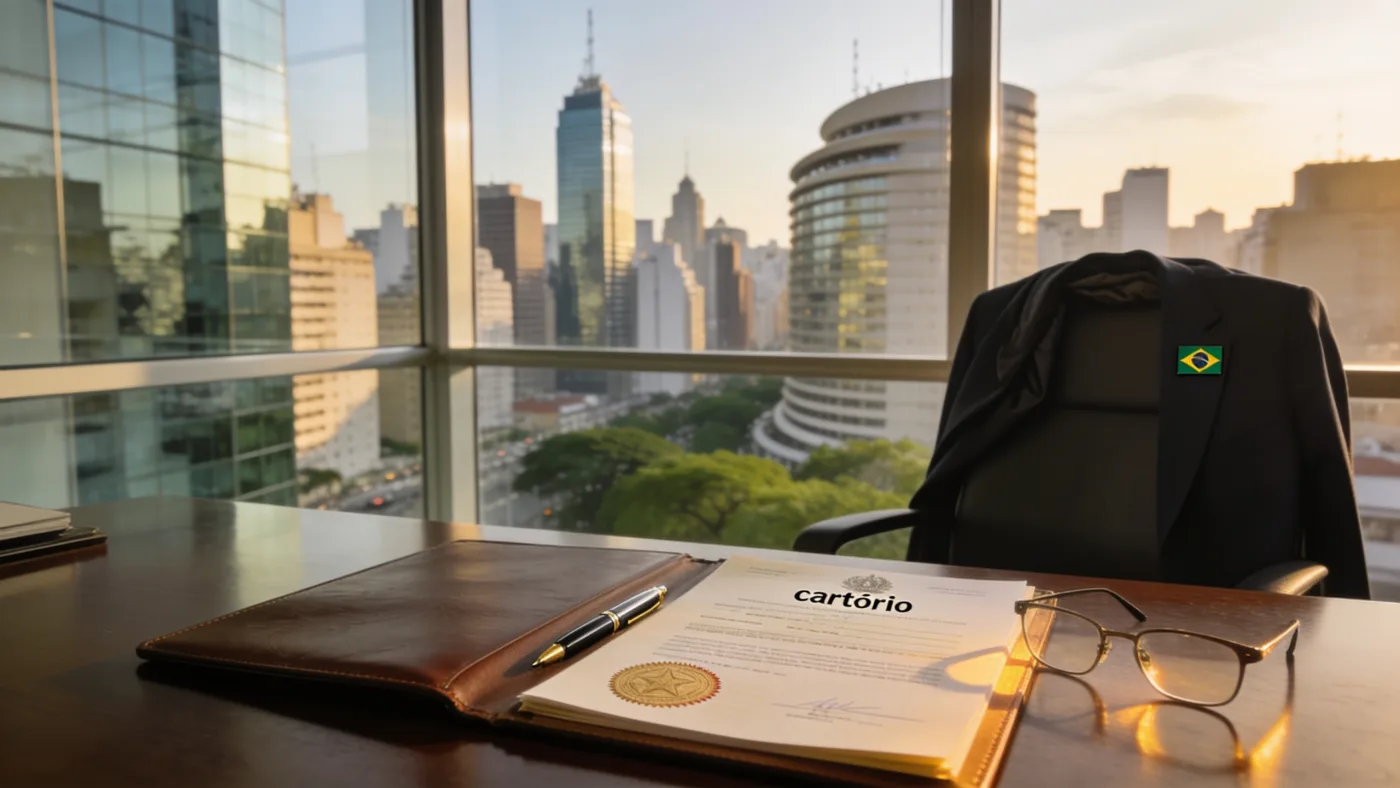

You signed a contract with a Brazilian partner, and buried in the final clauses is a line about “arbitragem.” Or maybe you are drafting a deal right now and wondering: if things go wrong, can I actually enforce a foreign arbitration award in Brazil? Will a Brazilian court honor it, or will I be stuck in litigation for a decade?
Here is the short answer. Brazil is one of the most arbitration-friendly countries in Latin America and a top-5 global user of ICC arbitration. Under Lei 9.307/1996 (the Brazilian Arbitration Act), a domestic arbitral award has the same force as a court judgment and needs no confirmation. A foreign award is enforceable after homologation (recognition) by the STJ (Superior Court of Justice), a process protected by the 1958 New York Convention, which Brazil ratified through Decreto 4.311/2002.
That matters because Brazilian court litigation is painfully slow. A commercial lawsuit can run 8 to 15 years through all appeals. Arbitration typically resolves in 12 to 24 months and stays confidential. For foreign investors opening a company or signing joint venture, supply, or shareholder agreements, a well-drafted arbitration clause is often the single most valuable protection in the contract.
This guide walks you through how arbitration works in Brazil, how the STJ enforces foreign awards, what a clause must contain, and the mistakes that can leave you holding a worthless victory.
On this page
What Law Governs Arbitration in Brazil?
Arbitration in Brazil is governed by Lei 9.307/1996, the Brazilian Arbitration Act, modernized by Lei 13.129/2015. Under Article 1, anyone capable of contracting may arbitrate disputes over “direitos patrimoniais disponíveis” (freely transferable economic rights). Foreign awards are enforced via the 1958 New York Convention, ratified by Decreto 4.311/2002.
The framework rests on a few pillars worth understanding in plain English. Under Article 31 of the Arbitration Act, a domestic arbitral award (sentença arbitral) has the same legal force as a court judgment. You do not “confirm” it in court, it is directly enforceable. Under Article 18, the arbitrator acts as a judge, and the award is not subject to appeal.
You can read the full statute on the official Planalto portal (in Portuguese). The 2015 reform expressly allowed public administration entities to use arbitration, which is critical for infrastructure and concession contracts.
For foreign awards, the Civil Procedure Code (Código de Processo Civil, Lei 13.105/2015), in its articles on recognizing foreign judgments, sets the procedure. Constitutional Amendment 45/2004 moved jurisdiction for homologating foreign awards from the STF to the STJ.
Important: Brazil uses Civil Law, not Common Law. There is no binding precedent system like in the US or UK, so the wording of your written contract carries even more weight. A vague arbitration clause is a liability.
When Does an Arbitration Clause Fail in Brazil? Start With the Exceptions
An arbitration clause fails in Brazil when the dispute is not over freely transferable economic rights, or when the clause is too vague to show clear intent to arbitrate. Under Article 1 of Lei 9.307/1996, family, criminal, and tax matters cannot be arbitrated. Most commercial disputes over money, assets, or shares are fully arbitrable.
The rule is generous: any party capable of contracting can arbitrate commercial disputes. If your contract is a genuine business-to-business deal over money, assets, or shares, your dispute is arbitrable. The trap is procedural, not substantive.
Here is where clauses actually break down in practice:
- Pathological clauses: naming an institution that does not exist, or two conflicting institutions, or contradicting seats.
- No clear intent: saying disputes “may” be resolved by arbitration instead of “shall” leaves room for a party to run to court instead.
- Non-arbitrable subject matter: trying to arbitrate labor rights, consumer protection issues, or tax obligations.
- Consumer contracts: a clause imposed on a consumer without their express, separate agreement can be struck down.
- State immunity abroad: if your counterparty is a foreign state entity and there is no waiver of immunity from execution, you may win but be unable to seize protected assets.
Warning: A clause that only “recommends” arbitration or leaves the institution blank can be challenged as unenforceable. Brazilian courts are pro-arbitration, but they cannot rescue a clause that fails to express a clear, mandatory intent to arbitrate.
If you are structuring your presence in Brazil, review your entity setup alongside your dispute strategy. Our guide on Doing Business in Brazil as a Foreigner: 2026 Rules explains how the contract layer fits the bigger picture.
What Must Your Arbitration Clause Include to Be Enforceable?
An enforceable arbitration clause must be in writing and clearly express intent to arbitrate, per Article 3 of Lei 9.307/1996. Best practice is to specify five elements: the arbitration institution, the seat (sede), the language, the number of arbitrators (usually one or three), and the governing law. Missing these creates costly disputes before the real dispute even starts.
A dispute reaches arbitration through one of two routes. The cláusula compromissória (arbitration clause) is agreed in advance, inside the contract. The compromisso arbitral (submission agreement) is signed after a dispute arises. The clause is the smart move, because getting a party to agree to arbitrate after they are already in conflict is nearly impossible.
A strong clause answers these questions:
- Which institution? Name it exactly (for example, CAM-CCBC or the ICC).
- What is the seat? São Paulo is the most common seat for Brazil-connected deals. The seat determines which courts supervise the arbitration.
- What language? Portuguese, English, or bilingual.
- How many arbitrators? One for smaller disputes (cheaper), three for high-value or complex ones.
- Which substantive law? The law governing the merits of the contract.
Tip: Use the model clause published by your chosen arbitration chamber as your starting point. Every major institution publishes one. Then adapt it with a Brazilian lawyer to fit your deal, currency, and enforcement targets.
How Does the STJ Homologate a Foreign Arbitral Award?
To enforce a foreign arbitral award in Brazil, you must first obtain homologation (recognition) from the STJ, per Article 38 of Lei 9.307/1996 and the New York Convention. The STJ checks only formal requirements, not the merits. Once recognized, the award is enforced in a federal court like a domestic judgment.
This is the part foreigners care about most. You won an ICC arbitration seated in Paris or London, and the losing party has assets in Brazil. How do you collect?
You file a request for recognition of a foreign award (homologação de sentença arbitral estrangeira) at the STJ (Superior Court of Justice). The STJ does not re-examine who was right or wrong. It reviews limited grounds, essentially those in Article 38 of the Arbitration Act, which mirror the New York Convention:
- The parties had capacity and the arbitration agreement was valid.
- The losing party was properly notified and could present its defense.
- The award stayed within the scope of the arbitration agreement.
- The arbitral tribunal was constituted as agreed.
- The award became binding and was not set aside at the seat.
The STJ can also refuse recognition if the subject matter is not arbitrable under Brazilian law, or if enforcement would violate Brazilian public order (ordem pública).
Once the STJ homologates the award, you take it to a federal court (Justiça Federal) for actual execution: freezing bank accounts, attaching property, and collecting. That enforcement phase follows the same rules as executing a domestic judgment.
Note: A domestic award (rendered in an arbitration seated in Brazil) skips the STJ entirely. Under Article 31, it is directly enforceable in the competent court. Only foreign-seated awards need homologation.
Example: A German supplier won a R$ 5,000,000 award against a Brazilian distributor in an arbitration seated in Zurich. The supplier files for homologation at the STJ (court fees and translation costs typically run several thousand reais), obtains recognition, then moves to a federal court to freeze the distributor’s accounts. Total timeline is often 12 to 24 months for recognition plus enforcement, far faster than starting fresh litigation.
Which Arbitration Institution Is Right for Your Brazil Deal?
For Brazil-connected disputes, the leading domestic chamber is CAM-CCBC (Centro de Arbitragem e Mediação da Câmara de Comércio Brasil-Canadá) in São Paulo. For cross-border deals, the ICC International Court of Arbitration is the global standard. Choose based on the parties’ nationality, the amount in dispute, and enforcement location.
The main options for foreign investors are:
- CAM-CCBC: Brazil’s most used chamber, strong for domestic and Brazil-Latin America disputes, proceedings often in Portuguese.
- ICC (International Chamber of Commerce): the top choice for large international deals, high credibility for STJ homologation and cross-border enforcement.
- CAM-B3: specialized in capital markets and shareholder disputes involving listed companies.
- CIESP/FIESP: popular for industrial and commercial contracts in São Paulo.
- Ad hoc arbitration: no institution administers the case; the parties (and arbitrators) run it themselves, cheaper but riskier for foreigners unfamiliar with Brazilian procedure.
Tip: For most foreign investors, institutional arbitration beats ad hoc. The chamber handles appointments, fees, deadlines, and procedural disputes, which prevents a bad-faith party from stalling the whole process. The extra administrative cost is worth the predictability.
If your dispute is a shareholder conflict, your choice of chamber connects directly to your corporate structure. If you have not yet decided how to incorporate, compare the options in our guide on the best company type in Brazil: LTDA vs SA vs EIRELI.
What Are the Costs of Arbitration in Brazil in 2026?
Arbitration in Brazil costs more upfront than litigation but usually far less over the full timeline. Costs include an administrative fee to the chamber, arbitrator fees (scaled to the amount in dispute), and lawyers. A dispute of R$ 1,000,000 can cost tens of thousands of reais in institutional and arbitrator fees; larger disputes cost proportionally more.
Three cost buckets matter:
- Administrative fee: paid to the chamber to register and manage the case, often starting around R$ 1,500 to several thousand reais depending on the institution.
- Arbitrator fees: the biggest cost, calculated on a sliding scale tied to the value in dispute. Three arbitrators cost roughly three times one.
- Legal fees and experts: your own lawyers, technical experts, and translations.
In practice: For a dispute worth R$ 500,000, using a single arbitrator, total arbitration costs may sit in the range of tens of thousands of reais. For a R$ 5,000,000 dispute with a three-member panel, costs rise substantially. Compare that to a 10-year court battle with appeals, expert fees, and frozen capital: arbitration usually wins on total cost of resolution.
For foreign award enforcement, budget separately for STJ homologation. That includes court fees, sworn translations of the award and arbitration agreement into Portuguese, and consular legalization or apostille of documents.
How Do State Entities and Shareholder Disputes Change the Clause?
Since the 2015 reform (Lei 13.129/2015), Brazilian public administration entities can arbitrate disputes involving disposable economic rights, but arbitrations with the state must use Portuguese and follow the transparency (publicity) principle, so they are not confidential. Shareholder disputes require the clause to bind all shareholders, including future ones.
If your deal involves a concession, public procurement, or infrastructure contract with a Brazilian public body, note two special rules. First, the seat should be in Brazil and the language Portuguese. Second, the arbitration cannot be confidential because government acts must be public.
For shareholder and corporate disputes, the arbitration clause is usually placed in the company bylaws (estatuto social) or shareholders’ agreement (acordo de acionistas). To bind incoming shareholders automatically, the clause must be drafted carefully so it applies to anyone who joins the cap table later. This is especially relevant when you incorporate. See our step-by-step guide to opening an LTDA company in Brazil as a foreigner.
Warning: If your foreign counterparty is a state entity abroad, insist on a clear waiver of immunity from execution in the contract. Without it, you may win an award you cannot enforce against protected sovereign assets, turning a legal victory into a paper trophy.
Opening a Brazilian company to hold your investment also requires a CNPJ (corporate taxpayer registration), which in turn needs a valid registered address. Ribeiro Cavalcante can provide a fiscal address in Brazil so you can complete registration without renting physical office space.
Arbitration vs Litigation in Brazil: Which Should You Choose?
For most cross-border commercial disputes, arbitration beats Brazilian court litigation on speed, confidentiality, and enforceability. Litigation costs less upfront but drags on for years. The table below compares the two so you can decide before signing.
| Factor | Arbitration | Court Litigation |
|---|---|---|
| Typical timeline | 12 to 24 months | 8 to 15 years with appeals |
| Confidentiality | Yes (except state disputes) | No, public record |
| Appeal | None (award is final) | Multiple appeal levels |
| Choice of arbitrator/judge | Yes, you pick specialists | No, assigned by the court |
| Upfront cost | Higher (chamber + arbitrators) | Lower court fees |
| Enforce foreign award | STJ homologation + New York Convention | Foreign judgment homologation, harder |
| Language flexibility | Portuguese, English, or bilingual | Portuguese only |
What Changed for Arbitration in Brazil in 2026?
No new statute replaced Lei 9.307/1996 in 2026, so the core framework is stable. The active developments are practical: arbitration chambers are refining rules on third-party funding disclosure, arbitrator conflicts of interest, and expedited procedures for smaller disputes, while Brazilian courts continue reinforcing the pro-arbitration line set by the STJ.
Key trends to watch in 2026:
- Third-party funding transparency: chambers increasingly require parties to disclose if an outside funder is bankrolling the case, to catch hidden conflicts.
- Expedited procedures: streamlined, cheaper tracks for lower-value disputes, often a single arbitrator and tight deadlines.
- Stronger conflict rules: tighter disclosure duties for arbitrators to avoid later challenges to the award.
- Continued pro-enforcement posture: the STJ and lower courts keep upholding valid clauses and recognizing foreign awards, refusing only on the narrow grounds allowed by the New York Convention.
The constitutionality of arbitration in Brazil was settled long ago, and the courts have consistently defended it. The Supreme Federal Court (STF) has addressed arbitration-related constitutional questions, including in cases like ADI 6309, confirming that the system aligns with Brazil’s constitutional order. You can follow such decisions on the STF portal.
Important: Stability is good news for foreign investors. A stable, pro-arbitration legal environment means the clause you draft today will still work the way you expect years from now, when you may actually need it.
How Do You Draft and Implement the Clause, Step by Step?
To implement an enforceable arbitration clause, draft it before signing, name a specific institution and seat, set the language and number of arbitrators, and have a Brazilian lawyer review it against Lei 9.307/1996. If a dispute later arises abroad, you enforce the award through STJ homologation, which typically takes 12 to 24 months.
Step 1: Decide before you sign
Choose arbitration or litigation while negotiating, not after a conflict starts. Once parties are in dispute, agreeing on a submission (compromisso arbitral) is very hard.
Step 2: Draft the five essential elements
Institution, seat, language, number of arbitrators, and governing law. Start from your chosen chamber’s model clause and adapt it.
Step 3: Prepare your documents
Keep organized copies of:
- The signed contract with the arbitration clause.
- Corporate documents (CNPJ for the Brazilian company, articles of association).
- Identification of the parties (RG or passport for individuals, corporate registration for entities).
- All correspondence and payment receipts (guia de recolhimento).
Step 4: If a dispute arises, initiate arbitration
File a request for arbitration with the chamber named in your clause. The tribunal is constituted, deadlines are set, and hearings proceed. Most cases finish within 12 to 24 months.
Step 5: Enforce the award
A Brazil-seated award is directly enforceable in the competent court. A foreign-seated award goes to the STJ for homologation first, with sworn Portuguese translations and apostilled documents, then to a federal court for execution against the debtor’s assets.
Tip: Keep copies of every protocol number, receipt, and translation for at least 5 years. Enforcement can happen long after the award, and missing paperwork causes delays at the STJ.
Frequently Asked Questions
Can I choose foreign law and a foreign language in my Brazil arbitration clause?
Yes. For private commercial contracts, parties are free to choose foreign governing law, a foreign seat, and a foreign language such as English. Brazilian courts respect party autonomy under Lei 9.307/1996. The main exception is arbitration involving a Brazilian public entity, which must use Portuguese, a Brazilian seat, and follow the publicity principle. Even with foreign law and language, a foreign award is still enforceable in Brazil through STJ homologation under the New York Convention, provided you supply sworn Portuguese translations of the key documents.
How long does it take to enforce a foreign arbitral award in Brazil?
Homologation at the STJ typically takes several months to over a year, depending on whether the losing party contests it. After recognition, actual execution in a federal court (freezing accounts, attaching assets) adds more time. Realistically, budget 12 to 24 months from filing at the STJ to collecting, sometimes longer if the debtor litigates hard. This is still dramatically faster than the 8 to 15 years a fresh Brazilian court lawsuit can take through all appeal levels.
Does a domestic arbitral award need STJ approval?
No. Under Article 31 of Lei 9.307/1996, an award rendered in an arbitration seated in Brazil has the same force as a court judgment and is directly enforceable in the competent local court, with no homologation. Only foreign-seated awards need STJ recognition before enforcement. This is a key reason many Brazil-connected deals choose a Brazilian seat, such as São Paulo: it removes the homologation step entirely and speeds up collection when the debtor’s assets are in Brazil.
Can the STJ review whether the arbitrators decided correctly?
No. The STJ performs only a formal review during homologation. It checks whether the arbitration agreement was valid, the losing party was notified and could defend itself, the tribunal was properly constituted, and the award does not violate Brazilian public order. It cannot re-examine the merits or substitute its own judgment. This limited review, aligned with the New York Convention, is exactly what makes arbitration reliable for foreigners: the outcome will not be reopened over a disagreement about the facts.
Is arbitration confidential in Brazil?
Yes, for private commercial disputes. Confidentiality is one of arbitration’s biggest advantages over public court litigation, where filings are generally open. The main exception is arbitration involving public administration entities, which must respect the publicity principle and cannot be confidential. If confidentiality matters for your business, confirm the chosen chamber’s rules protect it and reinforce that in the clause. Keep in mind that enforcement proceedings before the STJ or a federal court are court records and may become partly public.
Do I need a Brazilian lawyer for arbitration or enforcement?
For STJ homologation and enforcement in Brazil, yes. Only lawyers registered with the OAB (Brazilian Bar Association) can represent you before Brazilian courts. During the arbitration itself, party autonomy allows foreign counsel, but Brazilian legal input is strongly advised to draft the clause, ensure the award is enforceable locally, and manage translations and apostilles. A bilingual Brazilian lawyer bridges the gap between your foreign contract and Brazil’s Civil Law enforcement system, protecting you from procedural traps.
Enforce Your Arbitration Award in Brazil with Confidence
Arbitration is one of the most powerful tools a foreign investor has in Brazil, but only if the clause is drafted correctly and the enforcement path is planned in advance. A single vague sentence can turn a winning award into an unenforceable one, and a missing waiver of immunity can leave you unable to collect.
Navigating STJ homologation, sworn translations, and federal court execution as a foreigner can feel overwhelming, especially across languages and legal systems. Our bilingual legal team drafts robust arbitration clauses, guides you through recognition of foreign awards, and enforces them against Brazilian assets, so your victory abroad becomes real money in Brazil.
Talk to a specialist lawyer now
Talk to a Lawyer on WhatsApp