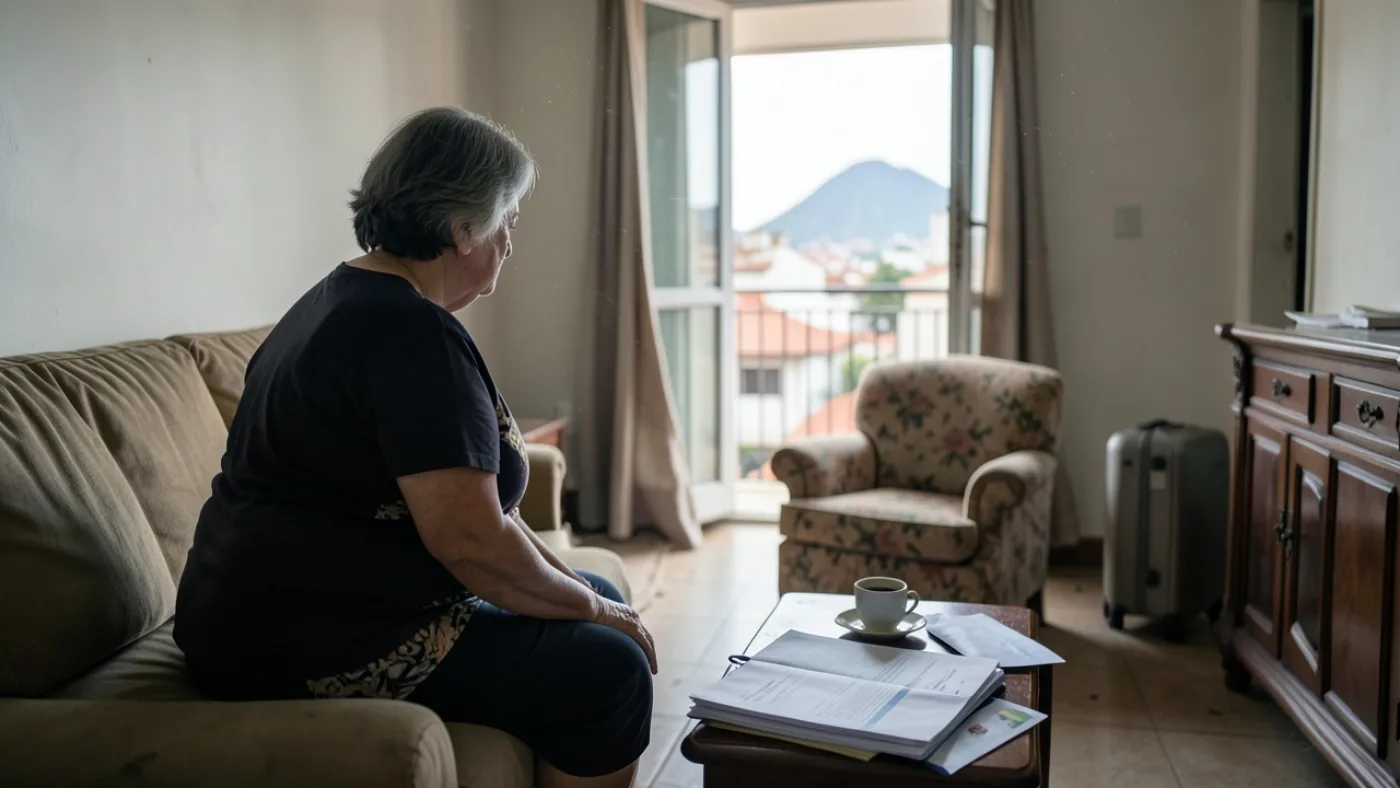
The most expensive mistake foreign heirs make with a Brazilian estate is simple: they wait. They wait for probate to finish in London, Lisbon, Miami or Johannesburg, assuming that once the foreign will is validated, the apartment in Rio or the farm in Bahia will follow automatically. It does not. While they wait, the Brazilian clock runs out.
Brazilian law requires the inventário (probate proceeding) to be opened within 60 days of the death, under the Civil Procedure Code. Miss it, and most states add a late-filing fine to the ITCMD (state inheritance tax). On a R$ 1,500,000 estate in São Paulo taxed at 4%, the tax is R$ 60,000 and a 20% fine adds R$ 12,000 you never had to pay. Then comes the second shock: the foreign will may not even decide who inherits the Brazilian assets.
So the real question is not “where is the will?” It is: which set of rules actually decides who inherits in Brazil, and what will the other heirs, or the state tax authority, argue against you? This article compares the three routes a Brazilian estate can follow (intestate succession, a Brazilian will, and a foreign will), shows where the standard order stops applying, and gives you the strongest counter-argument you will face.
On this page
Who Inherits in Brazil When There Is No Will?
With no valid will, Brazil applies a fixed statutory ladder set out in Article 1,829 of the Brazilian Civil Code (Law 10.406/2002): descendants together with the surviving spouse, then ascendants together with the spouse, then the spouse alone, then collateral relatives up to the fourth degree. Each class excludes the next. Nationality plays no part in it.
This is route A, the default, and it governs the large majority of estates in Brazil because most people die without a will. Brazil is a Civil Law country, so this ladder is written into the statute itself and a judge has no discretion to rearrange it.
| Order | Who is called | Critical detail |
|---|---|---|
| 1st | Descendants (children, then grandchildren) in competition with the surviving spouse | Whether the spouse shares depends on the marital property regime |
| 2nd | Ascendants (parents, then grandparents) in competition with the spouse | The spouse inherits here regardless of the property regime |
| 3rd | Surviving spouse or stable-union partner alone | Takes 100% of the estate |
| 4th | Collaterals to the 4th degree: siblings, nephews and nieces, uncles and aunts, cousins | Full siblings inherit double the share of half-siblings (Civil Code art. 1,841) |
| 5th | The Municipality, State or Federal District | Only when no heir in any class exists (herança vacante) |
Two principles matter enormously for international families. First, all children inherit equal shares. Under Article 227, paragraph 6 of the Federal Constitution, there is no distinction between children born inside or outside marriage, adopted children, or children recognised years later. A child born in Manila to a Filipina mother inherits exactly what a child born in Curitiba inherits.
Second, representation applies. If a child died before the parent, that child’s own children step into the share (Civil Code art. 1,851). A grandchild in Toronto who never met the deceased is a legal heir in Brazil.
Key point: Immigration status is irrelevant to your right to inherit. A tourist, an overstayer, or someone who has never entered Brazil inherits on identical terms. What you cannot avoid is a CPF (Brazilian taxpayer number), because no asset can be transferred or taxed without one.
Pros of route A: no document to validate, no foreign procedure to import, and the heirs are identified directly from birth, marriage and death certificates. Cons: you get no flexibility at all. If the deceased wanted an unmarried partner, a stepchild or a charity to receive something, intestate succession will not deliver it.
How Much Can a Brazilian Will Actually Change?
A Brazilian will can freely dispose of only 50% of the estate. The other half, the legítima, is reserved by Articles 1,845 and 1,846 of the Civil Code for “necessary heirs”: descendants, ascendants and the spouse. Any clause that invades that reserved half is reduced by the court, no matter how clearly it was written.
This is route B, and it is the only route that lets the deceased change the outcome while still being fully enforceable in Brazil. Within the free half (parte disponível), you can name anyone: a partner, a friend, a stepchild, an institution abroad.
How it works: the estate is split in two. The reserved half goes to the necessary heirs in the statutory order. The free half goes wherever the will directs. If there are no necessary heirs at all, the whole estate can be freely disposed of.
Example: an Italian retiree in Florianópolis leaves a Brazilian estate of R$ 1,500,000, one daughter in Milan and a long-term Brazilian partner. His will leaves everything to the partner. The daughter is a necessary heir, so she receives R$ 750,000 (the legítima) and the partner keeps the free half, R$ 750,000, plus whatever share the stable union itself grants her over jointly acquired property.
Formats accepted in Brazil include the public will drawn up before a cartório (notary office with legal registration powers), the closed will and the private will. The public will is the safest for foreigners, because it is read, recorded and kept by the notary, which removes almost every later challenge about capacity or authenticity. You can read the Civil Code text directly on the Brazilian government’s official legislation portal.
Pros: it works immediately in a Brazilian probate, it can allocate specific assets to specific heirs (useful to avoid co-ownership fights), and it can be drafted in Portuguese with a sworn interpreter present. Cons: it cannot disinherit children or a spouse, and it requires the testator to be physically available before a Brazilian notary or to use a consular will.
Does a Foreign Will Decide Who Inherits Brazilian Assets?
Not on its own. Brazilian courts have exclusive jurisdiction over assets located in Brazil, under Article 23, item I of the Civil Procedure Code. A foreign will can be used as evidence of intent, but it never transfers a Brazilian property by itself, and a foreign probate decision over Brazilian-situs assets cannot be recognised at all.
This is route C, and it is where most of the money is lost. Heirs spend two years and thousands of dollars completing probate in their own country, then discover that the Brazilian apartment was never inside that estate for Brazilian purposes.
What actually happens in practice is a separate Brazilian inventário, run under Brazilian succession rules, in which the foreign will is translated by a sworn public translator, apostilled under the Hague Apostille Convention, and submitted. The Brazilian court or notary then applies the foreign dispositions only to the extent they do not violate the legítima or Brazilian public order.
Watch out: clauses that are perfectly normal abroad are void here. A trust holding Brazilian real estate, a clause leaving 100% to one child “because the others were already provided for”, a clause disinheriting a spouse after a long separation: all of these collide with forced heirship and get reduced or ignored.
Foreign judgments about non-Brazilian matters (a divorce, a guardianship, the appointment of an executor over foreign assets) can be recognised through homologation at the Superior Court of Justice. You can check the procedure on the STJ official website. But a foreign ruling dividing a house in Salvador will be refused, because jurisdiction over it belongs exclusively to Brazil.
Pros: it shows intent and can resolve the free half in your favour. Cons: it adds translation, apostille and legalisation costs, it delays the 60-day filing window, and it creates two parallel estates that must be coordinated. Our detailed walkthrough of that second process is here: Brazil Probate: How Foreign Heirs Claim Inheritance.
Which Route Produces Which Result? A Side-by-Side Comparison
The three routes differ less in who inherits than in how much of the estate the deceased could redirect, and how long the process takes. Intestate succession gives zero flexibility, a Brazilian will gives 50%, and a foreign will gives up to 50% but only after translation, apostille and a Brazilian inventário that typically adds 4-8 months.
| Criterion | A. No will (intestate) | B. Brazilian will | C. Foreign will only |
|---|---|---|---|
| Who decides the heirs | Civil Code art. 1,829 ladder | Art. 1,829 for 50% + testator for 50% | Brazilian law applies; will respected only within the free 50% |
| Flexibility | None | Up to 50% of the estate | Up to 50%, subject to validity review |
| Documents needed | Death, birth, marriage certificates, CPF, powers of attorney | Same + certified copy of the will from the cartório | Same + sworn translation + apostille of will and probate papers |
| Typical timeline | 4-8 months by notary deed; 1-3 years in court if contested | Usually judicial; 8-18 months | 12-24 months, plus the foreign procedure |
| Main cost drivers | ITCMD 2%-8% (state rate), notary fees, lawyer fees | Same + will drafting and registration | Same + translation, apostille, consular steps |
| Biggest risk | An unwanted heir appears (estranged child, grandchild by representation) | Clause invading the legítima gets reduced | Missing the 60-day deadline and paying an ITCMD fine |
Tip: open the Brazilian inventário first and let the foreign process run in parallel. Filing within 60 days protects you from the fine even if the foreign documents arrive months later, because the deadline is about opening the proceeding, not finishing it.
When Does the Standard Succession Order Not Apply?
The ladder in Article 1,829 is the rule, but at least six situations bend it. The most common is the marital property regime: in comunhão universal or separação total convencional, the surviving spouse does not compete with the children, while in comunhão parcial the spouse inherits alongside them over the deceased’s separate assets.
Here is where the second half of your problem lives. The exceptions below decide real cases far more often than the ladder itself.
- Stable union (união estável): after the Supreme Federal Court decision in RE 878.694, an unmarried partner in a proven stable union inherits on the same succession terms as a spouse. The decision is searchable at the STF official portal. The catch is proof: without a registered declaration of stable union, the partner must litigate to establish it first.
- Foreign marriage with a foreign property regime: if the couple married abroad under a regime unknown to Brazil, the court must interpret it, which often changes whether the spouse competes with the children.
- Exclusion for unworthiness or disinheritance: an heir who attempted against the deceased’s life or committed serious offences can be excluded, but only by a court judgment, never by a private statement.
- Renunciation: an heir can renounce by public deed. The share then goes to the other heirs of the same class, not to the renouncing heir’s children.
- Usufruct and the right of residence: the surviving spouse keeps the right to live in the family home regardless of their inheritance share, which can make a property unsellable for years.
- The pro-Brazilian-family rule: Article 5, item XXXI of the Federal Constitution and Article 10 of the LINDB (Law of Introduction to the Rules of Brazilian Law) provide that succession of assets of a foreigner located in Brazil follows Brazilian law in favour of the Brazilian spouse or children, unless the law of the deceased’s home country is more favourable to them. This rule chooses whichever law benefits the Brazilian spouse or children, and it can override an otherwise applicable foreign law.
Warning: that last rule cuts both ways. If you are a foreign heir competing with a Brazilian spouse or child of the deceased, expect the other side to invoke Article 5, XXXI to pull in whichever law gives them more. It is one of the most underused arguments in cross-border Brazilian estates.
What Is the Other Side’s Strongest Argument Against You?
The strongest argument is not that you are a foreigner. It is this: the deceased’s last domicile was abroad, so under Article 10 of the LINDB the law of the domicile governs the succession, and the foreign will, validated by a foreign court, should determine everything, including the Brazilian apartment.
Stated properly, that argument has real teeth. Article 10 of the LINDB genuinely connects succession to the law of the deceased’s domicile. Many jurisdictions, including the EU succession regime, treat the estate as a single unit governed by one law. A well-prepared opposing lawyer will say: Brazil itself chose the domicile rule, so Brazil must accept its consequences, and re-litigating the same estate in two countries produces contradictory results and double taxation.
Here is the answer, in three layers.
First, jurisdiction beats choice of law. Even if a foreign law were applicable in theory, Article 23, item I of the Civil Procedure Code gives Brazilian courts exclusive jurisdiction over successions involving assets situated in Brazil. No foreign judgment on those assets can be homologated. So the practical forum is always Brazil.
Second, forced heirship is public order. Articles 1,845 and 1,846 protect the reserved half as a matter of Brazilian public policy. A foreign disposition that eliminates a child’s legítima is not applied, regardless of which law the opposing side invokes.
Third, the Constitution has the final word. Article 5, XXXI is a constitutional command, and it ranks above the LINDB. Where a Brazilian spouse or child exists, the comparison between the two laws is mandatory and resolved in their favour.
The double-taxation part of their argument is legitimate, but it is solved separately, not by surrendering jurisdiction. We cover the mechanics in Brazil Inheritance Tax Treaty: None Exists, Avoid Double Tax.
Which Situation Are You In, and Which Route Should You Take?
Match your facts to the route. Estates with only descendants, no will and no dispute can usually be closed by notary deed in 4-8 months. Estates with a foreign will, a contested stable union, a minor heir or an absent heir must go through court, which realistically means 12-24 months.
- You are a child or grandchild abroad and there is no will: route A. Get a CPF, send an apostilled power of attorney to a Brazilian lawyer, and push for the notary (extrajudicial) inventário. Fastest and cheapest path.
- You are an unmarried partner: prove the stable union first, ideally by a declaration registered at a cartório while both partners are alive. Without that proof, you may be treated as a stranger to the estate.
- You still have time to plan: route B. A Brazilian public will covering the Brazilian assets, drafted in parallel with your home-country will, eliminates almost all cross-border friction. See Inheritance for Foreigners in Brazil in 2026 for the planning checklist.
- You hold only a foreign will: route C. File the Brazilian inventário immediately, then supplement with the translated and apostilled will.
- The estate includes rural land near a border: special restrictions apply to foreign ownership. Check Brazil Border Land: 150 km Rule for Foreign Buyers before assuming you can simply register the transfer.
What Changed in 2026 for Foreign Heirs?
The forced heirship core of the Civil Code was not amended. The real change is fiscal: the 2023 tax reform constitutional amendment (Constitutional Amendment 132/2023) requires states to apply progressive ITCMD rates, and several states have been raising their top brackets toward the 8% ceiling currently set by the Federal Senate.
Two other developments matter for international families. Courts continue to expand the treatment of stable unions, including unions formed abroad, in line with RE 878.694. And notary offices have become far more comfortable running fully remote inventários for heirs who never travel to Brazil, provided the powers of attorney are apostilled and the heirs are all adults and in agreement.
Quick recap: the law on who inherits is stable. What is moving is the tax rate on what you inherit and the practical ability to do the whole process without boarding a plane.
Frequently Asked Questions About the Succession Order in Brazil
Can my foreign parent disinherit me from Brazilian assets?
Not from the reserved half. As a descendant you are a necessary heir under Articles 1,845 and 1,846 of the Civil Code, which guarantee you a share of 50% of the estate alongside the other necessary heirs. A will can redirect only the free half. True disinheritance exists but requires a court judgment based on specific grave causes listed in the Civil Code, such as an attempt against the testator’s life, and it is rarely granted.
Do I need to travel to Brazil to receive my inheritance?
Usually no. You can act through a Brazilian lawyer with a specific power of attorney (procuração) signed before a notary abroad and apostilled, or signed at a Brazilian consulate. You will need a CPF, which non-residents can request through a Brazilian consulate or online via Receita Federal. Travel becomes necessary only in rare contested cases where a judge requires personal appearance.
Does my stepchild or my ex-spouse inherit anything in Brazil?
A stepchild who was never legally adopted or recognised is not in the succession order and inherits only if named in the free half of a will. A divorced ex-spouse inherits nothing. A legally separated spouse also loses succession rights. A spouse who was separated in fact for a short period before death may still inherit, which is a frequent source of litigation and depends on evidence about the actual end of the relationship.
What happens if one heir lives abroad and refuses to cooperate?
The notary route requires unanimity, so a single uncooperative heir pushes the case into court. There, the heir is served (abroad through a rogatory letter or the Hague Service Convention, which adds 6-12 months) and the judge can divide the estate without their consent. The remaining heirs can also request judicial authorisation to sell an asset that is deteriorating or generating costs during the proceeding.
How much will the whole process cost a foreign heir?
Budget three layers. ITCMD runs from 2% to 8% of the asset value depending on the state, so an estate of R$ 500,000 taxed at 4% means R$ 20,000. Notary and registry fees typically add 1%-2%. Lawyer fees in uncontested estates are often 4%-6% of the estate value. Add translation and apostille, commonly R$ 70-R$ 500 per document depending on length and language.
Confirm Your Place in the Brazilian Succession Order Before the 60 Days Run Out
Cross-border estates are not difficult because Brazilian law is obscure. They are difficult because two legal systems are describing the same family at the same time, and only one of them controls the asset on Brazilian soil. Our bilingual team handles exactly this: identifying who the legal heirs are under Brazilian law, filing the inventário in time, and defending your share against the arguments the other heirs will raise.
Your concrete next step: gather the death certificate, your own birth or marriage certificate, and any will (Brazilian or foreign), then send them to us for a succession-order analysis so we can tell you in writing where you stand and what must be filed first.
Talk to a specialist lawyer now
Talk to a Lawyer on WhatsApp