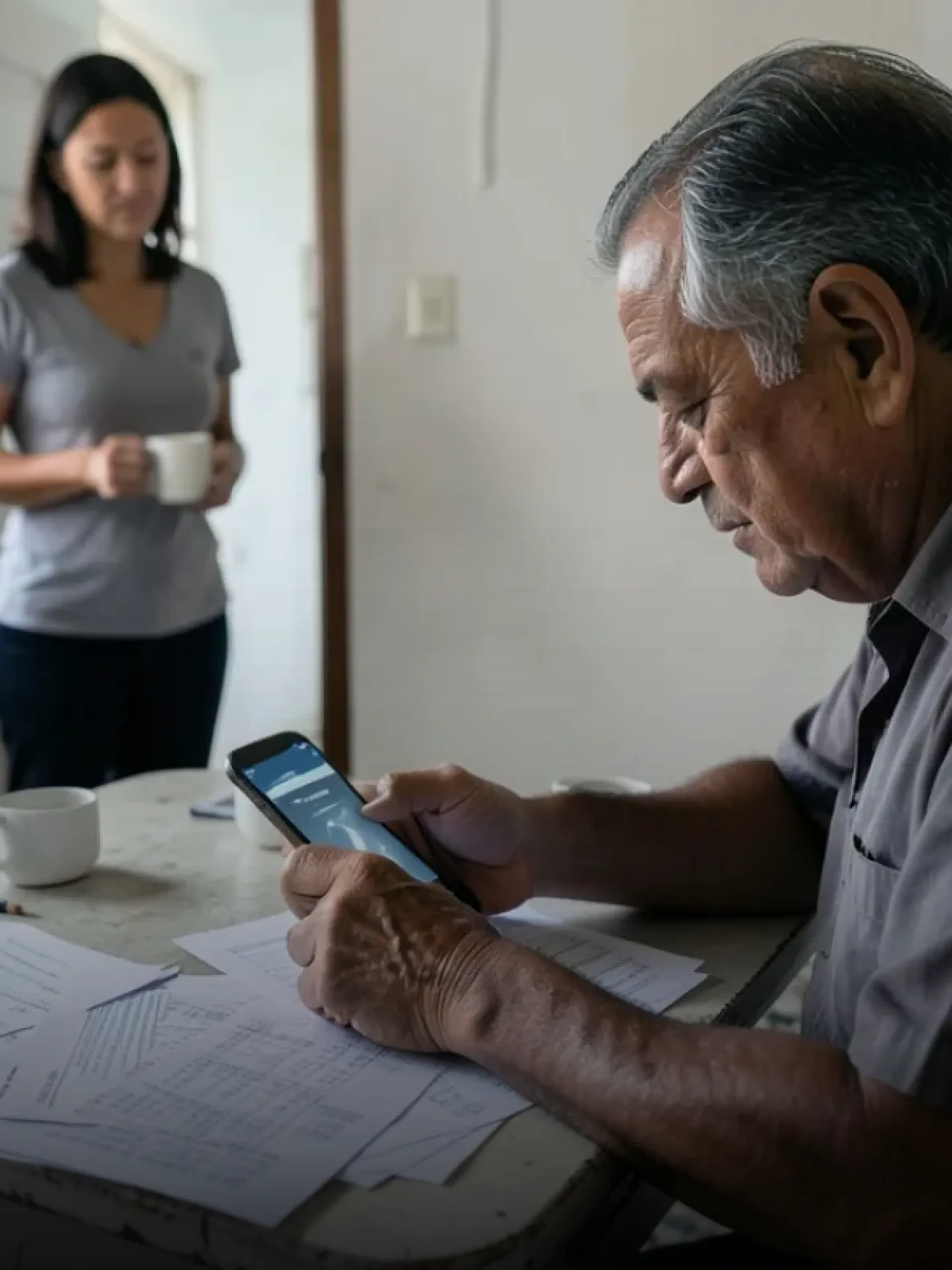

You have decided to leave Brazil for good. The apartment is sold or the lease is ending, the flights are booked, and the last thing on your mind is another visit to a government website. Here is the problem: if you simply board the plane, Receita Federal (the Brazilian IRS) keeps treating you as a Brazilian tax resident. That means Brazil continues to claim tax on your worldwide income, including the salary you will earn in Lisbon, Dubai or Miami, and it keeps expecting an annual return from you every single year.
The way to cut that link cleanly is the tax exit process: the Comunicação de Saída Definitiva do País (Notice of Definitive Exit) and the Declaração de Saída Definitiva do País (Definitive Exit Tax Declaration). They are two separate filings, both free, both done online with Receita Federal, and both governed mainly by Instrução Normativa RFB nº 208/2002 and the Income Tax Regulation approved by Decreto nº 9.580/2018.
Skipping them is not a harmless shortcut. Receita Federal can block your CPF, hold you liable for tax on foreign income you never brought into Brazil, and apply a late-filing fine that starts at R$ 165.74 and climbs to 20% of the tax due. The Administrative Council of Tax Appeals (CARF) has already confirmed in published rulings that filing the exit declaration late is a formal infraction with no escape through voluntary disclosure.
This guide explains exactly what to file, when, what it costs, what happens if you do not, and how to fix the situation if you left Brazil years ago and never told anyone.
On this page
What Is the Tax Exit Declaration in Brazil?
The tax exit declaration is the formal filing that ends your status as a Brazilian tax resident. Under Instrução Normativa RFB nº 208/2002, it comes in two parts: the Comunicação de Saída Definitiva (a short notice of departure) and the Declaração de Saída Definitiva (a full income tax return covering 1 January up to your exit date). Both are free.
Think of the Comunicação as the announcement and the Declaração as the closing accounts. The Comunicação tells Receita Federal the date you stopped being a resident, so the system can flag your CPF as a non-resident and stop expecting the ordinary annual return. The Declaração reports every real, every asset and every source of income up to that exit date, then closes the file.
Many foreigners assume only Brazilian citizens go through this. Not true. If you lived in Brazil on a residence permit, or even on a temporary status but stayed 183 days or more within a 12-month period, you became a tax resident. Our detailed breakdown of tax residency in Brazil and the 183-day rule explains how you acquired that status in the first place.
Brazil follows the Civil Law tradition, which means the rules are written out in statutes and normative instructions rather than built from case law. That is good news for you: the requirements are objective and published. The bad news is that Receita Federal applies them mechanically. If the filing is missing, the system assumes you are still a resident, no matter where you actually live.
Important: The exit process is about tax residency, not immigration status. Cancelling your CRNM (National Migration Registration Card) with the Federal Police does not close your tax file, and closing your tax file does not cancel your residence permit. They are separate procedures handled by different agencies.
Who Must File It, and When Does Tax Residency Actually End?
Anyone registered as a Brazilian tax resident who leaves permanently must file. Under Instrução Normativa RFB nº 208/2002, residency ends on the date declared in the Comunicação de Saída. If you never file, residency ends automatically only after 12 consecutive months abroad, and Brazil taxes your worldwide income for that entire period.
That 12-month gap is where the money is lost. Consider a British consultant who leaves São Paulo on 10 March 2026 and starts a job in Singapore on 1 April. If he files the exit notice, his Brazilian residency ends on 10 March and nothing he earns in Singapore concerns Receita Federal. If he files nothing, he stays a Brazilian tax resident until 10 March 2027, and every Singapore paycheque in between is, on paper, taxable in Brazil at rates reaching 27.5%.
You are expected to go through the exit process if any of the following apply:
- You held a permanent residence permit or CRNM and are moving abroad without intending to return to live in Brazil.
- You spent 183 days or more in Brazil within a 12-month window, became a tax resident, and are now leaving.
- You are leaving temporarily but will remain abroad for more than 12 months (the character of the absence changes automatically).
- You are a Brazilian national relocating permanently, including dual nationals and naturalised citizens.
Example: A German engineer arrives in Brazil in February 2024 on a work-based residence permit, files Brazilian returns for 2024 and 2025, and leaves on 20 June 2026. Her Declaração de Saída Definitiva must cover income from 1 January 2026 to 20 June 2026 only, plus a full listing of the assets she held on that exit date (Brazilian bank balances, an apartment in Florianópolis, a car, investments).
There is a nuance worth knowing. In a 2017 ruling, CARF held that a taxpayer who never filed the exit declaration and kept submitting ordinary returns as a resident could still be treated as a non-resident in fact, because more than 12 months abroad had elapsed. The declaration, the panel said, is the formal expression of the intent to leave, not the only possible proof of it. Useful in a dispute, but a terrible plan A: that taxpayer only reached that conclusion after an assessment and years of litigation.
What Are the Deadlines for the Exit Notice and the Exit Declaration?
Two deadlines apply. The Comunicação de Saída Definitiva must be filed from the exit date until the last business day of February of the year following departure. The Declaração de Saída Definitiva is filed during the ordinary income tax season of that following year, which Receita Federal has consistently closed at the end of May.
Practical translation for a 2026 departure:
- Exit date: any day in 2026.
- Comunicação de Saída Definitiva: from the exit date until the last business day of February 2027.
- Declaração de Saída Definitiva: during the 2027 filing season, normally March to the end of May 2027, covering income from 1 January 2026 to the exit date.
- Any tax due: payable in a single instalment by the Declaração deadline, without the usual option to split into monthly quotas.
If you left in 2025, the Comunicação was due by the last business day of February 2026 and the Declaração by the close of the 2026 season (31 May 2026, per the calendar published by Receita Federal). If you are reading this after those dates and did nothing, you are late, but the situation is fixable, and the sooner you act the smaller the fine.
Tip: File the Comunicação as soon as you have a confirmed exit date, even before you fly. It takes about fifteen minutes on the Receita Federal portal and it is the single filing that stops the residency clock. The heavier Declaração can wait for the following year’s season.
One more deadline matters for your paperwork: five years. That is the general period Receita Federal has to review and assess your filings, so keep every protocol number, receipt and supporting document for at least that long after the exit year.
What Happens If You Skip the Exit Declaration?
Skipping it triggers a late-filing fine of 1% per month on the tax due, with a minimum of R$ 165.74 and a ceiling of 20% of the tax owed, according to Receita Federal’s published penalty rules. On top of that, unpaid tax accrues interest at the SELIC rate plus 1% per month, and your CPF can be flagged as irregular (“pendente de regularização”).
The consequences fall into three layers, and the third is the one that hurts most.
Layer 1: the fine and the interest
In CARF case 10880.722082/2013-11, decided on 9 September 2020, the panel confirmed that an individual who permanently leaves Brazil must file the exit declaration promptly for income earned up to the departure date. Filing late is a formal infraction subject to a fine calculated on the tax due, and the panel expressly rejected the argument that voluntary disclosure (denúncia espontânea) wipes out the penalty. Coming forward on your own reduces exposure, but it does not erase the late-filing fine.

Layer 2: the CPF blockage
A CPF flagged for missing returns is a practical nightmare. It can block bank transfers, freeze investment accounts, prevent you from selling Brazilian property, stop you from renewing documents at a consulate, and complicate any future return to Brazil. Foreigners who kept an apartment in Rio and later tried to sell it remotely are the classic case: the sale stalls at the cartório (notary office with legal registration powers) because the seller’s tax situation is irregular.
Layer 3: worldwide income exposure
This is the expensive one. While you remain a resident on paper, Brazil claims tax on everything you earn anywhere. With Brazil now receiving automatic bank information from more than 100 jurisdictions under the OECD Common Reporting Standard, a foreign account in your name linked to a Brazilian CPF is visible to Receita Federal.
Warning: If Receita Federal assesses you as a resident for a year you spent entirely abroad, the burden shifts to you to prove the departure with boarding passes, foreign lease agreements, foreign tax residency certificates and utility bills. Rebuilding that evidence five years later, from another continent, is far more expensive than the fifteen-minute filing you skipped.
How Do the Different Exit Scenarios Compare?
The financial gap between filing on time and doing nothing is measured in years of worldwide taxation, not in filing fees. Both the Comunicação and the Declaração cost R$ 0 to submit through the Receita Federal portal. The table below sets out the four situations we see most often in practice.
| Scenario | When residency ends | Worldwide income taxed by Brazil | Typical cost and risk |
|---|---|---|---|
| Comunicação and Declaração filed on time | On your declared exit date | Only up to the exit date | R$ 0 in filing fees, clean CPF, non-resident treatment from day one |
| Filed late (within a year or two) | On your declared exit date, once accepted | Only up to the exit date | Fine from R$ 165.74 up to 20% of tax due, plus SELIC interest |
| Never filed, more than 12 months abroad | Automatically after 12 consecutive months of absence | Full 12 months of worldwide income | Assessment risk, CPF irregular, burden of proving departure |
| Never filed and still filing resident returns | Contested, may require a CARF or court dispute | Potentially every year filed as resident | Highest exposure: assessments, litigation and legal fees |
In practice: An American expat earning USD 120,000 a year abroad who forgets the exit filing after leaving in July 2026 is, on paper, exposed to Brazilian tax on roughly USD 60,000 of 2026 foreign income plus another six months of 2027 income, at rates up to 27.5%. Foreign tax credits may soften the blow if a treaty applies, but the compliance and legal cost alone typically exceeds R$ 15,000.
What Changed in 2026 for Departing Taxpayers?
The core exit rules in Instrução Normativa RFB nº 208/2002 remain unchanged in 2026. What changed is the environment around them: the income tax reform sanctioned in late 2025 and effective from January 2026 raised the exemption threshold for residents to R$ 5,000 per month and introduced a withholding charge on dividends remitted abroad, sharpening the difference between resident and non-resident treatment.
Three developments deserve your attention this year.
First, the resident versus non-resident gap widened. With residents now enjoying a higher exemption band and a minimum effective tax on very high incomes, while payments to non-residents face flat withholding at source, the choice is no longer academic. If you hold Brazilian company shares or receive profit distributions, your residency status directly changes what leaves your account.
Second, offshore reporting for residents got heavier. The 2023 offshore assets law requires Brazilian residents to report and tax foreign investments, trusts and controlled companies on an annual basis. A person who “forgot” the exit declaration is technically caught by these rules, which is precisely why unfiled exits are now riskier than they were five years ago.
Third, data-matching improved. Receita Federal cross-checks CPF activity against banking data, property registries and international information exchange. A dormant CPF attached to an active foreign bank account is exactly the profile that generates automated notices.
None of this changes the mechanics of the filing. It changes the price of ignoring it. For the wider picture of how Brazil taxes non-residents and residents differently, see our pillar guide on taxes in Brazil for foreigners, with rules and rates for 2026.
How Do You File the Exit Declaration Step by Step?
Everything is done online through the Receita Federal portal using a gov.br account or a digital certificate. There is no fee. Budget one afternoon for the Comunicação and the supporting paperwork, and expect the full Declaração the following year to take longer, since it lists every asset you held on the exit date.
Step 1: fix your exit date
Choose the date you actually left Brazil with the intention of not returning to live there. Keep the boarding pass and any evidence of the move (foreign lease, employment contract, school enrolment for children).
Step 2: file the Comunicação de Saída Definitiva
Access the service through the Receita Federal portal on gov.br, log in, and complete the short form with your CPF, exit date and, if applicable, details of any dependants leaving with you. Save the receipt and protocol number immediately.
Step 3: appoint a fiscal representative in Brazil
Naming a procurador (attorney-in-fact) resident in Brazil is not legally mandatory, but it is strongly recommended. Your representative can receive notices, handle withholding obligations on rental income, and act if Receita Federal raises a query while you are twelve time zones away. The power of attorney is usually granted through a cartório or a Brazilian consulate abroad.
Step 4: prepare the Declaração de Saída Definitiva
Download the annual IRPF software in the following year’s season and select the “Saída Definitiva do País” option. Report:
- All income earned from 1 January to the exit date: salary, rent, freelance income, investment returns, capital gains.
- All assets and rights held on the exit date: Brazilian and foreign bank balances, real estate, vehicles, shares, quotas in Brazilian companies.
- Debts and liabilities outstanding on that date.
- Tax already withheld at source and any carnê-leão payments made during the year.
After the exit date, foreign income no longer belongs in the Brazilian return. That is the whole point of the exercise.
Step 5: convert your banking and investment accounts
Notify your Brazilian bank and broker that you are now a non-resident. Ordinary retail accounts must generally be converted into a Conta de Domiciliado no Exterior (CDE), and portfolio investments migrate to the non-resident investor regime regulated by the Banco Central do Brasil under CMN Resolution 4.373. Banks are strict here: an unconverted account can be frozen when the institution’s compliance team notices the mismatch.
Step 6: settle any tax due and archive everything
Pay any balance in one instalment by the Declaração deadline through a DARF slip, then store the receipts, protocol numbers and the declaration file itself for at least five years.

Note: If you keep a Brazilian company (CNPJ) running after you leave, the company remains fully resident for tax purposes and still needs a valid registered address in Brazil. Ribeiro Cavalcante provides a fiscal address in Brazil for exactly this situation, so your corporate obligations do not collapse when your personal residency ends.
What Are the Mistakes That Cost Departing Expats the Most Money?
The most expensive error is not the missing filing itself, it is the combination of an open resident status with income still flowing from Brazil. Rental income paid to a non-resident is subject to withholding at 15% at source under the Income Tax Regulation approved by Decreto nº 9.580/2018, and the paying party is responsible for it.
Here is what typically goes wrong in real files:
- Filing the Comunicação but never the Declaração. The residency clock stops, but the return that closes the year is missing, and the fine still applies.
- Continuing to pay carnê-leão on Brazilian rent as if resident. Once you are a non-resident, the tenant or the property manager must withhold 15% and remit it. Paying the wrong way creates a double problem: an overpayment on one side and an unpaid withholding on the other.
- Leaving property in a resident’s tax profile. When you later sell that apartment, capital gains for non-residents follow a progressive scale starting at 15%, and the buyer’s notary will demand proof of your tax status. Mismatched records stall the deed.
- Forgetting dependants. A spouse or children included in your resident returns need their own exit treatment. Otherwise, their CPFs stay flagged.
- Assuming a tax treaty makes the filing optional. Treaties allocate taxing rights and relieve double taxation, but they do not remove the domestic obligation to formalise your exit.
Brazil has double taxation treaties with countries including Portugal, Spain, Italy, France, Argentina, Japan, Canada and the Netherlands, but not with the United States or the United Kingdom, where relief depends on domestic foreign tax credit rules instead. Where no treaty exists, an unclosed Brazilian residency can genuinely lead to the same income being taxed twice, with no mechanism to unwind it.
If you are still resident and unsure how your Brazilian income should be reported before you leave, our guide on how to declare income to Receita Federal as a foreigner in 2026 walks through the annual return itself.
Frequently Asked Questions About Leaving Brazil for Good
I left Brazil three years ago and never filed anything. Can I still fix it?
Yes. You file the Comunicação de Saída Definitiva retroactively with your true exit date and submit the missing Declaração de Saída Definitiva for that year, plus any ordinary returns Receita Federal still expects. Expect a late-filing fine starting at R$ 165.74 per return, up to 20% of tax due, plus SELIC interest. CARF has confirmed that voluntary disclosure does not cancel the fine, but coming forward before an assessment keeps the amount at the minimum and restores your CPF to regular status, which is what unblocks property sales and bank transfers.
Do I still have to file the annual Brazilian tax return after the exit declaration?
No, not the ordinary resident return. Once the exit is properly filed, your obligation ends with the Declaração de Saída Definitiva. From then on, Brazilian-source income is taxed by withholding at source: 15% on rent, 15% to 22.5% on capital gains, and specific rates on financial investments. Your tenant, broker or paying agent handles the withholding. You do not file an annual return unless you later re-acquire Brazilian tax residency, for example by moving back with a residence permit or by exceeding the 183-day threshold again.
Does the exit declaration cancel my CPF?
No. Your CPF stays active and keeps the same number, but its status changes to non-resident. You will still need it to hold Brazilian property, receive rental income, maintain investments under the non-resident regime, or open accounts in the future. Keeping the CPF regular is precisely why the exit filing matters: an irregular CPF blocks routine operations at banks, cartórios (notary offices with legal registration powers) and consulates, and can only be cleared by bringing the missing declarations up to date.
What if I leave Brazil temporarily and might come back in two years?
Under Instrução Normativa RFB nº 208/2002, an absence that exceeds 12 consecutive months converts into non-residency automatically, whether or not you intended it. If you know you will be abroad longer than a year, filing the exit is usually the cleaner route, because it fixes an exact date instead of leaving a 12-month window of worldwide taxation. If you return later, you simply become a resident again on arrival with a residence permit, or after 183 days in any 12-month period.
I keep an apartment in Brazil that I rent out. How am I taxed after leaving?
Rental income paid to a non-resident is subject to 15% withholding at source, applied on the gross rent, under the Income Tax Regulation of 2018. There is no monthly carnê-leão and no annual return for that income. The practical difficulty is operational: someone in Brazil must calculate and remit the DARF each month. This is the main reason we recommend appointing a fiscal representative before you fly, ideally the same professional or agency managing the property.
Is a lawyer required to file the exit declaration?
Legally, no. The filings are free and can be submitted by the taxpayer through the gov.br portal. In practice, foreigners hire counsel when the file is complicated: property to sell, a Brazilian company (CNPJ) still active, several years of missing returns, treaty questions, or an assessment already issued. All lawyers in Brazil must be registered with the OAB (Brazilian Bar Association), and you can verify any lawyer’s registration number on the OAB website before signing a power of attorney.
File Your Brazilian Tax Exit Declaration With Confidence
Leaving a country is stressful enough without wondering, years later, whether a tax authority on another continent still considers you one of its residents. The exit declaration is not complicated, but it is unforgiving: the deadlines are fixed, the fines are automatic, and the cost of doing nothing compounds quietly until the day you try to sell a property or move money.
Our bilingual team at Ribeiro Cavalcante Advocacia handles tax exits for expats, investors and international families every month, including retroactive filings for people who left Brazil years ago and only discovered the problem when their CPF was blocked. We review your residency history, calculate the exposure, prepare both filings, and act as your fiscal representative in Brazil so you never have to deal with Receita Federal alone from abroad.
Tell us your exit date and your situation, and we will tell you exactly what needs to be filed and what it will cost.
Talk to a specialist lawyer now
Talk to a Lawyer on WhatsApp