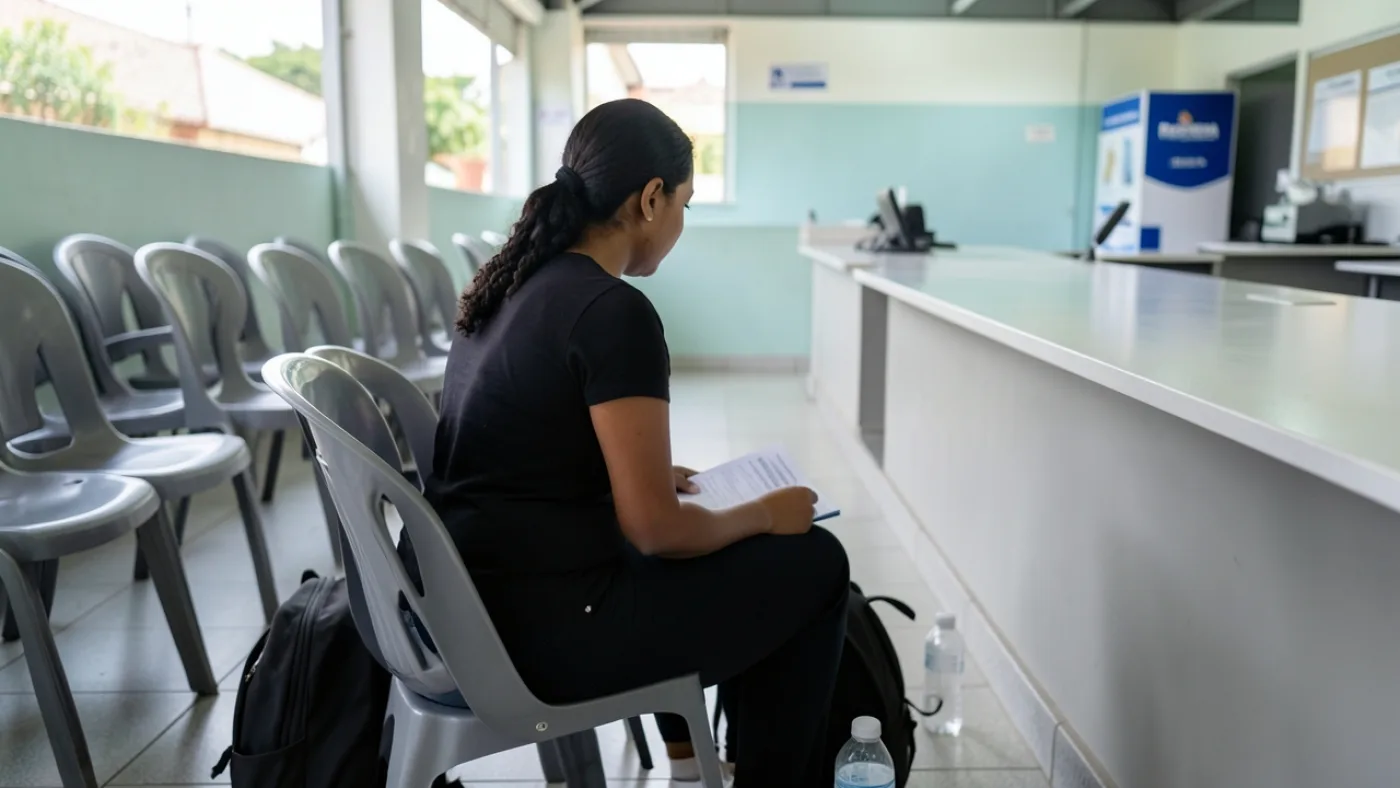

Yes, you can screen out almost every fake Brazilian lawyer in about ten minutes, for free, before you transfer a single real. But the check most expats are told to do (asking to see an OAB card) is the one that protects you least, because a card is trivial to fake and impossible for a foreigner to read.
Here is the uncomfortable part. Most foreigners who lose money to a “Brazilian lawyer” never get it back, and the reason is almost never that the fraud was sophisticated. It is that the victim paid a personal PIX, signed nothing, and dealt with someone the Brazilian Bar Association has no authority over. When you later go looking for justice, your complaint gets denied at three different doors: the OAB says the person was never registered, the police need proof of intent, and the civil court asks for the contract you never had.
So this guide works backwards. First the rule that decides everything, then the red flags that actually predict fraud, then the three very different kinds of “legal help” you will be offered in Brazil, and finally the situations where these red flags are not red flags at all. Because a foreigner who walks away from every lawyer who asks for money upfront will never hire anyone.
On this page
What Is the One Rule That Makes or Breaks Every Brazilian Legal Scam?
Only a person registered with the Ordem dos Advogados do Brasil (OAB, Brazilian Bar Association) may give legal advice or represent you before a Brazilian court. Under the Statute of Advocacy and the Bar, Law 8.906/1994, any legal act performed by an unregistered person is null and void. Not contestable. Void.
Read that last sentence again, because it is the mechanism that turns a bad hire into a disaster. If an unregistered “consultant” files your residency appeal or your response to a Federal Police notification, the filing does not merely look weak. It can be struck out entirely, and the deadline behind it does not come back. You paid for a document that legally never existed.
Brazil also follows the Civil Law (Roman-Germanic) tradition, not Common Law. There is no broad system of binding precedent that a lawyer can wave at you, and the Superior Court of Justice (STJ) publishes decisions that guide but rarely guarantee. Anyone telling you “I have a precedent that makes your case automatic” is either simplifying for a foreigner or lying to one.
Important: Practising law without OAB registration is not just an administrative issue in Brazil. It is the misdemeanour of illegal exercise of a profession, and when money changes hands it becomes estelionato (fraud) under Article 171 of the Brazilian Penal Code, punishable by one to five years of imprisonment plus a fine.
Which Red Flags Actually Predict a Scam?
Seven signs do most of the predictive work: a guaranteed outcome, a withheld OAB number, a large upfront payment to a personal account with no written contract, manufactured urgency, English that evaporates after the sale, a power of attorney with money-handling powers, and a refusal to put anything in writing on WhatsApp.
1. They guarantee the result
Guaranteeing an outcome is a disciplinary offence for Brazilian lawyers, listed among the infractions in the OAB Statute. A genuine lawyer will tell you the probability, the risks and the worst case. “Your permanent residency is 100% approved, I know the officer” is not confidence. It is a sales pitch from someone who will be unreachable when it fails.
2. The OAB number never arrives
A real lawyer’s registration number (for example OAB/SP 351.356) is public information printed on every petition they file. If you ask twice and get deflection (“my assistant handles that”, “I will send it after the contract”), stop. You can check any name or number yourself on the OAB’s free national register in two minutes; here is the step-by-step OAB number check.
3. Big money upfront, personal account, zero paperwork
Brazilian practice uses a written fee agreement (contrato de honorários) as standard. Payment should go to the CNPJ (company tax number) of the law firm or to the lawyer’s account identified by CPF matching the contract, with a receipt. A PIX to a random individual for R$ 12,000, with the contract “coming next week”, is the single most common way foreigners lose money here.
4. Artificial urgency
“Immigration is cracking down this week.” “The seller signs tomorrow or the deal dies.” “Transfer today and I will file tonight.” Real Brazilian deadlines exist, but they are written in a document you can read, and they are measured in days or months, not in hours.
5. English that drops after the sale
Fluent English in the sales call, then months of Portuguese-only voice notes and untranslated court documents. This is sometimes fraud and sometimes just a firm using a bilingual salesperson over a monolingual legal team. Either way you end up signing things you cannot read. Compare what genuine bilingual service costs in our guide to English-speaking lawyers in Brazil.
6. A power of attorney that lets them touch your money
This is the red flag nobody warns expats about. A standard litigation procuração (power of attorney) gives powers to act in court. A dangerous one adds special powers to receive funds and give discharge (receber e dar quitação), to sell assets, or to move money. Sign that and your settlement or property proceeds land in their account, legally.
7. Nothing in writing, ever
Voice notes only. No email. No numbered case reference (número do processo). Brazilian court cases are searchable online by number in almost every state. A lawyer who will not give you the process number of your own case is hiding either inaction or non-existence.
Warning: Brazil does not have the American-style contingency culture in most areas, and quota litis fee agreements are restricted by OAB rules. Anyone promising “you pay nothing unless we win, and I need R$ 2,000 now for costs” is combining two incompatible ideas.
Who Are the Three Kinds of “Lawyer” You Will Meet in Brazil?
Foreigners in Brazil are typically offered help by three profiles: an OAB-registered advogado, an unregistered “consultant” or despachante (document facilitator), and a foreign attorney. Only the first can advise you on Brazilian law or go to court. The other two have narrow, legitimate uses and are regularly used to sell illegitimate ones.
Option A: the OAB-registered advogado
Requirements to hold this title: a Brazilian law degree plus a pass in the Exame de Ordem (bar exam), then registration at a state OAB chapter. A foreign law degree alone is not enough. They can sign petitions, appear before courts, the Federal Police and Receita Federal (the Brazilian tax authority), and they are bound by a disciplinary code with real penalties: censure, suspension and disbarment.
Pros: your acts are valid, your fee contract is enforceable, and the OAB can discipline them. Cons: the good ones are not the cheapest, and consultation fees in 2026 commonly run R$ 300 to R$ 800 for an initial paid session in the major capitals, with state OAB fee schedules (tabelas de honorários) publishing suggested minimums that serious firms respect.
Option B: the despachante or “legal consultant”
A despachante is a legitimate document facilitator. Queuing at a cartório (notary office with legal registration powers), pulling certificates, handling vehicle paperwork, chasing a protocol at a public counter: all fine, all cheap, often R$ 80 to R$ 400 per errand. What they cannot legally do is advise you on your visa strategy, draft your purchase contract, or represent you in a dispute.
Pros: fast and inexpensive for pure bureaucracy. Cons: if they cross into legal work, the work is void and you have almost no recourse, because the OAB has no disciplinary jurisdiction over someone who was never registered.
Option C: the foreign attorney
A lawyer qualified abroad may register with the OAB as a consultor em direito estrangeiro (foreign law consultant) and advise on their own jurisdiction only. Never on Brazilian law, never in a Brazilian court. Useful when your matter is cross-border (US tax exposure, EU succession), useless for a Brazilian property closing or an immigration filing. The scam version: a “US-qualified international lawyer in Brazil” charging R$ 15,000 to handle a Brazilian residency case they cannot legally sign.
| Criterion | OAB advogado | Despachante / consultant | Foreign attorney |
|---|---|---|---|
| Can advise on Brazilian law | Yes | No (illegal) | No (home jurisdiction only) |
| Can file in court | Yes | No, filings are void | No |
| How to verify | OAB national register, free, 2 minutes | No public register of competence | OAB consultant register |
| Typical 2026 cost | R$ 300-800 consultation; R$ 8,000-15,000 immigration package | R$ 80-400 per errand | Hourly, often USD-based |
| Written contract expected | Yes, contrato de honorários | Service receipt | Engagement letter |
| If they take your money | OAB complaint + civil claim + police | Police and civil claim only | Usually foreign bar, slow |
| Safe use case | Any legal matter | Queues, certificates, protocols | Cross-border advice only |
Where Exactly Does Your Claim Get Denied When You Try to Recover the Money?
Recovery attempts fail at three predictable doors. The OAB refuses because the person was never registered and is outside its jurisdiction. The police report stalls because fraud under Article 171 of the Penal Code requires proof of intent to deceive, not just bad service. And the civil claim weakens because you have no written contract defining what was promised.
Each door has a key, and each key is a document you create before you pay, not after.
- OAB disciplinary complaint: works only against a registered lawyer, and even then it can suspend or disbar them without returning one real to you. It is punishment, not refund.
- Police report (boletim de ocorrência) for estelionato: needs a paper trail showing deception. Screenshots of promises, the PIX receipt, the fake OAB number, the WhatsApp claim “I am a lawyer”.
- Civil claim: under the Small Claims Law (Lei 9.099/1995), the Juizado Especial Cível handles claims up to 40 times the minimum wage, and you do not need a lawyer for claims up to 20 times the minimum wage. It is the realistic route for sums under roughly R$ 60,000.
- Fee arbitration: if the dispute is about how much a real lawyer charged, Brazilian courts can arbitrate fees, but they start from the written contract. No contract means the judge estimates, usually generously for the professional.
Practical example: A French investor paid R$ 35,000 by PIX to a “consultor jurídico” promising a fast-tracked investor visa. No contract, personal account, no OAB number. Four months later the phone was off. The OAB replied it had no jurisdiction because the man had never been registered. His remaining routes were a police report and a small claims action, and the money was already gone offshore.
Now compare: the same R$ 35,000 paid to a law firm’s CNPJ against a signed contrato de honorários with deliverables and a refund clause. Same risk of a bad outcome, completely different recovery position.
But Isn’t a Large Upfront Fee Without a Formal Contract Just Normal in Brazil?
This is the strongest argument on the other side, and it is not entirely wrong. Brazilian legal work is an obligation of means, not of result, so fees are earned by effort, not by winning. Advance payment of 30% to 50% is genuinely standard, and many small practices operate for years on WhatsApp confirmations alone.
Put at its strongest, the defence sounds like this: “I did the work, I filed the petition, the court denied it. Fees are due for the service, not the outcome. The client speaks no Portuguese, misunderstood the timeline, and now wants a refund because they lost. There was no formal contract because the client was in a hurry and asked me to start immediately. Nothing in Brazilian law requires a written fee agreement for the fee to be owed.”
That argument usually wins on the fee question. It does not save the scammer, and here is the difference. First, the defence presupposes registration; an unregistered person performed acts that are void, so there was no service to be paid for. Second, it presupposes evidence of work: a process number, a protocol, a filed petition. Fraud cases collapse precisely because no protocol exists. Third, it presupposes a professional relationship, meaning payment traceable to a professional, invoiced, declared.
So the correct response is not “never pay upfront”. It is: pay upfront to a verified OAB registration, against a written scope, into a traceable account, with a protocol number expected by a specific date. Then the other side’s best argument becomes irrelevant, because you can prove exactly what was promised and exactly what was delivered.
When Are These Red Flags Not Red Flags at All?
Roughly half the “red flags” circulating in expat Facebook groups are legitimate Brazilian practice misread by foreigners. Genuine deadlines can be brutally short (appeal windows are often 15 days in Brazilian procedure), genuine upfront costs exist, and a good lawyer will refuse to predict your outcome. Knowing the exceptions stops you from rejecting the competent professionals.
- Real urgency: if the lawyer shows you the notification, the citation or the court order with the date on it, the urgency is the document’s, not theirs. Ask to see the page.
- Legitimate advance costs: court filing fees, cartório charges, certificate fees, apostilles and sworn translation are real disbursements. They should be itemised, and the receipts should come back to you. See which documents actually need an apostille for Brazil before paying for extras you do not need.
- Portuguese-only documents: Brazilian courts operate in Portuguese, and foreign documents need a tradutor público (sworn translator), not your lawyer’s casual translation. Our guide on finding and verifying a sworn translator explains who is authorised.
- “I cannot promise you will win”: that is the ethical answer, not a weak one.
- Using a despachante: perfectly fine when a firm delegates queue work to cut your bill. It is a problem only when the despachante makes the legal decisions.
- A procuração drafted in Portuguese: normal. Signed abroad, it usually needs notarisation and an apostille. What matters is reading the powers granted, clause by clause.
Tip: Paste the procuração into a translation tool before signing and search for the words “receber”, “quitação”, “alienar” and “transigir”. If they appear and nobody explained why, ask for them to be removed. Litigation powers do not require money-handling powers.
What Changed in 2026?
The legal framework did not change: Law 8.906/1994 still governs who may practise, and the Penal Code articles on fraud and false identity are untouched. What changed is the fraud technique. Instant payments and AI-generated material now let a scammer build a convincing bilingual “law firm” in a weekend.
Three patterns have grown noticeably among foreign clients:
- Cloned identities. The scammer uses a real, verifiable OAB number belonging to an actual lawyer, then gives you a different WhatsApp number and bank account. The register check passes. Always cross-check the name against the firm’s official channels and call the number listed publicly, not the one that contacted you.
- AI-polished websites and documents. Flawless English, invented case studies, fabricated “court decisions” as PDFs. Verify any court document by searching the process number on the relevant state court portal, not by trusting the file you received.
- Instant, irreversible payment. PIX settles in seconds and cannot be recalled like a card charge. The Central Bank (Banco Central do Brasil) provides a special refund mechanism for fraud, but it depends on the bank and on speed, so report within hours, not days.
Immigration matters deserve a specific note. Residency and visa processes run through the Federal Police and the official gov.br channels, with published fees. Nobody has an inside contact, and no fee is payable in cash to an intermediary “for the officer”.
How Do You Vet a Brazilian Lawyer in 30 Minutes?
Six steps, and none of them cost anything. The core of it is verifying the registration on the OAB’s free national register, then confirming that the bank account, the contract and the registered name all describe the same person or firm. Mismatch in any of the three is where you stop.
- Step 1: get the full name and OAB number in writing. On WhatsApp or email, not verbally. Format is state plus number, such as OAB/RJ 123.456.
- Step 2: search the OAB national register at cna.oab.org.br. Confirm the name, the state chapter and that the registration is active, not suspended or cancelled.
- Step 3: verify the identity behind the number. Ask for the firm’s CNPJ and check that the bank or PIX details belong to that CNPJ or to the lawyer’s own CPF matching the contract.
- Step 4: demand a contrato de honorários. It should state the scope, the deliverables, the total fee, the payment schedule, who pays court and cartório costs, and what happens if you terminate. Our list of costly contract mistakes foreigners make in Brazil applies here too.
- Step 5: read the procuração line by line and strike out money-handling powers you did not agree to.
- Step 6: set a written checkpoint. “You will send me the protocol or process number by [date].” A real lawyer accepts this immediately.
Important: You will need a CPF (Brazilian taxpayer number) for almost any legal or property matter here, and a legitimate lawyer will help you get one rather than charge you thousands to “arrange” it. Start with our guide on how to get a CPF in Brazil.
Frequently Asked Questions
How do I know if a Brazilian lawyer’s OAB number is real?
Search the name or number on the OAB’s free national register (cna.oab.org.br). It returns the registered name, state chapter and status. A valid result is necessary but not sufficient: scammers reuse real numbers belonging to other lawyers. Cross-check by contacting the firm through the phone number or email published on its own official site or on the state OAB chapter listing, never through the number that approached you.
Is it normal for a Brazilian lawyer to ask for payment before starting?
Yes. An advance of 30% to 50% of the agreed fee is standard practice, and court filing fees plus cartório costs are genuinely payable upfront. What is not normal is paying before you have a signed contrato de honorários, or paying into a personal account that does not match the contract. Request an itemised breakdown separating professional fees from third-party costs, and keep every receipt.
Can a foreign lawyer represent me in Brazil?
No. Representation before Brazilian courts and authorities requires OAB registration, which requires a Brazilian law degree and a pass in the Exame de Ordem. A foreign attorney may register with the OAB as a consultor em direito estrangeiro and advise only on their home jurisdiction. If someone qualified abroad offers to handle your Brazilian immigration filing or property purchase, the acts they sign can be declared null and void.
What do I do if I already paid a fake lawyer?
Act within hours, not days. Contact your bank immediately and ask about the fraud refund mechanism for PIX transfers. File a boletim de ocorrência (police report) for estelionato, attaching PIX receipts, screenshots of the promises and any claim of being a lawyer. If the person is OAB-registered, file a disciplinary complaint with the state chapter. Then assess a civil claim, which for sums under roughly R$ 60,000 usually goes to small claims court.
Should I trust lawyer recommendations from expat Facebook groups?
Treat them as leads, never as verification. Groups are actively farmed by intermediaries, and enthusiastic recommendations frequently come from people whose case has not finished yet, so no result has been tested. Take the name, then run the OAB check, the CNPJ check and the contract check yourself. A referral from someone whose matter closed successfully two years ago is worth more than twenty fresh comments.
Hiring a Lawyer in Brazil Without Falling for the Scam: Your Next Step
Being asked to wire thousands of reais to a stranger in a country whose language and legal system you are still learning is an uncomfortable position, and caution here is intelligence, not paranoia. Every legitimate Brazilian firm expects you to verify it.
Your next step is concrete: take the name you are considering, run it through cna.oab.org.br, and ask that person for a written contrato de honorários with the scope, the fee and the payment account stated. If you want a second opinion on a contract or a fee proposal you have already received, send it to our bilingual team and we will tell you what it actually says before you sign.
Talk to a specialist lawyer now
Talk to a Lawyer on WhatsApp