
Fortunately, the transaction costs for buying property in Brazil are highly regulated and predictable. If you understand how the municipal taxes, notary fees, and registration costs work, you can budget for your purchase without any unpleasant surprises. This guide breaks down every single cost you will encounter, from the initial tax payment to the final property deed registration.
To successfully complete your transaction, you must understand the rules on how to legally buy property in Brazil as a foreigner. Armed with the right information and professional support, you can protect your investment and secure your dream property with peace of mind.
On this page
What is the Real Cost of Buying Property in Brazil?
The total transaction cost of buying property in Brazil typically ranges from 4% to 8% of the property’s value, according to historical transactional data from the Association of Notaries and Registrars of São Paulo (ANOREG/SP). This percentage includes the ITBI municipal transfer tax, public notary drafting fees, and the land registry office fee.
Unlike common law countries, Brazil uses a civil law system where property transfers are highly formalized. You cannot transfer property through a private contract alone. The law requires a public deed drafted by a licensed notary and registered with the specific registry office that holds the property’s records. Each of these steps has a mandatory, non-negotiable cost associated with it.
To give you a clear, visual breakdown of what you need to budget, here is an overview of the mandatory and optional costs you will face. Keep in mind that these rates are set by municipal and state laws, meaning they will vary slightly depending on where your property is located.
| Expense Type | Average Cost / Rate | Who Pays? | Is It Mandatory? |
|---|---|---|---|
| ITBI (Municipal Tax) | 2% to 4% of property value | Buyer | Yes |
| Public Deed (Escritura) | 0.5% to 1.5% (State-regulated scale) | Buyer | Yes (for properties over 30 minimum wages) |
| Property Registry (Registro) | 0.5% to 1.5% (State-regulated scale) | Buyer | Yes |
| Clearance Certificates (Certidões) | R$ 200 to R$ 800 total | Buyer | Yes (highly recommended for due diligence) |
| Power of Attorney (Procuração) | R$ 300 to R$ 800 | Buyer | If buying remotely via representative |
| Legal Representation Fee | 1% to 2% of transaction value | Buyer | Optional (strongly recommended for foreigners) |
Note: While some of these fees might look small individually, they add up quickly. If you are planning an acquisition, you should always keep a liquid buffer of at least 6% of the purchase price ready in Brazilian Reais (BRL) to cover these administrative closing costs.
What is the ITBI Tax and How Much Will You Pay?
The ITBI (Imposto sobre Transmissão de Bens Imóveis) is a municipal property transfer tax that averages 2% to 3% of the property’s assessed value, as authorized by Article 156 of the Brazilian Federal Constitution. The buyer must pay this tax to the local municipality before the property registry office can officially record the deed transfer.
Because ITBI is a municipal tax, every city in Brazil has the authority to set its own rate and payment deadlines. The tax is calculated based on either the actual purchase price agreed upon by the parties or the “Valor Venal de Referência” (the municipality’s estimated market value for the property), whichever is higher.
Municipalities do this to prevent buyers and sellers from under-reporting the transaction price to pay lower taxes. For example, if you buy an apartment in São Paulo for R$ 400,000, but the city database estimates its reference value at R$ 450,000, your ITBI tax will be calculated using the R$ 450,000 figure.
Let’s look at the actual ITBI rates for major Brazilian cities in 2026, according to official municipal tax codes:
- São Paulo (SP): 3.0% of the property’s reference value.
- Rio de Janeiro (RJ): 3.0% of the property’s assessed value.
- Brasília (DF): 3.0% of the property’s transaction value.
- Salvador (BA): 3.0% for standard urban properties.
- Florianópolis (SC): 2.0% of the transaction value.
- Belo Horizonte (MG): 3.0% of the property’s assessed value.
Warning: You must pay the ITBI within the deadline established by the municipality—often 15 to 30 days after signing the purchase commitment or immediately before signing the public deed. Failing to pay on time will result in late fees of up to 20% plus daily interest based on the SELIC rate.
To help you understand how this works in practice, let’s look at a concrete calculation for an apartment purchase in São Paulo:
Example: If you buy a condominium in São Paulo for R$ 500,000, and the municipal reference value is also R$ 500,000, your ITBI tax will be exactly R$ 15,000 (3.0% of R$ 500,000). You must pay this in a single installment via a municipal tax slip (Guia de ITBI) before scheduling your deed signing.
How Do Cartório and Land Registry (Registro de Imóveis) Fees Work?
Cartório and registry fees in Brazil are set by progressive state tables updated annually, typically totaling between 1% and 2% of the property’s purchase price under the applicable Brazilian law (The Public Records Law). On a R$ 1,000,000 property, these administrative costs generally range from R$ 10,000 to R$ 20,000 depending on the state.

Foreigners often get confused by the word “cartório” because it refers to two completely different entities involved in the purchase process. To legally buy property, you must pay fees to both of them:
- Tabelionato de Notas (Notary Public Office): This cartório drafts the public deed of purchase and sale (Escritura Pública). The notary reviews the seller’s and buyer’s documents, confirms the ITBI payment, and drafts the legal transfer document. Both parties must sign this deed.
- Cartório de Registro de Imóveis (Real Estate Registry Office): Once you have the signed Escritura Pública, you must take it to the specific registry cartório where the property is registered. They will verify the deed and update the property’s master record book (Matrícula) to list you as the new owner.
Important: Under Article 1,245 of the Brazilian Civil Code, you are not the legal owner of a property until the public deed is officially registered in the Matrícula at the Registro de Imóveis. Signing the deed at the notary’s office only creates a contract between the parties; it does not transfer ownership.
State court systems regulate the fees for both of these offices. The tables are progressive, meaning that the absolute cost increases as the property value rises, but the percentage rate actually decreases. These tables vary significantly from state to state. For instance, registering a R$ 500,000 property in Santa Catarina may cost a different amount than registering the same value property in Rio de Janeiro.
Let’s look at the average cost breakdown for a property valued at R$ 800,000 in the state of São Paulo, according to the official 2026 fee tables published by the state’s registry college:
- Deed Drafting Fee (Tabelionato de Notas): Approximately R$ 3,900.
- Property Registration Fee (Registro de Imóveis): Approximately R$ 3,750.
- Total Cartório Costs: R$ 7,650 (just under 1% of the total purchase price).
Are There Hidden Costs or Exemptions for Buyers in Brazil?
Yes, hidden costs like sworn translations, background check certificates (certidões), and power of attorney drafting can add up to R$ 3,000, though first-time buyers can claim a 50% discount on registry fees under Article 290 of the Public Records Law (the applicable Brazilian law). This registry discount applies specifically to properties financed through the Housing Finance System (SFH).
When planning your purchase, you must look beyond the main taxes and registration fees. If you are a foreign buyer, you will face several mandatory costs that local buyers do not have to worry about. Understanding these costs beforehand will keep your transaction on track.
Here are the primary additional costs you must consider:
- Sworn Translations: Any foreign document, such as a marriage certificate or corporate charter, must be translated by a certified public translator in Brazil (tradutor juramentado) to have legal validity. This service usually costs R$ 250 to R$ 500 per page.
- Apostille and Legalization: Documents issued outside Brazil must be apostilled in your home country. This fee is paid locally to your domestic notary or state authority before you send the documents to Brazil.
- Power of Attorney (Procuração Pública): If you cannot be physically present in Brazil to sign the deed, you must grant a power of attorney to a trusted representative or your lawyer. Preparing this document at a Brazilian consulate abroad or at a local notary in Brazil costs between R$ 300 and R$ 800.
- CPF Registration: Every foreign buyer must obtain a Brazilian taxpayer registry number (Cadastro de Pessoas Físicas – CPF). This can be done online through the official Brazilian government portal (gov.br), which is usually free or costs a nominal administrative fee of less than R$ 15 if processed via a consular office.
- Due Diligence Certificates (Certidões Negativas): To protect yourself from buying a property with hidden debts or lawsuits attached to it, you must pull clearance certificates for both the property and the seller. Ordering these certificates from various court systems and municipal registries costs around R$ 400 to R$ 800 in total.
Tip: If you are buying your very first residential property in Brazil and financing it through the SFH, make sure to explicitly request the 50% registry fee discount at the Cartório de Registro de Imóveis. The notary will not apply this discount automatically; you must request it in writing and sign a declaration stating that this is your first home purchase.
Before you commit to a purchase, it is also highly recommended that you check the current laws regarding foreign property ownership in Brazil to verify if your nationality or the location of the property (such as border zones or agricultural lands) introduces any special legal restrictions.
What Changed for Real Estate Transactions in 2026?
In 2026, the complete digital integration of the Electronic Public Registry System (SERP) has cut property deed registration times down to 5 to 7 business days, down from the previous 30-day average. Additionally, remote digital signatures via the e-Notariado platform are now universally accepted for foreign buyers holding a valid CPF.
This digital transformation has made buying property in Brazil faster, safer, and much cheaper for international investors. You no longer have to spend thousands of dollars on plane tickets just to sign a paper registry book in a crowded notary office. You can complete the entire purchase process from your laptop, as long as you have a registered digital signature.
The SERP system also allows lawyers to conduct comprehensive, real-time background checks across all 26 Brazilian states and the Federal District simultaneously. This dramatically reduces the time and cost associated with obtaining physical clearance certificates, making the legal due diligence phase much more secure.
Another major change being discussed in 2026 is the ongoing implementation of the Brazilian Tax Reform (PEC 45/2019). While the reform will replace several consumption taxes with a new dual VAT system over the next few years, ITBI remains a municipal tax for the time being. However, administrative changes in how municipal values are assessed mean that cities are updating their reference values more frequently. Having professional legal advice to verify that the tax basis is calculated correctly is more critical than ever.
Step-by-Step Practical Guide to Paying Fees and Transferring Property
Completing a property transfer in Brazil requires a structured legal sequence that typically takes 15 to 42 days to finalize once a price is agreed upon. Following the correct order is essential because the public registry office will immediately reject any deed that does not have proof of paid municipal taxes attached to it.
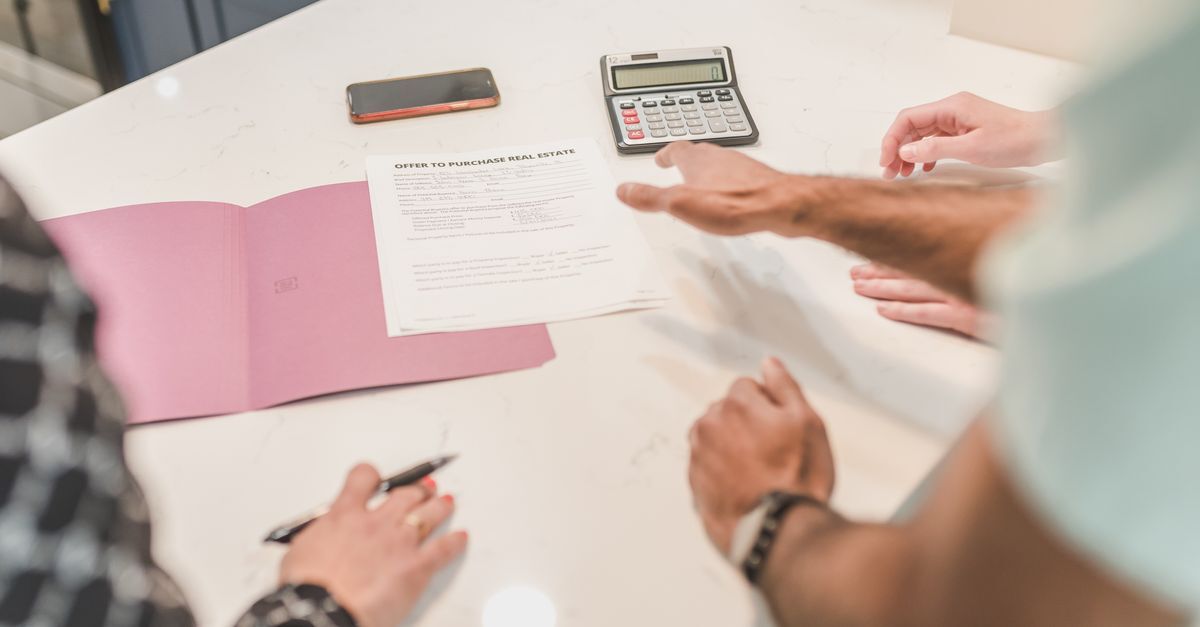
This step-by-step list shows how the process works from start to finish, along with the estimated timeline and documentation requirements for each stage:
- Legal Due Diligence (7 to 10 days): Your legal representative collects and reviews all *certidões negativas* (clearance certificates) from the seller and the property. This ensures the property is free of mortgages, tax liens, and labor law liabilities.
- Drafting the Private Agreement (3 to 5 days): The buyer and seller sign a private purchase and sale commitment (*Contrato de Promessa de Compra e Venda*). This contract outlines the price, payment terms, and penalties. A small deposit (usually 10%) is paid at this stage.
- Requesting the ITBI Tax Slip (2 to 4 days): Your lawyer or notary submits the transaction details to the local city hall (*Prefeitura*) to generate the ITBI tax payment slip.
- Paying the ITBI Tax (1 day): The buyer pays the ITBI tax slip through a wire transfer or bank deposit. You must keep the official bank receipt, as the notary cannot draft the public deed without it.
- Drafting the Public Deed (5 to 10 days): The *Tabelionato de Notas* drafts the *Escritura Pública*. Once drafted, both the buyer and seller sign the document physically or digitally via the e-Notariado platform. The notary fee is paid at this time.
- Registering the Deed (5 to 7 business days): The signed deed and proof of ITBI payment are submitted to the *Registro de Imóveis*. The registrar updates the property’s master record (*Matrícula*), completing your legal transfer of ownership.
To prepare for this process, make sure you have the following essential documents ready:
- A valid Passport.
- An active Brazilian CPF number.
- Proof of marital status (marriage certificate, translated and apostilled if non-Brazilian).
- Proof of address (from your home country or Brazil).
- Power of Attorney (if signing via a legal representative).
If you want a more detailed look at the complete transactional timeline, check out our guide on the step-by-step real estate purchase process for foreigners in Brazil.
Frequently Asked Questions About Brazilian Property Costs
Can a foreigner pay property taxes in Brazil from an overseas bank account? No, you cannot pay Brazilian municipal taxes (ITBI) or cartório fees directly from a foreign bank account. These payments must be made in Brazilian Reais (BRL) using a local bank transfer or payment slip (Boleto Bancário). Most foreign buyers transfer funds to a regulated Brazilian currency exchange broker or their legal representative’s escrow account, which then pays the local tax authorities on their behalf.
What is the difference between Valor Venal and the transaction price? The *Valor Venal* is the official value assigned to a property by the municipal government for annual property tax (IPTU) purposes. The transaction price is the actual amount you agree to pay the seller. For ITBI calculation, the municipality will use whichever value is higher. If your purchase price is R$ 600,000 but the city’s database lists the *Valor Venal de Referência* as R$ 650,000, your tax will be calculated based on R$ 650,000.
Do I need a Brazilian bank account to buy real estate in Brazil? No, you do not need a personal Brazilian bank account to purchase property, but having one can make paying municipal taxes and monthly utility bills easier. You can transfer the purchase price directly from your overseas account to the seller’s account through a Central Bank-registered exchange contract (*Contrato de Câmbio*), or you can use a licensed broker to handle the currency conversion and make payments on your behalf.
How long does it take to register the property after paying the fees? Under the 2022 public registry modernization law (Law 14.382), the *Registro de Imóveis* must register your public deed within 5 to 7 business days from the submission date, provided all documents are correct and the ITBI tax is paid. If the registry office finds any inconsistencies in your documents, they will issue a “nota devolutiva” (rejection notice) pointing out the errors, which can add 15 to 30 days to your timeline.
Are there annual taxes on property ownership in Brazil? Yes, once you purchase property in Brazil, you are responsible for paying the IPTU (*Imposto Predial e Territorial Urbano*), which is an annual municipal property tax. The rate typically ranges from 0.5% to 1.5% of the property’s assessed value (*Valor Venal*), depending on the city and the property type. You can pay this tax in a single annual payment (which usually includes a 5% to 10% discount) or in 10 monthly installments.
Protect Your Investment: Hire a Bilingual Brazilian Real Estate Lawyer
Working with an independent real estate attorney is the best way to safeguard your funds, avoid tax overpayments, and ensure your deed is properly registered with the local authorities. A bilingual lawyer registered with the Brazilian Bar Association (OAB) will conduct a thorough title search, draft protective contracts, and coordinate with the cartórios so you don’t have to navigate the bureaucracy alone.
Navigating Brazilian real estate law as a foreigner can be daunting, but you do not have to do it alone. Our bilingual legal team at Ribeiro Cavalcante Advocacia is here to guide you through every step of your transaction, ensuring your interests are fully protected from contract to registry.
Talk to a specialist lawyer now
Talk to a Lawyer on WhatsApp