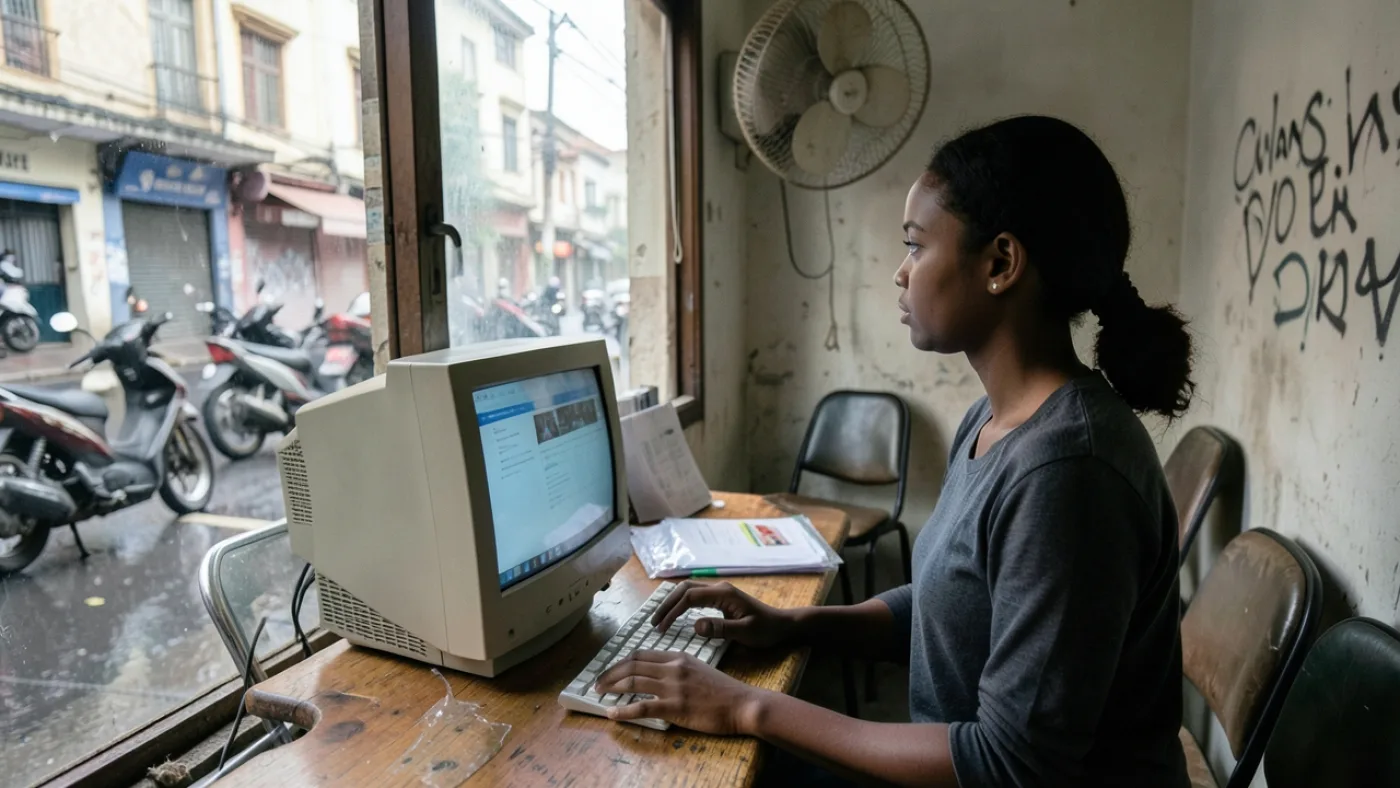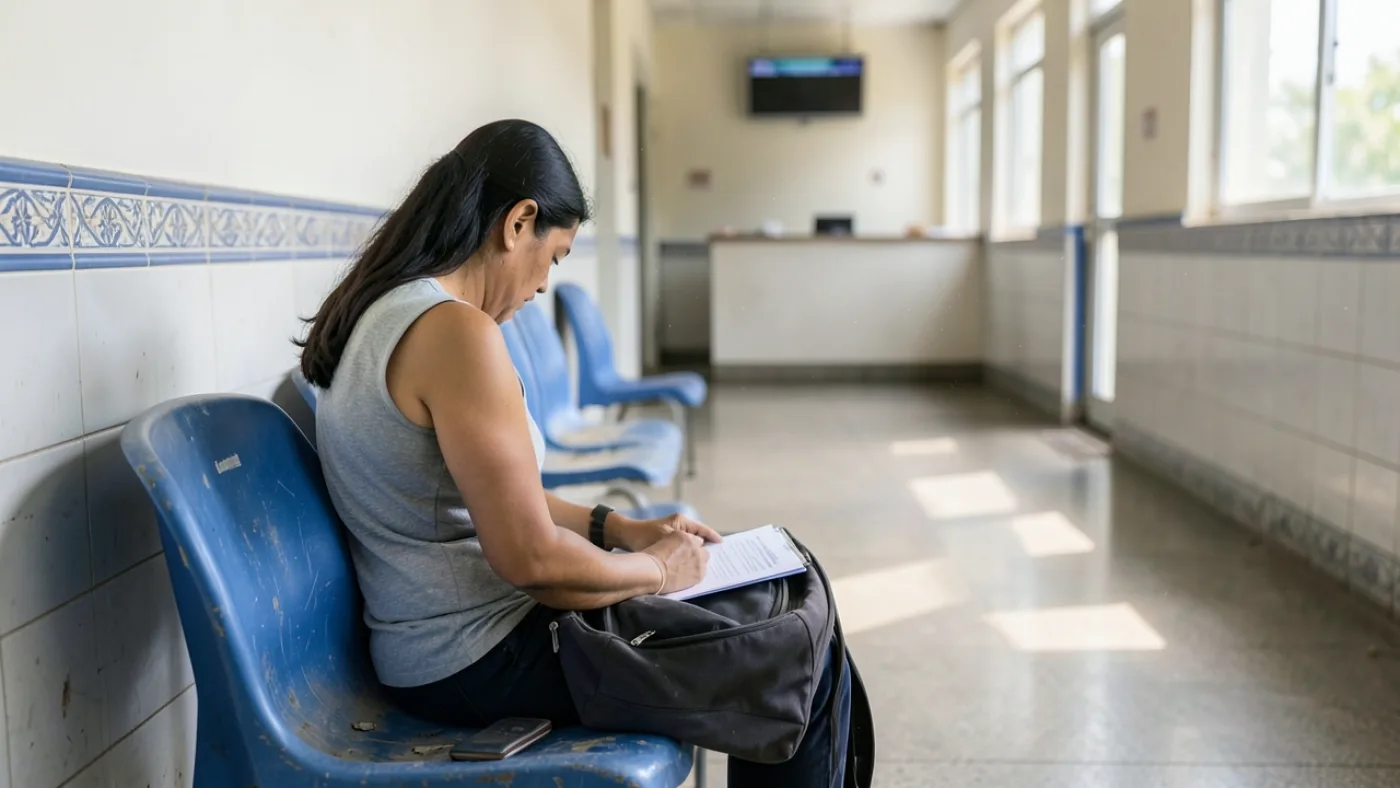
You landed in Brazil excited to start your remote‑work adventure, but suddenly the reality hits: you need to legalize your status and the process feels like a maze of Portuguese documents, government portals, and conflicting advice. If you’re wondering where to start and how to avoid costly mistakes, you’re in the right place. The good news? Brazil’s digital nomad visa (officially a temporary residence permit for remote workers) follows a logical, repeatable checklist — and thousands of foreigners have successfully obtained it. In this guide, you’ll learn exactly how to apply, from gathering your first document to holding your CRNM card.
By early 2026, over 3,800 digital nomads had already registered under the framework of Lei 13.445/2017 (the Migration Law) and Normative Resolution No. 45/2021. The application process does involve Brazilian bureaucracy, but with clear steps, the right documents, and an understanding of the timeline, you can avoid the most common pitfalls. Whether you apply at a Brazilian consulate abroad or switch from a tourist visa inside Brazil, this article breaks down every stage, including updated 2026 requirements, real costs, and tips from applicants who’ve already gone through it.
On this page
What Is the Brazil Digital Nomad Visa and Who Can Apply?
Brazil’s digital nomad visa is a temporary residence permit that allows you to live and work remotely in the country for up to two years. You must be employed or contracted by a company outside Brazil — or have your own business that generates income from non‑Brazilian sources — and you must be able to perform your professional duties using information technology. The permit does not authorize you to work for a Brazilian employer, nor to receive local salary; it is strictly for remote work directed abroad.
To qualify in 2026, you must meet these core criteria:
- A monthly income of at least USD 1,500 (or the equivalent in another currency).
- Alternatively, a bank balance of at least USD 18,000 for the year, in lieu of monthly proof.
- Valid health insurance coverage that is usable in Brazil.
- A clean criminal record (no serious convictions) from your country of residence or origin.
- Proof that your work is remote and your employer or clients are based outside Brazil.
If you tick these boxes, you can apply whether you’re in your home country or already inside Brazil on a tourist visa. For a deeper dive into the legal requirements and how they changed, see our complete 2026 Digital Nomad Visa requirements guide.
How Much Does the Process Cost? (Fees in BRL and USD)
Understanding the fees ahead of time helps you budget without surprises. The following table summarizes the main costs you’ll face in BRL and their approximate USD equivalent (using an exchange rate of around R$ 5 = US$ 1 for simplicity, though rates fluctuate).
| Application Stage | Fee (BRL) | Approx. USD | When Due |
|---|---|---|---|
| Consular visa fee (if applying abroad) | Varies (typically R$ 400‑500) | $80‑100 | At consulate appointment |
| eVisa for US/CA/AU nationals (pre-travel) | R$ 405 (approx.) | $81 | Before boarding (if applying inside Brazil) |
| CRNM registration fee (via MigranteWeb) | R$ 204.77 | $41 | At Polícia Federal appointment |
| CRNM issuance fee (card production) | R$ 168.13 | $34 | After biometrics |
| Total (inside‑Brazil path, eVisa not needed) | R$ 372.90 | ~$75 | — |
| Total (consular path + CRNM fees) | ~R$ 872.90 | ~$175 | — |
If you need to hire a tradutor juramentado (sworn translator), budget an additional R$ 0.30 to R$ 0.50 per word for document translations. Most applicants spend R$ 200‑500 on translation services. Also, apostille fees abroad vary by country.
What Documents Do I Need to Apply for the Brazil Digital Nomad Visa?
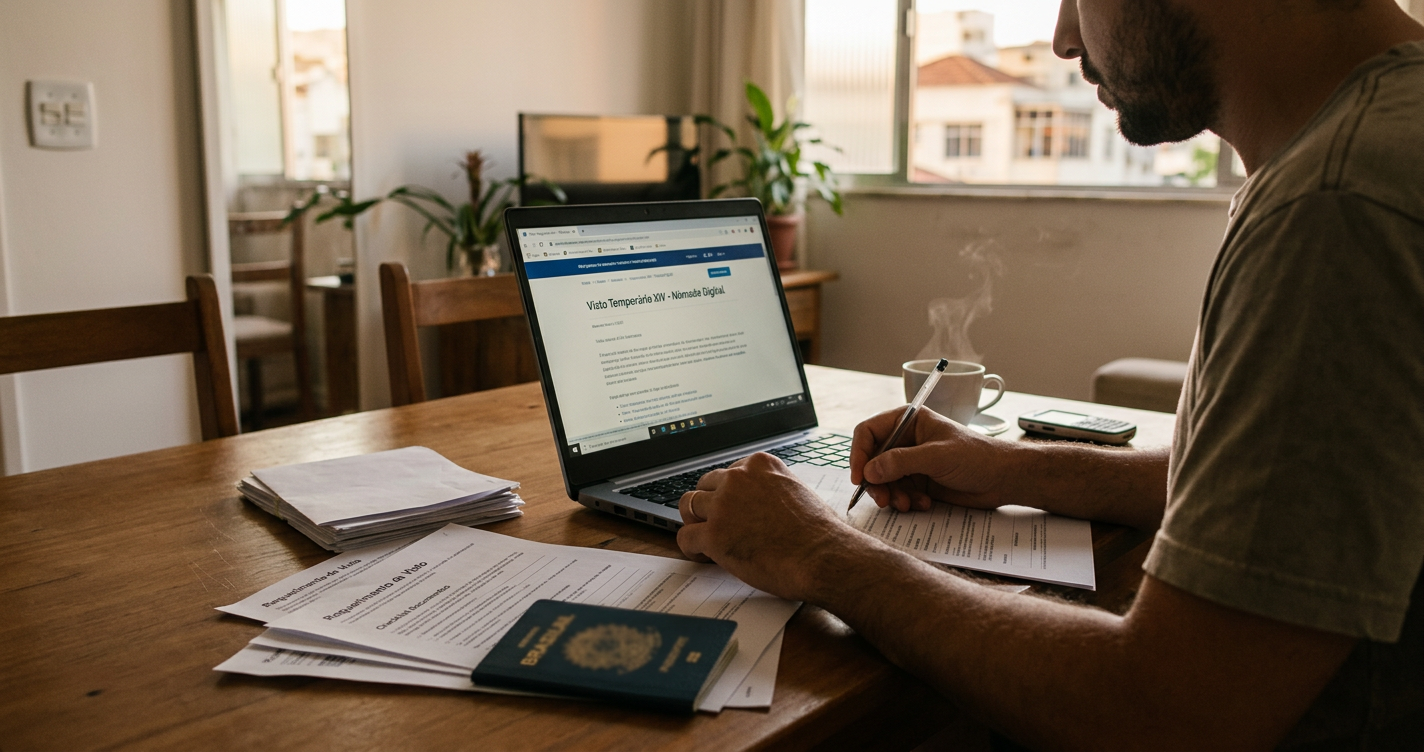
Gathering the right paperwork is half the battle. All foreign documents must be apostilled in your home country (Brazil is a signatory to the Hague Apostille Convention) and, if not in Portuguese, translated by a tradutor juramentado (sworn translator) registered with the local Junta Comercial (Commercial Registry). Here’s your document checklist:
- Passport — valid for at least six more months, with a blank page for the visa sticker (if applying at a consulate) and a copy of the bio page.
- Proof of remote work — an employment contract, service agreement, or a detailed declaration from your employer/clients explaining your role, remote nature, and that your salary comes from a foreign source. Freelancers should provide multiple client contracts and invoices.
- Proof of income — recent bank statements (last three months) showing regular deposits of at least USD 1,500/month, or a bank certificate showing a balance of USD 18,000 or more. Tax returns or payslips can also help.
- Criminal background check — issued within the last 90 days from every country you’ve lived in for the past five years. Must be apostilled.
- Health insurance certificate — valid for use in Brazil, covering the full period of your intended stay. It must explicitly state coverage in Brazil.
- Completed visa application form — if applying at a consulate, the form from the consular portal; if inside Brazil, the online form via MigranteWeb.
- One passport‑style photo — recent, white background (some consulates require two).
Tip: Double‑check that your health insurance certificate clearly states “Brazil” as a coverage territory, because generic “worldwide” policies often get rejected. Our detailed article on required documents for the Brazil Digital Nomad Visa lists exactly what to include.
How Do I Apply: Consulate vs. Inside Brazil via MigranteWeb?
You have two main pathways to obtain your residence permit. Choosing the right one depends on your nationality, location, and how much time you have.
Path A – Applying at a Brazilian Consulate Abroad
This is the most secure route because you arrive in Brazil with your residence visa already stamped in your passport. You must book an appointment at the Brazilian consulate that serves your jurisdiction, submit all original documents (including apostilled and translated ones), pay the consular fee, and wait for processing. Consular processing times vary from 10 to 30 business days, depending on the post. Once approved, you receive a sticker visa valid for one year — which you will then register with the Polícia Federal after arrival. This path avoids any risk of your tourist visa running out while you wait.
Path B – Entering Brazil as a Tourist and Changing Status
Many nationals (including EU, UK, and Mercosul) can enter Brazil visa‑free and apply for the residence permit directly with the MigranteWeb system, administered by the Ministry of Justice. You must start the application before your 90‑day tourist stay expires. First, you create an account on MigranteWeb, fill out the digital nomad residence request, upload your documents (scanned, with Portuguese translations), and wait for preliminary approval. After the system gives you a protocol number, you schedule an appointment at the Polícia Federal scheduling portal for biometrics and document review. Important: if you are a US, Canadian, or Australian citizen, you now need an eVisa to enter Brazil as a tourist. This eVisa was reintroduced in April 2025 and must be obtained online before boarding your flight; it costs about USD 81 and is valid for 90 days. Without it, you cannot enter the country to change status. For a walkthrough of the full in‑country route, consult our digital nomad visa complete guide.
What Is the Step‑by‑Step Process from Start to CRNM Card?
Now we’ll walk through every step exactly as an applicant experiences it. We’ll assume the inside‑Brazil path (Path B), because it’s the most common, but we’ll note where the consular path differs.
Step 1: Gather and Prepare Your Documents: Digital nomad visa brazil
Start by collecting all the documents listed above. If you’re still outside Brazil, get your criminal record certificate apostilled in your country of residence. If you’re already in Brazil, you can obtain a Brazilian criminal record certificate via the Polícia Federal’s online system if you’ve been in the country for more than 30 days. Have all documents translated into Portuguese by a sworn translator — this step alone can take 5–10 business days.
Step 2: Apply Online via MigranteWeb (or at the Consulate)
Access MigranteWeb and choose the “Autorização de Residência” (Residence Authorization) option, then select “Nômade Digital”. Fill in your personal data, attach digital copies of all required documents, and submit. The system generates a protocol number immediately. If you’re applying at a consulate, you’ll complete the paper or electronic form and take your documents to the appointment. In either case, you’ll need to pay the applicable fee: for the consular path, you pay the visa fee at the consulate; for MigranteWeb, the payment receipt for the CRNM registration (R$ 204.77) will be generated later, before your Polícia Federal visit.
Step 3: Wait for Preliminary Approval (Inside‑Brazil Path Only)
Once submitted, MigranteWeb reviews your file. This can take anywhere from 10 to 45 days. You can track the status online. If any document is missing or insufficient, you’ll receive a notification to correct it — so keep an eye on your email (including spam). Once approved, you’ll receive an e‑mail instructing you to pay the CRNM fees and schedule the Polícia Federal appointment.
Step 4: Pay Fees and Schedule the Polícia Federal Biometrics Appointment
Using the Polícia Federal appointment system, you’ll choose a date and unit close to your address. Before the appointment, you must pay the CRNM registration fee (R$ 204.77) and the issuance fee (R$ 168.13) at a bank (Banco do Brasil, Caixa, or via online banking). Keep the printed receipts — you’ll need to show them at your appointment.
Step 5: Attend the Polícia Federal Appointment (Biometrics and Document Check)
Arrive at the designated Polícia Federal unit with your original passport, printed protocol, payment receipts, and all original or notarized copies of your documents. The officer will take your fingerprints and photograph, verify your documents, and might ask basic questions about your work. This step usually takes 30‑60 minutes. After the appointment, you’ll receive a protocolo (a paper document) that proves you are in regular status while the card is being produced. Do not lose this protocol — it serves as your official ID until the plastic CRNM arrives.
Step 6: Wait for the CRNM Card and Receive It
The CRNM (National Immigration Registration Card) is typically mailed to the Brazilian address you provided within 30 to 90 days. Sometimes the card becomes available for pickup at the Polícia Federal unit — your protocol will indicate which delivery method applies. Once you have the card, your residence permit is fully active. For more about what the CRNM represents and how to maintain it, read our CRNM legal status guide.
What Is the Realistic Timeline? How Long Does It Really Take?
Brazilian bureaucracy rewards patience. While the official processing times are published, in practice you should plan for the following realistic windows:
- Document gathering and translation: 2–4 weeks (depends on availability of apostilles and sworn translators).
- Consular processing (if abroad): 2–6 weeks (varies widely by consulate).
- MigranteWeb review (inside Brazil): 2–6 weeks, sometimes longer in December/January (summer recess).
- Polícia Federal appointment availability: 1–4 weeks (slots can fill quickly in São Paulo and Rio de Janeiro).
- CRNM card delivery: 30–90 days after biometrics.
Total time from zero to physical card usually ranges from 3 to 5 months. Plan your finances and travel accordingly — you cannot leave and re‑enter Brazil without your CRNM card (or the protocol document if you’re still waiting). Always keep your protocol with you.
Digital nomad visa brazil: How Do I Renew the Digital Nomad Visa?
The initial residence permit is granted for one year. You can renew it for an additional year, totaling a maximum of two years. To renew, you must start the process at least 30 days before your current permit expires. You’ll follow essentially the same steps: re‑access MigranteWeb (or schedule a new Polícia Federal appointment if already in the system), show continued remote work and income (bank statements from the last year), and pay the same CRNM fees. Your criminal record from Brazil must be clean, and your health insurance must remain valid. The renewal is generally simpler, because your documents are already in the system, but you still need to provide updated income proof. After two years, if you want to stay longer, you’d need to switch to another residence category (such as an investor or work visa), as the digital nomad permit cannot be renewed indefinitely. Check out our visa residency rules 2026 guide for what comes next.
What Changed in 2026 That Affects Digital Nomad Visa Applicants?
The core legal framework for digital nomads — Normative Resolution No. 45/2021 — remains stable, but two practical updates matter this year:
- eVisa for US, Canadian, and Australian citizens: Since April 2025, nationals of these three countries must obtain an eVisa before flying to Brazil, even if they only plan to enter as tourists and later change status. The eVisa costs approximately USD 81, is valid for 90 days, and is a straightforward online application. Without it, you will be denied boarding. See the consular services portal for details.
- Mandatory MigranteWeb for in‑country applications: All residence requests initiated inside Brazil must start through the MigranteWeb system, with no more walk‑in filings at Polícia Federal for first‑time applications.
Additionally, the Polícia Federal has been digitalizing workflows, which speeds up background checks but can create temporary backlogs during system updates. Keep an eye on the Polícia Federal immigration page for service alerts.
What Are Common Rejection Reasons and How Can I Avoid Them?
Applications are rarely denied without a chance to fix errors, but four pitfalls cause most rejections:
- Insufficient income proof: Bank statements that show lump‑sum deposits instead of regular salary can raise suspicion. Provide a letter from your employer or accountant explaining the income flow.
- Health insurance missing Brazil coverage: Your policy must explicitly mention Brazil; “worldwide” plans often fail. A simple endorsement from the insurer can fix this.
- Wrong apostille or no apostille: A notarization without an apostille is worthless under the Hague Convention. Check your country’s competent authority for issuing apostilles.
- Incomplete translations: All foreign‑language documents must be fully translated into Portuguese by a sworn translator. DIY translations or partial translations are not accepted.
If your application is returned for correction, you’ll usually have 10‑30 days to resubmit. Don’t panic — many successful applicants receive a correction notice at least once.
Frequently Asked Questions (FAQ)
- Can I bring my spouse and children on the digital nomad visa?
Yes. You can apply for family reunification once your own residence permit is approved. Each dependent must provide separate documentation (birth certificates, marriage certificate) and pay additional CRNM fees. Processing times are about the same. - Do I need to speak Portuguese to apply?
No, but you must have all non‑Portuguese documents translated. The Polícia Federal officers may speak some English, but bringing a Portuguese‑speaking friend or interpreter is helpful. - Can I leave Brazil while my application is being processed?
If you applied inside Brazil, leaving before receiving the CRNM card generally voids your pending application. Always wait for the protocol document or card before international travel. - Is the income threshold pre‑tax or after‑tax?
Brazilian immigration authorities consider gross income (pre‑tax) shown on bank statements or employment contracts. As long as the monthly gross amount equals or exceeds USD 1,500, you’re fine. - Can I apply from inside Brazil if my visa‑free tourist stay is about to expire?
If you submit your MigranteWeb application before the 90‑day deadline, you receive a protocol that extends your legal stay while the application is under review. This protocol protects you from overstay fines.
Ready to Apply for Your Digital Nomad Visa in Brazil? Get Expert Help Now
Navigating Brazil’s immigration process as a foreigner can be daunting — you don’t have to do it alone. Our bilingual legal team at Ribeiro Cavalcante Advocacia specializes in helping expats, digital nomads, and investors secure their residence permits without the guesswork. We’ll review your documents, handle translations, and guide you from the first form to the moment you hold your CRNM card. Let’s get your Brazilian life legalized so you can focus on what you do best: working remotely from paradise.
Talk to a specialist lawyer now
Talk to a Lawyer on WhatsApp