
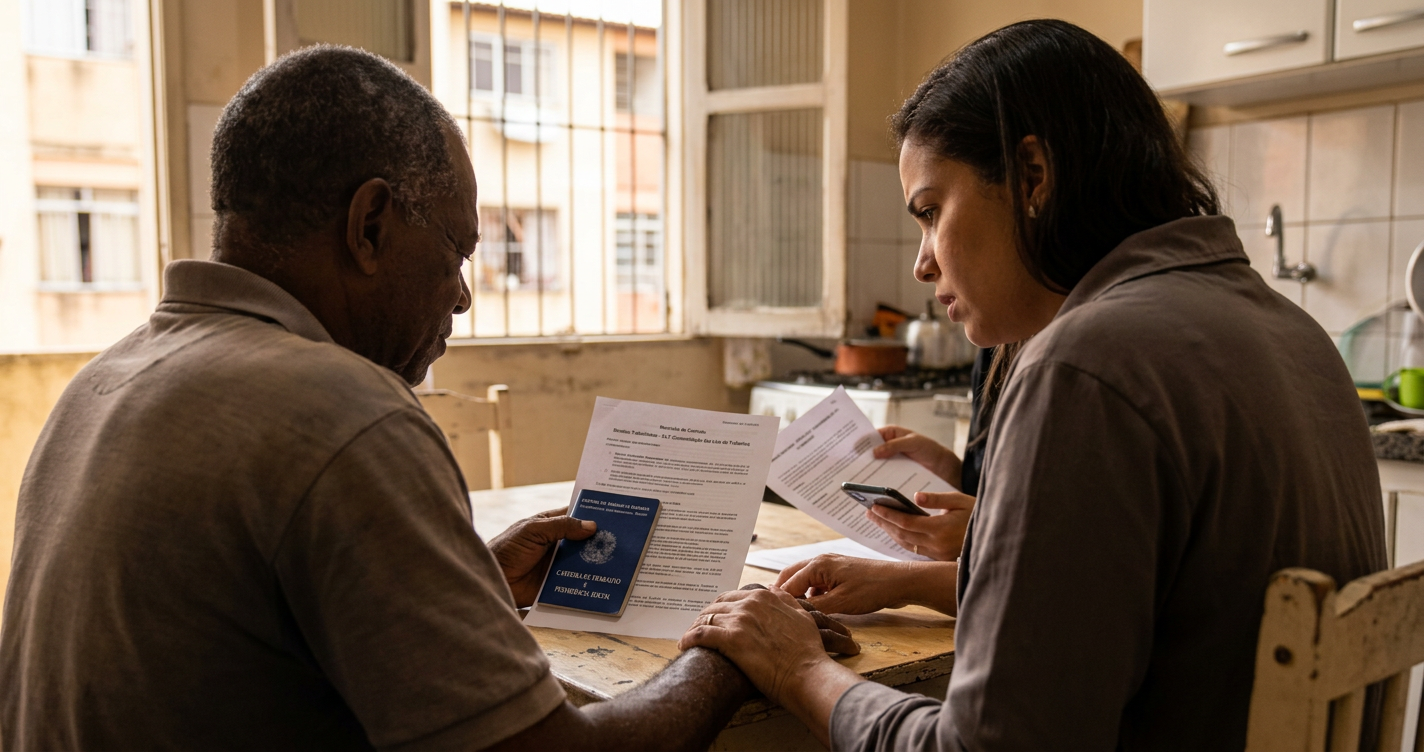
Brazilian employment law treats workers as the protected party. While the US system gives employers broad flexibility, Brazil’s Consolidation of Labor Laws (CLT), combined with the Federal Constitution’s Article 7, guarantees a robust set of rights that you cannot contract out of — no matter what an employee agrees to. This article breaks down the key differences between employee rights in Brazil and the USA, with real numbers and practical implications for US companies.
If you’re planning to hire in Brazil, understanding these mandatory protections will save you from costly lawsuits, regulatory penalties, and reputational damage. Let’s start with the most fundamental difference: at-will employment doesn’t exist here.
On this page
Can You Fire an Employee in Brazil Without Cause? No, and Here’s Why
In the United States, every state except Montana uses at-will employment. You can fire any employee at any time, for any reason — or no reason at all — as long as it isn’t discriminatory. In Brazil, termination without a specific, legally justified reason is called dispensa sem justa causa, and it’s not only allowed — it’s also the most common path. However, it comes with a guaranteed package of severance rights that no employment contract can waive.
What you must pay when terminating without cause in Brazil:
- 30-day notice period (or payment in lieu). During this period, the employee works 2 hours less per day or gets 7 days off at the end. If you want them out immediately, you pay the full month’s salary plus benefits.
- Proportional 13th salary (1/12 of the monthly salary for each month worked in the year).
- Proportional vacation plus 1/3 bonus (including the current accrual period).
- FGTS (Fundo de Garantia do Tempo de Serviço) withdrawal authorization. Employers deposit 8% of the employee’s salary monthly into a blocked account. On termination without cause, the employee can withdraw the full balance, and the employer must pay a 40% penalty over the total FGTS deposits made during the employment period.
Here’s a real-world simulation. A marketing manager hired 2 years ago with a monthly salary of R$5,000 (about USD 1,000) has accumulated R$9,600 in FGTS deposits (8% × 24 months). On termination without cause, you’ll pay:
- Notice: R$5,000
- Proportional 13th: R$5,000 × (months worked in the current year / 12)
- Proportional vacation plus 1/3: roughly one month’s salary if no vacation taken
- FGTS fine (40% of R$9,600): R$3,840
Total severance cost can easily exceed 3 times the monthly salary. US employers used to zero severance are often shocked. For more detail on each component, see our guide on demissão sem justa causa 2026.
Termination for cause (justa causa) exists — for serious misconduct like theft, fraud, or habitual negligence — but Brazilian labor courts hold employers to a high standard of proof. If you get it wrong, you’ll pay the full without-cause package plus moral damages.
Minimum Wage and Mandatory Benefits: What US Employers Must Pay
The US federal minimum wage has been $7.25 since 2009, though many states mandate higher hourly rates. It doesn’t include any built-in benefits beyond the hourly wage. In Brazil, the minimum wage is set nationally and revised annually. In 2026, the monthly minimum wage is approximately R$1,640 (roughly USD 330 at current exchange rates). That covers a 44-hour workweek. But the legal minimum salary is just the starting point — Brazilian law layers on mandatory benefits that inflate your total cost per employee by 40–60% above the base salary.
Mandatory add-ons on top of salary include:
- 13th salary (gratificação natalina): one extra month’s salary per year, paid in two installments (November and December).
- Vacation bonus: 30 calendar days of paid vacation after every 12 months, with an additional 1/3 of the monthly salary (e.g., if your employee earns R$3,000, you pay R$4,000 for the vacation period).
- FGTS: employer deposits 8% of the employee’s monthly salary into a government-managed severance fund.
- INSS (social security) employer contribution: 20% over the gross payroll, plus possible RAT (workplace accident insurance) of 1–3%.
- Transportation vouchers (vale-transporte): employer must provide monthly public transportation passes; the employee contributes up to 6% of their salary, the employer covers the rest.
- Meal or food vouchers: often mandated by collective bargaining agreements, providing around R$20–R$40 per working day.
- Family allowance: for employees earning below a certain threshold (in 2026, around R$1,800), a small monthly payment per dependent child.
When you see a job ad offering “R$4.000 monthly,” plan on a real total employment cost of around R$6.500–R$7.000 after mandatory charges and benefits. There is no equivalent of a “benefits-lite” W-2 arrangement in Brazil.
How Many Vacation Days Are Employees Entitled to in Brazil?
The United States has no federal paid vacation mandate. Employers offer what they think necessary to attract talent — typically 10–15 days per year for mid-level white-collar roles. Brazil, by contrast, mandates 30 calendar days of paid vacation for every 12 months of work (período aquisitivo). Those 30 days can be split into up to three periods, with one period being at least 14 days and the others at least 5 days each. But here’s the critical part: you must pay the employee their regular salary for that month plus an extra 1/3 on top (abono de férias). If the employee’s monthly salary is R$6,000, you’ll pay R$8,000 when they take vacation.
Vacation must be granted within 12 months after the accrual period ends — otherwise the employer owes double payment. There’s no “use it or lose it” policy; you can only lose the right to vacation if the employee refuses to take it within the correct timeframe, and even then labor courts may side with the worker.
For US companies used to flexible, non‑guaranteed PTO, this mandatory vacation regime requires careful workforce planning. You cannot incentivize employees to skip vacation for extra pay (Brazilian law prohibits “buying” vacation days beyond 10 days).
What Is the 13th Salary and Why Must We Pay It?
The 13th salary (gratificação natalina) is a Christmas bonus enshrined in the Constitution and detailed in Law 4.090/1962. Every formal employee receives an additional month’s salary each year. The first half must be paid between February and November; the second half by December 20. Even if the employee has not worked a full year, they earn a pro‑rata portion — 1/12 of the monthly salary for each full month of service.

For US multinationals, this feels like a mandatory holiday bonus that you have no say over. Budget for it from day one. A team of five with monthly salaries averaging R$10,000 will cost an extra R$50,000 annually, plus the additional FGTS and INSS contributions on that 13th salary amount.
Overtime and Working Hours: How Brazil Differs from the US
In the US, the Fair Labor Standards Act mandates 1.5 times the regular rate for hours worked over 40 in a week for non‑exempt employees. Brazil’s standard workweek is 44 hours (8 hours Monday to Friday, 4 hours Saturday) or up to 40 hours if negotiated. Overtime is anything beyond the daily 8 hours or weekly limit. The mandatory overtime premium is at least 50% above the normal hourly rate — and collective bargaining agreements often increase this to 70%, 80%, or even 100% for night shifts or weekends.
There’s also a daily cap: employees cannot work more than 2 overtime hours per day unless there is a valid force majeure situation. An employer who systematically demands 3 or 4 extra hours risks fines and backpay lawsuits. Night work (between 10 p.m. and 5 a.m.) gets an extra 20% on top of the overtime rate and a shorter legal hour (52 minutes and 30 seconds).
Most importantly, Brazil’s rules apply to salaried employees too — there is no broad “exempt” category like in the US. Only certain C‑level executives who hold actual management powers (and receive a 40% bonus over their base salary) may be exempt from overtime controls. Everyone else is entitled to overtime pay, even if they have a fancy title.
Maternity Leave: How Much Paid Time Off Are Mothers Entitled To?
The US federal Family and Medical Leave Act (FMLA) grants 12 weeks of unpaid leave to eligible employees. Some states offer paid family leave, but there is no federal mandate. Brazil operates completely differently: maternity leave is 120 days fully paid, at no cost to the employee. The employer pays the salary during leave and then recovers the amount from the Brazilian social security system (INSS), up to the contribution ceiling.
Even more generous, the Empresa Cidadã program (Law 11.770/2008) allows companies to voluntarily extend maternity leave to 180 days (6 months). Most large corporations adopt this to remain competitive. The extra 60 days are also compensated through tax incentives. Paternity leave starts at 5 days, but companies that join the Empresa Cidadã can extend it to 20 days.
Additionally, Brazil provides employment stability from the moment pregnancy is confirmed up to 5 months after childbirth. You cannot fire a pregnant employee except for gross misconduct — and even then, a labor court will scrutinize your evidence heavily. Violating this rule means automatic reinstatement with backpay.
For US employers accustomed to short, unpaid leaves, building a maternity‑leave policy around Brazil’s mandatory paid leave and stability period is non‑negotiable and essential for compliance.
Probationary Period: Can You Test an Employee Before Committing?
Brazil allows a probationary period (contrato de experiência) of up to 90 days, which can be extended once for another 90 days — total maximum 180 days. During this time, you can assess the employee’s suitability. Termination during the probation has lower costs: you still pay proportional 13th salary and vacation, plus the FGTS balance and the 40% fine, but notice periods may be shorter if specified in the contract. However, you must have an objective reason to end the contract early — simply “it wasn’t a good fit” without documented performance issues can be challenged.
Many foreign startups mistakenly believe they can use a probation clause to fire like at‑will. The reality is Brazilian labor judges look for fairness and may award additional compensation if they perceive the termination was arbitrary. Always document performance gaps.
Union Agreements and Collective Bargaining: A Mandatory Layer in Brazil
In the United States, only about 10% of private‑sector employees belong to a union, and membership is voluntary. In Brazil, the system is one of mandatory union representation by category and geographic base. Every employee — whether they join the union or not — is covered by the collective bargaining agreement (convenção coletiva) or collective accord (acordo coletivo) negotiated annually between the employers’ syndicate and the workers’ union. These agreements, often called dissídios coletivos, can set higher wages, additional bonuses, longer notice periods, or extra days off beyond the CLT’s minimums.
What does this mean for your US company? You must identify the union that represents your employees’ category (e.g., metalworkers, IT professionals, retail workers) in the region where they work. Then you must apply the terms of that agreement: wage floors, annual raises (usually equal to inflation plus a small real gain), and additional benefits like meal vouchers or private health plans. Even if you never speak to the union directly, their agreement binds you. Union dues, however, became optional after the 2017 labor reform — employees can refuse to pay.
Strikes are legal and can occur when collective bargaining breaks down, though they must follow strict legal procedures. US employers often underestimate the power unions hold in Brazil. Getting caught ignoring a collective agreement can lead to class‑action lawsuits from the union itself.
Employee Rights in Brazil vs USA: A Side‑by‑Side Comparison
| Aspect | United States | Brazil |
|---|---|---|
| Employment relationship | At‑will (except Montana). Terminate anytime, no severance required by federal law. | Not at‑will. Termination without cause triggers mandatory severance package: 30‑day notice, proportional 13th and vacation, FGTS balance release, plus 40% fine on total FGTS deposits. |
| Minimum wage | $7.25/hour federal (state may be higher). No guaranteed annual increase mechanism. | National monthly minimum wage of ~R$1,640 (USD 330) in 2026, adjusted annually by law. Covers 44‑hour workweek. |
| Paid time off | No federal mandate. Employers decide; typically 10–15 days/year for full‑time employees. | 30 calendar days per year, with a 1/3 salary bonus (abono de férias). Cannot be fully traded for cash. Unused vacation leads to double pay. |
| 13th salary | No legal requirement. Year‑end bonuses are discretionary. | Mandatory. One extra month’s salary per year, paid in two installments. Pro‑rata for partial years. |
| Overtime | 1.5x for hours >40 in a week (FLSA for non‑exempt). Some states higher. | At least 50% extra for hours >8 daily or >44 weekly. Cap of 2 extra hours/day. Night and weekend premiums often higher via collective agreements. |
| Maternity leave | 12 weeks unpaid via FMLA for eligible employers/employees. Some states offer paid leave. | 120 days fully paid (reimbursed by INSS). 180 days if part of Empresa Cidadã. Job stability from pregnancy confirmation until 5 months post‑birth. |
| Probationary period | Not federally regulated; typically 90 days for benefits eligibility but employment remains at‑will. | Up to 90 days, extendable to 180 days. Termination inside probation still requires proportional severance and objective justification. |
| Union agreements | Voluntary. Union membership around 10% in private sector. Agreements cover only members. | Mandatory representation. Collective agreements cover all employees in the category and region, setting wages and benefits above legal minimums. |
Practical Implications for US Companies Hiring in Brazil
Beyond knowing the rights, you need a legal structure to employ someone in Brazil. You can hire through a local subsidiary, use an employer of record (EOR), or engage a Brazilian professional employer organization. Each path has its own registration, tax, and compliance obligations. If you’re thinking of setting up a local entity, start with our guide on US Company Operate in Brazil 2026.
Once you have an entity, you’ll register with the Receita Federal (Brazilian IRS) for CNPJ, enroll in the eSocial system for digital payroll and labor reporting, and open an FGTS account with Caixa Econômica Federal. You’ll pay monthly contributions: 20% INSS employer share, FGTS 8%, and possibly a risk-adjusted RAT rate. Payroll processing in Brazil must follow strict government-defined procedures, including correct taxation of benefits and timely delivery of 13th salary installments.
Labor lawsuits are common. Disgruntled employees can claim unpaid overtime, moral harassment, health hazards, or wrongful termination, often seeking years of backpay plus penalties. The legal system favors the worker in evidentiary matters, so maintaining airtight documentation — time cards, vacation records, pay stubs, performance reviews — is your best defense. For a deeper dive into tax and accounting implications, read our Foreign Company Tax Brazil 2026: Complete Guide.
Cultural note: Brazilian employees expect benefits like private health insurance, meal vouchers, and transportation vouchers, even when not strictly mandated by law for all categories. Providing these can make the difference in attracting top talent, but they also roll into the total cost of employment.
If you’re just exploring the Brazilian market, our comprehensive overview Doing Business in Brazil as an American 2026 Guide can help you weigh all the legal, tax, and operational considerations.
What Changed in 2026 for Brazilian Employment Law?
The core statutory framework — CLT, FGTS, 13th salary — remains stable in 2026. However, two trends are reshaping the environment for employers:
1. Full eSocial digitalization. Since the final phase of eSocial was implemented, all employment events (hiring, payroll, terminations, vacation, work accidents) must be reported digitally in real time. Compliance is no longer optional; fines for late or missing reports can reach thousands of reais per employee. US employers must integrate their HR processes with the government’s electronic systems from day one.
2. Judicial debates on the 2017 reform. Brazil’s Supreme Federal Court (STF) has been reviewing several points of the 2017 labor reform that tried to give more weight to collective agreements over the law. As of 2026, many issues remain settled: agreements can reduce some benefits (like meal breaks or shift duration) but cannot strip rights strictly guaranteed by the Constitution (13th salary, vacation, FGTS). Employers should not rely on broad “agreement over law” assumptions without case-by-case legal advice.
3. Remote work regulation. Since 2022, Law 14.442/2022 clarified rules for telecommuting: home office must be explicitly agreed in the contract; the employer must reimburse expenses like internet and electricity if the worker’s cost increases. This is particularly relevant for US companies hiring Brazilian professionals to work fully remote.
No major new holiday, wage, or termination laws were enacted in 2026, but the political dialogue continues around reducing the cost of hiring and increasing flexibility. For now, plan on the full suite of mandatory protections staying in place.
Frequently Asked Questions (FAQ) for US Employers
Can I fire a Brazilian employee without a reason?Not exactly. You can fire without cause (“sem justa causa”) but must pay a statutory severance package: 30‑day notice, proportional 13th and vacation, and the FGTS fine of 40% over all deposits made during the contract. Termination with cause (“justa causa”) is possible for serious misconduct but requires strong evidence; courts rarely approve it without solid documentation.
How much notice do I have to give when terminating an employee?
At least 30 days. You can require the employee to work during the notice period with reduced hours (2 hours less daily or 7 days off at the end), or you can release them immediately and pay the month’s salary plus benefits. If the employee resigned, they must give 30 days’ notice or pay the equivalent.
Do I have to pay a Christmas bonus?
Yes. The 13th salary is a constitutional right. You must pay half by November and the other half by December 20. Even if the employee works only one full month in a year, they receive 1/12 of their monthly salary. There are no exceptions.
What is the total cost to terminate an employee in Brazil?
The cost varies by length of service and salary level. As a rule of thumb, expect 3 to 4 times the monthly salary when you add notice, proportional benefits, and the FGTS penalty. An employee earning R$5,000 after two years might cost around R$15,000–R$20,000 to terminate without cause, including the FGTS fine and all accrued rights.
Do I need to negotiate a union agreement to hire employees?
You don’t directly negotiate unless you’re part of an employers’ syndicate, but you must comply with the collective bargaining agreement (CCT) already in force for your employees’ category and region. This CCT sets wage floors, mandatory benefits, and other conditions. Ignoring it exposes you to class‑action lawsuits and labor claims.
Ready to Hire in Brazil? Get Expert Guidance on Employee Rights
Brazil’s labor laws are a powerful protective shield for workers — and a source of substantial liability for uninformed employers. As a US company, you can’t transplant your domestic HR policies and expect them to work here. You need a strategic approach that respects Brazilian mandatory rights while keeping your business competitive.
Our bilingual labor law team at Ribeiro Cavalcante Advocacia helps foreign companies navigate every step: from drafting compliant contracts and registering payroll in eSocial, to managing terminations and defending against lawsuits. Whether you’re hiring your first employee or expanding a team of 50, we ensure you stay on the right side of the law — and out of court.
Talk to a specialist lawyer now
Talk to a Lawyer on WhatsApp