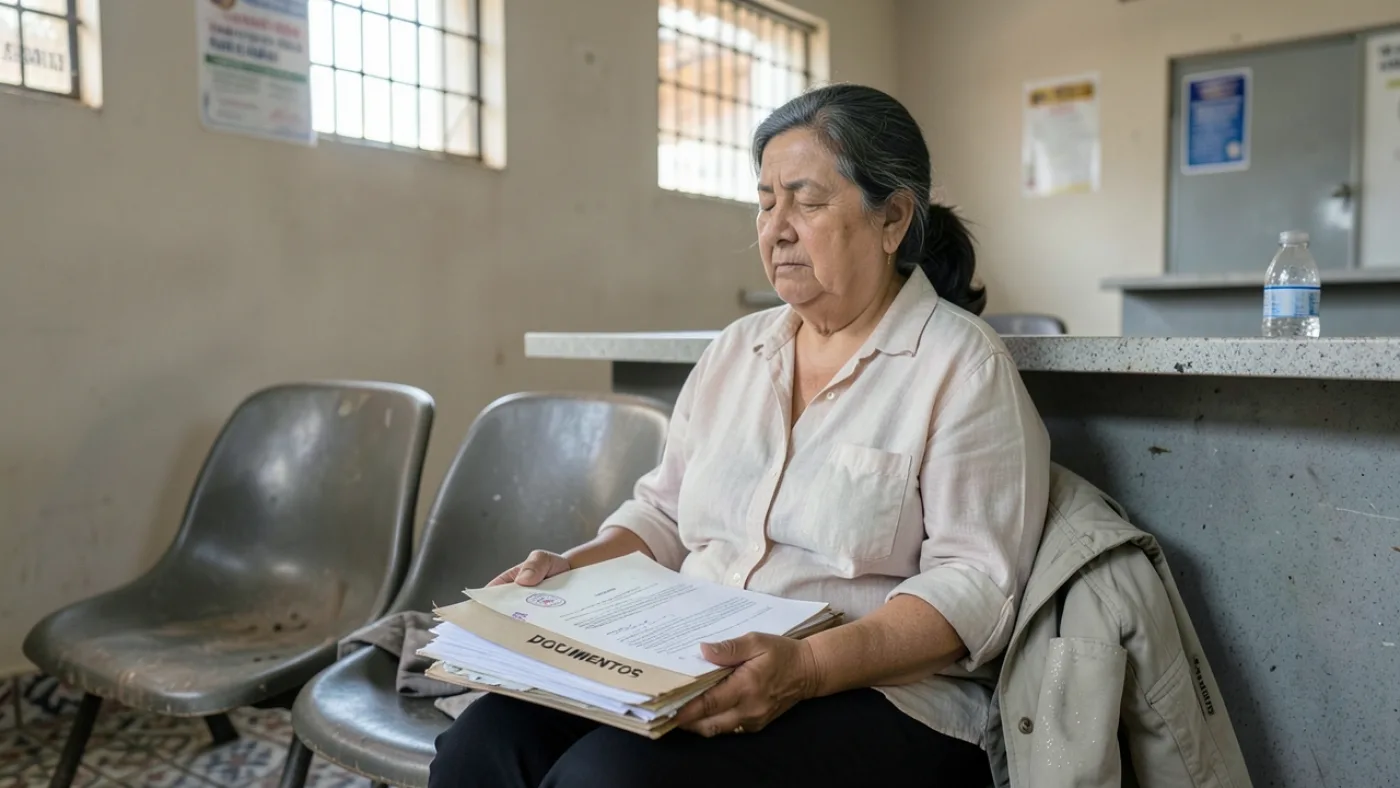
You have decided that Brazil is the plan, and now the paperwork is making you doubt the decision. That is normal, and yes, there is a clear legal path for almost every American who wants to live here. The real problem is that most of what you will read online about moving to Brazil from the USA is out of date, and the mistakes it causes are the exact mistakes that get applications rejected at the counter.
For the full picture, see our guide: Moving to Brazil as a Foreigner: Legal Checklist for CPF, Visas and Documents.
This guide is built around one question: where do US citizens’ residence applications actually get denied? Because once you know that, choosing between the digital nomad route, the retiree route, the investor route and family reunion becomes a practical decision instead of a guessing game. Everything here reflects the rules in force in November 2026, including the visitor visa requirement that came back for Americans in April 2025, the 2026 income tax reform under Law 15.270/2025, and the Federal Police fees that have not changed this year: R$ 168.13 to process a residence authorization and R$ 204.77 for the CRNM card.
On this page
Which Americans Can Skip the Income Requirement Entirely?
If you are the spouse, stable partner, parent or child of a Brazilian (or of a foreigner who already holds residence), you qualify for family reunion residence under Law 13.445/2017, and the statute sets no minimum income or investment threshold. That is the exception. Every other route for US citizens is gated by a number: US$ 1,500 a month, US$ 2,000 a month, R$ 500,000 or R$ 1,000,000.
Family reunion is the cheapest, fastest and most durable option, and it is also the one Americans most often fail to use because they assume they need to be formally married. You do not. A união estável (stable union) formalized by public deed at a cartório (notary office) is accepted, and so is a judicially recognized partnership. It also shortens the naturalization clock: ordinary naturalization requires four years of residence, but drops to one year if you have a Brazilian child or a Brazilian spouse or partner from whom you are not separated, under the Brazilian Migration Law.
Common mistake: Americans believe that marrying a Brazilian makes them Brazilian. It does not. Marriage gives you residence and a shorter path to citizenship, never citizenship itself, and the Federal Police will not accept a marriage certificate as a nationality document.
Where does this route get denied? Almost always on proof of the relationship, not on money. A US marriage certificate that was never apostilled, a sworn translation done by a non-registered translator, or a stable union declared only in a private document with no notarial act. Fix the documents and this route is close to automatic.
Can You Still Fly to Brazil and Figure It Out Later?
No. Since 10 April 2025, US, Canadian and Australian citizens need a visitor visa to enter Brazil, under Decree 11.515/2023. It is available as an e-Visa, costs US$ 80.90, allows multiple entries and permits a stay of up to 90 days per year. Any blog telling you Americans enter Brazil visa-free is describing a rule that no longer exists.
That 90-days-per-year allowance is the single biggest planning trap for US movers. You cannot spend five months scouting cities, and you cannot use repeated short trips to build up presence. Apply through the official platform indicated by Itamaraty, the Brazilian Ministry of Foreign Affairs, on the official consular portal, and ignore third-party agents charging several times the government fee.
Heads up: the visitor visa does not allow paid work in Brazil or receiving a salary from a Brazilian source. It is also not a stepping stone: residence is a separate legal track, even when you are allowed to file the request while lawfully present as a visitor.
If you overstay, the Migration Law sets a fine charged per day of excess stay, with a legal range from R$ 100.00 up to R$ 10,000.00, reducible according to your economic condition. Deportation only follows if you neither leave nor regularize within the deadline the authority gives you, which cannot be shorter than 60 days. Unpleasant, survivable, and entirely avoidable: file your residence request before day 90.
Option A: How Does the Digital Nomad Residence Work for US Remote Workers?
The digital nomad route, created by CNIg Resolution 45/2021, requires foreign-source income of at least US$ 1,500 per month or US$ 18,000 available in bank funds. It is issued for one year and is renewable, and it is the fastest legal path for most US citizens relocating in 2026. It authorizes you to live in Brazil while working for employers or clients located outside Brazil.
What you will be asked to produce:
- Employment contract, service agreement or client contracts with a company based outside Brazil
- Bank statements or pay records proving the US$ 1,500 monthly income, or the US$ 18,000 balance
- A declaration that you perform your work remotely using telecommunications technology
- Health insurance valid in Brazil (consulates commonly expect coverage of US$ 30,000 or more)
- FBI identity history summary, apostilled by the US Department of State
- Valid passport and proof of address in Brazil
Pros: low financial bar, no Brazilian sponsor needed, you can file at a Brazilian consulate in the US or from inside Brazil through the Migrante Web system of the Ministry of Justice. Cons: it does not let you take a job with a Brazilian company, renewal depends on the arrangement still being genuinely foreign, and it gives you no tax shelter whatsoever.
In practice: a Texas software engineer earning US$ 7,000 a month from a US employer pays R$ 168.13 for the residence processing fee and R$ 204.77 for the CRNM card, roughly R$ 373 in government fees in total, plus apostille, sworn translation and the US$ 80.90 e-Visa if entering as a visitor first.
Option B: Is the Retiree Residence Better if You Have a US Pension?
The retiree route, under CNIg RN 40/2019, requires proof of a monthly transfer to Brazil of at least US$ 2,000 from your retirement source. It suits Social Security recipients, military and federal retirees, and people drawing down a 401(k) or IRA. It is tied to the transfers continuing, which is also exactly where it gets denied at renewal.
The documentary core is a benefit award or verification letter from the paying institution (for example, the SSA benefit verification letter), apostilled and sworn-translated, plus evidence that the funds can actually be transferred to a Brazilian bank account in your name. Dependents can normally be included in the same application, which makes this attractive for couples.
Pros: a modest, predictable threshold; no business plan; no employer. Cons: a private 401(k) drawdown is harder to document than a government pension, because the authority wants to see a stable monthly flow rather than discretionary withdrawals. Americans who rely on variable withdrawals often need an institutional statement structuring the payments as a recurring monthly transfer before filing.
Worth knowing: Brazil’s tax exemption for people over 65 applies to Brazilian social security and private pension income, not to foreign pensions. Your US pension does not become tax-free in Brazil simply because you turned 65.
Option C: When Does the Investor Route Make Sense?
There are two investor routes. Investing in a Brazilian company requires at least R$ 500,000, or from R$ 150,000 for innovation and startup projects, under CNIg RN 13/2017. Real estate investment requires an urban property worth at least R$ 1,000,000, reduced to R$ 700,000 in the North and Northeast regions, under CNIg RN 36/2018. Both are granted without a fixed end date, subject to proof the investment was made.
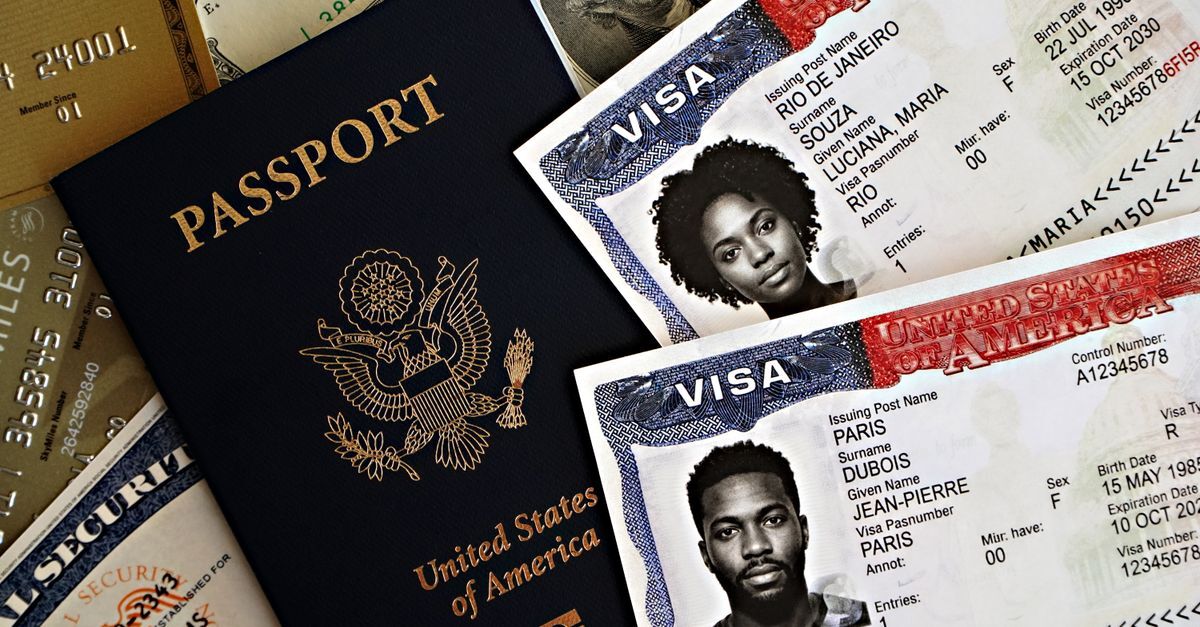
For the company route, the business must exist before you apply. You need a CPF, articles of association filed with the state Junta Comercial (commercial registry) through the Redesim system, a CNPJ, and a fiscal address in Brazil, which is a registration requirement for any CNPJ. You also need an investment plan showing job creation or productive activity, and the inflow must be reported to the Central Bank through SCE-IED, the system that replaced the old RDE-IED registration under Law 14.286/2021.
Two myths to kill. First, EIRELI no longer exists; it was abolished by Law 14.195/2021, and foreigners now use an LTDA (including the single-member SLU) or an S.A. Second, you do not need a Brazilian partner. You need a CPF, and if you manage the company from abroad you must appoint a representative resident in Brazil to receive service of process.
For the real estate route, note that only urban property counts. Rural land purchases by foreigners are restricted under Law 5.709/1971, and in April 2026 the Supreme Court unanimously confirmed that those limits also apply to Brazilian companies controlled by foreigners. Land inside the 150 km border strip requires prior approval.
How Do the Four Routes Compare Side by Side?
The cheapest route is family reunion, with no financial threshold. The lowest-income paid route is the digital nomad residence at US$ 1,500 a month. Government fees are identical across all of them: R$ 168.13 to process the residence authorization plus R$ 204.77 for the CRNM card, according to the Federal Police fee schedule, unchanged in 2026.
| Criterion | Digital nomad | Retiree | Investor (company) | Family reunion |
|---|---|---|---|---|
| Legal basis | CNIg Res. 45/2021 | CNIg RN 40/2019 | CNIg RN 13/2017 | Law 13.445/2017, art. 37 |
| Financial requirement | US$ 1,500/month or US$ 18,000 in funds | US$ 2,000/month transferred to Brazil | R$ 500,000 (from R$ 150,000 for innovation) | None set by statute |
| Initial term | 1 year, renewable | Tied to continued transfers | No fixed end date | Usually linked to the family tie |
| Work for a Brazilian employer? | No | No | Yes, in your own company | Yes |
| Government fees | R$ 168.13 + R$ 204.77 | R$ 168.13 + R$ 204.77 | R$ 168.13 + R$ 204.77 | R$ 168.13 + R$ 204.77 |
| Where to file | Consulate in the US or Migrante Web | Consulate in the US or Migrante Web | Consulate or Migrante Web, after company setup | Normally in Brazil |
| Main denial risk | Income looks Brazilian-source; weak insurance | Transfers not provably recurring | Investment not yet made or not reported to BCB | Relationship documents not apostilled |
Where Exactly Do These Applications Get Denied?
Rejections almost never turn on eligibility. They turn on four things: a missing apostille, a translation not done by a registered sworn translator, income whose source looks Brazilian, and an unpaid or mismatched GRU fee slip. Approval rates are high when the file is complete, and government fees plus document costs for a single applicant typically land around US$ 500-US$ 700.
Now the counter-argument, in its strongest form. The immigration authority’s position on the digital nomad route is coherent: the resolution was written for people whose economic life stays abroad. If your bank statements show deposits from a Brazilian CNPJ, if your “foreign employer” is a US LLC you own that invoices Brazilian clients, or if your insurance policy technically excludes Brazil, then you are not the person the resolution describes. Granting residence anyway would let you enter the Brazilian labor market through a side door, bypassing the employer-sponsored work authorization that the Migration Law requires. That is not a bad argument. It is the right argument, applied to the wrong files more often than it should be.
The answer is documentary, not rhetorical. What matters is where the contract sits and who pays: a signed foreign service or employment contract, invoices issued to foreign entities, statements showing the inflows originate abroad, corporate documents for your own foreign company, and an insurance certificate that names Brazil expressly. If a meaningful share of your revenue genuinely comes from Brazilian clients, stop forcing this route and look at the investor route or employer sponsorship instead. Choosing the wrong category is the most expensive mistake in this process, because a denial costs you time you may not have left on your 90 days.
Common mistake: paying someone who promises a “guaranteed” or “expedited” approval. No one can guarantee a Federal Police outcome. Check any lawyer’s registration for free on the OAB national registry before transferring money, and read our guide on Brazil lawyer scams and OAB checks.
What Will Brazil Actually Tax Once You Move?
If you arrive with a residence authorization, you become a Brazilian tax resident on the day you land, under IN SRF 208/2002, and Brazil then taxes your worldwide income. If you are in Brazil on visitor status, residency starts the day you complete 184 days of presence within any 12-month period. Up to 183 days you remain a non-resident.
From January 2026, Law 15.270/2025 brings the tax to zero for monthly taxable income up to R$ 5,000.00, with a decreasing partial reduction up to R$ 7,350.00. Technically it is a reduction, not a new bracket: the monthly table still shows exemption up to R$ 2,428.80 and a top rate of 27.5% above R$ 4,664.68, per Receita Federal. The same law introduces a minimum tax on total annual income above R$ 600,000, rising to 10% at R$ 1,200,000 and above, with tax already paid credited against it.
Two more 2026 changes matter to Americans. Dividends are no longer fully exempt: 10% withholding applies when one company pays the same resident individual more than R$ 50,000 in a month, and 10% applies to dividends remitted abroad to non-residents regardless of amount. And for anyone still non-resident, Brazil withholds 25% on work income, services, retirement and pensions paid to residents abroad.
Heads up: there is no income tax treaty between Brazil and the United States. Relief comes from foreign tax credits on both sides, based on reciprocity of treatment rather than a treaty, which means coordination between your US return and your Brazilian declaration is a planning exercise, not an automatic exemption. Brazil does, however, have a social security totalization agreement with the US, which can preserve contribution periods across both systems.
What Changed in 2026 That Older Guides Miss?
Four changes. The visitor visa for US citizens has been mandatory since April 2025 at US$ 80.90. The income tax reform of Law 15.270/2025 took effect in January 2026. Dividends lost their blanket exemption. And Constitutional Amendment 141, published in October 2026, is cutting the working week from 44 hours toward 40.
If you plan to hire staff or be hired in Brazil, that last one matters. The constitutional limit becomes 8 hours a day and 40 hours a week with two paid rest days, without salary reduction. The transition runs in steps: 42 hours a week starting two months after publication, in mid-December 2026, and 40 hours one year after that. Until the first step takes effect, 44 hours remains the limit.
Also new for 2026: the consumption tax reform under Complementary Law 214/2025 is in its test year, with CBS at 0.9% and IBS at 0.1%, and payment waived for taxpayers that meet the reporting obligations. And the Supreme Court’s April 2026 decision on rural land confirmed that foreign-controlled Brazilian companies face the same acquisition limits as foreign individuals.
What Is the Step-by-Step Process From the USA to a CRNM Card?
There are two tracks: apply at a Brazilian consulate in the US before you fly, or enter on the visitor e-Visa and file from inside Brazil through Migrante Web. Either way you end at the same place, a Federal Police appointment for biometrics and the R$ 204.77 CRNM card. Budget 60-120 days from first document request to card in hand, with buffer.
- Step 1. Get your CPF (taxpayer number). It is free online at Receita Federal or at a Brazilian consulate, and R$ 7.00 only at partner units such as Banco do Brasil, Caixa, Correios or a civil registry office. See our guide on how to get a CPF in Brazil.
- Step 2. Order your US documents: birth certificate, marriage certificate if relevant, FBI identity history summary, pension or income proof.
- Step 3. Apostille them. State-issued documents are apostilled by the Secretary of State of the issuing state; federal documents by the US Department of State. The Hague Apostille Convention has applied to Brazil since 14 August 2016, so no consular legalization is needed.
- Step 4. Sworn translation into Portuguese by a tradutor público registered with a Brazilian commercial registry. Under Law 14.195/2021 the registration is valid nationwide and translations may be issued electronically.
- Step 5. File: at the consulate covering your state of residence, or on Migrante Web if filing in Brazil. Pay the R$ 168.13 processing fee via a GRU slip generated on the Federal Police portal.
- Step 6. Book your Federal Police appointment with your gov.br login. Bring originals, the paid GRU receipt and the R$ 204.77 card fee receipt.
- Step 7. Collect your protocol document with your RNM number (National Migratory Registry). Use it to open a bank account while the physical CRNM is produced.
Worth knowing: an unpaid or wrongly coded GRU is the most common reason an appointment is turned away at the door. The residence processing fee uses revenue code 140066 and the CRNM card uses 140120. Keep every protocol number and receipt for at least five years.
Which Route Should You Choose?
If you are married to or in a stable union with a Brazilian, choose family reunion. It has no income test, it is the strongest status available, and it reduces naturalization to one year of residence. Everything else is a distant second for you.

If you work remotely for a US employer or foreign clients and earn at least US$ 1,500 a month, choose the digital nomad route. It is the fastest and cheapest paid option, and the only real risk is documentation of where your income comes from. If you are retired with a government or institutional pension paying at least US$ 2,000 a month, the retiree route is more stable because it does not need renewal evidence of contracts, only of transfers.
If you intend to run a business in Brazil, hire locally or serve Brazilian clients, do not try to squeeze into the nomad category. Use the investor route, at R$ 500,000 or from R$ 150,000 for innovation projects, or have a Brazilian employer sponsor a work authorization. And if your plan is primarily to own property, the real estate route at R$ 1,000,000 (R$ 700,000 in the North and Northeast) buys residence, but buying property alone below those values gives you no immigration status at all.
Frequently Asked Questions
Do US citizens really need a visa just to visit Brazil in 2026?
Yes. Since 10 April 2025, under Decree 11.515/2023, US, Canadian and Australian citizens need a visitor visa. It is available as an e-Visa costing US$ 80.90, allows multiple entries and permits a stay of up to 90 days per year. The US Embassy in Brazil has confirmed the requirement. Any source saying Americans enter visa-free is outdated, and airlines will deny boarding without it.
Can I work remotely for my US employer while living in Brazil?
Yes, with the digital nomad residence under CNIg Resolution 45/2021, which requires US$ 1,500 in monthly foreign-source income or US$ 18,000 in bank funds. You may keep working for employers and clients outside Brazil, but you may not take a job with a Brazilian company. Important: this status does not exempt you from Brazilian tax. As a resident you declare worldwide income, including your US salary.
Does marrying a Brazilian give me Brazilian citizenship?
No. Marriage grants residence through family reunion, not nationality. It does shorten ordinary naturalization from four years of residence to one year, under Law 13.445/2017, provided you are not separated from your Brazilian spouse or partner. You still need Portuguese language ability and no criminal conviction. Extraordinary naturalization, requiring more than 15 uninterrupted years of residence and no conviction, is a separate alternative.
Will I be taxed twice, by the IRS and by Receita Federal?
Potentially, since there is no income tax treaty between Brazil and the United States. Relief comes from foreign tax credits claimed on both sides based on reciprocity of treatment. From 2026, Brazilian tax is zero on monthly taxable income up to R$ 5,000.00 with partial reduction to R$ 7,350.00, under Law 15.270/2025. Coordinating the two filings before your first Brazilian tax year is far cheaper than fixing it afterwards.
Do I need a Brazilian partner to open a company as an American?
No. A Brazilian partner has never been mandatory, and foreign capital receives the same legal treatment as national capital under Law 14.286/2021. You need a CPF, and if you manage the company from abroad you must appoint a representative resident in Brazil for service of process. Since 2024 a partner abroad can sign the articles electronically at the commercial registry. EIRELI no longer exists; use an LTDA, including the single-member SLU, or an S.A.
What happens if my CPF becomes irregular after I move?
An irregular or suspended CPF blocks bank transactions, property deeds and tax filings, which is disastrous mid-application. It usually happens because a required annual declaration was not filed or registration data is inconsistent. Regularization is done through Receita Federal’s online channels and sometimes in person. Our guide on fixing a blocked CPF in Brazil walks through the procedure.
Moving to Brazil From the USA: Get Your File Reviewed Before You Fly
Most denials we see are not close calls. They are apostilles missing from a birth certificate, income statements that do not match the contract, or an application filed in the wrong category by someone who would have qualified easily in another. A document review before you file costs a fraction of a second attempt.
Send us your situation in one message: your income source, your family ties in Brazil, and your target arrival date. Our bilingual team, registered with the OAB, will tell you which route fits and exactly which documents to order from the US first.
Talk to a specialist lawyer now
Talk to a Lawyer on WhatsApp