You are engaged to a Brazilian, or already married to one, and you keep reading contradictory things online. One site says marriage gives you Brazilian citizenship. Another says you get a passport after one year. A third says you must leave Brazil and apply at a consulate. Meanwhile your tourist stamp is running out and nobody at the cartório speaks English.
Here is the honest answer, up front. Marrying a Brazilian gives you exactly two legal advantages in Brazil, and nothing more by itself. First, the right to apply for a residence permit on the ground of family reunion, which, once granted, has no expiry date. Second, a shorter clock for naturalisation: one year of residence instead of four, under Law 13.445/2017 (the Brazilian Migration Law). Citizenship is never automatic. It is still granted by the Ministry of Justice after you prove residence, Portuguese ability and a clean criminal record.
Marriage also changes something most couples never think about until there is a problem: who owns what. Brazil’s default property regime splits almost everything acquired during the marriage in half, including the apartment in Rio you bought with savings earned in London. If you want a different arrangement, the prenuptial deed must be signed before the wedding.
This is the complete map: the cartório wedding, the Federal Police residence file, the naturalisation request, the property consequences, and the situations that go wrong (sham marriage investigations, divorce, visa overstays, children born in Brazil). Each stage has its own detailed guide, but this page tells you the order, the real timelines and the 2026 numbers.
On this page
Does Marrying a Brazilian Give You Citizenship or Residency?
Neither one automatically. Under Law 13.445/2017, marriage to a Brazilian makes you eligible to request residence based on family reunion, and it reduces the naturalisation residence requirement from four years to one year (art. 66). Both require separate applications, separate documents and separate authorities. The wedding certificate alone changes nothing in your immigration file.
Three different institutions handle the three stages, and they do not talk to each other:
- The cartório de registro civil (civil registry office) performs the marriage and issues the certificate.
- The Polícia Federal (Federal Police) decides your residence authorisation and issues the CRNM (National Immigration Registration Card).
- The Ministério da Justiça (Ministry of Justice) decides naturalisation.
Each stage has its own waiting time. Realistically, a couple that marries in March can expect a CRNM protocol within weeks, a physical card within two to six months, and eligibility to file for naturalisation one year after the residence start date. Naturalisation itself frequently takes a further 12 to 24 months at the Ministry of Justice, depending on backlog.
Stable union (união estável), Brazil’s registered domestic partnership, produces the same immigration effects as marriage when properly documented by public deed at a cartório or recognised by a court. Many binational couples choose it because it is faster to formalise. The Migration Law treats spouse and partner identically for family reunion and for the reduced naturalisation period.
Important: Brazil is a Civil Law country. There is no common-law marriage that arises simply from living together for X years. A stable union must be documented (deed, court declaration, or strong evidence) before any authority will treat you as a partner for immigration purposes.
In This Guide
Each topic below has its own in-depth article:
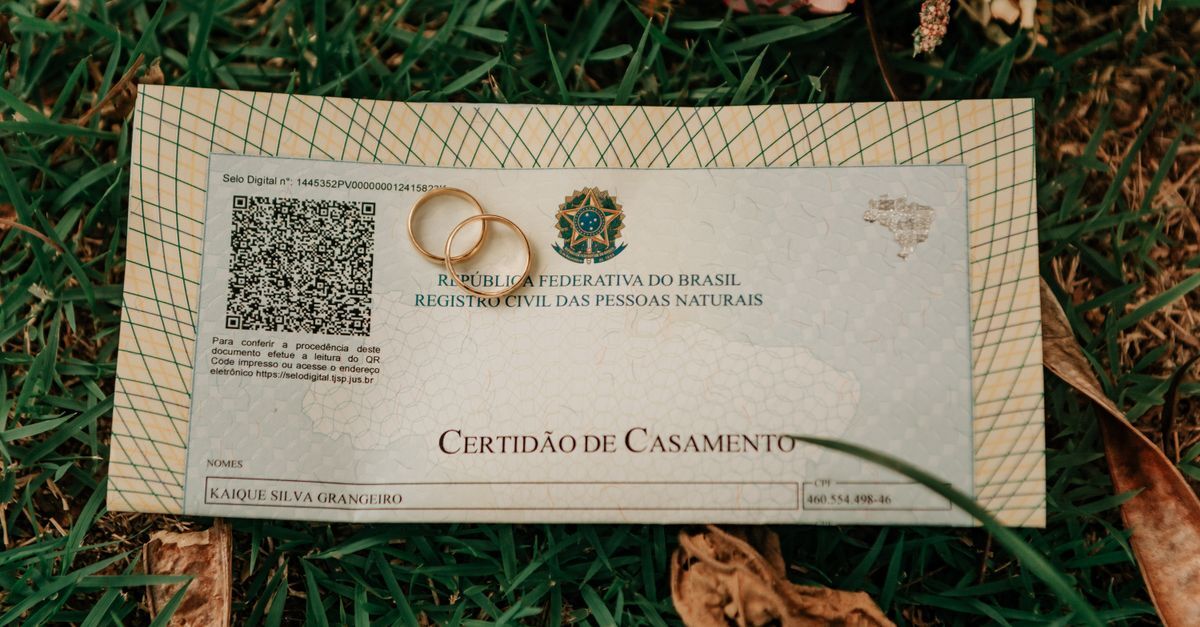
How Do You Marry a Brazilian in Brazil: Documents and the Cartório Process
You file a joint application (habilitação para casamento) at the cartório de registro civil of the district where either of you lives. The foreign spouse typically needs a passport, a birth certificate that is apostilled and sworn-translated, a CPF, and proof of civil status. The Hague Apostille Convention has applied to Brazil since 14 August 2016, so consular legalisation is no longer used for member countries.
Typical document set for the foreign spouse:
- Valid passport (and, if you already have one, your CRNM)
- Birth certificate, apostilled in the country of origin and translated by a tradutor público (sworn public translator registered with a Commercial Registry)
- CPF (Brazilian tax ID), free online at Receita Federal or at a Brazilian consulate
- Proof of single status, or divorce decree / death certificate of a former spouse, apostilled and translated
- Two witnesses with Brazilian ID (RG) and CPF
After filing, the cartório publishes the proclamas (marriage banns) for 15 days to allow objections. Nothing happens in that window for 99% of couples. Once the banns expire, the certificate of eligibility is valid for 90 days and the ceremony can be scheduled. Civil marriage in Brazil is governed by the Civil Code, which recognises the union as a full community of life with equal rights and duties for both spouses (art. 1,565).
Costs vary because registry fees follow state fee tables, not a national rate. Budget for the habilitação, the certificate copies, the sworn translations (charged per page) and the apostille in your home country. Some states offer free civil marriage ceremonies on designated dates for low-income couples.
Tip: Call the specific cartório before you translate anything. Document lists genuinely differ between São Paulo, Bahia and Rio Grande do Sul, and some registries insist your foreign birth certificate be issued within the last 12 months.
What Does Brazil Residency Through Marriage Require?
Residence by family reunion is filed in Brazil with the Federal Police. The two federal fees in 2026 are R$ 168.13 for processing the residence authorisation (revenue code 140066) and R$ 204.77 for the CRNM card itself (code 140120), both unchanged this year. Once granted on the basis of marriage to a Brazilian, the residence is issued for an indeterminate period.
You apply through the Federal Police migration portal, upload the documents, pay the two GRU payment slips, and then attend an in-person appointment for fingerprints and signature. This is the pattern across Brazilian bureaucracy: an online portal plus a mandatory physical step.
Core documents usually requested:
- Brazilian marriage certificate (recent copy) or the stable union deed
- Spouse’s Brazilian ID and CPF
- Your passport, including the entry stamp page
- Birth certificate, apostilled and sworn-translated
- Criminal record certificate from your country of residence over the previous five years, apostilled and translated
- A signed declaration of no criminal record in Brazil
- Proof of address in Brazil
- Both paid fee receipts
The protocol receipt you get at the appointment is what legalises your stay while the file is analysed. Keep it with your passport. Many banks, employers and health plans accept the protocol for enrolment purposes while the card is being printed.
Example: An American married in Salvador in February 2026 pays R$ 168.13 + R$ 204.77 = R$ 372.90 in federal fees (roughly US$ 70), plus sworn translation of three documents and an FBI background check apostilled in the United States. Total realistic out-of-pocket cost, excluding legal fees: R$ 1,500 to R$ 3,000.
Once you hold the CRNM you can work with no further permit, open bank accounts, sign a lease, enrol in the SUS public health system and become a tax resident. That last point matters: a foreigner entering with residence becomes a Brazilian tax resident from arrival and is then taxed on worldwide income, under the Receita Federal residency rules.
How Does Brazilian Citizenship Through Marriage Actually Work?
Through ordinary naturalisation with a reduced residence period. Law 13.445/2017 art. 65 requires four years of residence, civil capacity, the ability to communicate in Portuguese and no criminal conviction. Article 66 cuts the four years to one year for an applicant with a Brazilian spouse or partner, provided they are not separated when the grant is made.
Read that carefully, because this is where the internet misleads people. The reduction applies to one of four conditions. You still need:
- Civil capacity under Brazilian law
- One year of residence in Brazilian territory (instead of four)
- Ability to communicate in Portuguese, assessed in light of your circumstances
- No criminal conviction, or rehabilitation under the law
There is no “one year of marriage” requirement anywhere in the law. The clock counts residence, not months married. There is also no minimum age of 21, despite what several websites claim. And having a Brazilian child triggers the same one-year reduction, independently of marriage.
Nationals of Portuguese-speaking countries have an even shorter route under the Constitution (art. 12, II, a): one uninterrupted year of residence plus good moral standing. Separately, anyone with more than 15 uninterrupted years of residence and no conviction may seek extraordinary naturalisation under art. 67, with no language test condition in the same terms.
Applications are filed digitally through the Ministry of Justice portal. The decision is a discretionary administrative act, published in the Diário Oficial da União, followed by an oath ceremony before a federal court. Only after that can you request a Brazilian passport. Brazil permits dual nationality, so naturalising does not require renouncing your original citizenship, though your home country may have its own rules.
Warning: Long absences from Brazil during that one-year residence period are the single most common reason naturalisation files get rejected or suspended. The requirement is residence in national territory, and immigration entry and exit records are checked.
Which Marriage Property Regime Should a Binational Couple Choose?
If you sign nothing, Brazilian law applies comunhão parcial de bens (partial community of property) by default: assets acquired during the marriage are shared 50/50, while assets owned before, plus inheritances and gifts, stay individual. To choose any other regime you must sign a prenuptial deed at a cartório before the ceremony.
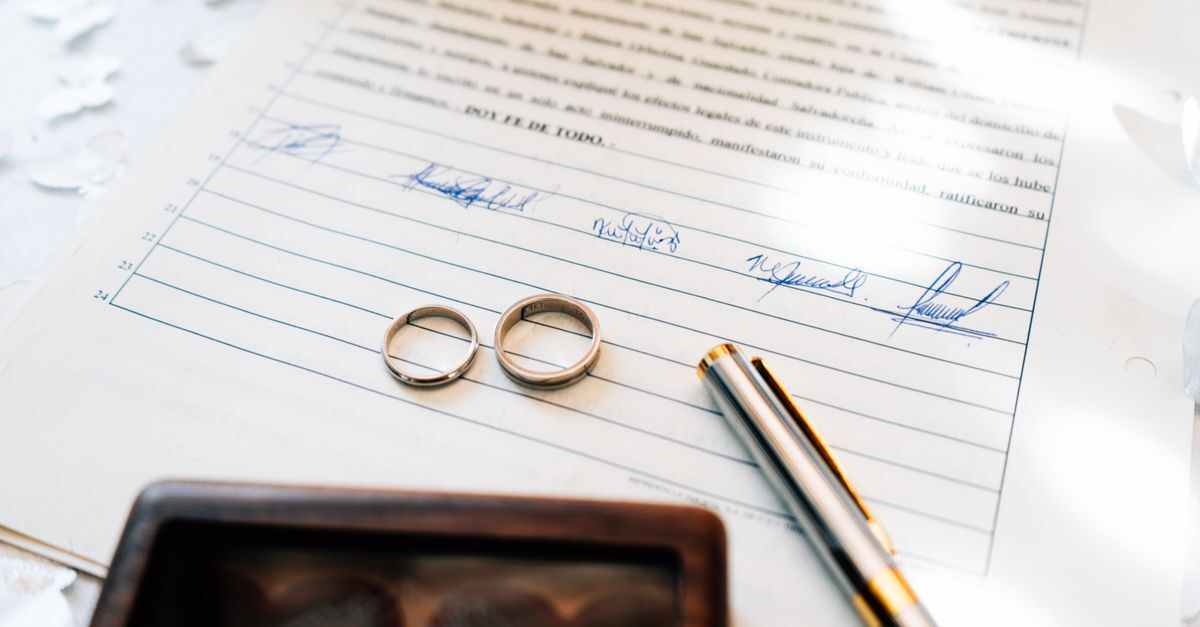
The four regimes available are partial community (default), universal community (comunhão universal, everything pooled including pre-marital assets), full separation of assets (separação total), and the final participation in aquestos, a rarely used hybrid. The prenuptial agreement (pacto antenupcial) is a public deed, drafted and signed at a notary office, then registered alongside the marriage.
For binational couples the stakes are higher than for domestic ones, because assets sit in more than one country and two legal systems may claim to govern them. Brazilian private international law looks to the couple’s first marital domicile to determine the property regime, which produces surprising results when a couple marries in Brazil and then moves abroad, or vice versa.
In practice: A German engineer marries a Brazilian in Recife with no prenup and buys a R$ 900,000 apartment three years later using an inheritance from his father. If he cannot document the money’s origin as inherited, the apartment is presumed acquired during the marriage and shared 50/50 on divorce. Paper trail is everything.
The property regime also drives succession. Your spouse’s inheritance rights, and whether your foreign will is enforceable over Brazilian assets, depend heavily on the regime chosen. If you own property in Brazil, read our guides on who inherits under Brazilian inheritance law and on how foreign wills are recognised in Brazil before you sign anything. Brazil reserves a mandatory share for a surviving spouse and descendants, so you cannot freely disinherit by will the way you might in some Common Law jurisdictions.
Can Same-Sex Couples Marry in Brazil and Get Residency?
Yes. Same-sex civil marriage has been available throughout Brazil since 2013, when the National Council of Justice obliged all cartórios to perform it, following Supreme Court (STF) rulings recognising same-sex stable unions. The immigration effects are identical: family-reunion residence and the same reduction of the naturalisation residence period to one year.
In practical terms, a same-sex binational couple follows exactly the same path described in this article: habilitação at the cartório, 15 days of banns, ceremony, then the Federal Police residence file. No registry may refuse the application. If one does, the refusal can be challenged administratively before the state court’s registry oversight body (corregedoria), and that complaint is usually resolved quickly.
Two points deserve attention. First, if you married abroad in a country where same-sex marriage is legal, that marriage can be registered in Brazil and used as the basis of a residence application, but the certificate must be apostilled and sworn-translated like any other foreign document. Second, if your home country does not recognise your marriage, that does not affect its validity in Brazil. Brazilian authorities apply Brazilian law to the civil effects of the marriage within Brazil.
Rights flowing from the marriage are also identical: pension survivor benefits from the INSS, health plan dependency, joint adoption, inheritance rights and property regime options. The Supreme Federal Court’s case law is settled on this point, so you should not encounter substantive legal resistance, only the occasional under-informed clerk.
Can You Get Married in Brazil on a Tourist Visa?
Yes. Brazilian civil marriage law sets no immigration-status requirement, so you can marry while in Brazil as a visitor. But the marriage does not change your status by itself. Your visitor permission keeps running, and if it expires before your residence is granted you are exposed to an overstay fine under Law 13.445/2017, art. 108.
This is the single most common timing mistake. The habilitação takes at least 15 days of banns, the ceremony needs scheduling, the certificate must be issued, and only then can you file the residence application. Each step burns days off your permitted stay. Plan the whole sequence backwards from your exit date.
Note also that since 10 April 2025, US, Canadian and Australian citizens need a visitor visa to enter Brazil (Decree 11.515/2023). It is available as an e-Visa, costs US$ 80.90, allows multiple entries and a stay of up to 90 days per year. Any guide telling you these nationalities enter visa-free is out of date.
If you do overstay, the picture is less dramatic than rumour suggests. The fine is charged per day of excess stay, with a legal range of R$ 100 minimum to R$ 10,000 maximum, reducible according to economic condition. Deportation only follows if you neither leave nor regularise within the deadline given, which is at least 60 days under art. 50 of the Migration Law. Filing a family-reunion residence application is itself a way to regularise.
Caution: Do not leave Brazil mid-process hoping to reset the clock. An exit while a residence file is pending can complicate the analysis, and re-entry on a fresh visitor permission does not always restore the same stay allowance within the 90-days-per-year limit.
What Do Authorities Check in a Sham Marriage Investigation?
The Federal Police assess whether the family relationship is genuine, not just documented. Evidence of cohabitation, shared finances, photographs, joint lease or deed, declared dependants on tax returns and consistent interview answers all matter. A marriage found to be simulated can lead to cancellation of the residence authorisation and, in serious cases, criminal exposure for false statements to a public authority.
What triggers scrutiny in practice: a residence application filed within days of the wedding, spouses with no common language, different declared addresses, a large age gap combined with thin documentary evidence, a history of previous short marriages to foreigners by the Brazilian spouse, or payment traces suggesting the marriage was commercial.
Genuine couples get caught in this net more often than you would expect, usually because they documented nothing. Everything is in one spouse’s name. There are no joint accounts. The lease is in the Brazilian’s name only. They live together but on paper they are strangers.
Tip: From the moment you decide to apply, start building the paper trail. Add your spouse to a bank account, put both names on the lease or utility bills, declare each other as dependants, keep dated photographs and travel records together. Volume and consistency beat any single perfect document.
If a file is questioned, you are entitled to be notified and to respond with additional evidence. This is an administrative proceeding, and the right to defence applies. A rejection can also be challenged in federal court. Do not simply reapply with the same thin file: that pattern itself becomes evidence against you.
Do You Lose Residency If You Divorce in Brazil?
Generally no, once your residence has been granted for an indeterminate period. But the consequences depend on timing. A divorce before naturalisation removes your access to the one-year reduced residence period, pushing you back toward the ordinary four-year requirement under Law 13.445/2017, art. 65.
Three scenarios to distinguish:
- Divorce while the residence application is pending: the legal basis for the application disappears, and the file is likely to be denied. You will need another residence basis (work, study, investment, digital nomad, a Brazilian child).
- Divorce after indefinite residence is granted: the CRNM remains valid and renewable. You should report the change of civil status, but you do not lose residence simply because the marriage ended.
- Divorce before naturalisation is decided: art. 66 requires you not to be separated at the moment the grant is made. Expect the reduction to be lost.
If you have a Brazilian child in your care, your position is considerably stronger. A Brazilian child independently triggers the one-year reduction for naturalisation, and under art. 55 of the Migration Law expulsion does not apply to someone with a Brazilian child under their care or a spouse or partner resident in Brazil.
Divorce in Brazil is relatively fast when uncontested: a consensual divorce with no minor children can be done by public deed at a cartório. Contested cases go to the family courts and can take years. Where children live in different countries after a separation, the stakes rise sharply. Our guide on international child abduction remedies in Brazil covers what happens when one parent relocates a child without consent.
Is a Child Born in Brazil to Foreign Parents Brazilian?
Yes. Brazil applies jus soli: a child born on Brazilian soil is Brazilian by birth, regardless of the parents’ nationality or immigration status, under the Federal Constitution (art. 12, I). The only exception concerns children of foreign parents in Brazil in the service of their own State, such as diplomats.
For the parents, this has two major consequences. First, a Brazilian child is a basis for residence by family reunion, independent of any marriage. Second, having a Brazilian child reduces the naturalisation residence requirement to one year under art. 66 of the Migration Law, exactly like a Brazilian spouse.
The birth is registered at a cartório de registro civil, normally within the first weeks, and the hospital issues the declaração de nascido vivo that the registry requires. Registration is free. The child’s Brazilian birth certificate is then the document used for the parents’ residence application, the child’s CPF and the child’s Brazilian passport.
Important: A Brazilian child does not make the parents Brazilian and does not immunise an irregular status indefinitely. It gives the parents a strong, lawful basis to apply for residence, and it offers meaningful protection against removal, but the application must still be filed with the Federal Police.
Many binational couples deliberately sequence things this way when the marriage route is slow or complicated. Also note the child will likely hold two nationalities, which may trigger a consular birth registration obligation in your home country and, later, tax or military-service questions there. Check with your consulate early rather than at age 18.
How Do Brazilians Married Abroad Bring a Foreign Spouse to Brazil?
Two routes exist. The Brazilian spouse can request a family-reunion visa for the foreigner at a Brazilian consulate abroad, or the couple can travel to Brazil and file the residence application domestically at the Federal Police. Either way, the foreign marriage certificate must be apostilled and sworn-translated, and it should be transcribed into the Brazilian civil registry.
The transcription step (transcrição de casamento) is the one couples forget. A marriage celebrated in Lisbon or Chicago is valid in Brazil, but to produce full civil effects here, including for property regime and succession purposes, it should be registered at the 1º Ofício de Registro Civil of the couple’s domicile in Brazil, or at the Brazilian consulate where the marriage was registered abroad. Consular guidance is published on the Itamaraty consular portal.
Which route is better? The consular visa route means the foreign spouse arrives with status already sorted and becomes a tax resident from arrival. It takes longer up front and consular processing times vary widely by post. The domestic route is usually faster to start but requires the foreigner to enter as a visitor and watch the overstay clock.
One detail worth planning: the property regime of a marriage celebrated abroad. Brazilian conflict-of-laws rules look to the first marital domicile, which can mean a couple married in a separation-of-property country ends up treated under a different regime once they settle in Brazil. If one of you owns substantial assets, get this analysed before the move, not after. This also interacts with cross-border estate taxation, where Brazil has no inheritance tax treaties at all, as explained in our guide on avoiding double inheritance taxation.
Marriage, Residency and Citizenship Timelines Compared
The three stages run in sequence, not in parallel. Based on the 2026 federal fee schedule, the full path from wedding to passport costs under R$ 400 in Federal Police fees but typically takes two to four years in total, dominated by Ministry of Justice processing time for naturalisation.
| Stage | Authority | Official fee (2026) | Realistic timeline |
|---|---|---|---|
| Marriage habilitação + ceremony | Cartório de registro civil | State fee table (varies) | 4-10 weeks (15 days of banns minimum) |
| Prenuptial deed (optional) | Notary office | State fee table | 1-3 weeks, must precede the wedding |
| Residence by family reunion | Federal Police | R$ 168.13 + R$ 204.77 | Protocol in weeks; CRNM card 2-6 months |
| Naturalisation (reduced period) | Ministry of Justice | Administrative fee applies | Eligible after 1 year of residence; decision 12-24+ months |
| Brazilian passport | Federal Police | Passport fee | After oath ceremony, days to weeks |
Compare this with the investment route. An investor seeking residence must put in at least R$ 500,000 in a Brazilian company, or from R$ 150,000 for innovation and startup projects, under CNIg Resolution 13/2017, or R$ 1,000,000 in urban real estate (R$ 700,000 in the North and Northeast) under CNIg Resolution 36/2018. Family reunion through marriage costs a fraction of that and leads to naturalisation three years faster.
What Changed in 2026 for Binational Couples?
The core marriage and migration rules are stable in 2026. Federal Police fees held at R$ 204.77 for the CRNM card and R$ 168.13 for residence processing. What changed sits around the edges: income tax, visitor visa requirements and the ongoing digitalisation of registry documents.
- Income tax relief. Since January 2026, Law 15.270/2025 brings income tax to zero for monthly taxable income up to R$ 5,000, with a decreasing partial reduction up to R$ 7,350. For a foreign spouse starting a Brazilian salary, this materially changes net pay.
- Dividends are no longer tax-free. Also under Law 15.270/2025, dividends remitted abroad to non-residents suffer 10% withholding, and 10% applies to a resident individual when one company pays more than R$ 50,000 in a single month. Couples with a family business should revisit their distributions.
- Visitor visas for US, Canadian and Australian nationals. Required since April 2025, available as an e-Visa at US$ 80.90, up to 90 days per year. This shapes the timing of any plan to marry while visiting.
- Electronic sworn translations. Under Law 14.195/2021, a public translator’s registration is valid nationwide and translations may be issued electronically, which has cut days off document preparation.
- Rural land restrictions confirmed. In April 2026 the Supreme Court unanimously upheld applying foreign-ownership limits on rural land to Brazilian companies controlled by foreigners. If your plan includes buying a farm with your Brazilian spouse, structure matters.
Nothing in 2026 changed the fundamentals: marriage is still not citizenship, and the one-year clock still counts residence rather than months married.
Step-by-Step: From Engagement to Brazilian Passport
The sequence below is the one that minimises wasted time and overstay risk. Expect the full path to take at least two years, and budget under R$ 400 in Federal Police fees plus translation, apostille and registry costs that vary by state.
- Step 1. Get your CPF (free at Receita Federal online or at a Brazilian consulate; R$ 7.00 only at partner units such as Banco do Brasil, Caixa or Correios).
- Step 2. Order your birth certificate and criminal record certificate at home, have both apostilled, then sworn-translated in Brazil.
- Step 3. Decide the property regime. If you want anything other than partial community, sign the prenuptial deed at a cartório before the wedding.
- Step 4. File the habilitação at the cartório. Wait out the 15 days of banns. Schedule the ceremony within the 90-day validity window.
- Step 5. Marry, collect the marriage certificate, and start building cohabitation evidence immediately (joint lease, joint account, shared bills).
- Step 6. Pay the two GRU slips (R$ 168.13 and R$ 204.77), file the residence application on the Federal Police portal, attend the biometrics appointment, keep the protocol.
- Step 7. Collect the CRNM. Register for tax purposes if applicable and update your bank, employer and health plan.
- Step 8. After one year of residence, file for naturalisation with the Ministry of Justice: proof of residence, Portuguese ability, criminal record certificates and the marriage certificate.
- Step 9. Attend the oath ceremony after publication of the grant, then apply for your Brazilian passport.
Remember: Every foreign public document in this process needs an apostille from the issuing country plus a sworn translation in Brazil. Brazilian documents going abroad are apostilled by authorised cartórios, not by consulates.
Frequently Asked Questions
How long do I have to be married to a Brazilian before applying for citizenship?
There is no minimum marriage duration in Brazilian law. Article 66 of Law 13.445/2017 reduces the residence requirement to one year for an applicant with a Brazilian spouse or partner who is not separated when the grant is made. So the clock measures your time residing in Brazil, not how long you have been married. In practice, if you obtain residence shortly after the wedding, you become eligible to file roughly one year later. You must still prove Portuguese ability, civil capacity and the absence of criminal convictions.
Can I work in Brazil while my residence application is pending?
Once you have filed the family-reunion residence application and hold the protocol receipt from the Federal Police, your stay is regular and employers can generally register you. Residence granted on family grounds carries no work restriction, unlike some work-based permits tied to a single employer. Many employers, however, prefer to wait for the physical CRNM before formalising a CLT contract. Bring both the protocol and your passport to HR, and ask your lawyer for a written explanation of the protocol’s legal effect if needed.
Do I need a prenuptial agreement if I own property abroad?
You should at least get it analysed. Under the default partial community regime, assets you owned before the wedding remain yours, so a flat you bought in 2019 is not automatically shared. The risk is what happens next: rental income, refinancing, sale proceeds reinvested in Brazil, and the difficulty of proving origin years later. A prenuptial deed signed at a cartório before the ceremony lets you define the regime explicitly and document your pre-marital estate. For couples with significant cross-border assets, it is usually cheaper than litigating later.
Will I lose my CRNM if we divorce after two years?
Residence granted for an indeterminate period on family-reunion grounds does not evaporate with the divorce decree. Your CRNM stays valid and renewable, though you should update your civil status with the Federal Police. What you lose is the one-year reduced residence shortcut to naturalisation under art. 66, unless you have a Brazilian child, which triggers the same reduction independently. If the divorce happens while the residence application is still pending, however, the legal basis disappears and the file will likely be refused.
Is a stable union as good as marriage for immigration purposes?
For immigration, yes. Law 13.445/2017 treats a spouse and a companheiro (partner in a stable union) identically for family-reunion residence and for the reduced naturalisation residence period. The practical difference is proof. A marriage certificate is unambiguous; a stable union needs a public deed drawn up at a cartório, or a court declaration, plus supporting evidence of a shared life. Where you intend to use the relationship for an immigration or naturalisation file, formalise the union by deed rather than relying on informal cohabitation.
Do I have to speak fluent Portuguese to naturalise?
Not fluent. Article 65 of the Migration Law requires that you can “communicate in Portuguese, taking into account the applicant’s conditions”. That wording is deliberately flexible and accommodates age, education and disability. In practice, applicants demonstrate ability through a Celpe-Bras certificate, a school or university record in Portuguese, or an assessment during the process. If your Portuguese is weak, start lessons during your residence year rather than waiting until you file, since this is the requirement most within your control.
Marrying a Brazilian: Get Your Residency and Citizenship Path Right
Marrying the person you love should not feel like an administrative obstacle course. But three authorities, apostilled documents, state-by-state registry rules and a property regime that quietly decides who owns your home make this one of the areas where foreigners lose the most time and money to avoidable mistakes. The good news is that the law is genuinely favourable once you understand what it actually says.
Ribeiro Cavalcante Advocacia is a Brazilian law firm, registered with the OAB (Brazilian Bar Association), that works daily with binational couples: planning the sequence, preparing the cartório file, drafting prenuptial agreements for cross-border assets, filing residence applications with the Federal Police and building naturalisation files that survive scrutiny. We work in English and Portuguese, and we will tell you honestly if your timeline is unrealistic.
Tell us where you are in the process, whether you are planning the wedding, sitting on an expiring visitor stamp, or counting the months to naturalisation, and we will map the next concrete step.
Talk to a specialist lawyer now
Talk to a Lawyer on WhatsApp