Are you a Portuguese citizen living in Brazil, wondering how to turn your residency into full citizenship without waiting for years? You’ve likely heard about a special, faster path but are confused by the legal jargon and bureaucratic steps. The good news is true: due to a historic treaty, Portuguese citizens can apply for Brazilian naturalization after just one year of permanent residency, a significant advantage over the standard four-year requirement. This guide cuts through the complexity. We’ll explain exactly how this accelerated 1-year path works in 2026, what you need to qualify, and the practical steps to navigate the process successfully.
On this page
Who is Eligible for the 1-Year Naturalization Path in Brazil?
The accelerated timeline is not automatic for every Portuguese citizen. It is a privilege established by the Treaty of Friendship, Cooperation and Consultation between Brazil and Portugal (often called the Estatuto de Igualdade). To qualify, you must meet specific conditions that prove your established life in Brazil.
Core Eligibility Requirements
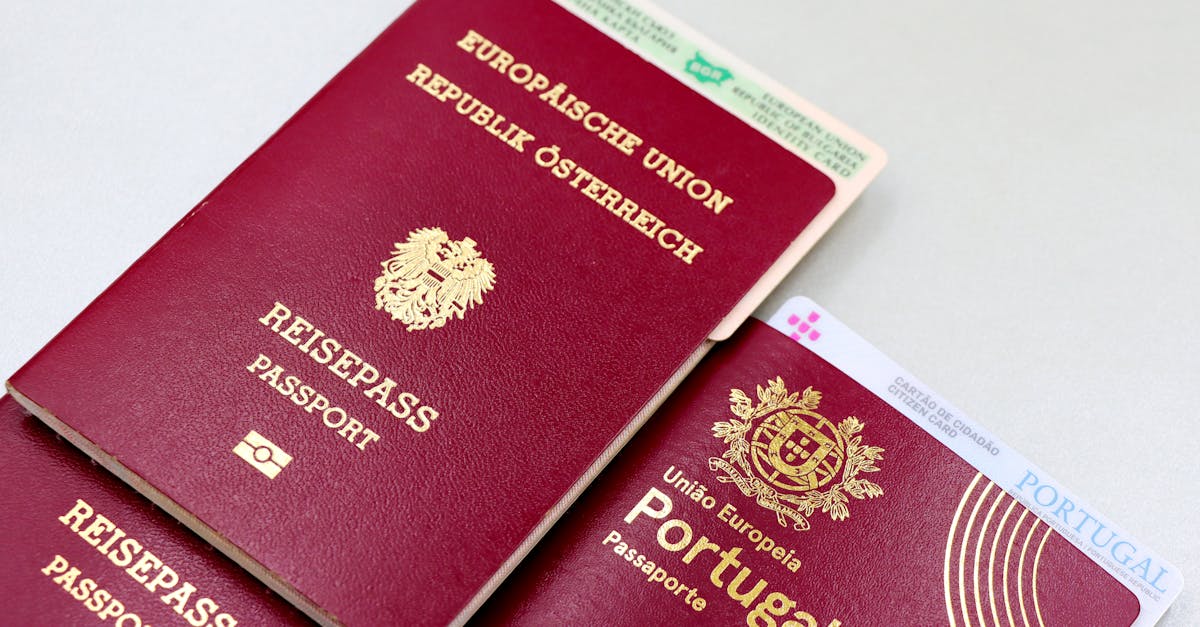
- Portuguese Citizenship: You must hold a valid Portuguese passport.
- Permanent Residency (Residência Permanente): You must have held a valid permanent visa (Residência Permanente) and your corresponding CRNM (Carteira de Registro Nacional Migratório) for at least one uninterrupted year. Temporary visas do not count. You can obtain permanent residency through various means, such as family reunion, investment, or retirement.
- Effective Residence: You must prove Brazil is your effective home. The law states that simply owning property is not enough. Proof comes from documents like employment contracts, business registrations, school enrollments for children, or long-term rental contracts.
- Moral Integrity: You must have a clean criminal record in Brazil and Portugal. Any criminal conviction may require a formal rehabilitation process before you can apply.
- Portuguese Language Ability: You must demonstrate the capacity to communicate in Portuguese, commensurate with your possibilities. For Portuguese citizens, this is typically assessed informally during the process, but being able to handle daily and bureaucratic life is essential.
The legal basis for this reduction is found in Article 12, §4º of the Brazilian Constitution, combined with the treaty and regulated by Portaria Interministerial Nº 19/2020. This ordinance formally confirmed that Portuguese citizens are subject to the one-year residency rule for naturalization.
What Are the Other Naturalization Options in Brazil?
Understanding the standard paths highlights the value of the Portuguese advantage. The general rule is governed by the Lei de Migração (Law 13.445/2017).
Option A: Standard Naturalization (4+ Years)
This is the path for most other nationalities. You must hold a permanent residence permit (CRNM) for a minimum of four years. The clock starts from the issuance date of your permanent visa, not from your initial arrival in Brazil. All other requirements (moral integrity, effective residence, Portuguese proficiency) apply equally. This is a lengthy process, often taking 1-2 years for the application itself after the four-year wait.
Option B: Naturalization for Spouses and Parents (1 Year)
This is another accelerated path, but based on family ties, not nationality. If you are married or in a stable union (união estável) with a Brazilian citizen, or if you have a Brazilian child, you can apply after just one year of permanent residency. This option is available to citizens of any country, including Portugal. For a Portuguese citizen, this creates an alternative basis for the same 1-year timeline.
Option C: Naturalization for Refugees (4 Years, Reducible)
Individuals recognized as refugees in Brazil can apply for naturalization after four years of residence. This period can be reduced to two years if they have a Brazilian child or spouse. This is a distinct humanitarian process managed by CONARE, separate from the standard or treaty-based paths. For more on this, see our guide on the CONARE refugee application process.

| Criterion | Portuguese Citizen Path (Treaty) | Standard Path | Family-Based Path (Spouse/Parent) |
|---|---|---|---|
| Legal Basis | Treaty of Friendship & Portaria 19/2020 | Art. 65, Lei de Migração | Art. 65, Lei de Migração |
| Residency Requirement | 1 year of Permanent Residency | 4 years of Permanent Residency | 1 year of Permanent Residency |
| Key Eligibility | Portuguese citizenship + permanent visa | Any nationality + permanent visa | Marriage/union with Brazilian or Brazilian child |
| Core Document | Portuguese passport, CRNM | CRNM (4 years old) | CRNM, Brazilian marriage/birth certificate |
| Approx. Total Timeline (Residency + Process) | 1 year + 6-18 months | 4 years + 6-18 months | 1 year + 6-18 months |
How Much Does Brazilian Naturalization Cost in 2026?
The government application fee for naturalization submitted via the online system (SEN) is zero. However, significant ancillary costs are involved in preparing your application. Budgeting for these is crucial to avoid delays.
- CRNM Registration/Renewal: Before applying, ensure your CRNM is valid. The fee for issuance or renewal at the Federal Police is R$ 204.77 (approx. €38 / US$42).
- Document Apostille: Portuguese documents (like birth or criminal record certificates) must be apostilled in Portugal under the Hague Convention. Fees vary by issuing entity.
- Sworn Translation (Tradução Juramentada): Any document not in Portuguese must be translated by a translator registered with the Brazilian commercial board (Junta Comercial). Average cost: R$ 50 to R$ 120 per page.
- Notary Fees (Cartório): You will need to certify copies (autenticar) of your original documents. Some cartórios also charge for digital scanning services. Expect small fees of R$ 20 to R$ 50 per document.
- Potential Legal Fees: While you can apply alone, many foreigners hire a lawyer to navigate the process, ensure documentation is perfect, and handle communications with authorities. This is a variable cost but can prevent costly mistakes or denials.
What Changed for Naturalization in Brazil in 2026?
The core rules for Portuguese citizens remain stable, but the process continues to digitize, improving efficiency. The key platform is the Sistema Eletrônico de Naturalização (SEN), hosted on the federal government’s gov.br portal. In 2026, expect:
- Fully Digital Submission: The entire application, including document uploads, is now online. Physical submissions at the Federal Police are largely phased out.
- Gov.br Account Requirement: You must have a gov.br account with at least “Silver” or “Gold” assurance levels. This requires a CPF (Brazilian tax number) and usually a Brazilian phone number for verification.
- Integrated System Checks: The SEN system can cross-reference data with the Federal Police (for your migration status) and the Electoral Justice (to check if you’ve illegally registered to vote). Ensuring your records are clean and consistent is more critical than ever.
- Continued Backlogs: Despite digitization, analysis times by the Ministry of Justice can still be long. Current estimates for a decision range from 6 to 18 months after application submission. Patience and precise documentation are key.
What is the Step-by-Step Process for Portuguese Citizens?
Phase 1: Pre-Application (The 1-Year Wait)
- Secure Permanent Residency: Obtain your permanent visa (e.g., through family, investment, retirement). Upon arrival, register with the Federal Police to get your physical CRNM card. This starts the 1-year clock.
- Build Your Life in Brazil: During this year, gather proof of effective residence: sign a long-term lease, get a Brazilian driver’s license (CNH), open a local bank account, pay taxes (if applicable), and enroll children in school.
- Plan Your Documents: Identify which documents from Portugal you will need (see list below) and start the process of obtaining apostilles, as this can take weeks.
Phase 2: Application Submission (Online via SEN)
- Access the System: Log into the gov.br portal with your Silver/Gold account. Navigate to the SEN service.
- Complete the Form: Fill in all personal, family, and residency history details accurately.
- Upload Required Documents (Digital Scans):
- Valid Portuguese Passport (all pages).
- Valid CRNM (front and back).
- CPF (Cadastro de Pessoas Físicas) card.
- Apostilled and Sworn Translated Portuguese Birth Certificate.
- Apostilled and Sworn Translated Portuguese Criminal Record Certificate (from the last 5 years).
- Brazilian Criminal Record Certificates (Certidões de Antecedentes Criminais) from the Federal, State, and Electoral Justice. These can be obtained online.
- Proof of Effective Residence: Employment contract, business registration (CNPJ), property deed, long-term rental contract, utility bills in your name, Brazilian driver’s license, children’s school records.
- Proof of Financial Means: Bank statements, tax declarations, or proof of steady income.
- Payment of any outstanding Brazilian taxes (certificate from Receita Federal).
- Submit and Note Protocol Number: After submission, you will receive a protocol number. This is your proof of application. Save it.
Phase 3: Analysis, Decision, and Final Steps
- Ministry of Justice Analysis: Your case enters a queue. The Ministry may request additional information via the system. Monitor your gov.br messages.
- Publication of Grant: If approved, your naturalization will be published in the Official Federal Gazette (Diário Oficial da União). This publication is the legal act that grants you citizenship.
- Obtain Your Naturalization Certificate: After publication, you must request your official naturalization certificate (Certidão de Naturalização) through the SEN system.
- Register as Brazilian: With the certificate, you must register your new status. This involves:
- Registering the certificate at a Notary of Notes (Cartório de Notas).
- Applying for your Brazilian RG (Carteira de Identidade) at a state identification institute.
- Applying for your Brazilian passport at the Federal Police.
- Updating your CPF record with the Receita Federal to reflect your new nationality.
Frequently Asked Questions (FAQ)
1. Can trips abroad during the 1-year period break my residency?
No, short trips do not automatically interrupt your residency. According to the law, the period is not considered interrupted by trips abroad, provided the total sum of absences does not exceed 12 months. However, very long or frequent absences might raise questions about your “effective residence.” It’s best to maintain clear ties to Brazil (like a fixed address, employment, or family) and keep your trips reasonable.

2. Do I need to speak fluent Portuguese?
The law requires the “ability to communicate in Portuguese considering his/her condition.” For Portuguese citizens, this is a formality, but you must be able to handle the process. All communications with authorities will be in Portuguese. While there is no formal exam for treaty-based applicants, demonstrating basic proficiency for daily and bureaucratic life is expected and practical.
3. I have a Brazilian child. Should I use the family path or the Portuguese treaty path?
You can use either, as both require one year of permanent residency. The Portuguese treaty path is often simpler document-wise, as it relies on your passport and CRNM. The family path requires additional documentation proving the relationship (birth certificate, marriage certificate). We recommend choosing the path for which you have the clearest, most easily obtainable documentation.
4. Can I apply if I have a minor criminal record from years ago?
A criminal conviction, even if old, can be a ground for denial. The requirement is “moral integrity.” The authorities will check both Portuguese and Brazilian records. In some cases, you may need to go through a legal “rehabilitation” process in the country where the conviction occurred before applying. This is a complex situation where consulting a lawyer is highly advisable.
5. Once naturalized, can I lose my Portuguese citizenship?
No. Portugal allows dual citizenship. Acquiring Brazilian nationality will not cause you to lose your Portuguese citizenship. You will become a dual citizen of Portugal and Brazil, with the rights and obligations of both nations. You must, however, always enter and exit Brazil using your Brazilian documents (ID or passport).
Ready to Start Your Brazilian Naturalization Journey?
Navigating the accelerated naturalization path as a Portuguese citizen is a remarkable opportunity, but the devil is in the bureaucratic details. A missing apostille, an incorrect translation, or a misinterpreted form can lead to frustrating delays or even denial. Having a bilingual legal team that understands both the treaty’s privileges and the day-to-day realities of Brazilian bureaucracy can transform a complex process into a clear, managed pathway.
Our immigration lawyers at Ribeiro Cavalcante Advocacia are experienced in guiding Portuguese citizens through every step—from securing permanent residency to submitting the flawless naturalization application and handling the final registrations. Let us handle the legal complexities so you can focus on building your life in Brazil.
Talk to a specialist lawyer now
Talk to a Lawyer on WhatsApp