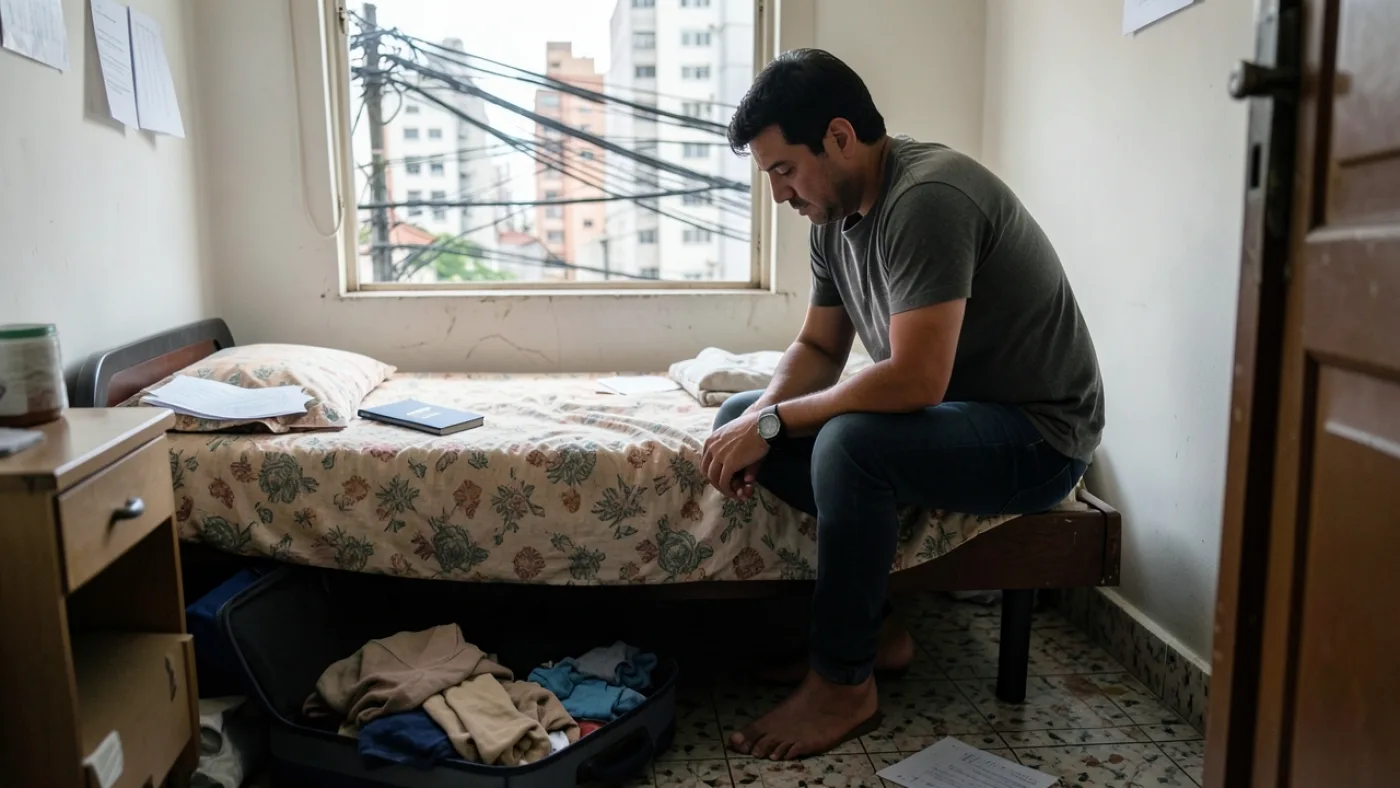

The most expensive mistake foreigners make when applying for investor residency in Brazil has nothing to do with the amount of money involved. It is wiring the investment into the wrong account, at the wrong time, without registering it at the Banco Central (Brazilian Central Bank). We see it several times a year: an investor sends R$ 600,000 from abroad into a personal Brazilian account, buys a stake in a company months later, and then discovers that the Federal Police will not count a single real of it. The capital was never registered as foreign direct investment, so on paper the “investment” does not exist. Result: application denied, months lost, and money that is now difficult to repatriate without tax friction.
Family applications fail for a mirror-image reason: the paperwork proves a legal relationship but not a real one. A marriage certificate alone is often not enough.
Brazil uses a Civil Law system, not Common Law. What is written in the statute and in the ministerial ordinances is what happens, and a caseworker has almost no discretion to accept a “reasonable equivalent” document. This article sets out the rules for investor and family residency in 2026, and then spends the second half on the cases where those rules do not save you, and what actually answers the authority’s objections.
On this page
What Is the Rule for Investor Residency in Brazil in 2026?
The standard rule is that a foreign individual who invests at least R$ 500,000 in the share capital of a Brazilian company can apply for residence, under the investor rules issued by the National Immigration Council (CNIg) and the framework of Law 13.445/2017, the Brazilian Migration Law. The threshold drops to R$ 150,000 for innovation, research or technology projects.
Three separate systems have to line up before you file anything with immigration:
- Corporate: a Brazilian company with a CNPJ (corporate taxpayer number), articles of association filed at the Junta Comercial (Commercial Registry), and you named as quotaholder.
- Banking: the capital transferred from abroad and registered as foreign direct investment in the Banco Central’s electronic system, so the money is traceable and legally yours.
- Immigration: the residence application itself, with a business plan showing job creation or income generation in Brazil.
The business plan is not a formality. Immigration analysts read it. A plan that promises three hires in eighteen months, with realistic revenue figures and a sector that matches your professional background, passes. A one-page document saying “consulting services” does not.
Key point: the investor route is not really an immigration process. It is a corporate, banking and immigration process running in parallel, and the corporate and banking steps must be finished first. If you want the detailed threshold analysis, our guide on Brazil investor visa requirements and 2026 costs breaks down each document.
There is also a real estate route. Buying urban property in Brazil, generally around R$ 1,000,000 (reduced to roughly R$ 700,000 for property in the North and Northeast regions under the CNIg rules), can support a residence application. It is simpler operationally, but it does not create a business, which matters later if you want to renew or naturalize. We compare both in investor visa versus real estate residency.
One practical note: to obtain a CNPJ, the company needs a valid registered fiscal address in Brazil. Ribeiro Cavalcante provides a fiscal address in Brazil for clients who are incorporating before they physically relocate.
What Is the Rule for Family Residency (Reunião Familiar)?
Under article 37 of Law 13.445/2017, residence for family reunion is granted to the spouse or partner of a Brazilian or of a foreigner already holding residence, to their children, to parents, and to dependants recognised by Brazilian law. There is no minimum investment and no minimum salary requirement in the statute itself.
This is the cheapest and fastest family route into Brazil, and it is also the one most often denied. The reason is evidentiary, not financial. The authority must be satisfied that the family bond is real and legally documented in a form Brazil recognises.
What counts as proof, in practice:
- Marriage or birth certificate, apostilled in the country of origin and translated by a sworn translator (tradutor juramentado) registered in Brazil.
- For stable unions (união estável), a public deed drawn up at a cartório (notary office with legal registration powers), not a private agreement.
- Supporting evidence of a shared life: joint lease or deed, joint bank account, photographs across time, correspondence at the same address, health insurance listing the dependant.
- Proof of the sponsor’s status: Brazilian ID (RG), CPF (individual taxpayer number), or the CRNM (National Immigration Registration Card) if the sponsor is a foreign resident.
Watch out: a marriage celebrated abroad has no automatic effect in Brazil. It should be transcribed at the 1st Registry of Civil Registry of Natural Persons in Brazil or, at minimum, presented apostilled and sworn-translated. Skipping this step is the single most common cause of a family reunion rejection.
How Does the Application Process Actually Work, Step by Step?
Most residence applications in 2026 begin online through the Federal Police’s Migrante Web system, followed by an in-person biometrics appointment. According to the Federal Police, the applicant must register within 90 days of entering Brazil when arriving on a visa, and the CRNM card is issued after biometrics are collected.
The realistic sequence for an investor family:
- Weeks 1-4: obtain CPF numbers for every adult applicant, grant a power of attorney at a Brazilian consulate or apostilled abroad, incorporate the company and file at the Junta Comercial.
- Weeks 4-8: open the corporate bank account, transfer the capital from abroad, register the foreign direct investment with the Banco Central.
- Weeks 8-10: assemble the immigration file: passports, apostilled criminal record certificates from every country of residence in the last five years, sworn translations, business plan, corporate and banking evidence.
- Weeks 10-12: file online, pay the federal fees by GRU (government payment slip), book the Federal Police appointment.
- Months 3-6: decision, biometrics, CRNM issued.
How it works: spouse and children are filed as dependants attached to the principal applicant’s file, not as separate cases. Filing them separately later usually adds two to four months and a second round of translations, because certificates older than 90 days are frequently rejected.
How Much Does It Cost in 2026?
Government fees are modest. According to the Federal Police fee schedule, the CRNM card costs R$ 204.77 (roughly US$ 40), with a separate registration fee of about R$ 168 per person. The real budget goes to incorporation, translations, apostilles and legal work, typically R$ 15,000 to R$ 30,000 for a full investor family file.
| Item | Typical cost in 2026 (BRL) | Notes |
|---|---|---|
| CRNM card issuance (per person) | R$ 204.77 | Federal Police fee, paid by GRU |
| Residence registration fee (per person) | approx. R$ 168 | Verify current GRU code before paying |
| Company incorporation (Junta Comercial + fees) | R$ 1,500 – R$ 3,000 | Varies by state |
| Sworn translation (per document) | R$ 100 – R$ 300 | Certificates older than 90 days often rejected |
| Apostille abroad (per document) | Varies by country | Mandatory under the Hague Apostille Convention |
| Legal fees, investor family file | R$ 15,000 – R$ 30,000 | Includes corporate, banking and immigration work |
| Minimum corporate investment | R$ 500,000 | R$ 150,000 for innovation or technology projects |
Example: a family of four (investor, spouse, two children) budgeting an R$ 500,000 investment would pay roughly R$ 1,490 in Federal Police fees for all four CRNM cards and registrations, plus around R$ 2,400 in translations for twelve documents, plus incorporation and legal fees. Government charges are the smallest line on the invoice.
When Does the Investor Rule Not Save You?
Meeting the R$ 500,000 threshold is a floor, not a guarantee. Under the CNIg investor rules, the analyst evaluates whether the investment generates jobs or income in Brazil. Applications are refused every month despite the money being fully transferred, because the capital, the company or the plan does not withstand scrutiny.

The recurring failure patterns:
- Capital in the wrong pocket. Money sent to a personal account, then contributed to the company locally, is domestic capital. It does not qualify as foreign direct investment and cannot be repatriated cleanly.
- The shelf company. A CNPJ with no employees, no lease, no invoices and no operating activity twelve months in. Renewal is where this collapses, not the first application.
- The recycled business plan. Generic plans without sector-specific figures read as templates and are treated as such.
- Criminal record gaps. Certificates missing from a country where you lived for eighteen months during the last five years will stop the file.
- Capital paid in as an intercompany loan. A loan is debt, not equity. It does not count toward the investment threshold.
Watch out: residence obtained through investment is initially granted for a fixed term. When you apply to convert it to an indefinite-term authorization, the authority looks backwards at whether the business actually did what your plan promised. A dormant company at renewal can undo the whole structure, including your family’s dependent status.
There is also the tax dimension nobody plans for. Once you become a Brazilian tax resident, worldwide income becomes reportable to the Receita Federal (Brazilian IRS). If you later leave, you must file a formal exit declaration or you keep accruing obligations. Our article on the Brazil tax exit declaration, deadlines and penalties explains what happens if you skip it.
What Will the Authority Argue Against Your Family Case, and What Answers It?
The strongest argument against a family reunion application is not that your relationship is fake. It is that article 37 of Law 13.445/2017 grants residence only when the legal family bond is adequately proved, and that documentary formality exists precisely because the State cannot verify private facts. On that reading, an unproved bond is legally the same as no bond.
That is a serious argument, and Brazilian courts have accepted it. In Appeal 1000305-60.2023.4.01.3600, judged on 8 November 2023, the Federal Regional Court of the 1st Region (TRF1) applied article 37 of the Migration Law and upheld the refusal of a family-based residence authorization because the legal requirements of the family bond with a Brazilian or with a foreigner holding residence had not been adequately demonstrated. The court did not question the applicant’s good faith. It questioned the evidence.
So what answers it? Not sincerity, and not appeals. Evidence, built before filing:
- Certificates apostilled and sworn-translated within the last 90 days, and the foreign marriage transcribed into the Brazilian civil registry where possible.
- A stable union proved by public deed at a cartório, plus at least two independent categories of shared-life evidence (housing, finances, dependants).
- The sponsor’s own status documented and current: a CRNM that has not expired, an address that matches the one declared.
- Consistency across every document. A date of marriage that differs by one day between the certificate and the online form invites a formal demand for clarification, which alone can add 60 days.
Key point: the authority’s objection is almost never “we do not believe you.” It is “you did not prove it in the required form.” That objection is defeated at the document-preparation stage, not at the appeal stage. Judicial review of an immigration refusal in Brazil regularly takes one to three years.
What Changed in 2026 for Investors and Families?
The most relevant recent change is Decree 12.657/2025, which updated the regulation of the Migration Law and pushed residence applications further onto digital channels, with clearer expectations around proof of economic solvency. In practice, more of the process happens online, and the documentary standard applied to the file has become stricter, not looser.
What this means for you:
- Digital-first filing. Most applications start on the Federal Police platform, with an in-person step only for biometrics and document verification.
- Economic solvency is documented, not declared. Bank statements, proof of income, corporate documents and Banco Central registration are expected to be uploaded, not merely asserted.
- Faster rejections. Digital screening catches formal defects earlier. A missing apostille now produces a refusal in weeks rather than surfacing at the counter months later.
Naturalization rules remain a strong incentive to get the residence right the first time. Ordinary naturalization under the Migration Law requires four years of residence, but that period drops to one year for a foreigner who has a Brazilian child or is the spouse of a Brazilian national. Our overview of the investor route toward a Brazilian passport maps the full timeline.
Which Route Fits Your Family Best?
Choose by what you already have. If you have a Brazilian spouse or child, family reunion under article 37 is faster and costs almost nothing in government fees. If you have capital but no Brazilian family, the R$ 500,000 corporate route gives you residence plus a business asset. The table below compares the practical trade-offs.
| Route | Financial requirement | Typical timeline | Main risk |
|---|---|---|---|
| Corporate investment | R$ 500,000 in share capital | 3-6 months after incorporation | Renewal if the business is dormant |
| Innovation / technology investment | R$ 150,000 plus project | 4-7 months | Project must be genuinely innovative |
| Real estate purchase | approx. R$ 1,000,000 (less in North/Northeast) | 3-6 months after registered deed | Deed must be registered, not just signed |
| Family reunion (article 37) | None | 2-5 months | Documentary proof of the bond |
| Dependants of an investor | Covered by principal applicant | Filed together | Filing separately delays everyone |
Quick recap: the rule decides whether you can apply. The evidence decides whether you succeed. Investors lose on capital registration and business substance; families lose on apostilles, translations and civil registry transcription.
Frequently Asked Questions
Can a foreigner own 100% of a Brazilian company?
Yes. A foreign individual or foreign company can hold 100% of the quotas of a Brazilian limited liability company (LTDA). There is no requirement for a Brazilian partner. What is required is a CPF for the foreign quotaholder, a registered fiscal address for the CNPJ, and, if the owner lives abroad, a resident legal representative in Brazil with powers granted by public power of attorney. Restricted sectors exist, including rural land, border areas, and certain media and aviation activities. For the investor residence route specifically, the applicant must be an individual holding quotas personally, not only through an offshore holding company.
Does my spouse need a separate investment to get residency?
No. The spouse and minor children of an investor apply as dependants under family reunion, attached to the principal applicant’s file. There is no separate investment threshold for them. What they do need is the same documentary standard: apostilled marriage and birth certificates, sworn translations, and consistency with the principal applicant’s declared data. Filing the family at the same time as the investor is significantly faster and cheaper than adding them months later, because a second filing usually means a second round of certificates, since Brazilian authorities commonly reject documents issued more than 90 days earlier.
How long until I can apply for Brazilian citizenship?
Ordinary naturalization under the Brazilian Migration Law requires four years of residence, plus Portuguese language ability and no disqualifying criminal record. That period is reduced to one year for a foreigner who has a Brazilian child or is married to a Brazilian national. Investors who arrive with their family and later have a child born in Brazil often reach eligibility far sooner than four years. Note that the four years count from the date residence is granted, not from your first arrival, which is one more reason not to delay filing.
What happens if my residence application is denied?
You can file an administrative appeal within the deadline stated in the decision, usually a short window of days, and you can also challenge the refusal in federal court. Administrative appeals succeed when the defect was formal and fixable, such as a missing translation. Judicial review is slower: one to three years is realistic, as the TRF1 decision in Appeal 1000305-60.2023.4.01.3600 illustrates, where the refusal was ultimately upheld. Refiling a corrected application is often faster than litigating, provided the underlying eligibility was never in doubt.
Do I have to live in Brazil full time to keep my residence?
Residence in Brazil can be lost through prolonged absence, and the authority may cancel an authorization when the holder is absent from the country for an extended period without justification. Equally important, an investor whose company stops operating risks losing status at renewal, regardless of physical presence. If you plan to split time between countries, keep the company genuinely active, keep the Banco Central registration updated, and maintain a documented Brazilian address. Also note that becoming a tax resident triggers worldwide income reporting to the Receita Federal.
Do I need a lawyer registered with the OAB?
Legally, you can file a residence application yourself. Practically, investor and family files touch corporate registration, Banco Central rules, notarial procedure and immigration law at the same time, and every professional acting as a lawyer in Brazil must be registered with the OAB (Brazilian Bar Association). Consultants who are not OAB-registered cannot represent you in an administrative appeal or in court if the application is refused. Ask for the OAB number before you sign anything, and confirm it on the Bar’s public registry.
Hire a Brazil Immigration Lawyer for Your Investment and Your Family
Investor and family residence in Brazil is won or lost before the file is submitted, in the sequence of corporate registration, capital transfer and document legalisation. Our bilingual team handles all three in one workflow, so the money arrives in the right account, the company exists before the application, and every certificate carries the apostille and sworn translation the Federal Police expects.
Concrete next step: send us your passport data page, a list of every country you have lived in during the last five years, and, if you have Brazilian family, the marriage or birth certificate you intend to rely on. We will tell you within one business day which route fits, what it costs, and which documents to start legalising this week.
Talk to a specialist lawyer now
Talk to a Lawyer on WhatsApp