
Yes, a Vietnamese business owner can get Brazilian residency and, eventually, a Brazilian passport. But almost nobody gets rejected for the reason they expect.
Most Vietnamese entrepreneurs who contact us are worried about the money: do I really need R$ 500,000? Do I need a Brazilian partner? Will the Federal Police question my source of funds? Those are fair questions, and we answer them below. But in practice, investor residency applications from Vietnam rarely collapse because the capital was too small. They collapse because of paperwork that was never going to be accepted in the first place, and because the capital entered Brazil through the wrong door.
Brazil runs on Civil Law, not Common Law. That means the form of a document matters as much as its content. A perfectly legitimate Vietnamese company registration certificate, translated by a competent bilingual translator, can be rejected simply because that translator was not a sworn public translator registered with a Brazilian commercial board. A US$ 200,000 wire that funded a real factory can fail to count as “investment” because it was recorded as a loan instead of equity at the Central Bank.
This guide is organised around one question: where exactly does this application get denied, and how do you avoid it? The answers below reflect the rules in force in 2026, including the updated regulation of the Brazilian Migration Law.
On this page
Where Do Vietnamese Investor Residency Applications Actually Get Denied?
Most denials happen at three points: document legalization (Vietnam is not part of the Hague Apostille Convention, so consular legalization is required), the Central Bank capital registration (funds must be recorded as foreign direct investment, not a loan), and the business plan, which under the National Immigration Council rules must show job creation, not just a bank transfer.
The legalization trap: apostille does not work for Vietnamese documents
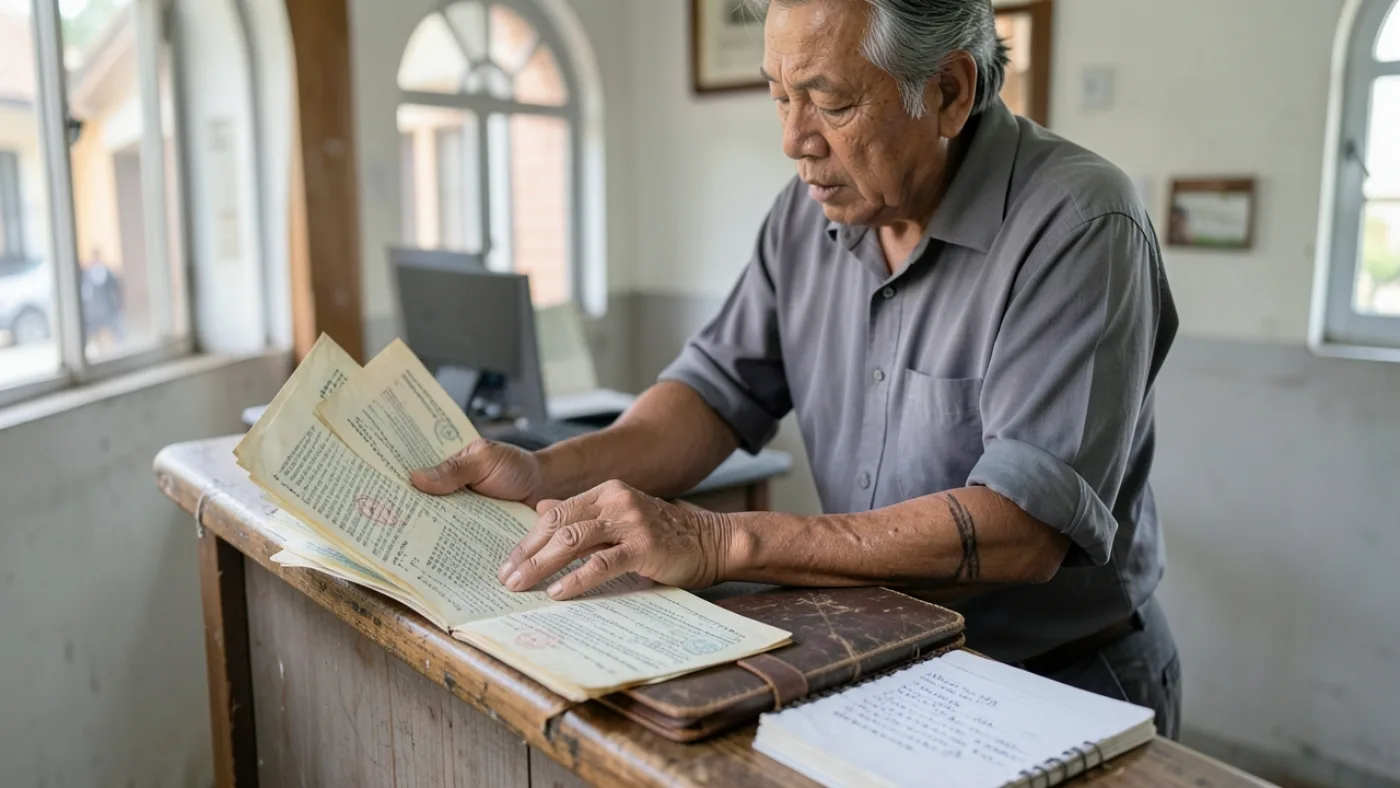
Every guide about Brazilian immigration tells you to “apostille your documents.” That advice is written for applicants from Europe, the United States or Latin America. Vietnam has not acceded to the Hague Apostille Convention, so a Vietnamese birth certificate, criminal record certificate or corporate document cannot be apostilled at all.
Instead, your documents must go through the older consular legalization chain: notarization in Vietnam, certification by the Vietnamese Ministry of Foreign Affairs, and then legalization at the Brazilian Embassy in Hanoi. Only after that can they be sworn-translated into Portuguese in Brazil. The Itamaraty (Brazilian Ministry of Foreign Affairs) publishes the current rules for each country on its consular services portal.
Warning: If you show up at the Federal Police with apostilled Vietnamese documents obtained from a private service, they will be refused, and your 90-day registration window keeps running. Budget 4-8 weeks for the full legalization chain before you fly.
The Central Bank problem: how you send the money decides everything
The second common denial is technical and expensive to fix. To count as investment for immigration purposes, foreign capital must be registered with the Banco Central do Brasil in the RDE-IED system (Electronic Declaratory Registry, Foreign Direct Investment). The Central Bank classifies inbound money by its nature: equity, loan, payment for services.
If your accountant or the receiving bank codes the wire as an intercompany loan, or if you deposit money into a personal Brazilian account and then move it to the company, the immigration file will not show a qualifying capital contribution. Reclassifying it afterwards is possible but slow, and it requires amending both the corporate act and the Central Bank record.
Important: The money must arrive from abroad, into the Brazilian company’s own account, registered as foreign direct investment, and be matched by a capital increase recorded at the Junta Comercial (state commercial registry). All four elements, or it does not count.
The business plan nobody reads until it is rejected
For the reduced investment track, the business plan is not a formality. The National Immigration Council (CNIg) rules require a plan describing the activity, the investment schedule, and the number of jobs to be created in Brazil. A three-page document saying “we will import Vietnamese textiles and expect growth” is the classic rejection.
What works: named roles with salary ranges, a hiring calendar, a market analysis with Brazilian data, and a realistic revenue projection. If your plan says you will hire six Brazilians in 24 months, the authorities can later verify it. That verification is exactly what makes the plan credible now.
Who Qualifies for Brazilian Residency as a Vietnamese Business Owner?
Under the Brazilian Migration Law (Lei nº 13.445/2017), any foreign national may apply for investor residency regardless of nationality. The standard benchmark is R$ 500,000 of foreign capital invested in a Brazilian company, reduced to R$ 150,000 when the project involves innovation, research or technology and creates jobs.
Do Vietnamese citizens need a visa to enter Brazil?
Yes. Vietnam and Brazil have no visa-waiver agreement, so Vietnamese passport holders need a visa even for tourism. For the investor route, you apply for a temporary visa (VITEM XIV, the investment category) at the Brazilian Embassy in Hanoi, after the residence authorization is approved by the Ministry of Justice in Brasília.
There is a second, faster-feeling route: enter on a business or tourist visa and apply for residency from inside Brazil. It is legal, but riskier. If the application is refused while you are in Brazil, you must leave before your entry period expires, and overstaying triggers daily fines under the Migration Law.
Can a Vietnamese national own 100% of a Brazilian company?
Yes. Brazil does not require a Brazilian partner for a Sociedade Limitada (LTDA), the standard private limited company. A foreigner can hold 100% of the quotas. There is no legal minimum share capital for most activities.
The catch: if you do not yet live in Brazil, the company needs a resident legal representative with power of attorney, and every shareholder (including you) needs a CPF (Individual Taxpayer Registry number). The company also needs a registered fiscal address to obtain its CNPJ (corporate tax ID). If you have not yet leased commercial space, Ribeiro Cavalcante provides a compliant fiscal address in Brazil that satisfies the registry requirements.
Tip: Get your CPF before anything else. It is free at Receita Federal offices in Brazil and costs around R$ 7.00 when requested through a Brazilian consulate abroad. Nothing in the corporate or immigration chain moves without it. You can start on the Receita Federal website.
Is there a Brazilian golden passport for investors?
No. Brazil has no citizenship-by-investment programme, and any agency selling one is selling a fiction. Investment gets you residency. Citizenship comes later, through naturalization, and the clock only starts once you hold a valid residence permit.
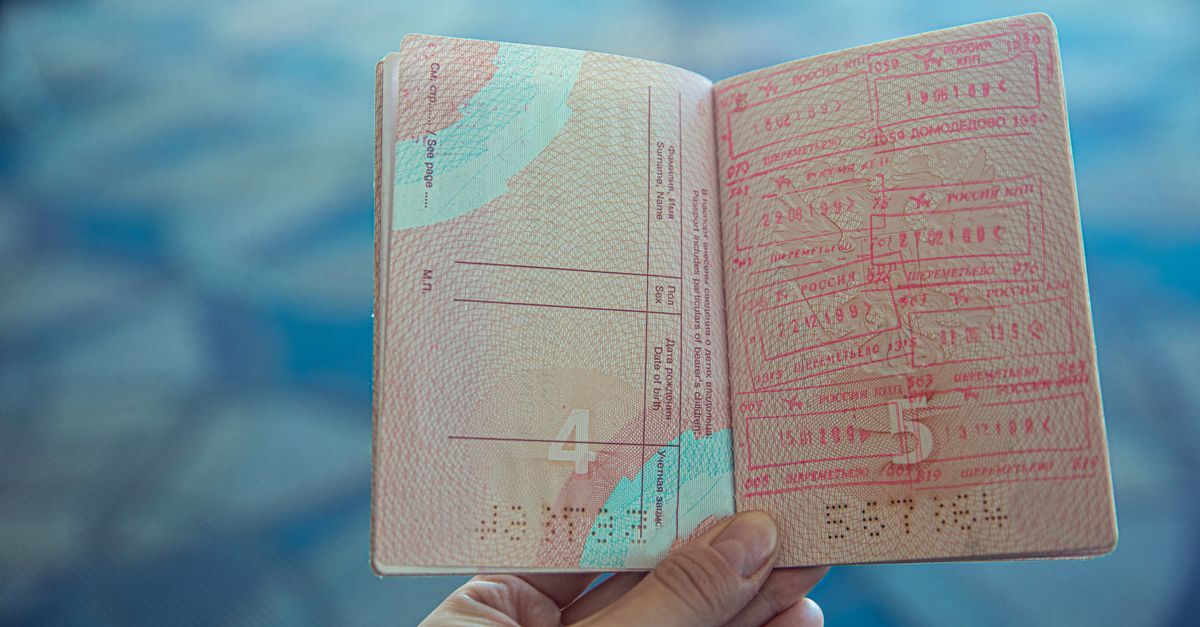
The ordinary path under the Migration Law requires four years of residence in Brazil plus Portuguese language ability. That period drops to one year in specific situations, most notably if you have a Brazilian child or a Brazilian spouse. We see the same structure discussed in our guides on the R$ 500,000 investor path to a Brazilian passport and on accelerated one-year naturalization.
What Does the Full Process Cost in 2026?
Government fees are surprisingly low. The CRNM (National Migration Registry Card) costs R$ 204.77 according to the Federal Police fee schedule, the CPF is free in Brazil, and CNPJ registration carries no federal fee. The real costs are the qualifying investment itself, sworn translations, consular legalization in Vietnam and professional fees.
What are the exact government fees?
Expect the following, based on the fee tables published by the Federal Police and Receita Federal for 2026: CRNM first issue R$ 204.77 (about US$ 40); CRNM renewal or replacement R$ 204.77; residence authorization analysis fee around R$ 168.13; CPF free in Brazil or roughly R$ 7.00 abroad; CNPJ free.
Consular visa fees at the Brazilian Embassy in Hanoi follow a reciprocity table and change periodically, so confirm the current amount directly with the embassy before paying anything to an intermediary.
What do translations and legalization really cost?
Sworn translation (tradução juramentada) in Brazil runs roughly R$ 80-150 per page, depending on the state board’s reference table and the technical difficulty of the text. A typical investor file (passport, birth certificate, marriage certificate, Vietnamese criminal record, company incorporation documents, bank statements) reaches 15-30 pages.
Practical example: A Ho Chi Minh City exporter opening a logistics LTDA in Santos budgeted R$ 3,200 in sworn translations (24 pages), R$ 204.77 for the CRNM, R$ 168.13 for the residence application, about R$ 2,800 in Vietnamese notary and consular legalization fees, and R$ 4,500 in accounting for company formation. Total non-investment cost: roughly R$ 10,900 (about US$ 2,000), excluding legal fees.
How long does the whole process take?
Realistically, 6-12 months from first document to CRNM in hand. Document legalization in Vietnam: 4-8 weeks. Company formation and CNPJ: 2-5 weeks. Capital transfer and Central Bank registration: 1-3 weeks. Ministry of Justice analysis of the residence authorization: 60-120 days. Federal Police biometrics and CRNM issuance: 30-90 days after approval.
Important: Once you enter Brazil on the investor visa, you have 90 days to register with the Federal Police. Missing that deadline generates a fine and complicates every later step, including naturalization.
Which Pathway Fits Your Situation?
Vietnamese business owners usually qualify under one of four routes: standard investor residency (R$ 500,000), reduced innovation investment (R$ 150,000), company administrator transfer, or family-based residency. Family-based residency is by far the fastest and cheapest, and it is the only one that reduces naturalization from four years to one.
| Pathway | Financial requirement | Typical timeline to CRNM | Time to naturalization |
|---|---|---|---|
| Investor residency (standard) | R$ 500,000 foreign capital in an LTDA | 6-12 months | 4 years of residence |
| Investor residency (innovation) | R$ 150,000 plus job-creation business plan | 6-12 months | 4 years of residence |
| Company administrator | R$ 600,000 investment, or R$ 150,000 plus 10 jobs in 2 years | 4-9 months | 4 years of residence |
| Family reunion (Brazilian child or spouse) | No investment required | 2-5 months | 1 year of residence |
The R$ 150,000 innovation track is the one most Vietnamese tech and e-commerce founders should look at first. We break down the same threshold in detail in our guide to residency through a R$ 150,000 investment, and the document logic is identical regardless of nationality.
“You Are Buying a Visa, Not Building a Business”: The Objection You Must Answer
The strongest argument against your application is not xenophobic and not unreasonable. It goes like this: the Migration Law grants investor residency to attract productive capital that generates employment in Brazil, so an applicant who wires R$ 500,000 into a dormant company, hires nobody, and spends most of the year abroad has satisfied the letter of the rule while defeating its entire purpose.
That argument is correct on its own terms. The residence authorization is granted for a productive purpose, and the authorities can review it. Investor CRNMs are typically issued for a defined period first, and renewal requires proof that the business actually operated: tax filings, payroll records, invoices, the capital still in the company.
Here is the answer. The objection defeats a shell, not a business. If your Brazilian company files monthly tax returns, employs even two registered staff with signed carteiras de trabalho (work cards), issues nota fiscal invoices, and maintains the registered capital, the renewal is documentary rather than discretionary. The applicants who lose are the ones who treated formation as the finish line.
Tip: Keep a “renewal folder” from day one: monthly accounting reports, employment registrations, bank statements showing operational movement, and the Central Bank RDE-IED certificate. When renewal comes, you assemble it in an afternoon instead of reconstructing three years of history.
What Changed for Investor Residency in 2026?
The main change is Decreto nº 12.657/2025, published in October 2025 and in force through 2026, which updates the regulation of the Migration Law. Its central purpose is digitalization: residency applications now run through a single online portal, and the Ministry of Justice has tightened how economic requirements are documented and verified.
Three practical consequences for Vietnamese applicants:
- Single digital entry point. Applications, document uploads and status tracking happen through the migration portal on gov.br, which reduces trips to Federal Police counters but makes file quality decisive. A blurry scan is now a rejection reason.
- Stricter economic evidence. The decree reinforces that financial requirements must be demonstrated with verifiable documents, not declarations. For investors, that means the Central Bank registration and the corporate amendment, not a bank letter.
- gov.br account required. You need a verified gov.br digital identity, which in turn requires a CPF. This is why the CPF is now genuinely the first step, not an afterthought.
The Migration Law itself, available in full on the Planalto government portal, was not amended in substance. The thresholds still come from National Immigration Council normative resolutions, which can be updated without changing the law.
Step by Step: From Hanoi to CRNM
The correct order matters more than speed. Doing step 4 before step 3 is the single most common cause of a rejected file. Expect 6-12 months total, and start the Vietnamese document legalization chain first, because it is the longest lead-time item and everything else depends on it.
- Obtain your CPF. Free in Brazil, around R$ 7.00 through a consulate. Do this for every shareholder and administrator.
- Legalize your Vietnamese documents. Notary in Vietnam, Ministry of Foreign Affairs, then the Brazilian Embassy in Hanoi. Include birth certificate, marriage certificate if applicable, and criminal record certificate.
- Sworn-translate everything in Brazil. Only a tradutor público juramentado registered with a state commercial board produces a translation the authorities accept.
- Incorporate the Brazilian LTDA. Articles of association at the Junta Comercial, CNPJ at Receita Federal, municipal and state registrations, fiscal address.
- Open the corporate bank account and transfer the capital from abroad, coded as foreign direct investment.
- Register the capital in RDE-IED at the Central Bank and amend the articles of association to reflect the capital increase.
- File the residence authorization with the Ministry of Justice through the migration portal, attaching the business plan.
- Collect the VITEM XIV visa at the Brazilian Embassy in Hanoi (if applying from abroad).
- Register with the Federal Police within 90 days of arrival for biometrics and CRNM issuance.
Warning: Do not transfer capital before the company exists and its bank account is open. Money that lands in a personal account almost never counts as qualifying investment, and undoing that mistake can cost months.
Special Situations Vietnamese Investors Ask About
Three scenarios come up constantly: buying farmland, having a child born in Brazil, and dual nationality. Each has a specific rule. Rural land purchases by foreigners are restricted by Lei nº 5.709/1971, a Brazilian-born child grants immediate residency to the parents, and Brazil permits dual nationality while Vietnam largely does not.
Can I buy farmland for an agribusiness project?
With limits. Brazilian law restricts rural property acquisition by foreign individuals and by Brazilian companies controlled by foreigners. Restrictions include area caps measured in modules of indefinite exploration, per-municipality percentage limits, and in some cases approval by the National Congress for very large areas.

Urban real estate has no such restriction: a Vietnamese national can freely buy apartments or commercial buildings in Brazilian cities. If your project is coffee, cashew, aquaculture or timber, structure the land question with a lawyer before you commit capital, because a purchase made in breach of Lei nº 5.709/1971 can be declared null.
My child will be born in Brazil. What changes?
Everything, and in your favour. Brazil applies jus soli: a child born on Brazilian soil is Brazilian, regardless of the parents’ immigration status. The parents of a Brazilian child are entitled to residency on family reunion grounds, with no investment requirement and no minimum income threshold.
It also shortens naturalization from four years to one year of residence under the Migration Law. Many investor families end up using the investment route for the business and the family route for the immigration status, which is entirely legitimate. The same logic applies to marriage with a Brazilian citizen, as explained in our guide to Brazilian residency routes and costs.
Will I lose my Vietnamese citizenship?
Brazil does not require you to renounce any other nationality when you naturalize. The restriction, if any, comes from the Vietnamese side. Vietnamese nationality law is built around the principle of single nationality, with limited exceptions, and acquiring a foreign nationality can affect your Vietnamese status.
Important: Before filing for Brazilian naturalization, get written guidance from Vietnamese authorities or a Vietnamese lawyer about the consequences for your Vietnamese passport, property rights and family registration. Brazilian permanent residency, which is indefinite and renewable, may serve your purposes without touching your nationality at all.
Frequently Asked Questions
Can I apply for investor residency without leaving Brazil?
Yes. Under the Migration Law, residence authorization can be requested from within Brazilian territory, even if you entered on a tourist or business visa. This avoids a round trip to Hanoi. The risk is timing: if the analysis extends past your authorized stay and no extension applies, you must leave. Filing early in your entry period and keeping proof of the protocol number are essential. For applicants with families already in Brazil, the in-country route is usually worth the risk. For a first-time applicant with everything still in Vietnam, applying from abroad is cleaner.
Does the R$ 500,000 have to be paid in one transfer?
No, but the full amount must be effectively integrated into the Brazilian company and registered at the Central Bank before the residence authorization is granted. Multiple transfers are acceptable if each one is properly coded as foreign direct investment and reflected in the RDE-IED registry. What is not acceptable is a commitment to invest later, or capital “subscribed but not paid in.” Brazilian corporate law allows subscribed capital to remain unpaid, but immigration authorities look for money that actually arrived.
Can I register as MEI (microentrepreneur) as a Vietnamese national?
Generally no, not on a temporary residence permit. The MEI regime, with its annual revenue ceiling of R$ 81,000 for most activities, is normally restricted to Brazilians and foreigners holding permanent residency. Investor applicants should incorporate an LTDA instead, which has no minimum capital requirement and can opt into the Simples Nacional simplified tax regime up to R$ 4.8 million in annual revenue. The LTDA is also the only structure that supports an investment-based residency application.
Do I need to speak Portuguese?
Not for residency. You do for naturalization. The Migration Law requires applicants for Brazilian citizenship to demonstrate the ability to communicate in Portuguese, usually through the Celpe-Bras proficiency certificate or equivalent evidence such as a Brazilian school or university diploma. For Vietnamese speakers, Portuguese takes real time, so start informally in year one rather than scrambling in year four. This is, in our experience, the most underestimated requirement of the entire pathway.
How long is the investor CRNM valid, and can it become permanent?
Investor residence is typically granted for a defined initial period and can then be converted to residence of indefinite duration, provided the business remained active and the capital stayed in Brazil. At renewal, the authorities look for evidence of real operation: tax filings, employees registered with the social security system, invoices issued. Indefinite residence still requires you to renew the physical CRNM card periodically (fee R$ 204.77 per the Federal Police schedule), but the underlying right no longer expires.
Do I need a Brazilian lawyer for this?
Legally, no: you can file yourself through the gov.br migration portal. Practically, the failure points described in this article (consular legalization for a non-Apostille country, RDE-IED coding, business plan standards, corporate amendments) sit at the intersection of immigration, corporate and exchange-control law. Any lawyer you hire must be registered with the OAB (Brazilian Bar Association), which you can verify online. Ask specifically whether they have handled Central Bank foreign capital registration, not just visa forms.
Start Your Brazil Residency Pathway as a Vietnamese Business Owner
Building a business in a country whose language, legal system and paperwork culture are entirely new is genuinely difficult, and the Vietnamese-to-Brazil route has specific traps that generic immigration advice misses completely. Our bilingual team handles the corporate formation, the Central Bank registration and the residence application as one connected file, so the pieces actually fit together.
Your concrete next step: send us three things by WhatsApp: a scan of your passport, a one-paragraph description of the business you want to run in Brazil, and the amount you plan to invest. We will tell you within one business day which pathway fits, what your Vietnamese documents will need, and a realistic timeline with costs.
Talk to a specialist lawyer now
Talk to a Lawyer on WhatsAppThis article is for informational purposes only and does not constitute legal advice. Fees, thresholds and procedures described reflect rules in force in 2026 and may change. For an analysis of your specific case, consult a qualified attorney registered with the OAB.