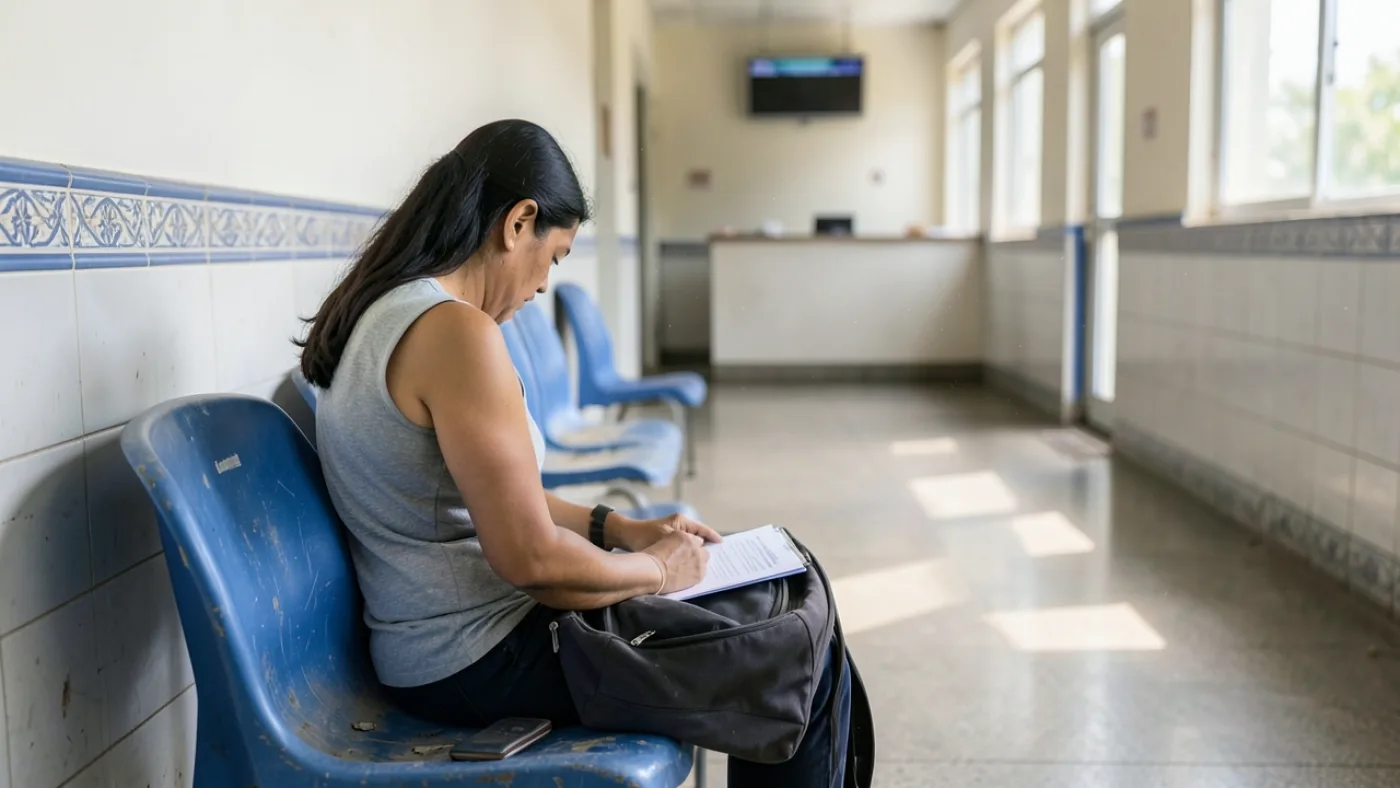

The single most expensive mistake in a Brazilian retirement visa application is almost never about money. It is about paperwork. Applicants walk into the consulate with twelve months of bank statements showing US$ 2,400 landing in their account every month, and they get denied. Why? Because a bank statement proves that money arrived. It does not prove that the money is passive, recurring and transferable to Brazil, which is what the law actually asks for. The result: a rejected file, a second consular fee, three to five months lost, and in the worst cases an applicant who has already given up an apartment lease abroad.
The fix is boring and cheap: present the source document, not the destination. A Social Security award letter, a pension fund statement of benefits, a signed lease with a notarized rental history, a dividend statement from a brokerage. Then legalize it properly (apostille) and have it translated by a sworn translator.
This guide covers exactly who qualifies for residency based on retirement or passive income in Brazil, how much income you need in 2026, which documents work and which get rejected, what the two application routes cost, and what to do if your monthly income falls short of the threshold.
On this page
Do You Actually Have to Be Retired to Qualify?
No. This is the exception most people never hear about: Brazil’s framework covers residency based on retirement or passive income, and there is no minimum age. A 41-year-old living on rental income or dividends of roughly US$ 2,000 per month can apply under the same rules as a 68-year-old drawing a state pension.
Start with the exception, because it is where most lost opportunities hide. Thousands of foreigners assume that “retirement visa” means they must hold a formal retirement certificate from their home country’s social security system. They rule themselves out, then look at the investor route with its six-figure capital requirement and conclude Brazil is out of reach.
Now the rule. Under Law 13.445/2017, the Brazilian Migration Law, and its regulating decree, Brazil grants residence authorization to foreigners who can prove stable means of subsistence that do not depend on working in Brazil. Retirement income is the classic example. Passive income (aluguel, dividendos, juros) is treated under the same logic: money that keeps arriving whether or not you get out of bed.
Key point: The old “visto permanente para aposentado” no longer exists as a concept. Since the 2017 Migration Law came into force, what you obtain is a residence authorization that materializes as a CRNM (Carteira de Registro Nacional Migratório, the National Migration Registry Card), not a stamp glued into your passport. Anyone selling you a “permanent retirement visa” is working from an outdated script.
Two other misconceptions cost people this right. First, the belief that you must already live in Brazil: you can apply from abroad at a Brazilian consulate. Second, the belief that you cannot work: this residency does not forbid economic activity in Brazil. It simply requires that your qualifying income be passive. Many holders later open a small business or freelance legally.
How Much Income Does Brazil Require in 2026?
The working benchmark is roughly US$ 2,000 per month in verifiable passive income, about R$ 11,000 at 2026 exchange rates, transferable into Brazil. Immigration practice has long added approximately US$ 1,000 per month for each dependent beyond the first two included in the application. Government fees are separate and modest.
Three details determine whether your number actually works:
- Gross vs net: authorities look at the recurring benefit amount stated by the paying institution. If your gross pension is US$ 2,300 but US$ 400 is withheld for health insurance premiums, present documents that make the gross benefit clear.
- Currency risk: the threshold is read in US dollars, but the file is analyzed in Brazil. A file built at US$ 2,050 is fragile. Build at US$ 2,300 or more if you can.
- Transferability: the income must be capable of being remitted to Brazil. Some pension schemes restrict payment to domestic accounts only. That does not disqualify you, but you must show a lawful path for the money to reach Brazil, which is regulated by the Banco Central do Brasil foreign exchange rules.
Example: A Canadian couple aged 63 and 61 apply together. She receives CPP plus a corporate pension totaling CAD 2,900 per month (about US$ 2,100). He has no pension yet but receives CAD 1,400 monthly in net rental income from a condo in Halifax. They file with her pension as the primary qualifying income and his rental income as reinforcement. Combined, roughly US$ 3,100 per month, comfortably above the benchmark for two people, with two independent sources. That redundancy is worth more than a single large number.
Option A: Residency Based on Retirement (Pension or Social Security)
This is the strongest version of the application. A lifetime state pension or Social Security benefit is, by definition, recurring and not dependent on your labor. If you draw US$ 2,000 or more per month from a public retirement system, your income documentation can be a single award letter, apostilled and sworn-translated.
How it works: You obtain a benefit verification letter from the paying body (the US Social Security Administration’s benefit verification letter, the UK Pension Service statement, Canada’s CPP/OAS statement of benefits, Australia’s Centrelink income statement). That document is apostilled in the country of origin under the Hague Apostille Convention, then translated in Brazil by a tradutor público juramentado (sworn public translator). The consulate or the Federal Police reads the letter and sees a fixed monthly amount with no end date.
Requirements in practice:
- Official benefit letter stating the monthly amount and its recurring nature
- Valid passport with at least six months remaining
- Criminal background certificate from your country of residence for the last five years, apostilled
- Birth certificate and, if applying with a spouse, marriage certificate, apostilled
- Proof of the ability to transfer funds to Brazil (bank declaration or remittance history)
- Address in Brazil for the Federal Police registration stage
Pros: the cleanest evidence, the fastest analysis, and the least likely to trigger a request for additional documents (exigência). Cons: it is available only if you are already receiving a benefit. Deferred pensions, “I will be eligible at 65” letters and projected-benefit statements do not qualify. You need money flowing now.
Important: Private pension and annuity payments count, but only if the payer confirms the payment schedule in writing. A contract that merely allows withdrawals is not the same as a schedule of guaranteed monthly payments. Ask your provider for an annuitization or payout statement, not a portfolio balance.
Option B: Residency Based on Passive Income (Rent, Dividends, Interest)
This route uses non-pension income: rental income, dividends, bond interest, royalties, or structured distributions from retirement accounts. The same benchmark applies (around US$ 2,000 per month, roughly R$ 11,000 in 2026), but the evidentiary burden is heavier because the income is not guaranteed for life by a state institution.
What works well for rental income: registered lease agreements with at least twelve months of term remaining, plus twelve months of deposit history, plus (ideally) an accountant’s or tax return confirmation that this income was declared. Three layers, not one. What works for dividends: brokerage or fund statements showing a consistent distribution history across at least twelve months, plus a holdings statement showing the capital that generates it.
Watch out: 401(k) or IRA withdrawals are the weakest evidence in this category, and the reason is legitimate. You are choosing to deplete capital. Nothing forces that withdrawal to continue. If this is your only income, convert part of the account into a scheduled annuity or documented systematic withdrawal plan before applying, and include the account balance so the analyst can see the capital will last decades, not months.
Pros: no age requirement, no need to be retired, and a 45-year-old landlord can access the same residency track that a retiree uses. Cons: more documents, more chance of an exigência, and sometimes an analyst who wants to see the income again in twelve months. Files built on three independent income streams survive scrutiny far better than files built on one.
Option C: What If You Fall Short of US$ 2,000 a Month?
Falling short does not end the conversation. Brazil has several parallel residency tracks, and some are cheaper than the retirement route. Family reunion residency, for instance, has no fixed income threshold when you are the spouse, partner or parent of a Brazilian, and it can lead to naturalization after just one year of residence.
Realistic alternatives:
- Family reunion (reunião familiar): spouse, stable union partner, child, or parent of a Brazilian or of a resident foreigner. The strongest and cheapest route when it applies.
- Mercosur residency: nationals of Argentina, Uruguay, Paraguay, Chile, Bolivia, Peru, Colombia, Ecuador and others access a simplified two-year residency with no income threshold.
- Digital nomad residency: designed for remote employees and contractors, with an income benchmark around US$ 1,500 per month or savings of about US$ 18,000. Note the key difference: this income is active, so it does not qualify under the retirement route, and the nomad permit is time-limited.
- Investor residency: capital investment in a Brazilian company or real estate. Compare the numbers in our analysis of the investor visa versus real estate residency.
One practical hybrid: if you have US$ 1,400 in pension income and a property in Brazil generating rent, count both. Nothing requires all qualifying income to come from abroad, provided it is passive and documented.
Retirement, Passive Income or Alternatives: How Do They Compare?
The table below compares the three main paths on the criteria that actually change your decision: income threshold, documentary difficulty, government fees and realistic timeline. CRNM registration with the Federal Police costs R$ 204.77 in 2026 under the federal fee schedule, regardless of which route you use.
| Criterion | A. Retirement / Pension | B. Passive Income | C. Alternatives (family, nomad, investor) |
|---|---|---|---|
| Income threshold | ~US$ 2,000/month (about R$ 11,000) | ~US$ 2,000/month, same benchmark | No threshold (family/Mercosur); ~US$ 1,500/mo (nomad); capital investment (investor) |
| Minimum age | None, but you must already receive the benefit | None | None |
| Core income document | Benefit award/verification letter | Leases, dividend statements, payout schedules + 12 months of history | Marriage/birth certificate; employment contract; investment registration |
| Documentary difficulty | Low | Medium to high | Low (family) to high (investor) |
| Consular visa fee | Roughly US$ 100-290, varies by nationality and reciprocity | Same | Same, when filed abroad |
| Federal Police CRNM registration | R$ 204.77 (2026) | R$ 204.77 | R$ 204.77 |
| Typical professional fees | R$ 5,000-15,000 depending on complexity | Usually higher end of the range | Varies widely |
| Realistic total timeline | 3-6 months to CRNM in hand | 4-8 months | 2-4 months (family/Mercosur); 4-9 months (investor) |
| Path to naturalization | Generally 4 years of residence | Generally 4 years | 1 year if married to a Brazilian or parent of a Brazilian child |
Which Route Fits Your Situation?
Choose by the quality of your evidence, not by the size of your income. A US$ 2,100 state pension with an official award letter beats a US$ 4,000 income built from three informal rentals with no written leases. The threshold is roughly US$ 2,000 per month; the decision is about provability.
- If you already draw Social Security or a state pension of US$ 2,000+: choose Option A and file at the consulate before you move. It is the shortest path and you arrive already authorized.
- If you are 45-60 with rental or dividend income: choose Option B, but spend two months upgrading your documentation before you file: registered leases, twelve months of statements, tax returns.
- If you are married to a Brazilian: ignore both and use family reunion. Same CRNM, lower cost, naturalization eligibility in one year instead of four.
- If you are already in Brazil on a tourist stamp and time is running out: act now, not later. Filing a residence request from inside Brazil is possible, but an overstay changes everything. See our guide on the R$ 10,238 overstay fine and how to regularize.
- If your income is remote work: the nomad permit is your route today, and the retirement route becomes available later, when part of your capital produces passive income. For the full map of categories, see our overview of the residency visa in Brazil in 2026.
What Changed for Retirement and Passive Income Residency in 2026?
The legal framework itself is stable: the 2017 Migration Law and its regulating decree still govern the process, and the income benchmark remains around US$ 2,000 per month. What changed in practice is digitalization, currency pressure on the threshold, and stricter scrutiny of income sources by consular posts.
Three practical shifts worth knowing:
- Digital filing is now the default. Most in-country residence requests and CRNM steps run through the Federal Police migration portal, with an in-person appointment only for biometrics and document delivery. Check current requirements on the Polícia Federal official site.
- Exchange-rate exposure matters more. Because the benchmark is read in dollars but daily life is in reais, applicants near the threshold are being asked more often to show a margin. Pension income that converted comfortably above R$ 11,000 two years ago can look tight after a swing.
- Tighter reading of “passive.” Consulates have become less tolerant of files where the money is really disguised salary: consulting income, management fees from a company you run, or “dividends” from a one-person business that only pays out when you work. If that describes you, expect questions.
On taxation, nothing changed structurally, and it still surprises people. Once you spend 183 days in Brazil within a twelve-month period (or arrive holding a residence permit), you generally become a Brazilian tax resident and must declare worldwide income to the Receita Federal. Brazil and the United States have no income tax treaty, but they do have a social security totalization agreement in force, which matters for benefit eligibility and contribution history, not for income tax relief. Foreign pensions are usually taxable in Brazil, with foreign tax credits available in some scenarios.
How Do You Apply, Step by Step?
There are two doors: apply for a temporary visa for residence purposes at a Brazilian consulate abroad, then register in Brazil; or apply for residence authorization directly to the Federal Police while lawfully in Brazil. Either way, you must complete the Federal Police registration within 90 days of entry or of approval, or the authorization lapses.
Route 1: Consulate first (recommended)
- Weeks 1-4: gather documents in your home country. Benefit letter or income evidence, criminal record certificate, birth and marriage certificates. Apostille every civil and official document.
- Week 4: complete the online visa application on the Itamaraty consular system, pay the fee, book your appointment at the consulate covering your jurisdiction.
- Weeks 5-12: consular analysis. Straightforward pension files are often decided in 3-6 weeks; passive income files take longer and may generate document requests.
- On arrival in Brazil: within 90 days, book your Federal Police appointment, pay the R$ 204.77 registration fee via the guia de recolhimento (federal payment slip), attend for biometrics, and receive your protocol.
- Weeks 12-24: your CRNM card is issued. The paper protocol is legally valid while you wait. Get your CPF (free at Receita Federal) and open a bank account.
Route 2: Filing from inside Brazil
Possible while you are lawfully present, for example on a valid tourist stamp. You upload the same documents through the Federal Police migration portal, pay the fees, and attend an appointment. The advantage is that you can view apartments and choose a city first. The risk: your tourist period may expire mid-analysis, and if you slip into irregular status you may face fines and a harder path, including the scenarios described in our guide on the 60-day window to fix your status.
Tip: Order two apostilled originals of every document. Brazilian offices retain originals, sworn translators want to see the original, and re-ordering an apostilled criminal record from abroad can add six weeks to your timeline. The extra cost is usually under US$ 100. The saved delay is worth ten times that.
Budget for translation: sworn translators in Brazil typically charge R$ 60-120 per page depending on the state’s official table. A standard retirement file with five or six documents runs roughly R$ 600-1,200. Note that Brazil is a Civil Law country, so form matters: an unapostilled or untranslated document is not “close enough”, it is simply not a document.
Why Do So Many People Lose This Right Without Knowing It?
Because the barrier is informational, not financial. A retiree with US$ 2,100 per month qualifies under the same law as a millionaire, yet most never apply. The three silent killers are the belief that you must be formally retired, the 90-day registration deadline after approval, and income evidence built on bank statements instead of source documents.
Now the counter-argument, in its strongest form, because it deserves an honest answer. The immigration authority’s position is this: Brazil is granting long-term residence, access to the public health system, and an eventual path to citizenship to someone who will not contribute through payroll. Passive income is inherently revocable. Rent stops when a tenant leaves. Dividends get suspended. A retirement account can be drained in five years. Pension schemes sometimes restrict payment abroad. If Brazil approves everyone who can screenshot US$ 2,000 in deposits, it inherits the cost of those whose income evaporates. Therefore, the authority says, the burden of proof must be high, and skepticism toward self-directed withdrawals is not bureaucratic obstruction, it is prudence.
That argument is basically right, and understanding it is what wins cases. The answer is not to complain about scrutiny but to satisfy it structurally: show a source that is institutional (a payer, not a self-withdrawal), show duration (a term, a lifetime benefit, a lease with remaining years, a capital base), and show redundancy (two or three independent streams). A file built that way removes the authority’s legitimate objection instead of arguing against it.
Quick recap: No age requirement. Roughly US$ 2,000 per month in passive, documented, transferable income. Source documents, not bank statements. Apostille plus sworn translation. Register with the Federal Police within 90 days. Expect 3-6 months end to end, and build in a buffer.
Frequently Asked Questions
Can I include my spouse and children in the same application?
Yes. A spouse or stable-union partner and dependent children can be included as dependents, typically through family reunion linked to your residence authorization. Immigration practice has long expected roughly US$ 1,000 per month of additional income for each dependent beyond the first two. You will need apostilled marriage and birth certificates, translated by a sworn translator in Brazil. Each dependent pays their own CRNM registration fee of R$ 204.77 and receives an individual card.
Can I work in Brazil on a retirement or passive income residency?
Yes. Once you hold a CRNM and a CPF, you are a legal resident and may work, open a company, or freelance. The restriction is on the qualifying income, which must be passive at the time of application, not on your future economic activity. Practically, many holders later register as an MEI or open a Brazilian company. If you go that route, note that a CNPJ requires a registered fiscal address in Brazil, a service our firm provides.
Does my residency expire, and how often must I renew?
Residency granted on this basis is typically issued for an indeterminate period once fully documented, but the CRNM card has its own validity and must be renewed. Under the Migration Law’s regulating decree, cards for indeterminate residency are generally valid for up to nine years for holders under 60, and issued without expiry for holders aged 60 or over. Long absences from Brazil (commonly more than two years) can put your residency at risk.
Will I pay Brazilian tax on my foreign pension?
Usually yes, once you become a Brazilian tax resident, which normally happens on arrival with a residence permit or after 183 days of presence in a twelve-month window. Brazil taxes worldwide income, and foreign pensions are generally included in the annual declaration to Receita Federal. Brazil has no income tax treaty with the United States, though foreign tax credit mechanisms may apply. Get a tax opinion before you transfer large sums or sell assets abroad.
Can I apply if I am already in Brazil on a tourist stamp?
Yes, while you remain lawfully present. You file the residence request with the Federal Police through the migration portal rather than at a consulate. The danger is timing: tourist periods are limited and analysis can outlast them. Overstaying triggers daily fines that can reach over R$ 10,000 and complicates future filings. If your stamp expires in under 60 days, get legal advice before filing rather than after.
Start Your Brazil Retirement Visa Application the Right Way
Moving your retirement to Brazil is a decision about your life, not a form to fill in. The rules are more generous than most people believe (no age limit, no six-figure investment, no requirement to stop working), and the denials almost always come from documentation that was assembled in the wrong order. Our bilingual team, registered with the OAB (Brazilian Bar Association), reviews income evidence before you spend a single consular fee.
Concrete next step: gather your benefit letter or income documents from the last twelve months, plus your passport, and send them for a document-by-document eligibility review. We will tell you exactly which papers qualify, which need upgrading, and which route to file.
Talk to a specialist lawyer now
Talk to a Lawyer on WhatsApp