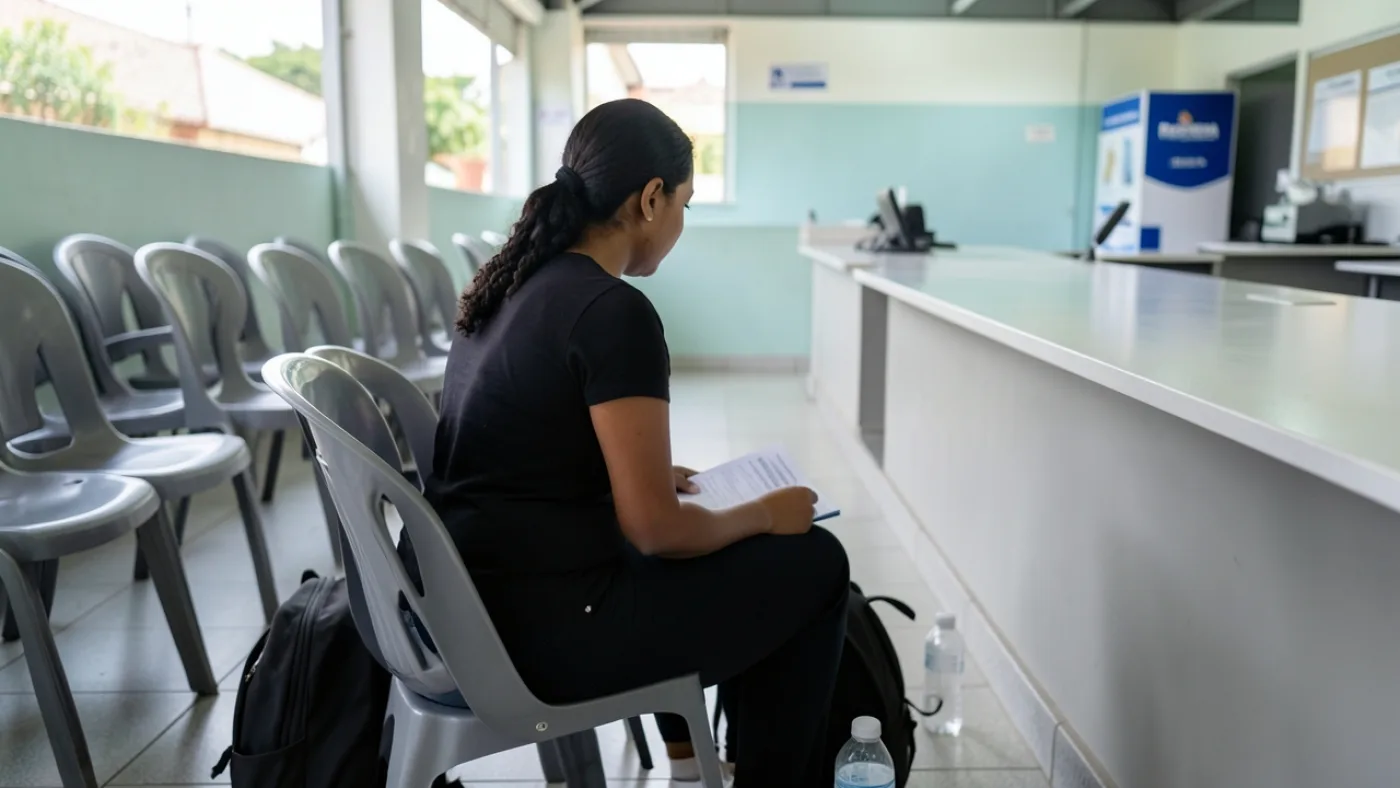

You feel like you are doing everything right and nothing is moving. That feeling has a solution, but it is not the one most foreigners look for. The fix is not pushing harder, hiring someone louder, or escalating to a supervisor: it is understanding that in Brazil, a request almost never gets denied because you were wrong. It gets denied because a document was incomplete, a signature was not recognised, a translation was not sworn, or a power of attorney did not contain the exact words the registry needed.
Brazil is a Civil Law country in the Roman-Germanic tradition, not a Common Law country. Judges apply written codes. Institutions trust paper, databases and filing receipts, not statements of good faith. The foundation of this logic is the Lei de Introdução às Normas do Direito Brasileiro (Law of Introduction to Brazilian Legal Norms), Decree-Law 4.657/1942, which even sets that a new law takes effect 45 days after publication unless it says otherwise. That is the culture in one sentence: the form of the act is the act.
This guide maps the exact points where foreigners’ requests, claims and filings get rejected in Brazil, how long each stage realistically takes in 2026, what it costs, and how to build a timeline that survives contact with reality.
On this page
What Is the Costliest Mistake Foreigners Make in Brazilian Legal Culture?
The costliest mistake is signing a generic power of attorney abroad and assuming it will work in Brazil. A procuração (power of attorney) used in Brazil normally needs apostille plus sworn translation, and must list specific powers. A missing clause can stall a property sale or an inheritance case for months, with apostille and translation alone taking 1 to 3 weeks to redo.
Here is how it plays out. A client in Lisbon signs a one-page POA at a notary saying “to represent me in all matters in Brazil.” It is apostilled under the Hague Convention, translated, and sent to São Paulo. The lawyer files it. Three weeks later the registry issues an exigência (formal requirement notice): the document does not contain express power to sign a public deed, does not identify the property by its registration number, and does not grant power to receive payment. Nothing was wrong on the merits. The seller still owns the property, the buyer still has the money. The transaction simply cannot happen because the paper is not in the shape the system recognises.
Multiply that by the distance. Redoing the POA means a new notarial act abroad, a new apostille, a new sworn translation in Brazil, and a new filing. In our experience, that cycle rarely closes in under 25-40 days when the signer lives outside Brazil.
Common mistake: Assuming “general power of attorney” means the same thing in Brazil as in the United States or the UK. In Brazilian practice, powers that are not written out are powers you do not have.
Rebuild the rule from that failure and the whole system becomes predictable: before you worry about whether you are legally right, verify that every document in your file is formally admissible. That is the gate where claims die.
Why Does Form Beat Merit in the Brazilian Legal System?
Because Brazilian law is codified and documentary. Rights exist when they are registered, filed or recorded, and each step produces a protocolo (filing receipt) that becomes your evidence. Under the Brazilian Civil Code, certain acts, including most real estate transfers above a legal value threshold, are only valid through a public deed drawn up at a notary office.
In Common Law countries, a court can look at conduct, intention and precedent to reach a fair result. Brazilian judges can also weigh good faith, but the first question an official asks is narrower: does this file contain the documents the statute requires? If not, the request is returned, not decided. That is why foreigners often describe Brazilian bureaucracy as “slow” when it is actually filtering: the system rejects incomplete files early and repeatedly, instead of deciding on partial information.
Two institutions carry this culture. The cartório is not just a notary: it is a private office with delegated public authority to register births, marriages, deeds, companies’ documents, property titles and signatures. The protocolo is your proof of existence inside the machine. If you cannot show a protocol number, officially nothing happened.
Worth knowing: Save a PDF of every protocol number, GRU payment slip and receipt you generate, with the date in the filename. When an authority later says it never received your request, that file is what reopens the matter.
This also explains why Brazilian lawyers ask for so many documents up front. It is not caution theatre. Every missing item is a future exigência, and every exigência costs you weeks. If you are selecting counsel, the ability to anticipate those requirements is the single most useful thing you are paying for, which is why it pays to read about how to hire an English-speaking lawyer in Brazil before you commit.
Where Exactly Do Foreigners’ Requests Get Denied in Brazil?
In practice, rejections cluster at five formality gates: apostille, sworn translation, power of attorney wording, taxpayer registration (CPF) and signature recognition. These five account for the large majority of denials we see in immigration, property and inheritance files, and all five are fixable before filing, at a cost of a few hundred reais.
Gate 1: the apostille gap
Brazil has been part of the Hague Apostille Convention since 2016. A foreign public document (birth certificate, marriage certificate, criminal record, notarial act) generally needs an apostille from the issuing country’s competent authority. A notarised but non-apostilled document is usually refused outright. Check which papers in your file need it with this apostille checklist for Brazil.
Gate 2: the sworn translation gap
Translations must be made by a tradutor público juramentado (sworn public translator) registered with a Brazilian state commercial registry. A translation done by a certified translator abroad, or by a bilingual friend, is normally rejected by cartórios and the Federal Police even when it is accurate.
Gate 3: the power of attorney gap
Specific powers, correct identification of the asset or process, and (for deeds) a public instrument rather than a private one. This is the gate described above, and the most expensive to fail.
Gate 4: the CPF gap
The CPF (Cadastro de Pessoas Físicas, individual taxpayer number) is your identity key in almost every database. Without it you cannot be a party to a deed, open a bank account, or register as a shareholder. Many foreigners discover this mid-process. Our guides on getting a CPF in Brazil and what you can and cannot do without a CPF cover both scenarios.
Gate 5: signature recognition
Reconhecimento de firma (notarised signature verification) requires that your signature card already exist at a Brazilian cartório. If you never opened one, the office cannot recognise your signature, and documents requiring it bounce.
Heads up: Every one of these five gates is a formality, not a judgment about you. That is good news: formal defects can be cured. Decisions on the merits often cannot.
How Does the Brazilian Calendar Really Count Your Deadlines?
Procedural deadlines in Brazilian civil litigation are counted in business days, not calendar days, under the Civil Procedure Code of 2015. The Code also suspends procedural deadlines between 20 December and 20 January. Add national, state and municipal holidays, and a “15-day deadline” in December can land in February.
This is where expats from Common Law systems lose weeks of planning. A 15-business-day period beginning on 10 December does not end before Christmas: the clock stops on 20 December and restarts on 21 January. Meanwhile, administrative deadlines (immigration, tax, municipal) are frequently counted in calendar days, which is the opposite rule. Mixing them up is how people miss a registration window.
Two more calendar traps worth internalising:
- Municipal holidays. Rio de Janeiro, São Paulo and Salvador each have local holidays that close courts and cartórios on days the rest of the country works.
- Carnival. Not a statutory national holiday everywhere, but in practice most courts and registries operate minimally for three to four days, and the week around it is effectively lost.
In practice: A client needed a corporate document registered before a 31 January contractual deadline. The sworn translation was ordered on 18 December. The translator’s office reopened on 7 January, the cartório had a backlog, and the registration came out on 29 January, two days to spare. Ordering it on 15 November would have cost the same money and removed all the stress.
The lesson is structural, not anecdotal. In Brazilian legal culture, the scarce resource is almost never money: it is the slot. The Federal Police appointment, the translator’s queue, the judge’s hearing calendar, the cartório’s analysis line. Budget for queues, not for fees.
What Timelines Should You Realistically Expect in 2026?
Expect documents in weeks and litigation in years. Apostille plus sworn translation typically runs 1 to 3 weeks; cartório registration ranges from same-day to a few days; a CPF requested through a Brazilian consulate abroad can take several weeks. Civil litigation is a different universe: CNJ court statistics consistently show first-instance civil cases averaging years, not months.
The Conselho Nacional de Justiça (National Council of Justice) publishes annual caseload data in its Justiça em Números report, and the pattern has been stable for years: a straightforward civil case commonly takes 2 to 5 years to first-instance judgment, and 5 to 10 years or more once appeals are exhausted. Small claims courts (Juizados Especiais) are faster, often 6 to 18 months, but have value caps and limited evidence-gathering.
| Process | Realistic timeline | Where it usually gets denied or stuck |
|---|---|---|
| CPF (online, Receita Federal) | Same day to a few days | Name spelling differs from passport; no apostilled birth certificate |
| CPF via consulate abroad | Several weeks | Incomplete form or unpaid R$ 7.00 consular fee |
| Apostille + sworn translation | 1-3 weeks | Translation not done by a sworn translator registered in Brazil |
| CRNM (residence card) issuance | Weeks to several months after appointment | Appointment scarcity; missing criminal record or proof of address |
| Property deed + land registry | 30-90 days | Defective POA; unpaid ITBI; outdated property certificates |
| Inheritance (judicial probate) | 1-4 years | Heirs abroad without valid POA; untranslated civil status documents |
| Civil lawsuit, first instance | 2-5 years | Evidence not formally produced; missed business-day deadline |
Inheritance deserves a special warning, because it combines every gate at once: foreign heirs, foreign documents, foreign signatures and Brazilian assets. If that is your situation, read how foreign heirs claim inheritance in Brazil before sending anything to a cartório.
What Is the Authority’s Strongest Argument Against You?
The strongest argument is not bureaucratic stubbornness: it is fraud prevention. Brazilian registries and the Federal Police argue that formality is the only reliable defence against identity fraud and property theft, and they are largely right. Public faith attached to a registered deed is what lets a buyer trust a title without litigation.
Put it in its strongest form. A registrar tells you: “If I accept a non-apostilled document, I cannot verify that the foreign authority that issued it exists. If I accept a translation by a translator I cannot audit, I cannot verify the content. If I accept a vague power of attorney, I may be transferring a stranger’s home to someone with no authority, and the registry’s public faith, which every Brazilian relies on, collapses. Your inconvenience is the price of a system where a registered title is practically unchallengeable.”
That argument is sound, and it is why fighting the formality almost never works. But it has a limit. Brazilian law does not authorise officials to invent requirements beyond the statute, and it does not allow indefinite silence. Administrative processes are subject to legally defined response periods, and a registrar’s exigência can be challenged through dúvida (a formal referral of the registrar’s objection to a judge). When an authority imposes a requirement with no legal basis, the remedy is not to argue at the counter: it is a written, documented challenge through the proper channel.
So the practical posture is dual: comply fully with every legitimate formality, and push back formally, in writing, when a requirement cannot be traced to a rule. Shouting at a clerk produces nothing. A petition with a protocol number produces a decision.
How Much Does the Formality Layer Cost in 2026?
Less than most people fear. According to the Federal Police fee schedule, first registration or renewal of the CRNM (National Migration Registry Card) costs R$ 204.77, roughly US$ 40 or € 38 at around R$ 5.1 to the dollar. The CPF is free online at Receita Federal and costs R$ 7.00 at a post office or consulate.
The real money is in property and translation:
- ITBI (municipal property transfer tax): typically 2% to 3% of the property value, set by each municipality.
- Public deed plus land registry: roughly 1% to 1.5% of value combined, following each state’s official cartório price table (tabela de custas).
- Sworn translation: charged per lauda (standard page), commonly in the R$ 80 to R$ 300 range per page depending on the state table and whether it is a technical or standard text.
- Signature recognition and authenticated copies: usually R$ 10 to R$ 50 per act.
- Apostille in Brazil: charged per document under state cartório tables, commonly R$ 50 to R$ 120.
In practice: On a R$ 500,000 apartment (about US$ 98,000), budget roughly R$ 10,000 to R$ 15,000 in ITBI, about R$ 5,000 to R$ 7,500 in deed and registry costs, and R$ 500 to R$ 1,500 in apostilles and sworn translations if you are a foreign buyer. The “hidden 5%” is not hidden: it is simply never mentioned by sellers.
Warning: Anyone who tells you they can “skip” the ITBI, the apostille or the registry for a fee is describing a crime, not a shortcut. Before paying any intermediary, review these red flags of Brazilian lawyer scams.
What Changed in Brazilian Legal Culture in 2026?
The direction of travel is digital, and it genuinely shortens some queues. Notarial acts, including many powers of attorney, can now be executed electronically through the national notarial platform operated by the notaries’ association, with video conference and digital certificate, removing the need to be physically present at a Brazilian cartório.
Three changes matter most for foreigners:
- Electronic notarial acts. A Brazilian-format public power of attorney can often be signed remotely using a digital certificate (ICP-Brasil), which removes the apostille and translation step entirely because the document is born Brazilian.
- Unified gov.br identity. Most federal services now run through the gov.br portal, with higher-trust account levels (prata and ouro) unlocking more services. Foreigners with a CPF can often raise their account level and self-serve.
- Full electronic litigation. Court files are filed, served and decided electronically. Hearings by video are routine, which means a party living abroad can testify without flying in.
What has not changed is the documentary logic. Digitalisation made the queue shorter, not the requirements looser. An electronic file with a defective power of attorney is rejected just as fast as a paper one, now in days instead of weeks.
Worth knowing: Obtaining a Brazilian digital certificate requires a CPF and an identity validation step. Doing that early converts many future three-week document cycles into same-day signatures.
Step-by-Step: How to Build a Brazilian Timeline That Survives Reality
Work backwards from your hard deadline and add a 40% buffer. The sequence below is the order that prevents the five formality gates from triggering, and it starts with the CPF because almost nothing else can be registered in your name without it.
- Step 1: Get your CPF. Online via Receita Federal if you are in Brazil, or through a Brazilian consulate abroad (R$ 7.00). Allow several weeks if applying from abroad.
- Step 2: Open a gov.br account and raise it to a verified level. This becomes your access key to immigration, tax and court portals.
- Step 3: List every foreign document your process requires, then apostille all of them in the issuing country in a single batch. Batching saves both courier cost and weeks.
- Step 4: Commission sworn translations in Brazil from a translator registered with a state commercial registry. Ask for the quote per lauda and the delivery date in writing.
- Step 5: Have your power of attorney drafted in Brazil first, in Portuguese, with the specific powers listed, then signed abroad and apostilled, or signed electronically through the notarial platform.
- Step 6: File, then record the protocolo. Save the number, the date and the office.
- Step 7: Diary a follow-up every 10 business days. Processes in Brazil respond to polite, documented, repeated follow-up.
- Step 8: Treat any exigência as a 15-30 day event, not a 48-hour fix, and respond in writing.
Documents to assemble before anything else, organised by situation:
- All foreigners: valid passport, CPF, proof of Brazilian address (comprovante de residência), apostilled birth certificate with sworn translation.
- Immigration (CRNM): criminal record certificate from your country of residence (apostilled and translated), proof of the legal basis for residence, paid GRU fee slip.
- Property: updated property certificate (matrícula atualizada), municipal tax clearance, marital status proof, apostilled POA if buying remotely.
- Inheritance or family matters: apostilled marriage, divorce or death certificates, translated, plus specific POA for probate.
Heads up: Some Brazilian certificates expire. A matrícula or tax clearance certificate is often only accepted within 30 days of issue, so pull them at the end of your preparation, not the beginning.
Frequently Asked Questions About Brazilian Bureaucracy and Timelines
Why does everything in Brazil require a cartório?
Because Brazilian law delegates public faith to notaries and registrars. A cartório is not just a notary office: it is a private office exercising public authority to record births, marriages, deeds, titles and signatures. Under the Civil Code, certain acts, including most real estate transfers, are only valid as a public deed. The upside is that once an act is registered, it is extremely hard to challenge. The cost is an extra institutional layer in nearly every transaction.
Can I handle a Brazilian legal process entirely from abroad?
Often yes, provided your power of attorney is correctly formed. Courts operate electronically, hearings can be held by video, and many notarial acts can now be signed remotely with a Brazilian digital certificate. What cannot be done remotely is biometric collection for your residence card, which requires a Federal Police appointment in person. Plan one trip around that appointment and delegate everything else through properly drafted representation.
How long does a civil lawsuit really take in Brazil?
CNJ caseload data has shown consistently that first-instance civil cases typically run 2 to 5 years, and 5 to 10 years or more once appeals are exhausted. Small claims courts are considerably faster, often 6 to 18 months, but they cap the claim value and limit expert evidence. Mediation and settlement are frequently the rational choice, not a concession: a settlement in month eight beats a judgment in year six.
Is a sworn translation always required?
For foreign documents used before Brazilian authorities, courts and cartórios, assume yes. The translation must be produced by a tradutor público juramentado registered with a Brazilian state commercial registry. Translations certified abroad, even by sworn translators in your country, are routinely refused. Costs are set per standard page under state tables, commonly R$ 80 to R$ 300 per page. Always ask for the page count estimate before approving the job.
What happens if I miss a deadline because of a holiday I did not know about?
For procedural deadlines, the Civil Procedure Code counts business days and suspends periods between 20 December and 20 January, so holidays usually extend rather than shorten your time. Administrative deadlines are frequently counted in calendar days and do not pause, which is riskier. If you miss an administrative window, such as a residence registration period or a visa stay limit, the consequence can be a fine, as explained in our guide on Brazil visa overstay fines and how to regularise.
Do I need a Brazilian lawyer, or can a despachante handle it?
A despachante (document agent) can be excellent for queue logistics and routine filings. Only a lawyer registered with the OAB (Brazilian Bar Association) can represent you in court, draft binding legal opinions or defend you when a requirement is challenged. For anything involving property title, inheritance, immigration appeals or litigation, verify the OAB number before paying. For purely administrative errands, a despachante is often faster and cheaper.
Navigate the Brazilian Legal System With a Bilingual Lawyer on Your Side
Brazilian bureaucracy is not designed to defeat you, but it is unforgiving of files that arrive incomplete. The clients who move fastest are not the ones who complain loudest: they are the ones whose documents were apostilled, translated and drafted in the right form before the first filing. Our bilingual team at Ribeiro Cavalcante Advocacia prepares those files every week, for immigration, property, inheritance and company matters.
Your concrete next step: send us a list of the documents you currently hold and the deadline you are working towards, and we will tell you which of the five formality gates your file would fail today.
Talk to a specialist lawyer now
Talk to a Lawyer on WhatsApp