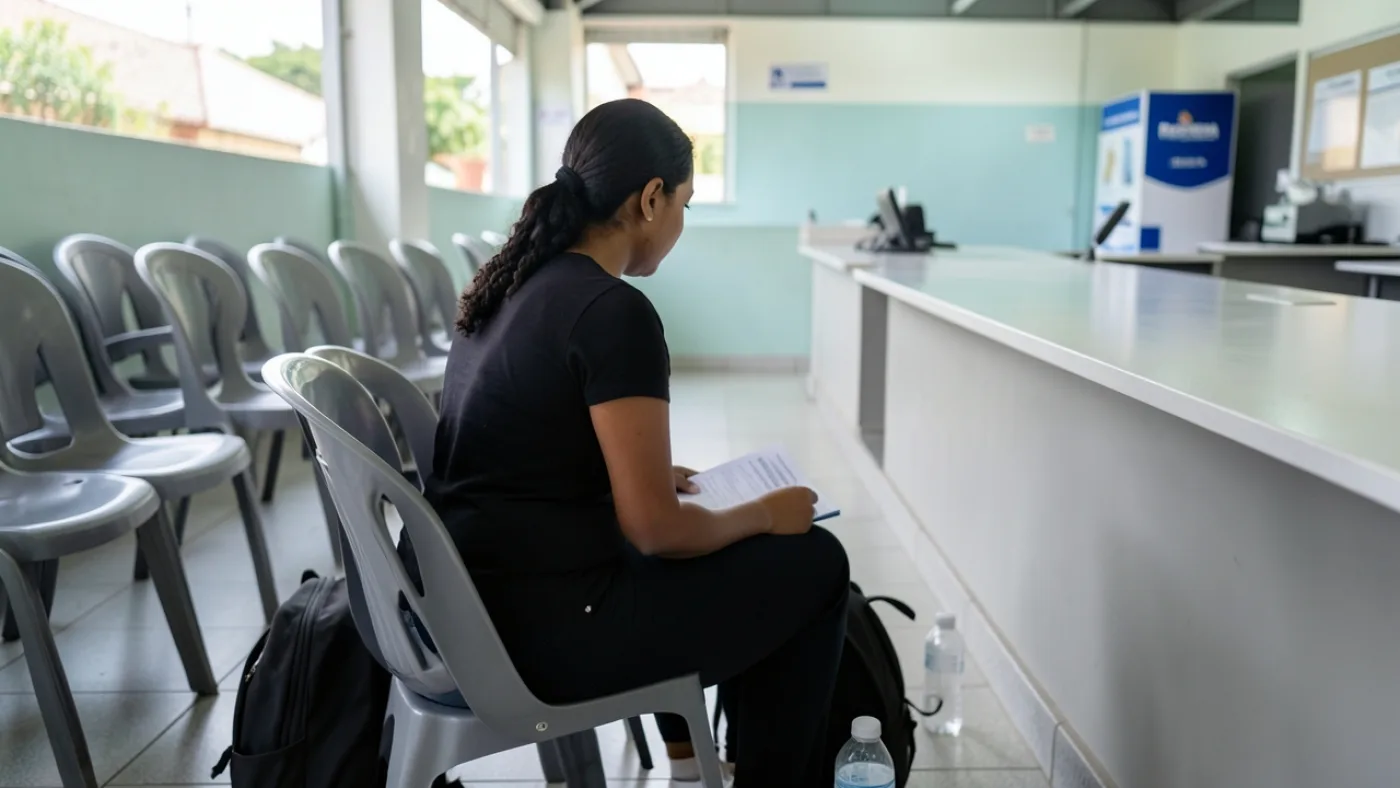

That moment of disbelief is what thousands of foreign residents in Brazil experience every year. The denial letter cites reasons that sound technical and final—”not on the ANS list,” “contractual exclusion,” “pre-existing condition.” You might feel powerless, especially navigating a legal system in a language you may not yet fully master.
Here is the truth: Brazilian law offers you robust, enforceable protections against unlawful health plan denials. In 2026, court decisions from the Superior Tribunal de Justiça (STJ, Brazil’s highest appeals court for non-constitutional matters) are stronger than ever in favor of patients. A high-cost medication like Signifor Lp—costing upwards of R$ 10,000 per month—can be covered by court order in as little as 48 hours through an emergency injunction called a liminar.
This guide explains exactly what Brazilian law protects, how the regulatory system works, what to do when coverage is denied, and how to enforce your rights—whether you hold a permanent visa, a temporary residency, or are a digital nomad with a private health plan in Brazil.
On this page
What Is a “Plano de Saúde” and How Does It Work for Foreigners?
A plano de saúde is a private healthcare insurance contract regulated by Brazilian federal law. You pay a monthly fee (mensalidade) to an operator (operadora de plano de saúde), and in return, the operator must provide or reimburse medical, hospital, and sometimes dental services according to the terms of your contract and—crucially—the mandatory minimum coverage defined by law.
Unlike the copay-and-deductible model common in the United States, Brazilian health plans typically operate on one of two models:
- Rede credenciada (accredited network): You receive care directly from a network of doctors, hospitals, and labs. The plan pays them directly. Most individual and family plans work this way.
- Reembolso (reimbursement): You pay the provider upfront and the plan reimburses you according to a fee schedule. This is more common in premium or executive plans.
As a foreigner in Brazil, you have the exact same rights as a Brazilian citizen when it comes to private health plans. The Código de Defesa do Consumidor (CDC, Consumer Defense Code—Law 8.078/1990) treats health plan contracts as consumer relations, meaning any ambiguous clause or contractual doubt must be interpreted in your favor. To subscribe, you will need a CPF (Cadastro de Pessoas Físicas), which you can obtain for free at the Receita Federal (Brazilian IRS) or for a nominal fee of R$ 7.00 at participating post offices and Brazilian consulates abroad.
Who Governs Health Plans in Brazil? The Regulatory Framework
Brazil’s private health insurance sector is not a free market free-for-all. It is tightly regulated by a dedicated federal agency and two pivotal laws. Understanding this framework is your first tool when a denial arrives.
ANS: The National Agency for Supplementary Health
Created by Lei nº 9.961/2000, the ANS (Agência Nacional de Saúde Suplementar) is the federal regulatory watchdog. It licenses health plan operators, defines mandatory coverage, monitors financial health, investigates consumer complaints, and imposes fines. When your plan denies a legitimate claim, the ANS is one of the first bodies you can turn to—and operators fear ANS sanctions because fines can reach hundreds of thousands of reais.
Lei nº 9.656/1998: The Health Plan Law
Lei nº 9.656/1998 is the cornerstone statute governing all private health plans in Brazil. It defines mandatory coverage types, sets rules for waiting periods (carências), prohibits abusive clauses, and establishes the legal basis for the Rol da ANS—the list of procedures and events that every plan must cover at a minimum. Article 51 of this law also imposes criminal penalties on operators that fraudulently deny covered services.
The CDC: Consumer Protection Applies to Health Plans
Brazilian courts have repeatedly affirmed that health plan contracts fall under the CDC. This matters because the CDC reverses the usual burden of proof in many cases: if the operator claims an exclusion applies, the operator must prove it. The CDC also voids any contractual clause that places the consumer at an excessive disadvantage—a powerful shield against fine-print exclusions buried in your policy.
What Must Brazilian Health Plans Cover? The Rol da ANS Explained
The Rol de Procedimentos e Eventos em Saúde (commonly called the Rol da ANS) is the official list published by the ANS that defines the minimum mandatory coverage every health plan must provide. It includes thousands of procedures, from routine consultations and lab tests to complex surgeries, cancer treatments, and a specific list of medications.
The Rol is updated periodically. In recent years, the ANS has added coverage for oral chemotherapy drugs, certain biologic therapies, and advanced diagnostic tests. If a treatment, exam, or procedure appears on the Rol, your plan must cover it—no exceptions, no contractual exclusion can override it.
However, the most contentious legal battle in Brazilian health law over the past five years has revolved around one question: Is the Rol da ANS exhaustive or merely a starting point?
The 2022 STJ Ruling and 2023 Clarifications: Exhaustive or Exemplary?
In June 2022, the STJ decided Tema 990, ruling that the Rol da ANS is exhaustive (taxativo). Under this interpretation, health plans would only be obligated to cover treatments explicitly listed on the Rol. Anything not on the list could lawfully be denied.
The decision sent shockwaves through patient advocacy groups and the medical community. It meant that innovative cancer drugs, rare disease therapies, and cutting-edge surgical techniques—even when prescribed by a treating physician—could be excluded simply because the ANS had not yet updated its list.
But the story did not end there. In September 2022, the Brazilian Congress passed Lei 14.454/2022, effectively overturning the STJ’s strict interpretation. The new law re-established that the Rol serves as a minimum reference, not a ceiling. Under the 2022 law—and the STJ’s subsequent 2023 clarifications—health plans must cover treatments, surgeries, and medications that are not on the Rol if certain conditions are met:
- The treatment has proven scientific efficacy and is supported by evidence-based medicine.
- There is a recommendation from Brazil’s Comissão Nacional de Incorporação de Tecnologias no SUS (CONITEC) or an equivalent internationally recognized health technology assessment body.
- The treatment is prescribed by the patient’s treating physician and is not experimental in nature.
In practice, this means that in 2026, Brazilian courts routinely order health plans to cover high-cost medications like Signifor Lp (pasireotide) for acromegaly and Cushing’s disease, even when these drugs are not formally listed on the Rol—provided the medical justification is solid. A single monthly dose of Signifor Lp can cost over R$ 10,000, making court intervention not just a right but a financial necessity for patients.
If your plan has denied a medication with the phrase “fora do Rol da ANS” (outside the ANS list), do not accept that as final. Brazilian courts have established strong precedents for forcing health plans to cover prescribed medications, especially in cases involving cancer, chronic diseases, and rare conditions.
Pre-Existing Conditions, Waiting Periods, and COEX Coverage
When you first subscribe to a Brazilian health plan, you may face waiting periods called carências. These are legal—provided they comply with maximum limits set by law—and they exist to prevent people from signing up only when they already need expensive care.

Standard Waiting Periods (Carências)
- 24 hours: Emergency room visits and urgent care.
- 300 days: Childbirth (parto).
- 180 days (6 months): Consultations, exams, elective surgeries, and hospital admissions.
- 24 months: Pre-existing conditions declared at the time of subscription.
Pre-Existing Conditions and COEX
If you declared a pre-existing condition (doença ou lesão preexistente, or DLP) when signing up, the plan may impose a 24-month waiting period specifically for treatments related to that condition. During this period, the operator can offer CPT (Cobertura Parcial Temporária—Temporary Partial Coverage), which means certain high-cost procedures related to that condition may be suspended until the waiting period expires.
However, operators cannot refuse to cover emergencies related to a pre-existing condition. If your declared condition causes an acute emergency requiring immediate hospitalization, the plan must cover it—even during the 24-month waiting period.
Critically, if your plan failed to require a medical exam at the time of subscription, the operator cannot later deny coverage by claiming a pre-existing condition existed. Under Lei 9.656/98, the burden is on the operator to prove both the existence of the condition and that you knew about it at the time of subscription. This is a common defense point when denials cite pre-existing conditions.
If you are facing a denial based on a pre-existing condition allegation and want to understand your full legal options, our guide on what to do when Brazilian health insurance denies your treatment covers the specific steps to challenge this type of refusal.
Can Your Health Plan Cancel Your Policy? Forbidden Cancellations
One of the most anxiety-inducing fears for any patient receiving treatment is the possibility that their health plan will simply cancel their policy to avoid paying. Brazilian law strongly prohibits this practice.
Under Article 13 of Lei 9.656/98, a health plan operator cannot unilaterally cancel an individual or family plan during a hospitalization, ongoing treatment, or because the patient has developed a costly illness. This is known as the prohibition against rescisão unilateral imotivada (unmotivated unilateral cancellation) for individual plans.
The rules differ slightly depending on your plan type:
- Individual/family plans (planos individuais ou familiares): The operator can only cancel for fraud or non-payment after 60 days of arrears. Cancellation due to high utilization or illness is strictly illegal.
- Corporate/group plans (planos coletivos empresariais): These can be terminated by the employer or association that holds the master contract. However, if you are undergoing treatment or are hospitalized, you may have the right to maintain coverage for the duration of the treatment by converting to an individual plan or through judicial protection. The STJ has ruled that even in collective plans, the operator cannot selectively exclude a patient because of their medical costs.
If your plan is a corporate plan and your employment ends, you have specific portability and continuity rights (discussed below). You should never simply accept a cancellation notice without verifying its legality.
Portability: Switching Health Plans Without New Waiting Periods
Portabilidade de carências (waiting period portability) is the right to switch health plan operators without having to serve new waiting periods for conditions already covered under your previous plan. This right is regulated by the ANS through Resolução Normativa (Normative Resolution) updates issued periodically.
To qualify for portability, you generally need to meet these conditions:
- You have been with your current plan for at least two years (or three years if you had a pre-existing condition waiting period).
- Your current plan is active and payments are up to date.
- The new plan is in the same or a lower price range as defined by the ANS.
- You are within the portability window—typically during the anniversary month of your contract (May for contracts signed in May) or within 60 days of the anniversary.
Portability is especially relevant for expats who change employers in Brazil. If your new employer offers a different health plan, you can often port your waiting period history—meaning you do not restart the clock on coverage for pre-existing conditions or standard carências. The ANS offers a free online tool called Guia ANS de Planos de Saúde where you can compare plans and check portability eligibility at gov.br/ans.
What to Do When Your Health Plan Denies Coverage: Step-by-Step Guide
When the denial letter arrives—whether it says “not on the Rol,” “high-cost medication,” “contractual exclusion,” or “pre-existing condition”—you have a clear escalation path. Brazilian law gives you multiple avenues, and you can pursue them simultaneously or sequentially. Here is the most effective sequence, based on current practice in 2026:
Step 1: File a Complaint with the Plan’s Ouvidoria
Every health plan operator in Brazil is required by the ANS to maintain an Ouvidoria (ombudsman office). This is an internal appeals channel independent from the customer service department. By law, the Ouvidoria must respond to your complaint within 7 business days. File your complaint in writing, attach the doctor’s prescription (in Portuguese), the medical report (laudo médico) justifying the treatment, and the denial letter. Keep a protocol number.
Step 2: File a Complaint with the ANS
If the Ouvidoria does not resolve the issue, or if your case is urgent, go directly to the ANS. You can file a complaint through the ANS portal at gov.br/ans or by calling Disque ANS (0800 701 9656). The ANS is required to forward your complaint to the operator, which must respond within 5 business days for non-urgent cases and up to 10 business days for complex cases. The ANS complaint generates an official record that strengthens any future court case and may resolve the matter without litigation.
Step 3: File a Complaint with PROCON
PROCON (Programa de Proteção e Defesa do Consumidor) is the state-level consumer protection agency. It can summon the health plan operator to a conciliation hearing and impose administrative fines. PROCON complaints are free and can be filed online through your state’s PROCON website. The operator typically has 10 to 15 days to respond.
Step 4: Seek a Judicial Liminar (Emergency Injunction)
In urgent cases—cancer treatment, upcoming surgery, a medication without which the patient’s health will deteriorate—you can file a lawsuit requesting a liminar (preliminary injunction). Brazilian judges can and do grant liminares within 48 hours in cases involving life-threatening conditions or severe suffering. The judge orders the health plan to provide the treatment or medication immediately, under penalty of daily fines (astreintes) that can range from R$ 1,000 to R$ 5,000 per day of non-compliance.
For claims up to 20 minimum wages (R$ 32,420 in 2026), you can file in the Juizado Especial Cível (Small Claims Court) without a lawyer. However, for medication cases, having a specialized health-law attorney is strongly recommended. Our comprehensive guide on suing health insurance companies in Brazil explains the litigation process, costs, and what to expect in court.
In addition to coverage, you can claim reimbursement of any amounts you paid out of pocket for the denied treatment, with interest of 1% per month and monetary correction. With Brazil’s elevated interest rates in 2026, reimbursement claims can result in significant recoveries. For example, if you paid R$ 30,000 for three months of a medication while fighting the denial, your reimbursement claim with correction and interest over a year could exceed R$ 35,000.
Comparison: Resolution Paths for Denied Health Plan Claims
| Path | Cost | Typical Timeline | Best For | Success Rate |
|---|---|---|---|---|
| Ouvidoria (Plan Ombudsman) | Free | 7 business days | Administrative errors, simple denials | Moderate (30-40%) |
| ANS Complaint | Free | 5-10 business days | Clear Rol violations, systemic issues | Moderate-High (40-60%) |
| PROCON Complaint | Free | 10-21 business days | Consumer rights violations, negotiation | Moderate (35-50%) |
| Judicial Liminar (Injunction) | Court costs + legal fees | 48 hours to 5 days | Urgent cases, high-cost medications | High (70-90%) |
| Full Lawsuit (Ação Ordinária) | Court costs + legal fees | 3-12 months | Complex cases, large reimbursement claims | High (75-90%) |
In 2026, the trend in Brazilian courts strongly favors patients. Health insurance denials in Brazil are increasingly being overturned when the medical justification is clear, especially for cancer treatments, rare diseases, and continuous-use medications prescribed by a specialist.
What Changed in 2026: Stronger Consumer Protections
While the foundational legislation (Lei 9.656/98 and Lei 9.961/00) remains in place, several developments in 2026 have reinforced patient rights:

- Consolidated STJ Jurisprudence: The STJ has issued multiple decisions in 2025 and 2026 reaffirming that operators cannot deny high-cost medications solely because they are not on the Rol when the treatment meets the Lei 14.454/2022 criteria. Courts are granting liminares faster than ever—often within 48 hours for oncology and rare disease cases.
- Higher ANS Fines: The ANS has increased penalty amounts for wrongful denials, with fines now reaching up to R$ 100,000 per infraction for repeat offenders. This financial pressure is compelling some operators to approve borderline cases rather than face sanctions.
- Digital Complaint Resolution: The ANS portal has been upgraded for faster processing. In 2026, online complaints lodged through gov.br/ans are being routed and tracked more efficiently, with operators required to respond within the strict 5-business-day window.
- Expanded Rol Coverage: The ANS added several new procedures and medications to the Rol in late 2025, including additional biologic therapies for autoimmune conditions. This means fewer treatments fall into the “not on the Rol” gap.
If you are dealing with a denial in 2026, these developments work in your favor. The legal landscape has never been more protective of patient rights.
Glossary of Portuguese Terms for Health Plan Consumers
Navigating Brazilian health plan disputes requires familiarity with specific legal and administrative terms. Here is a reference glossary for English-speaking subscribers:
- ANS (Agência Nacional de Saúde Suplementar): National regulatory agency for private health plans.
- Carência: Waiting period before certain coverages become active.
- CDC (Código de Defesa do Consumidor): Consumer Defense Code, applicable to health plan contracts.
- COEX / CPT (Cobertura Parcial Temporária): Temporary Partial Coverage—partial suspension of coverage for a pre-existing condition during the 24-month waiting period.
- DLP (Doença ou Lesão Preexistente): Pre-existing disease or injury.
- Laudo médico: Medical report or physician’s statement justifying a treatment.
- Liminar: Emergency court injunction ordering immediate action.
- Operadora: Health plan operator or insurance company.
- Ouvidoria: Internal ombudsman office of the health plan operator.
- Portabilidade de carências: Right to switch plans without serving new waiting periods.
- PROCON: State-level consumer protection agency.
- Rol da ANS: Official ANS list of mandatory covered procedures and events.
- STJ (Superior Tribunal de Justiça): Superior Court of Justice—Brazil’s highest appeals court for non-constitutional federal law matters.
- Taxativo vs. Exemplificativo: Exhaustive versus exemplary—a key legal distinction regarding whether the Rol is a closed or open-ended list.
Frequently Asked Questions
Can a foreigner subscribe to a Brazilian health plan without a CPF?
No. A CPF (Cadastro de Pessoas Físicas) is mandatory for subscribing to any private health plan in Brazil. The CPF is the Brazilian individual taxpayer identification number and is required for all formal contracts. Foreigners can obtain a CPF for free at a Receita Federal office or for a small fee (R$ 7.00) at post offices and some Brazilian consulates abroad. The process takes approximately 30 minutes in person, though online applications through the Receita Federal portal are now available for many nationalities.
How long are waiting periods for health plans in Brazil?
Standard waiting periods are: 24 hours for emergencies, 180 days (6 months) for consultations, exams, and elective surgeries, 300 days for childbirth, and up to 24 months for declared pre-existing conditions. These maximums are set by Lei 9.656/98 and cannot be exceeded. If you switch plans through portability, you do not serve new waiting periods for conditions already covered under your previous plan.
Can my Brazilian health plan cancel my policy because I got sick?
No. For individual and family plans, unilateral cancellation by the operator because you developed an illness or required expensive treatment is strictly illegal under Brazilian law. The operator can only cancel for fraud or non-payment exceeding 60 days. For corporate plans, termination by the employer follows different rules, but you retain portability and continuity rights.
What medications must Brazilian health plans cover by law?
Health plans must cover all medications listed on the ANS Rol. Additionally, under Lei 14.454/2022 and current STJ jurisprudence, plans must also cover medications not on the Rol if they have proven scientific efficacy, are recommended by CONITEC or an equivalent international body, and are prescribed by a physician for a specific medical need. High-cost medications like Signifor Lp (R$ 10,000+ per month) are routinely ordered covered by Brazilian courts when medically justified.
How fast can a Brazilian court force my health plan to cover a denied treatment?
In urgent cases—such as cancer treatment, surgeries with time sensitivity, or medications where delay could cause deterioration—a Brazilian judge can grant a liminar (emergency injunction) within 48 hours. This order compels the health plan to provide the treatment immediately, under penalty of daily fines (R$ 1,000 to R$ 5,000 per day). In 2026, courts are expediting these decisions, and many liminares for oncology and rare disease cases are granted on the same day they are filed.
Do I need a lawyer to appeal a health plan denial in Brazil?
Not for the initial steps—you can file complaints with the health plan’s Ouvidoria, the ANS, and PROCON without legal representation. For lawsuits in the Juizado Especial Cível (Small Claims Court) involving claims up to R$ 32,420 (20 minimum wages in 2026), a lawyer is optional. However, for medication denial cases, high-value claims, or any case requiring a liminar, an experienced health-law attorney significantly improves your chances of a fast and favorable outcome. The legal arguments that persuade a judge to grant an injunction often require specialized knowledge of ANS regulations and STJ precedent.
Ready to Enforce Your Health Plan Rights in Brazil? Get Expert Help Now
Facing a health plan denial in a country where you are still learning the language and legal system can feel overwhelming. You did not move to Brazil to spend your time fighting insurance companies. You deserve to focus on your health, your family, and your life here—not on decoding Portuguese legal jargon or navigating bureaucratic appeals on your own.
At Ribeiro Cavalcante Advocacia, our bilingual legal team specializes in health plan litigation for expats, foreign residents, and international families. We understand how to move fast—requesting emergency liminares when every day counts, building airtight reimbursement claims when you have paid out of pocket, and negotiating directly with operators who would rather settle than face adverse court rulings. Whether your denial involves a high-cost medication, a surgery your doctor says is essential, or a coverage cancellation that feels retaliatory, we know the legal arguments that work in Brazilian courts in 2026.
Your health plan is a contract, and Brazilian law is on your side. Let us help you enforce it.
Talk to a specialist lawyer now
Talk to a Lawyer on WhatsApp