
You’re a US general counsel or legal team member. Your company has staff in Brazil — maybe a few remote software developers, a sales representative, or an entire office. You may be paying them from the US, using a PEO, or acquiring a local entity. The question that keeps popping up: Can Brazilian labor law really override our US employment contracts?
The short answer is yes. Brazilian labor law applies to any work habitually performed in Brazil, regardless of where the employer is incorporated or what governing law clause is in the contract. This isn’t a gray area. The Consolidação das Leis do Trabalho (CLT) — Brazil’s labor code — contains a strict territoriality rule. If you have people working in Brazil, Brazilian law follows them. And ignoring this can turn into backdated social security debts, overtime claims, and labor lawsuits that easily reach six or seven figures in reais.
This article gives you the practical, non-legalese guide to how Brazilian labor law applies to US companies with local staff. We’ll break down the territoriality principle, the risks of direct hiring without a Brazilian entity, how joint employer liability works, the mandatory benefits your staff must receive, and how to structure your intercompany agreements for compliance — all from the perspective of a US legal team that needs to make decisions fast.
On this page
Why Does Brazilian Law Apply Even If You Have a US Employment Contract?
Brazil is a civil law country. The CLT, enacted in 1943 but updated repeatedly, is the central statute. Article 3 of the CLT defines an employee as any individual who personally, habitually, and under subordination provides services to an employer. The law does not care about the nationality of the employer. It cares about where the work is carried out.
The Supreme Labor Court (Tribunal Superior do Trabalho – TST) has consistently applied the principle of territoriality. This means that if your employee lives in Brazil and performs their duties from Brazilian territory, Brazilian labor courts have jurisdiction and will apply Brazilian law. You can read the full text of the CLT on the Brazilian government’s legislation portal.
US-governed employment contracts that try to waive mandatory CLT rights — such as the 13th-month salary, 30-day paid vacation, FGTS (severance fund) deposits, or maternity leave — are generally unenforceable in Brazilian Labor Courts. A Brazilian judge will simply ignore clauses that conflict with the CLT. Even if both parties agreed in writing, you cannot contract your way out of Brazilian labor law for work performed in Brazil.
There’s an additional trap: if you have no legal entity in Brazil, but the employee habitually works from there and you exercise direction and control, the court may declare a direct employment relationship between the worker and the US parent company. Once that happens, the US entity becomes liable for every missed CLT obligation, often retroactively for years.
What Are the Risks of Hiring Without a Formal Brazilian Entity?
Many US companies hire Brazilians as independent contractors or pay them through their US payroll without setting up a local subsidiary. This may seem convenient, but it creates a compliance minefield. If the worker later files a labor claim, the court will look at the actual work conditions, not the contract label.
Under Brazilian law, an employment relationship exists when there is (1) personal service, (2) habitual work, (3) subordination, and (4) remuneration. If all four elements are present, the worker is considered an employee — regardless of what the contract says. The TST often rules in favor of workers who show they were managed like employees, even if they held a “contractor” badge.
The consequences of a misclassification ruling include:
- Back payment of social security contributions (INSS) for up to five years
- FGTS deposits (8% of monthly salary) plus a 40% penalty on dismissal
- Unpaid 13th-month salary, overtime, and vacation plus a one-third premium
- Fines assessed by labor auditors, which can be substantial
- Potential criminal liability for repeated violations, though rare
Real example: A US technology startup paid its three Brazilian developers from its Delaware bank account for two years. One developer left and sued. The labor court found a direct employment relationship and ordered the US company to pay R$ 165,000 in backdated FGTS, INSS, and penalties. This cost could have been avoided by structuring the engagement properly from the start. For a comprehensive look at setting up compliant employment arrangements, read our guide on Hiring Employees in Brazil as a Foreign Business 2026.
How Does Joint Employer Liability Work in Brazil?
If your US company uses a Brazilian third-party staffing firm or a subcontractor to provide local personnel, you still face risk. Brazilian labor courts apply the theory of subsidiary liability (responsabilidade subsidiária). In simple terms, if the direct employer (the staffing company) fails to pay wages, taxes, or social contributions, the beneficiary of the services — your US company — can be held liable for the entire debt.
This is especially dangerous in terceirização (outsourcing) arrangements. The TST has repeatedly ruled that the business that ultimately benefits from the employee’s work is jointly responsible for labor rights. TST precedents clarify that even if the contract between the US firm and the Brazilian intermediary explicitly denies liability, the court can pierce that clause to protect the employee.
In practice, this means that if a staffing firm goes bankrupt and fails to pay its employees for two months, the workers can bring claims directly against your US entity in Brazilian Labor Court. The fact that you are a foreign company does not shield you — especially if your team in Brazil consistently supervised the workers. This is a primary reason why many international companies ultimately establish their own Brazilian subsidiary to centralize liability and control.
What Happens When a US Company Acquires a Brazilian Entity?
Acquisitions bring successorship liability (sucessão trabalhista). Under Brazilian labor law, the buyer of a business unit or ongoing enterprise automatically assumes all labor obligations of the predecessor. This includes past due wages, FGTS shortfalls, unpaid vacation, and even pending court judgments.

US acquisition lawyers often try to limit this risk through indemnity clauses in the purchase agreement. While those clauses are enforceable between the parties in a civil contract, they will not stop a Brazilian labor judge from holding the new owner directly liable to employees. Workers are not bound by the private contractual arrangements between seller and buyer. As a result, you must conduct thorough labor due diligence before any acquisition. Review payroll records, FGTS deposits, overtime patterns, and pending litigation.
If you acquire a Brazilian company without understanding the full labor exposure, you could inherit litigation that exceeds the purchase price. This is a topic we cover in depth in our Brazil Employment Law Foreign Employers 2026 Guide.
How Should You Structure Intercompany Agreements for Staff Sharing?
The safest structure is to have a Brazilian subsidiary act as the legal employer of your local staff. The US parent and the Brazilian subsidiary then enter into an arm’s-length intercompany services agreement. The subsidiary hires the employees, processes payroll, remits taxes, and charges the US parent a management fee for the services provided.
To avoid a court deeming the setup a sham, the intercompany agreement must reflect economic reality. Key points:
- The Brazilian subsidiary must exercise genuine managerial control over the employees — signing contracts, conducting performance reviews, and handling disciplinary matters.
- The US parent must not directly instruct the Brazilian employees on daily tasks. Communication should flow through the subsidiary’s management.
- The management fee should reflect market rates, not just a cost pass-through.
- Keep clear separation of bank accounts, employment records, and tax filings.
This structure works for staff sharing, shared service centers, and even for hiring a single employee. It does require on-the-ground compliance infrastructure, but it insulates the US parent from direct liability. For practical steps on forming such arrangements, see Hire Employees in Brazil as a Foreign Company 2026.
What Key Employee Benefits Must You Provide Under Brazilian Law?
Even with a proper entity, you must meet all CLT mandatory minimums. These rights are non-waivable and apply to every employee. The main items include:
- 13th Salary (gratificação natalina) – One extra monthly salary paid in two installments (by November 30 and December 20). It is not a bonus; it’s a constitutional right.
- Vacation – 30 calendar days off after every 12 months of work. The employee receives their salary plus a one-third premium (abono de férias). Vacation can be split into up to three periods, but at least one must be 14 days.
- FGTS (Fundo de Garantia do Tempo de Serviço) – The employer must deposit 8% of the employee’s gross monthly salary into a blocked individual account at Caixa Econômica Federal. On termination without cause, the employer pays a 40% penalty on the total FGTS balance.
- Overtime – Any hour above 8 per day or 44 per week must be paid with at least a 50% surcharge. Collective agreements may require higher percentages.
- Maternity and Paternity Leave – Maternity leave is 120 days (extendable to 180 in some cases). Paternity leave is 5 days, or 20 days if the employer participates in the “Empresa Cidadã” program. For paternity leave details, check our guide on 20-day paternity leave in 2026.
Minimum wage in Brazil for 2026 is R$ 1,518.00 per month. For a simple simulation: if your Brazilian employee earns R$ 5,000 per month, the monthly FGTS deposit is R$ 400. Over 12 months, the employer contributes R$ 4,800 to FGTS. The 13th salary adds another R$ 5,000 to payroll costs. These are not optional. For a full breakdown, refer to our Worker Rights in Brazil 2026: Complete Employee Guide.
How Are Working Hours and Overtime Regulated?
Brazilian labor law caps the standard workday at 8 hours and the workweek at 44 hours. Any time worked beyond these limits triggers overtime. If you have salaried employees working late into the night for US time zones, you must monitor and pay overtime unless an alternative schedule is agreed through formal time-banking arrangements or collective bargaining.
Time banks allow employees to take compensatory time off instead of receiving immediate overtime pay, but the compensation period cannot exceed six months (or one year under some collective agreements). Digital time-tracking systems are essential to demonstrate compliance. If a dispute arises and you cannot produce accurate time records, the court will likely accept the employee’s version of hours worked.
What Are the Termination Rules in Brazil?
Brazil does not follow at-will employment. Terminating an employee requires a valid reason to avoid full indemnity. The most common type is termination without cause (dispensa sem justa causa), which entitles the employee to:
- Notice period of at least 30 days (proportional to length of service, up to 90 days)
- Withdrawal of FGTS balance plus the 40% penalty
- 13th salary and vacation prorated
- Severance payment for notice period, whether worked or not
Certain employees have job stability (estabilidade), such as pregnant employees (from conception until 5 months after birth), those returning from occupational illness, and union leaders. Terminating a stable employee without following strict legal procedures can result in an order of reinstatement plus back pay. For example, after a long-term sick leave due to an occupational accident, an employee may enjoy stability of 12 months. If you dismiss them improperly, the court will order reinstatement and full back wages from the dismissal date. We explain stability periods in our article on employment stability after sick leave.
How Can Employees Enforce Their Rights, and What Happens If You Ignore Them?
Brazil has a specialized Labor Court system (Justiça do Trabalho) that employees can access without a lawyer and without paying court fees. A worker can file a verbal complaint at the local labor court, which will open proceedings. You, as a foreign employer, will receive a summons and must participate — typically through a Brazilian attorney because all filings occur via the electronic system PJe, which requires a Brazilian CPF and digital certificate. Language barriers complicate matters further, but courts may allow interpreters at hearings.
Ignoring a lawsuit is not an option. Default judgments are common, and enforcement can reach assets the US company holds in Brazil, such as bank accounts, receivables, or even its Brazilian subsidiary’s accounts. The court can also order the blocking of intercompany payments. While executing a judgment abroad is more complex, Brazil has bilateral treaties with the US that facilitate asset recovery in commercial cases, although labor claims often remain within Brazil.
Comparison: Entity vs. Direct Hiring from the US
| Factor | Direct Hiring from US (no entity) | Formal Brazilian Subsidiary |
|---|---|---|
| Labor law compliance risk | High – all CLT obligations apply if deemed employment | Controlled – subsidiary acts as employer, meets obligations |
| Liability exposure for US parent | Potentially direct liability for back wages, FGTS, INSS | Liability contained within subsidiary, though parent may have joint exposure if poor separation |
| Operational complexity | Seems simple, but court risk creates uncertainty | Requires incorporation, accounting, payroll — but gives legal certainty |
| Cost predictability | Low – sudden retroactive claims can be massive | High – predictable monthly payroll and tax costs, plus 13th salary and FGTS |
| Enforcement vulnerability | Very high – free access to labor courts for employees | Lower – compliance reduces likelihood of successful claims |
Brazilian labor law us companies: What Changed in 2026?
Brazil did not introduce a major labor reform in 2026. However, court decisions continue to refine the scope of the territoriality principle. In late 2025, the TST reaffirmed that a Brazilian resident working remotely for a US company from her home in São Paulo was entitled to all CLT protections, even though she never visited the employer’s headquarters. The court held that the work’s habitual location in Brazil was decisive.

Also, discussions around regulating platform work and cross-border remote employment have gained momentum, but no sweeping legislation has passed. The practical takeaway for 2026 is that Brazilian labor courts are consistent: if the worker is in Brazil, Brazilian law applies. US general counsel should not wait for a legislative shift; the current stance is solidly pro-worker.
Practical Step‑by‑Step Guide: How to Legally Hire Staff in Brazil
- 1. Decide on a structure. Choose between incorporating a Brazilian subsidiary (CNPJ) or using a reputable Brazilian Employer of Record (EOR). Do not proceed without a legal entity if long-term work is involved.
- 2. Register your entity and enroll with eSocial. Once the CNPJ is obtained, you must register with the Brazilian IRS (Receita Federal) for payroll tax and FGTS, and with eSocial — the government’s unified labor, social security, and tax reporting system.
- 3. Draft intercompany agreements. If using a subsidiary, prepare an arm’s-length services agreement between the US parent and the Brazilian company that clearly defines roles and compensation.
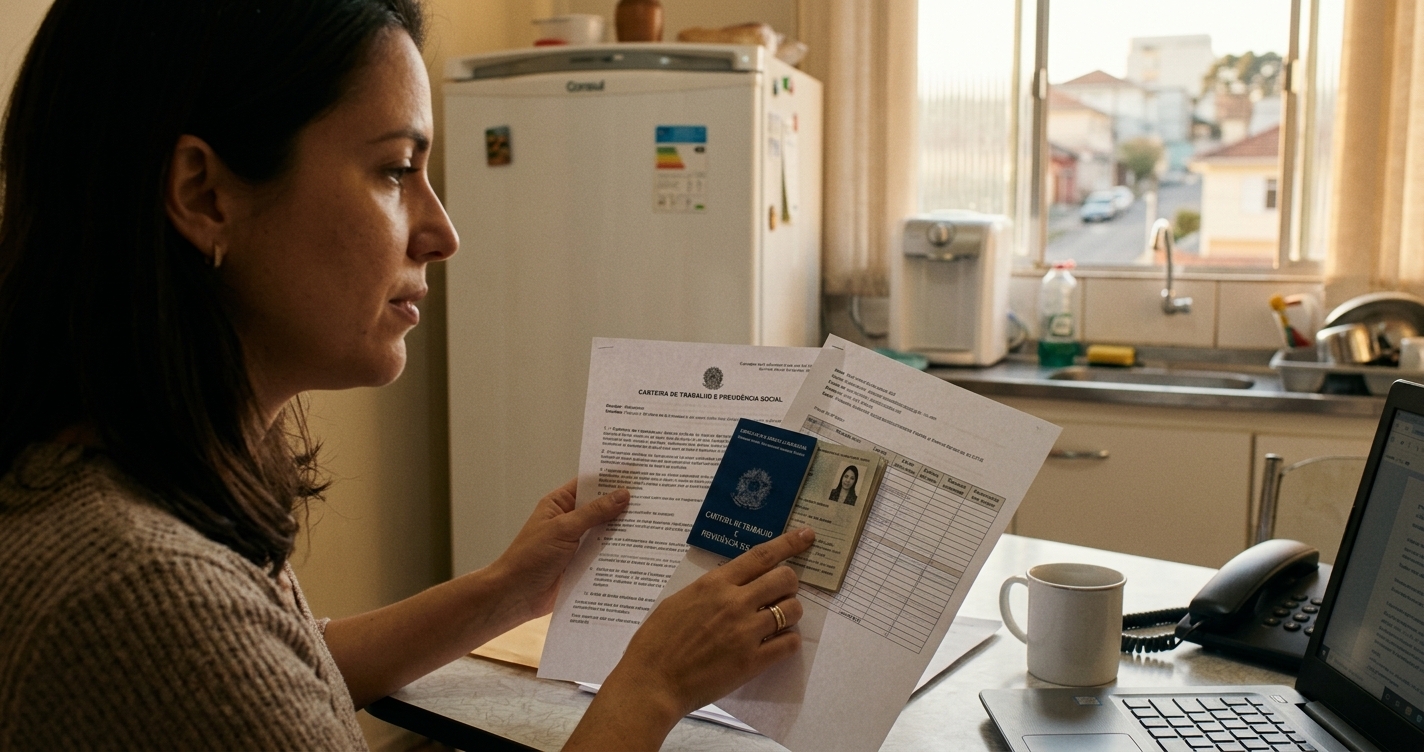
- 4. Formalize employment contracts. Every Brazilian employee must have a written contract in Portuguese (optional translation). Register the employee’s CTPS (Work and Social Security Card) and include start date, salary, and position.
- 5. Process payroll monthly. Deduct INSS (employee contribution) and income tax. Deposit the employer’s INSS contribution, FGTS, and other applicable taxes. Issue pay slips (holerites) with complete breakdowns.
- 6. Track working hours. Implement a compliant timekeeping system. Overtime must be recorded and compensated per the CLT or collective agreement.
- 7. Grant vacations and 13th salary on time. Late payments can trigger fines and lawsuits.
- 8. Maintain records for at least 5 years after termination. Labor auditors and courts can request documents retroactively.
Meeting these steps eliminates most enforcement surprises. If you need hands-on help setting up the local entity, our bilingual legal team can guide you through the entire process, from CNPJ registration to the first pay slip.
Frequently Asked Questions: Brazilian labor law us companies
Can a US company hire a Brazilian independent contractor and avoid CLT obligations?
It’s possible, but only if the worker truly acts as an autonomous professional — not under your subordination. If you control the person’s schedule, give instructions, and they work exclusively for you, a court will likely reclassify the relationship as employment. Written contracts alone do not protect you; the actual working conditions determine the outcome.
What happens if I pay my Brazilian staff through a US payroll without a Brazilian entity?
You may create a de facto employment relationship under Brazilian law. The worker can sue and claim all CLT rights retroactively, including INSS, FGTS, overtime, and the 13th salary. The US company becomes directly liable, and Brazilian courts can freeze local assets to enforce the judgment.
Is a non-compete clause enforceable in Brazil?
Yes, if it meets strict criteria: it must be limited in time (usually up to two years after termination), limited in geographic scope, and the employee must receive financial compensation during the restriction period. Blanket non-competes without compensation are generally invalid.
How long does a labor lawsuit take in Brazil?
A straightforward case can take 12 to 18 months from filing to trial, but appeals can extend the process to three years or more. Settlements are common, but the employer often ends up paying a significant portion of the claim to avoid prolonged litigation costs.
Do I need a Brazilian lawyer to manage labor compliance?
Legally, you can process payroll and draw up contracts without a lawyer, but the risks of misclassifying workers, missing tax obligations, or mishandling terminations are high. A qualified Brazilian labor attorney, registered with the OAB, helps you set up the right structure and defend you in court if needed.
Ready to Navigate Brazilian Labor Law? Get Expert Help Now
Navigating Brazilian labor law as a foreign company can feel like walking through a minefield. The rules are mandatory, the courts are accessible, and the financial exposure can be severe. But with the right structure — a properly formalized Brazilian subsidiary, compliant intercompany agreements, and accurate payroll — you can turn a compliance headache into a predictable operational model. Our bilingual legal team at Ribeiro Cavalcante Advocacia works daily with US companies to design bulletproof employment structures, handle labor audits, and defend against claims. Submit your details below and a specialized lawyer will contact you directly on WhatsApp to discuss your situation. No obligation, just clear answers.
Talk to a specialist lawyer now
Talk to a Lawyer on WhatsApp