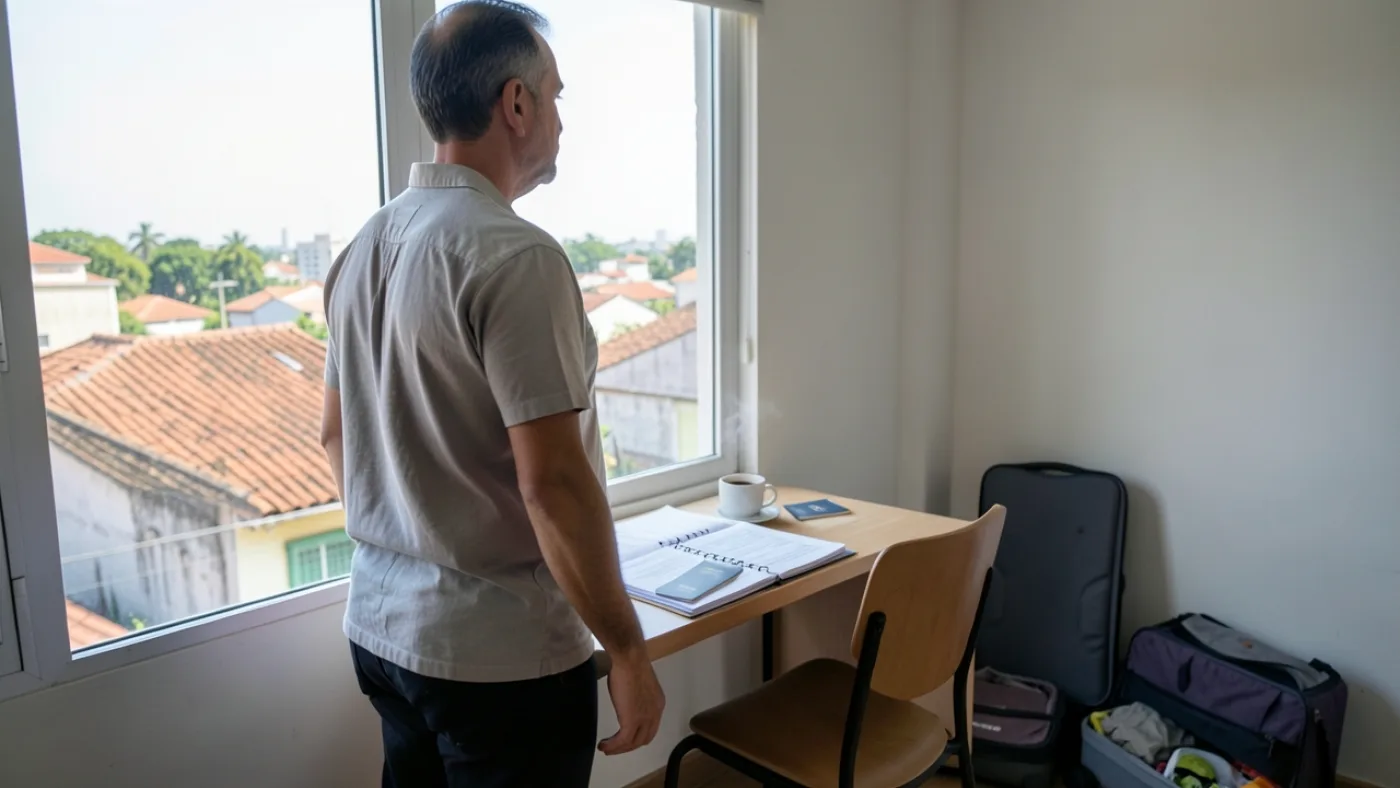

The good news is that for Nigerian business owners, obtaining a Brazilian passport is a realistic, albeit multi-step, journey. It begins with a strategic investment, moves through the residency process, and culminates in naturalization. While the path requires patience and precise legal navigation, Brazil’s current immigration framework, governed by the progressive Migration Law (Lei 13.445/2017), is designed to welcome investors and skilled professionals, offering a clear route to permanent residency and ultimately, citizenship.
On this page
Why Is Obtaining a Brazilian Passport a Multi-Stage Process?
A Brazilian passport cannot be directly acquired through investment; it is the final document issued after a foreigner achieves naturalization, which requires a period of lawful residency. This multi-stage process is rooted in Brazil’s Civil Law system, where naturalization is a privilege granted by the state, not an automatic right, typically after a minimum of four years of continuous residency as stipulated by Law 13.445/2017.
Unlike some countries that offer “citizenship by investment” programs, Brazil’s legal framework, specifically the Migration Law (Lei 13.445/2017) and its regulatory Decree 9.199/2017, mandates a clear progression. First, you must secure a residency visa, which for a business owner, typically means an investor visa. This visa allows you to live and work in Brazil legally. Once you have established residency, you must maintain it for a specified period, proving your integration into Brazilian society, before you can apply for naturalization.
This phased approach ensures that new citizens have a genuine connection to Brazil, contributing economically and culturally. For a Nigerian business owner, this means focusing on a robust business plan and investment as the foundation for the entire process, leading to the necessary initial residency permit (Autorização de Residência).
What is the Administrative Solution for Investor Residency in Brazil?
The primary administrative solution for investor residency involves applying for an Investor Visa (VITEM IX) through a Brazilian consulate abroad or directly applying for residency in Brazil if you are already present under a different visa. The central requirement, as per the National Council for Immigration (CNIg), is a minimum investment of R$ 500,000 into a Brazilian company, which generates jobs or contributes to local development, with processing typically handled by the Ministério do Trabalho e Emprego and subsequently the Polícia Federal.
The process generally starts by demonstrating a significant investment in a Brazilian company. This investment can be in capital, technology, or services, provided it generates jobs or contributes to Brazil’s economic or social development. The most common route is a direct capital investment of at least R$ 500,000 (roughly US$ 100,000 – actual conversion rates fluctuate daily) into a new or existing Brazilian company, as per CNIg Normative Resolution No. 47/2021.
After establishing your investment and company, you or your legal representative will submit the residency application to the Brazilian Ministry of Labor and Employment (Ministério do Trabalho e Emprego). This application will detail your business plan, the source of your funds, and your commitment to Brazil. Once approved, you will receive an approval letter that allows you to register your residency with the Federal Police (Polícia Federal) upon arrival or within Brazil, receiving your CRNM (Carteira de Registro Nacional Migratório – National Migration Registration Card).
Na prática: While the R$ 500,000 threshold is common, alternative pathways exist, such as investing R$ 150,000 in a company engaged in innovation, technology, or research, or demonstrating a high level of professional qualification in a strategic area. Each route has specific documentation and approval criteria, making tailored legal advice essential. Ribeiro Cavalcante Advocacia can guide you through the intricacies of Brazil Investor Visa 2026: R$500k Investment for Residency.
For individuals already in Brazil on a different visa, it is possible to apply for residency directly with the Polícia Federal or the Ministry of Justice, provided you meet the investor criteria. This “change of status” process is often more complex and time-sensitive, requiring careful preparation. The administrative fees for initial CRNM registration in 2026 are R$ 204.77, as published by the Polícia Federal, regardless of the investment amount.
When is a Judicial Path Necessary for Residency or Naturalization?
A judicial path, or a lawsuit, becomes necessary when an administrative application for residency or naturalization faces undue delays, unjust denials, or when there are complex legal issues that administrative bodies cannot resolve. This typically occurs after exhausting all administrative remedies, such as appeals to higher government authorities, and can involve costs ranging from R$ 5,000 to R$ 20,000 or more, with timelines often extending beyond two years in the Brazilian court system.
Most investor visa and naturalization applications are handled administratively. However, Brazil’s bureaucracy, while improving with digital initiatives like the gov.br portal, can still be slow. If your administrative application exceeds the legal processing times (e.g., 180 days for a naturalization request, as per Law 13.445/2017) without a clear response, or if it is denied on grounds you believe are incorrect or unlawful, you may need to pursue a judicial remedy.
Common scenarios requiring judicial intervention include:
- **Undue Delay:** If your application is stuck indefinitely without any progress.
- **Unjust Denial:** When the administrative decision appears to misinterpret the law or disregard evidence.
- **Complex Cases:** Situations involving criminal records (especially minor ones that should not impede residency), complex family situations, or unique investment structures not easily categorized by administrative guidelines.
- **Constitutional Challenges:** In rare cases, challenging the constitutionality of a specific requirement or an administrative act.
The judicial process begins with filing a lawsuit (e.g., a “Mandado de Segurança” – Writ of Mandamus, for delays, or a “Ação Ordinária” – Ordinary Action, for reviewing a denial) in a federal court. This involves a lawyer registered with the OAB (Ordem dos Advogados do Brasil – Brazilian Bar Association) representing you. While it offers a pathway to challenge administrative decisions, it is often slower and more costly than the administrative route. Court fees vary by state and case complexity, but you should budget for legal representation, which can range significantly based on the lawyer’s experience and the case’s demands.
Atenção: Brazilian courts operate under a Civil Law system, which can be less adversarial than Common Law systems, but equally meticulous about procedural rules. Judges often play a more active role in fact-finding. Expect multiple appeals, potentially reaching higher courts like the Superior Tribunal de Justiça (STJ) or even the Supremo Tribunal Federal (STF), which can prolong the overall timeline for a definitive resolution.
What Are the Common Mistakes Nigerian Business Owners Make During Brazilian Immigration?
One of the most common mistakes is underestimating the complexity and dynamism of Brazilian bureaucracy and legal requirements, leading to missed deadlines or submitting incomplete documentation. Forgetting to register with the Federal Police within 90 days of arrival or failing to properly apostille documents from Nigeria are critical errors that can result in significant fines (up to R$ 10,000 for non-registration) or application rejections, causing substantial delays.
- Ignoring Documentation Specifics: Brazil requires original documents, often apostilled in the country of origin (Nigeria, in this case), and then translated by a *sworn translator* (tradutor juramentado) in Brazil. Simply getting a notary stamp in Nigeria or a translation from an uncertified translator in Brazil is insufficient and will lead to rejection.
- Missed Deadlines: Forgetting to renew your CRNM before its expiry (typically 2 or 3 years for initial investor visas) or failing to register your arrival with the Polícia Federal within 90 days after entering Brazil with a temporary visa are serious errors. Fines for overstaying or not registering can be substantial.
- Incomplete Business Plan: A vague or unrealistic business plan for the investor visa application will likely be rejected. The plan must clearly demonstrate the investment, its source, job creation potential, and its contribution to Brazil’s economy.
- Underestimating Tax Residency: Once you become a resident, Brazil considers you a tax resident, subject to its progressive income tax brackets. Failing to understand your tax obligations from day one can lead to future complications with the Receita Federal (Brazilian IRS). For detailed guidance on company registration, see Open a Company in Brazil as a Foreigner: Residency Rules 2026.
- Not Seeking Professional Advice Early: Trying to navigate the entire process (visa, company formation, tax, naturalization) without legal counsel often results in costly mistakes, delays, or even denials. Brazilian law is distinct from Common Law systems, making local expert guidance invaluable.
Erro comum: Many Nigerian business owners assume their foreign company’s legal structure directly translates to Brazil. This is often not the case. Brazil has specific company types (e.g., Ltda., S.A.) with distinct liability and governance rules. Incorrectly setting up your company can lead to compliance issues, tax penalties, and problems with your residency application.
How Long Does the Investor Visa and Naturalization Process Take in Brazil?
The investor visa process typically takes 3 to 6 months for initial approval, followed by about 60 to 90 days to receive the CRNM (National Migration Registration Card) from the Federal Police. After maintaining legal residency for at least four continuous years, a Nigerian business owner can apply for naturalization, which then takes an additional 12 to 24 months to be processed by the Ministry of Justice, bringing the total timeline to citizenship and passport eligibility to around 5 to 7 years.
The timeline for a Nigerian business owner seeking a Brazilian passport can be broken down into several distinct phases:
-
Phase 1: Investor Visa Application and Approval (VITEM IX)
- Preparation: 1-2 months. This involves preparing your business plan, gathering personal documents (passport, birth certificate, police clearance), securing necessary funds, and translating/apostilling documents.
- Application Submission & Analysis: 2-4 months. The application is submitted to the Ministry of Labor and Employment. According to the Ministry, the official processing time is often stated as up to 60 days, but in practice, it can extend to 4 months or more depending on the complexity and volume of applications.
-
Phase 2: Arrival in Brazil & CRNM Registration
- Arrival: Upon receiving visa approval, you must travel to Brazil.
- Federal Police Registration: Within 90 days of arrival, you must register with the Polícia Federal (Federal Police) to obtain your CRNM (Carteira de Registro Nacional Migratório – National Migration Registration Card). The actual issuance of the CRNM can take anywhere from 30 to 90 days after registration. The CRNM initial registration fee is R$ 204.77, as confirmed by the Federal Police in 2026.
-
Phase 3: Fulfilling Residency Requirement for Naturalization
- Ordinary Naturalization: For most foreigners, including business owners, the requirement is 4 years of uninterrupted residency in Brazil, according to Article 65 of Law 13.445/2017.
- Reduced Residency: This period can be shortened to 1 year if you have a Brazilian spouse or child, or to 2 years if you are recognized for artistic, scientific, or technological contributions.
-
Phase 4: Naturalization Application and Approval
- Application: After fulfilling the residency requirement, you apply for naturalization with the Ministry of Justice and Public Security. This involves demonstrating proficiency in Portuguese, absence of criminal records, and sufficient means to support yourself and your family.
- Processing: Naturalization applications can take 12 to 24 months to process. The Ministry of Justice handles a large volume of applications, and while the law sets general guidelines, actual processing times can fluctuate.
-
Phase 5: Brazilian Passport Application
- Post-Naturalization: Once naturalization is approved and published in the Official Gazette (Diário Oficial da União), you are officially a Brazilian citizen.
- Passport Application: You can then apply for a Brazilian passport at the Polícia Federal. The electronic form needs to be filled out on the Federal Police website. The fee for an adult (18 years and above) Brazilian passport is approximately US$120.00 (or its equivalent in R$ at the current exchange rate, approximately R$ 600-650 in 2026), as per consular fee schedules, and the passport is typically issued within 1-2 weeks after the interview and biometric data collection.
Vale saber: The total journey from initial investor visa application to receiving a Brazilian passport realistically spans about 5 to 7 years. Patience and diligent record-keeping are crucial. Each step has specific requirements and potential bureaucratic hurdles that can extend these timelines. Having experienced legal counsel can significantly streamline the process and mitigate potential delays.
What Documents Are Required for Investor Residency and Naturalization?
For investor residency, key documents include a valid passport, certified copies of corporate registration and investment proof (e.g., bank transfers), a detailed business plan, and a criminal background check from Nigeria, all of which must be apostilled and translated by a sworn translator in Brazil. For naturalization, you will also need your CRNM, proof of Portuguese proficiency, and ongoing financial stability, among other documents like birth and marriage certificates.
- For Investor Residency (VITEM IX / Autorização de Residência):
- Valid passport (with at least six months validity).
- Nigerian Police Clearance Certificate (Federal Criminal Records check), apostilled in Nigeria.
- Original Birth Certificate, apostilled in Nigeria.
- Original Marriage Certificate (if applicable), apostilled in Nigeria.
- Bank statements demonstrating financial capacity and source of funds for the investment.
- Proof of investment (e.g., capital transfer receipts, company bank statements showing investment).
- Detailed business plan for the Brazilian company, outlining investment, job creation, and economic impact.
- Articles of Incorporation (Contrato Social) or Bylaws (Estatuto Social) of the Brazilian company.
- CNPJ (Cadastro Nacional da Pessoa Jurídica – Company Tax ID) registration for the Brazilian company.
- CPF (Cadastro de Pessoas Físicas – Individual Taxpayer Registry) for the Nigerian business owner. This is free at Receita Federal, or R$ 7.00 at Correios (Brazilian postal service) if done in Brazil.
- Proof of payment of application fees (e.g., GRU – Guia de Recolhimento da União).
- Completed electronic forms from the Ministério do Trabalho e Emprego or Polícia Federal.
- For CRNM Registration (after residency approval):
- Passport.
- Visa (if applicable, or residency approval notice).
- Original birth certificate (apostilled, sworn translation).
- Police Clearance Certificate (apostilled, sworn translation).
- Proof of address (comprovante de residência) in Brazil (e.g., utility bill).
- Two recent 3×4 photos.
- Proof of payment for CRNM issuance (R$ 204.77 in 2026, according to Polícia Federal).
- For Naturalization (after 4 years of residency):
- Current CRNM (Carteira de Registro Nacional Migratório).
- Valid passport.
- Birth certificate (apostilled, sworn translation).
- Marriage certificate (if applicable, apostilled, sworn translation).
- Proof of uninterrupted residency in Brazil for at least 4 years (e.g., utility bills, tax returns).
- Proof of means of subsistence (e.g., bank statements, company income, employment contract).
- Criminal background checks from Brazil and any other countries where you have lived for the past 5 years.
- Proof of Portuguese language proficiency (e.g., CELPE-Bras certificate or equivalent).
Atenção: All documents issued in Nigeria must be apostilled by the competent authority in Nigeria (typically the Ministry of Foreign Affairs) and then translated into Portuguese by a *tradutor juramentado* (sworn translator) in Brazil. Without proper apostille and sworn translation, documents will not be accepted. It is also crucial to ensure all names on all documents (passport, birth certificate, marriage certificate) match exactly, as discrepancies can cause significant delays. For assistance with fiscal address in Brazil, which is required for company registration, Ribeiro Cavalcante Advocacia can provide support.
What Changed in Brazilian Immigration Laws for Business Owners in 2026?
While no sweeping legislative changes to the core Migration Law (Lei 13.445/2017) specifically impacting investor visas occurred in early 2026, administrative updates by the Ministry of Labor and Employment and the Federal Police continued to streamline digital processes. The most notable ongoing discussions concern potential adjustments to minimum investment thresholds for certain innovative sectors, aiming to attract more tech-focused entrepreneurs, though specific changes have not been enacted as of early 2026.
The Brazilian immigration landscape is relatively stable concerning investor visas since the implementation of the Migration Law in 2017 and its regulating Decree 9.199/2017. However, administrative resolutions, particularly those issued by the National Council for Immigration (CNIg), are regularly updated to refine requirements and procedures. In 2026, the trend continues towards greater digitalization and efficiency:
- Digitalization of Services: The gov.br portal and the Polícia Federal’s online services have seen continuous improvements, making it easier to submit certain documents and track application statuses online. This reduces the need for multiple in-person visits, a welcome change for busy entrepreneurs.
- Investment Thresholds Discussions: While the R$ 500,000 investment for general investor visas (VITEM IX) remains standard, there are ongoing discussions about creating more flexible or lower thresholds for specific, high-impact sectors, particularly those related to startups, green technology, or underserved regions. These proposals aim to diversify foreign investment but have not yet resulted in new CNIg resolutions in early 2026.
- Focus on Compliance: There’s an increased emphasis on ensuring businesses comply with labor laws and tax regulations from the outset. Companies used as vehicles for investor visas face closer scrutiny regarding their operational legitimacy, job creation, and tax payments. This ensures the investment genuinely benefits Brazil’s economy.
Vale saber: Brazil operates under a Civil Law system, meaning changes typically come through new legislation or regulatory decrees, rather than common law precedent. Therefore, major shifts usually occur after parliamentary debate and presidential sanction. Minor adjustments, however, are frequently implemented through CNIg resolutions or internal directives from the Polícia Federal or the Ministry of Justice, reflecting policy priorities or operational refinements. Keeping abreast of these smaller, but impactful, changes requires ongoing legal monitoring.
Comparison Table: Key Investor Visa Routes for Nigerian Business Owners
This table summarizes the primary investor residency options available to Nigerian business owners, outlining their main requirements, indicative investment amounts, and typical processing times as of 2026. This helps in selecting the most suitable pathway based on your business model and financial capacity.
| Feature | General Investor Visa (VITEM IX) | Innovation/Startup Investor Visa | Real Estate Investor Visa |
|---|---|---|---|
| Legal Basis | CNIg Res. 47/2021 (Art. 3º, I) | CNIg Res. 47/2021 (Art. 3º, III) | CNIg Res. 47/2021 (Art. 3º, II) |
| Minimum Investment (2026) | R$ 500,000 into a Brazilian company | R$ 150,000 into an innovative startup | R$ 700,000 in specific regions or R$ 1,000,000 generally, in residential/commercial property |
| Investment Type | Direct capital in a new/existing company | Capital in a company recognized as innovative by a Brazilian institution (e.g., incubator, government agency) | Purchase of urban property |
| Key Requirement | Creation of new jobs or contribution to economic development | Demonstration of innovation, technology, or research relevance | Proof of property acquisition and payment |
| Typical Processing Time (Residency Permit) | 3-6 months (Ministry approval) + 1-3 months (CRNM) | 3-6 months (Ministry approval) + 1-3 months (CRNM) | 3-6 months (Ministry approval) + 1-3 months (CRNM) |
| Initial Residency Permit Validity | 2 years | 2 years | 2 years |
| Renewal Conditions | Proof of investment maintenance, tax compliance, and business activity | Proof of continuous innovation activity and business viability | Proof of property ownership maintenance and tax compliance |
| Benefits | Direct path to operating a business in Brazil | Access to Brazil’s innovation ecosystem, potentially faster processing | Tangible asset ownership, potential rental income |
| Relevant Blog Link | Open a Company in Brazil as a Foreigner: Residency Rules 2026 | N/A (covered under general investor visa for innovation) | Brazil Real Estate Residency: R$700k Rule & Steps 2026 |
Na prática: While the real estate investor visa offers tangible asset ownership, it generally requires a higher investment. For business owners, the direct company investment (general or innovation) often aligns better with their long-term objectives of establishing and operating a venture in Brazil. Always consult with a legal expert to assess which option best suits your specific business goals and financial situation.
Step-by-Step Practical Guide: Investor Visa to Naturalization
Navigating the Brazilian immigration path requires a structured approach, starting from strategic planning in Nigeria to establishing permanent roots in Brazil. This practical guide outlines the essential steps for a Nigerian business owner aiming for naturalization and a Brazilian passport.
- Step 1: Initial Consultation and Business Planning (Nigeria/Brazil)
- Engage with a bilingual Brazilian law firm (like Ribeiro Cavalcante Advocacia) to assess eligibility, understand investment requirements, and outline your business plan.
- Determine the most suitable company type (e.g., Ltda. for small/medium businesses) and investment strategy.
- Step 2: Document Gathering and Apostille (Nigeria)
- Collect all necessary personal documents: valid passport, birth certificate, marriage certificate (if applicable), and police clearance certificates.
- Have all documents legalized by apostille in Nigeria.
- Step 3: Company Formation and Investment (Brazil)
- Your legal team will assist with the incorporation of your Brazilian company (CNPJ registration).
- Transfer the required investment capital (e.g., R$ 500,000) to the newly formed company’s Brazilian bank account.
- Obtain a CPF (Cadastro de Pessoas Físicas) through a Brazilian Consulate or the Receita Federal online portal before applying for the visa.
- Step 4: Investor Visa (VITEM IX) Application (Nigerian Consulate / Brazil)
- Prepare the investor visa application (Autorização de Residência) with your lawyer, including the business plan, proof of investment, and company documents.
- Submit the application to the Ministry of Labor and Employment. If approved, you will receive an official approval notice.
- With the approval, if applying from Nigeria, present it to the Brazilian Consulate in Nigeria to obtain the temporary visa stamp in your passport. If already in Brazil on a different visa, you can apply for a change of status directly with the Polícia Federal.
- Step 5: Entry to Brazil and CRNM Registration
- Upon arrival in Brazil, you have 90 days to register your residency with the Polícia Federal.
- Attend the interview, provide biometric data, and submit original documents (apostilled and sworn translated).
- Pay the CRNM issuance fee (R$ 204.77 in 2026). The CRNM will be issued after processing.
- Step 6: Maintain Residency and Business Operations
- Actively manage your business, ensure tax compliance, and fulfill any job creation commitments outlined in your business plan.
- Renew your CRNM as required (typically after 2 years initially, then for longer periods).
- Maintain a clear criminal record.
- Step 7: Naturalization Application (After 4 Years of Residency)
- After a minimum of 4 continuous years of residency, apply for naturalization with the Ministry of Justice and Public Security.
- Provide proof of Portuguese language proficiency (e.g., CELPE-Bras exam certificate), financial stability, and good conduct.
- Step 8: Brazilian Passport Application
- Once your naturalization is approved and published in the Diário Oficial da União, you are a Brazilian citizen.
- Apply for your Brazilian passport at the Polícia Federal by completing the electronic form and paying the fee (approx. US$120 for adults in 2026).
Atenção: While many steps have online components (e.g., filling forms on Polícia Federal website for passport), several crucial stages, like biometric data collection and interviews, still require in-person attendance. Always double-check requirements on official government websites and confirm with your legal counsel.
Frequently Asked Questions About Brazilian Passport Planning for Nigerian Business Owners
Can a foreigner own 100% of a Brazilian company?
Yes, a foreigner can own 100% of a Brazilian company. Brazil’s legal framework generally allows for full foreign ownership in most sectors, with specific restrictions only in strategic areas like aviation, nuclear energy, and some forms of rural land ownership (under Law 5.709/1971). For a Nigerian business owner, this means you can establish a wholly-owned subsidiary or a new company in Brazil without needing a local partner, provided you meet all legal and financial requirements for incorporation and ongoing operations.
How long does the CRNM (National Immigration Registration Card) take to be issued?
After successfully registering with the Federal Police, the CRNM (Carteira de Registro Nacional Migratório) typically takes between 30 to 90 days to be issued. This timeframe can vary depending on the specific Polícia Federal unit, current demand, and the completeness of your documentation. You will usually receive a protocol number (número de protocolo) at the time of registration, which serves as temporary proof of your legal status until the physical card is ready for collection.
Do I need a lawyer to open a company or apply for residency in Brazil?
While not legally mandatory for every single step, retaining a lawyer is highly recommended, especially for foreign business owners. Brazilian law is complex, and the administrative processes (company registration, tax ID, visa, residency, naturalization) involve specific requirements, sworn translations, and strict deadlines. A bilingual Brazilian lawyer registered with the OAB (Brazilian Bar Association) can prevent costly mistakes, expedite processes, and represent your interests effectively, saving you significant time and potential frustration.
What are the tax implications for a Nigerian business owner in Brazil?
Once you establish tax residency in Brazil (generally after 183 days of physical presence within a 12-month period), you become subject to Brazilian income tax on your worldwide income. Companies registered in Brazil are subject to corporate taxes (e.g., Income Tax, Social Contribution on Net Profit) and various other federal, state, and municipal taxes (e.g., ICMS, ISS, PIS, COFINS). Understanding Brazil’s complex tax system, including income tax brackets up to 27.5% for individuals, is crucial for financial planning and compliance, requiring expert accounting and legal advice.
Can my family accompany me to Brazil under the investor visa?
Yes, your immediate family members (spouse, children under 18, and sometimes dependent parents) can generally accompany you to Brazil under a family reunification visa or dependency status linked to your investor visa. They will also apply for their own CRNM cards. The process involves providing their personal documents, proof of family relationship, and demonstrating that you, as the primary visa holder, have sufficient financial means to support them in Brazil without relying on public assistance, as per CNIg regulations and Law 13.445/2017.
Brazilian Passport for Nigerian Business Owners: Take the Next Step with Confidence
Navigating the journey from aspiring investor to Brazilian citizen can feel complex, with multiple layers of bureaucracy and legal specificities. However, with the right guidance, it is an achievable and rewarding endeavor. Our dedicated bilingual legal team at Ribeiro Cavalcante Advocacia specializes in assisting international clients, including Nigerian business owners, in successfully establishing their presence in Brazil and fulfilling their long-term immigration goals. We are here to simplify the process, anticipate challenges, and ensure your path to a Brazilian passport is as smooth as possible.
Talk to a specialist lawyer now
Talk to a Lawyer on WhatsApp