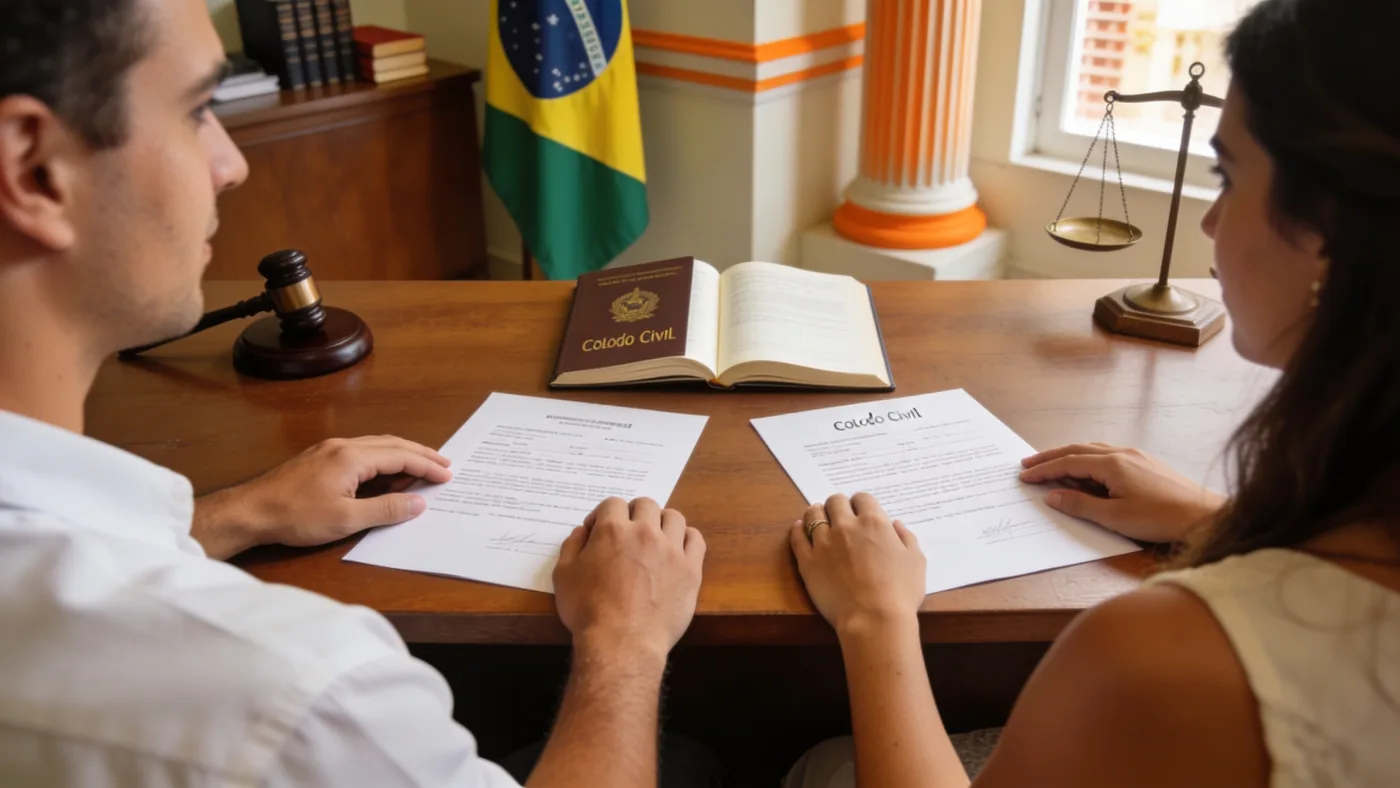

Your marriage ended. Your child crossed an international border — either with your consent or without it. Now you’re trying to understand whether Brazilian law gives you any rights, any remedies, and any realistic chance of seeing your child on your terms. The answer is yes, but only if you act quickly and understand exactly which legal framework governs your case.
Brazil has been a signatory to the 1980 Hague Convention on the Civil Aspects of International Child Abduction since 2000, incorporating it through Decree No. 3.413/2000. That treaty gives you a powerful legal mechanism — but it does not decide custody. It decides where custody should be decided. That distinction is everything.
This article explains precisely how the Hague Convention operates in Brazil during an international divorce, what constitutes a wrongful removal, how Brazilian federal courts handle return petitions, the realistic timeline and costs in 2026, and — crucially — what happens when the Convention does not apply and you must fight for custody inside the Brazilian judicial system.
If you are navigating a broader separation from a Brazilian spouse, our complete guide on Divorce in Brazil for Foreigners: Process & Timeline 2026 covers the full picture of how Brazilian courts handle international divorces.
On this page
What Does the Hague Convention Actually Do in Brazil?
The Hague Convention does not resolve custody disputes — it restores the geographic status quo. Under Decree No. 3.413/2000, Brazil is obligated to promptly return any child under 16 who was wrongfully removed to or retained in Brazil, so that custody can be decided by the courts of the child’s country of habitual residence. The treaty covers over 100 signatory countries.
Think of it this way: if your child normally lived in Germany and your Brazilian spouse brought them to São Paulo without your consent, the Hague Convention does not ask Brazilian courts to decide who is the better parent. It asks them to send the child back to Germany, where that question belongs.
The Convention’s core articles work like this in practice:
- Article 3 defines “wrongful removal” as taking a child across an international border without the consent of a person holding parental responsibility, when that responsibility was being — or would have been — exercised.
- Article 8 allows a left-behind parent to file directly with the Central Authority of Brazil (the ACAF — Autoridade Central Administrativa Federal, under the Ministry of Justice) without initially needing a lawyer, though legal representation becomes essential almost immediately.
- Article 12 sets a critical one-year deadline: if the child has been wrongfully removed for more than one year, the requesting parent must also prove the child has not become “settled” in Brazil. After one year, return is no longer automatic.
- Article 13 lists defenses the taking parent can raise to resist return — including grave risk of harm and the child’s own objections.
- Article 16 prohibits Brazilian courts from ruling on the merits of custody until they first determine whether return is warranted under the Convention.
Important: The one-year clock under Article 12 starts from the date of wrongful removal or retention — not from the date you filed your petition. If you delay, you lose leverage. File immediately.
What Counts as “Wrongful Removal” Under Brazilian Law?
A removal is wrongful under the Convention when it violates custody rights under the law of the child’s country of habitual residence, and those rights were actually being exercised at the time. Brazilian courts, applying Decree No. 3.413/2000 and guided by decisions from the Superior Tribunal de Justiça (STJ), have consistently held that “actually exercising” custody does not require the parent to be living with the child — it means not having abandoned the parental role.
Common scenarios that qualify as wrongful removal include:
- One parent takes the child to Brazil on a “vacation” and refuses to return
- A Brazilian parent relocates to Brazil after separation without the foreign parent’s consent or a court order
- The child was brought to Brazil with consent for a limited period, but the Brazilian parent overstays that period
- A Brazilian grandparent or relative keeps the child in Brazil against the foreign parent’s wishes
What does not automatically qualify: if you had a formal custody arrangement that permitted the Brazilian parent to take the child to Brazil, or if you signed a travel consent document without time limits, the removal may not be “wrongful” under the Convention’s definition.
Warning: If you had not been in contact with your child for several years and made no effort to maintain the parental relationship, a Brazilian federal court may find you were not “actually exercising” custody rights — potentially blocking your Hague petition entirely. Document every phone call, video chat, and visit.
How Does the Return Petition Process Work in Brazil?
In Brazil, Hague Convention return petitions are filed in Federal Courts (Justiça Federal), not state family courts. The Brazilian Central Authority — the ACAF, linked to the Ministry of Justice — receives the petition and forwards it to the Federal Public Prosecutor’s Office (Ministério Público Federal), which then initiates the judicial action. The entire process is governed by Brazilian federal procedural rules alongside the Convention itself.
Here is the step-by-step process as it works in 2026:
- Step 1 — File with your home country’s Central Authority: Contact the Central Authority in your country (e.g., the U.S. Department of State’s Office of Children’s Issues, or the UK’s International Child Abduction and Contact Unit). They will transmit the application to Brazil’s ACAF.
- Step 2 — ACAF receives and processes: Brazil’s ACAF, operating under the Ministry of Justice, reviews the application and attempts voluntary return first. If the taking parent refuses, the case goes to Federal Court.
- Step 3 — Federal Court action: The Ministério Público Federal files a civil action seeking the child’s return. The taking parent is served and has the right to respond with defenses under Article 13.
- Step 4 — Hearing and decision: The Federal Judge hears both sides, often orders a psychological evaluation of the child, and issues a ruling. In straightforward cases, this can take 3–6 months. Contested cases regularly take 12–24 months.
- Step 5 — Appeal: Either party can appeal to the Tribunal Regional Federal (TRF) and ultimately to the STJ. Appeals add 6–18 months to the timeline.
Example: A U.S. father filed a Hague petition after his Brazilian ex-wife moved their daughter to Rio de Janeiro in January 2024. The ACAF transmitted the case to the Federal Court in Rio in March 2024. A first-instance return order was issued in October 2024 — nine months later. The mother appealed. The TRF upheld the return order in April 2025. Total time: 15 months. Legal costs on the father’s side: approximately R$ 25,000–R$ 40,000 (roughly USD 5,000–8,000 at 2025 exchange rates).
What Defenses Can the Other Parent Raise?
Article 13 of the Hague Convention gives the Brazilian parent several defenses against return. Brazilian federal courts take these seriously, and they are the primary reason many Hague cases fail or drag on for years. Understanding them helps you prepare your case — and anticipate what you will face.

The three main defenses raised in Brazilian courts are:
- Grave risk of harm: The taking parent argues that returning the child would expose them to physical or psychological harm. Brazilian courts have accepted this defense in cases involving documented domestic violence in the country of habitual residence — but the threshold is high. A general claim that “life is better in Brazil” is not enough.
- Consent or acquiescence: If you signed travel documents, sent emails agreeing to the move, or waited years before filing, the taking parent may argue you consented. Courts look at all communications. A single ambiguous email can be used against you.
- Child’s objection: If the child is old enough and mature enough — Brazilian courts typically consider children above 12 seriously, though there is no fixed age in the Convention — the child’s expressed wish to stay in Brazil can influence the outcome.
It is also worth noting that Brazil has faced international criticism for delays in processing Hague cases. The Supremo Tribunal Federal (STF) has issued rulings emphasizing that Brazilian courts must comply with the Convention’s spirit of prompt return, but enforcement in practice remains uneven.
Tip: Keep every written communication with your co-parent about travel, residence, and the child’s schedule. Screenshots, emails, and WhatsApp messages have been decisive evidence in Brazilian Hague proceedings.
Hague Convention vs. Direct Custody Litigation in Brazil: What Are the Differences?
When the Hague Convention applies, it is almost always the faster and stronger route — because it bypasses the merits of custody entirely. When it does not apply, you must litigate custody directly in Brazilian state family courts under the Brazilian Civil Code and the Estatuto da Criança e do Adolescente (ECA — Child and Adolescent Statute), which establishes the “best interests of the child” as the governing standard.
The Convention does not apply when:
- The child is 16 or older
- The country where the child habitually lived is not a Hague signatory
- More than one year has passed and the child is settled in Brazil
- The removal was technically lawful (e.g., no custody order existed at the time)
- The child was born in Brazil and has always lived there
In those cases, custody is decided by a Brazilian state court (Vara de Família), applying Brazilian domestic law. Under Lei 13.058/2014, which amended the Brazilian Civil Code, shared custody (guarda compartilhada) is the legal default. Courts must actively justify any deviation from shared custody — meaning sole custody requires evidence that it is genuinely in the child’s best interest.
For international families, property division during divorce also intersects with custody arrangements. Our article on Divorce Brazil Foreign Spouse: Property Division Rules explains how Brazilian courts handle assets when one spouse is a foreigner.
Hague Convention vs. Direct Custody Litigation: Side-by-Side Comparison
Choosing the right legal route depends on whether the Convention applies to your situation. The table below compares the two paths across the factors that matter most to international families in 2026.
| Factor | Hague Convention Return Petition | Direct Custody Litigation in Brazil |
|---|---|---|
| Court | Federal Court (Justiça Federal) | State Family Court (Vara de Família) |
| Legal standard | Wrongful removal / habitual residence | Best interests of the child (ECA) |
| What it decides | Where custody is litigated (not who wins custody) | Custody arrangement itself |
| Typical timeline | 6–24 months (first instance) | 12–36 months |
| Estimated legal costs (Brazil side) | R$ 20,000–R$ 50,000 | R$ 15,000–R$ 60,000+ |
| Child’s age limit | Under 16 | No age limit |
| Requires Hague signatory country | Yes | No |
| Default custody outcome | Return to country of habitual residence | Shared custody (guarda compartilhada) |
| Can be appealed? | Yes — TRF, then STJ | Yes — TJXX, then STJ |
What Changed in 2026 for International Custody Cases in Brazil?
Brazil has not enacted new legislation specifically on the Hague Convention in 2026, but two significant developments affect how international custody cases are handled: increased judicial pressure to comply with Convention timelines, and a growing body of STJ precedent clarifying what constitutes “habitual residence” for children of mixed-nationality couples.
Key developments in 2025–2026:
- STJ on habitual residence: The Superior Tribunal de Justiça has issued decisions reinforcing that habitual residence is a factual question — not determined by nationality or birth registration. A child born in Brazil who lived in France for three years has habitual residence in France, not Brazil.
- Faster federal processing: The Ministry of Justice updated internal ACAF procedures in late 2024 to reduce the administrative processing time for incoming Hague applications. The target is now 30 days for transmission to Federal Courts, down from an average of 60–90 days previously.
- Psychological evaluation standards: Brazilian federal courts increasingly require standardized psychological evaluations (laudos psicológicos) before ruling on return petitions. This adds 60–90 days to proceedings but has made outcomes more predictable.
- Digital filing: Federal Courts now accept Hague petitions through the e-Proc system in most jurisdictions, reducing the need for in-person filings and speeding up the initial stages.
There is also ongoing legislative discussion about harmonizing Brazilian domestic custody rules with international treaty obligations — but no bill has passed as of mid-2026.
Practical Guide: What to Do If Your Child Has Been Taken to Brazil
If your child has been wrongfully removed to or retained in Brazil, speed is your most valuable asset. Every week of delay weakens your legal position — both under the Convention’s one-year rule and in terms of the child becoming more “settled” in Brazil. Here is what to do, in order.
- Document the removal immediately: Gather the child’s birth certificate, your custody order or parental rights documentation, any travel consent forms you did or did not sign, and all communications with the other parent about travel plans.
- Contact your country’s Central Authority: In the U.S., this is the Office of Children’s Issues at the State Department (+1-888-407-4747). In the UK, it is the International Child Abduction and Contact Unit (ICACU). They will guide you through filing a Hague application.
- Hire a Brazilian lawyer immediately: While the ACAF handles administrative transmission, you need a Brazilian lawyer to monitor the Federal Court proceedings, respond to defenses, and file emergency motions if needed. Look for a lawyer registered with the OAB (Ordem dos Advogados do Brasil — Brazilian Bar Association) with specific experience in international family law.
- File an emergency motion if the child is at risk: Brazilian Federal Courts can issue provisional measures (medidas cautelares) to prevent the child from being moved to a third country or to order supervised contact while the case proceeds.
- Prepare your evidence of “actually exercising” custody: Travel records, school communications, medical appointment records, photos, and financial support transfers all demonstrate active parenting. Compile everything.
- Attend hearings if possible: Brazilian judges give significant weight to the presence and testimony of the foreign parent. If you cannot travel to Brazil, your lawyer can appear on your behalf, but your personal presence — even via video link — strengthens your case.
Documents you will typically need for a Hague petition in Brazil:
- Child’s birth certificate (with certified Portuguese translation)
- Your passport and any custody or parental rights order from your home country
- Evidence of the child’s habitual residence (school enrollment, medical records, lease agreements)
- Proof of the wrongful removal (flight records, messages, statements)
- Power of attorney (procuração) for your Brazilian lawyer, notarized and apostilled
For a broader understanding of how Brazilian family law treats foreign spouses and parents, our pillar guide on Marriage in Brazil for Foreigners: Rules & Documents provides essential context on how the Brazilian legal system approaches international family relationships.
Frequently Asked Questions About the Hague Convention and Child Custody in Brazil
Does the Hague Convention guarantee my child will be returned from Brazil?
No — it creates a legal presumption in favor of return, but it is not automatic. The taking parent can raise defenses under Article 13, including grave risk of harm or the child’s own objection. Brazilian federal courts assess these defenses seriously. If the removal occurred more than one year ago and the child is settled in Brazil, the presumption of return weakens significantly. Acting within the first year gives you the strongest legal position.

How long does a Hague Convention case take in Brazil?
At first instance in Federal Court, straightforward cases take 6–12 months. Contested cases with psychological evaluations and multiple hearings typically take 12–24 months. If the losing party appeals to the Tribunal Regional Federal (TRF) and then the STJ, total proceedings can extend to 3–4 years. This is one reason why filing quickly and hiring experienced Brazilian counsel matters so much — early settlements and voluntary returns do happen, especially in the first 3–6 months.
What if my home country is not a Hague signatory?
If your country has not ratified the 1980 Hague Convention, you cannot use the Convention mechanism. Your only option is to litigate custody directly in Brazilian state family courts under Brazilian domestic law. The governing standard will be the “best interests of the child” under the Estatuto da Criança e do Adolescente (ECA). Brazilian courts will consider both parents’ circumstances regardless of nationality, but having no prior custody order from your home country significantly weakens your starting position.
Can a Brazilian court override a foreign custody order?
A foreign custody order must be recognized (homologated) by the Superior Tribunal de Justiça (STJ) before it has legal effect in Brazil. This process — called homologação de sentença estrangeira — can take 6–18 months and requires the order to be translated into Portuguese by a certified sworn translator (tradutor juramentado), apostilled, and submitted with supporting documents. Once homologated, the order is enforceable in Brazil. Without homologation, a Brazilian family court may disregard the foreign order entirely.
How much does a Hague Convention case cost in Brazil in 2026?
Costs vary significantly depending on complexity. For a non-contested return petition, expect to pay R$ 15,000–R$ 25,000 (approximately USD 3,000–5,000) in Brazilian legal fees at first instance. A contested case with appeals can reach R$ 50,000–R$ 80,000 or more. Translation, apostille, psychological evaluation reports, and travel costs add to this. Court filing fees in Federal Court are relatively low, but attorney fees are the main expense. Some legal aid options exist through the Defensoria Pública Federal for those who qualify financially.
What is “guarda compartilhada” and does it apply to international families?
Guarda compartilhada (shared custody) is the legal default under Brazilian law since Lei 13.058/2014. It means both parents share decision-making authority over the child’s education, health, and major life choices — even if the child lives primarily with one parent. For international families where parents live in different countries, Brazilian courts have developed arrangements involving extended holiday periods abroad and video communication schedules. However, shared custody across borders is logistically complex and requires detailed, enforceable agreements drafted with both countries’ legal systems in mind.
Child Custody and the Hague Convention in Brazil: Get Expert Legal Help Now
International custody disputes involving Brazil are among the most emotionally and legally complex situations a family can face. The rules are technical, the timelines are unforgiving, and the consequences of a misstep — a delayed filing, an ambiguous email, a missed hearing — can affect your relationship with your child for years. Brazil’s Civil Law system operates on written statutes and judicial precedent, and navigating it as a foreign parent without qualified local counsel is an enormous risk.
At Ribeiro Cavalcante Advocacia, our bilingual legal team works with international families across Brazil. We handle Hague Convention return petitions, direct custody litigation in Brazilian family courts, foreign judgment homologation, and cross-border custody agreements. We know what Brazilian federal judges look for, what defenses the other side will raise, and how to build the strongest possible case for you — from the first filing to the final appeal.
If your child is in Brazil and you need answers today, reach out to us directly. The sooner you act, the more options you have.
Talk to a specialist lawyer now
Talk to a Lawyer on WhatsApp