Yes, a Kazakh investor can obtain Brazilian residency and, four years later, apply for a Brazilian passport. But the money is almost never the reason applications fail.
The costliest mistake we see with investors from Kazakhstan is simple and expensive: they wire the money to Brazil first, and only then ask a lawyer how to convert it into residency. By that point the funds sat in a personal account, or entered as a “loan”, or were never registered with the Banco Central do Brasil (Brazilian Central Bank). The capital is in the country. The residency application is dead on arrival.
Brazil does not sell residency. It grants residency to foreign capital that arrives through a documented, traceable and legally correct channel. The threshold amount (R$ 500,000 for a company, R$ 1,000,000 for real estate) is the easy part. The paper trail is where files get denied.
This guide compares the three realistic routes for a Kazakh national in 2026, shows exactly where each one gets rejected, and maps the timeline from your first flight to Guarulhos to a Brazilian passport.
On this page
Where Do Brazilian Investor Residency Applications Actually Get Denied?
Most denials happen for documentary reasons, not financial ones. The three recurring causes are: foreign capital not registered in the Central Bank’s RDE-IED electronic system, paid-in capital that never appears in the company’s amended articles of association, and an investment plan that fails to show economic or social relevance as required by Brazil’s Migration Law (Lei nº 13.445/2017).
Let us unpack each one, because rebuilding the rule from the failure point is the fastest way to understand it.
Failure 1: unregistered capital. Every dollar or tenge that enters Brazil as foreign direct investment must be declared in the Banco Central do Brasil registration system, linked to the Brazilian company’s CNPJ (corporate taxpayer number) and to the foreign investor’s own registration. A transfer that lands in your personal Brazilian account, or in a friend’s account, is not foreign direct investment. It is an unexplained remittance. No Central Bank record means no proof of investment, and no proof of investment means no residency.
Failure 2: capital that exists in the bank but not in the corporate documents. Brazilian immigration authorities look at the company’s contrato social (articles of association) filed with the Junta Comercial (Board of Trade). If the paid-in share capital there still reads R$ 10,000 while R$ 500,000 sits in the account, the file does not meet the threshold. The capital must be formally subscribed and paid in.
Failure 3: a weak investment plan. The National Immigration Council (CNIg) rules require a business plan showing job creation, revenue projections and social or economic relevance over the following years. A two-page document saying “I will open an import company” is routinely returned for clarification, which adds 60-90 days to the process.
Warning: Do not transfer a single dollar to Brazil before the company exists, the CNPJ is active and the Central Bank registration is open. Reversing an incorrectly classified inflow is possible, but it typically costs months and additional accounting fees, and it leaves a mismatch in your file that examiners notice.
Route A: How Does the R$ 500,000 Corporate Investment Residency Work?
Route A grants residency to a foreign individual who invests at least R$ 500,000 (roughly US$ 97,000 at an illustrative rate of R$ 5.12 per dollar) as paid-in capital in a Brazilian company. The legal basis is Brazil’s Migration Law, Lei nº 13.445/2017, combined with Decreto nº 9.199/2017 and the applicable CNIg normative resolution on individual investors.
This is the main route for Kazakh entrepreneurs, and the most flexible. It works for trading companies, IT services, logistics, agribusiness intermediation, consulting, food service, and almost any lawful activity.
Requirements
- A Brazilian company (usually a Sociedade Limitada, the equivalent of an LLC) with an active CNPJ
- Minimum R$ 500,000 in paid-in capital originating abroad, registered with the Central Bank
- An investment plan covering job creation and economic relevance, usually for a 5-year horizon
- Your CPF (Brazilian individual taxpayer number) and a Brazilian address
- Apostilled and sworn-translated Kazakh documents: birth certificate, criminal record certificate, passport
A Brazilian company also needs a valid registered address to obtain the CNPJ and municipal licences. Investors who are not yet living in Brazil frequently use a compliant fiscal address in Brazil for the incorporation stage, then migrate to operational premises once the business is running.
Pros and cons
Pros: the lowest capital threshold among the main investment routes, the money stays working inside your own business, and the company can employ you, pay you a salary and build a Brazilian tax history that strengthens the later naturalization file.
Cons: it is an operating obligation, not a passive one. You must actually run the company, keep accounting current, file monthly and annual tax returns, and be able to show at renewal that the plan is being executed. A dormant company with zero revenue three years later is the single most common reason a renewal is questioned.
Practical example: A Kazakh grain trader incorporates a Ltda in Curitiba with R$ 520,000 in paid-in capital, hires two Brazilian employees in year one at roughly R$ 3,242.00 per month each, and projects R$ 4 million in annual turnover by year three. That file presents no difficulty. The same investor with R$ 500,000 parked in a savings account and no employees will face requests for clarification.
Route B: Is Real Estate Investment a Faster Path to Brazilian Residency?
Route B grants residency to a foreign buyer of urban real estate in Brazil. Under the CNIg normative resolution governing real estate investment (Resolução Normativa nº 36/2018), the reference thresholds are R$ 1,000,000 for property anywhere in Brazil and R$ 700,000 for property located in the North or Northeast regions.
It is not faster than Route A. It is simpler in operational terms, because you are not committing to run a business, hire staff or file corporate tax returns. For a Kazakh investor who wants a Brazilian base without an operating obligation, this is usually the more comfortable route.
Requirements
- Urban real estate (one property or several, as long as the combined value reaches the threshold)
- Funds remitted from abroad and registered with the Central Bank as foreign capital
- Property fully paid, with the purchase deed registered at the competent Cartório de Registro de Imóveis (real estate registry office)
- CPF issued before the purchase, since no property can be registered in Brazil without one
- Apostilled Kazakh criminal record certificate and civil documents, sworn-translated into Portuguese
Property under construction may qualify in certain scenarios, but the safest structure remains a completed unit with the deed already registered. Note the crucial distinction that catches buyers by surprise: the escritura (deed) signed at the notary office does not transfer ownership in Brazil. Only the registration at the Registro de Imóveis does. Brazil follows the Civil Law tradition, and here title comes from the registry, not from the contract.

Important: The value that counts for immigration purposes is the price actually paid and remitted from abroad, not the valor venal (assessed municipal value) used to calculate property tax. Buyers who declare a lower price in the deed to reduce the ITBI transfer tax destroy their own residency application. Declare the real figure.
Pros: no payroll, no operating obligations, and an asset that can appreciate or generate rental income. Cons: nearly double the capital required compared with Route A, plus transaction costs. Budget an extra 5% to 7% of the purchase price for the ITBI municipal transfer tax, registry fees and legal due diligence.
Route C: What Are the Lower-Cost Alternatives for Kazakh Nationals?
A reduced threshold of R$ 150,000 applies to investors in startups or innovation-focused companies under the CNIg rules, provided the project involves innovation, basic research or applied research and is supported by a qualifying incubator, accelerator or investment fund. Family reunion and work-based residency are the other realistic alternatives.
The R$ 150,000 innovation route is genuinely attractive, but it is not a discount version of Route A. The company must demonstrate innovative activity and, in practice, a link to a recognised Brazilian innovation ecosystem. A conventional import-export company will not qualify simply because it uses software.
Two other pathways deserve a mention for Kazakh applicants:
- Family reunion: if you have a Brazilian spouse, partner or child, residency is granted on that basis and the naturalization clock shortens dramatically (one year of residence instead of four).
- Digital nomad residency: available to remote workers employed by a foreign company, with a monthly income requirement around US$ 1,500 or bank funds of roughly US$ 18,000. It is a temporary status and, on its own, a weaker foundation for a long-term citizenship strategy than an investment route.
One point Kazakh nationals must accept early: unlike applicants from Mercosur countries or Portuguese-speaking nations, you have no shortcut. Kazakhstan is not a Mercosur member or associate, and it is not part of the CPLP. That means the ordinary route: investment residency, then four years of residence, then naturalization. The same structural logic applies to other non-Mercosur applicants, as we explain in our guide on Brazil residency for Sri Lankans and the four-year passport timeline.
How Do the Three Routes Compare Side by Side?
Route A requires R$ 500,000 in corporate capital, Route B requires R$ 1,000,000 (or R$ 700,000 in the North and Northeast) in real estate, and Route C requires R$ 150,000 in a qualifying innovation company. All three lead to the same four-year naturalization clock under Lei nº 13.445/2017. The table below summarises the practical differences.
| Criterion | Route A: Corporate | Route B: Real Estate | Route C: Innovation |
|---|---|---|---|
| Minimum capital | R$ 500,000 | R$ 1,000,000 (R$ 700,000 North/Northeast) | R$ 150,000 |
| Approx. USD (illustrative, R$ 5.12) | US$ 97,600 | US$ 195,300 / US$ 136,700 | US$ 29,300 |
| Operating obligation | Yes: hire, invoice, file taxes | No | Yes, plus innovation proof |
| Job creation required | Yes, in the plan | No | Yes, usually smaller scale |
| Realistic timeline to CRNM | 3-5 months | 3-6 months | 4-6 months |
| Transaction costs on top | Incorporation and accounting | ITBI, registry, due diligence (5-7%) | Incorporation and accelerator link |
| Family included | Yes, family reunion | Yes, family reunion | Yes, family reunion |
| Years to naturalization | 4 | 4 | 4 |
| Main denial risk | Dormant company at renewal | Unregistered or under-declared funds | Innovation not demonstrated |
What Is the Immigration Authority’s Strongest Argument Against You?
The strongest counter-argument is this: Brazilian law does not create a right to residency in exchange for money. Article 14 of Lei nº 13.445/2017 speaks of investment or activity of economic, social, scientific, technological or cultural relevance. Relevance is assessed. Capital that produces nothing, hires nobody and generates no tax revenue is arguably a deposit, not an investment, and the authority may lawfully refuse it.
That argument is not a strawman. It is correct as far as it goes, and it explains why files with perfect bank statements still receive requests for clarification. Applicants who assume the threshold amount is self-executing are the ones caught off guard.
Here is the answer. First, the CNIg resolutions convert the abstract concept of “relevance” into objective parameters: a minimum value, a documented origin of funds, and a plan. When those parameters are met, the analysis concerns the merits of the plan, not an open-ended discretionary veto. Second, Brazilian courts have confirmed that residency based on investment and economic relevance is a legitimate legal category. In case 5006007-52.2020.4.03.6119, decided on 8 June 2022, the Sixth Panel of the Federal Regional Court of the 3rd Region recognised the possibility of granting residency authorization on the basis of article 30 of Lei nº 13.445/2017 and article 161 of Decreto nº 9.199/2017, expressly including residency for the purpose of investment or activity of economic, social, scientific, technological or cultural relevance.
The practical lesson is not that you will litigate. It is that you should build the file as if you might have to defend it: real plan, real hires, real invoices, real tax filings.
What Changed in 2026 for Investor Residency in Brazil?
The core thresholds (R$ 500,000 corporate, R$ 1,000,000 real estate, R$ 150,000 innovation) have not been raised as of 2026. The main practical changes are procedural: near-total digitalisation of residency filings through the Ministry of Justice’s Migrante portal, and stricter documentary scrutiny on the origin of foreign funds under Brazil’s anti-money-laundering framework.
Three developments matter directly to Kazakh investors:
- Digital filing is now the default. Residency authorization requests are submitted through the federal government portal, with documents uploaded as PDFs. The in-person step at the Polícia Federal is now mostly limited to biometric collection for the CRNM.
- Source-of-funds scrutiny has increased. Expect to prove where your money came from in Kazakhstan: sale of a business, dividends, salary history, property sale. A bank balance alone is thinner evidence than it was five years ago.
- Naturalization backlogs remain the bottleneck. The Migration Law sets a 180-day decision deadline for naturalization requests, but in practice files commonly take 12 to 30 months, based on what we observe across our client base.
Tip: Start assembling your Kazakh documentation before you start the investment. Kazakhstan is a party to the Hague Apostille Convention, so your birth certificate and criminal record certificate need an apostille from the competent Kazakh authority, then a sworn translation into Portuguese by a tradutor público juramentado registered with a Brazilian Board of Trade. Translations done in Kazakhstan are not accepted.
What Is the Step-by-Step Process From Astana to a Brazilian CRNM?
The sequence has seven steps and typically takes 3 to 6 months from incorporation to CRNM in hand. Government fees are modest: the Federal Police charges a processing fee for the residence authorization request and a separate fee of R$ 204.77 for issuing the CRNM card, approximately US$ 40 at an illustrative rate of R$ 5.12 per dollar.
- Step 1, CPF: obtain your Brazilian taxpayer number through the Receita Federal, either at a Brazilian consulate or online. Allow 3-10 days.
- Step 2, structure: incorporate the Ltda (Route A or C) or complete legal due diligence on the property (Route B). Allow 15-30 days.
- Step 3, Central Bank registration: open the foreign investor and investment records before any transfer. Allow 5-10 days.
- Step 4, remittance: transfer funds through a licensed Brazilian bank under the correct foreign-capital classification. Never as a personal gift or loan.
- Step 5, formalisation: amend the articles of association to reflect the paid-in capital, or register the deed at the Registro de Imóveis.
- Step 6, residency filing: submit the residence authorization request with the investment plan, corporate or registry documents, apostilled personal documents and proof of payment. Allow 30-120 days for analysis.
- Step 7, CRNM: after publication of the approval in the Diário Oficial da União (Official Gazette), schedule biometrics with the Federal Police and receive your CRNM (National Immigration Registration Card). Allow 30-90 days for the physical card.
Note that the authorization usually starts with a fixed term. You then request the indefinite-term authorization once the legal conditions are met and the investment is maintained. Buying property or paying in capital does not, by itself, hand you permanent status on day one. This staged logic is the same one we describe in our overview of Brazil citizenship by investment and the R$ 500,000 path.
When Can a Kazakh Investor Actually Apply for a Brazilian Passport?
Ordinary naturalization requires four years of residence in Brazil under Lei nº 13.445/2017, plus the ability to communicate in Portuguese, civil capacity under Brazilian law and no criminal conviction with a final judgment. Realistically, a Kazakh investor should plan for 5.5 to 7 years from arrival to holding the physical Brazilian passport.
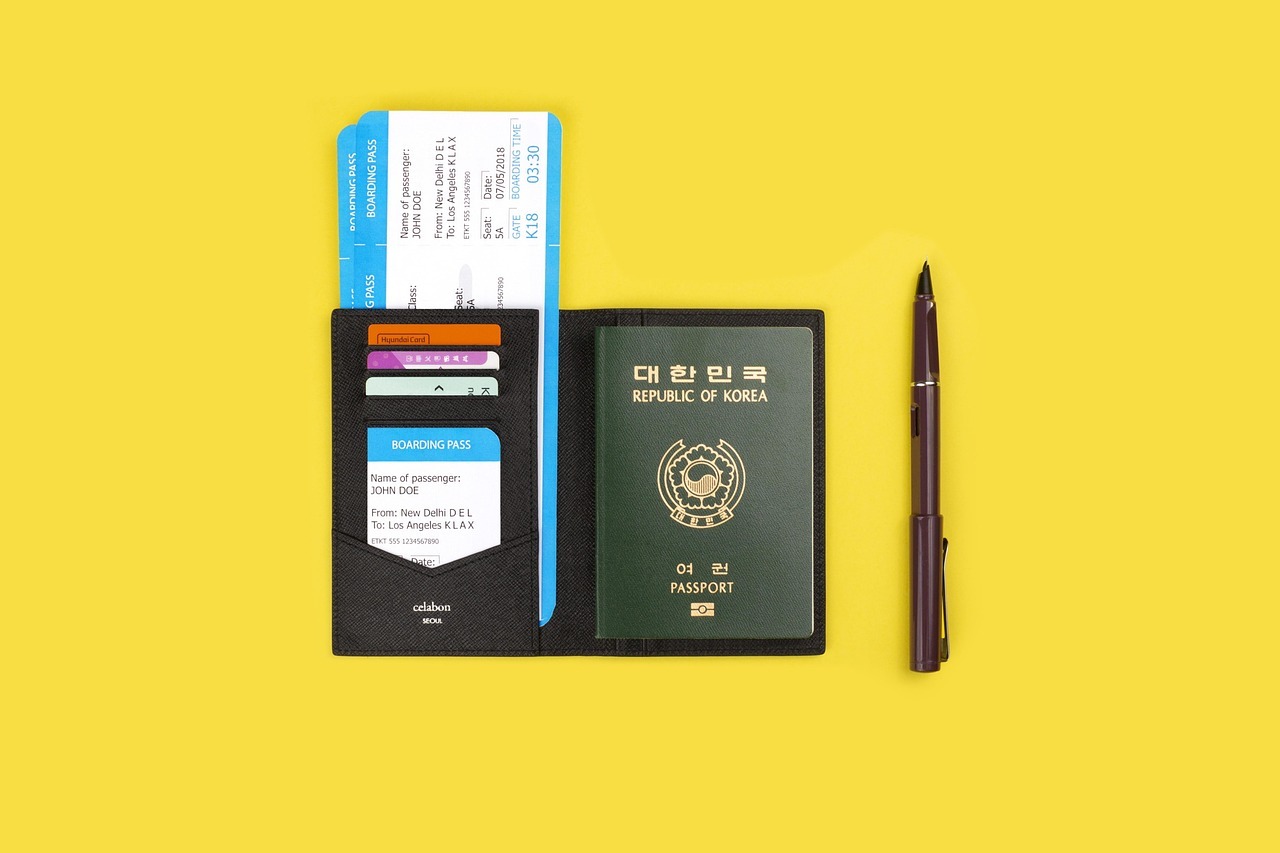
The arithmetic: 3 to 6 months to obtain residency, 4 years of residence, then 12 to 30 months of naturalization processing in practice (against the 180-day legal deadline), then 6 to 15 business days for the passport once the naturalization certificate is delivered.
Two shortening factors exist. A Brazilian spouse or a Brazilian child reduces the residence requirement to one year. Providing relevant services to Brazil or holding professional qualifications of national interest can also reduce it. Neither applies automatically; both must be documented.
Important: Long absences from Brazil are the quiet killer of naturalization files. There is no single statutory day-count rule in the Migration Law, but the Ministry of Justice assesses whether your residence was genuine. An investor who spends 10 months a year in Almaty and 2 in São Paulo has an investment in Brazil, not residence in Brazil. Keep entry and exit stamps, rental contracts, utility bills and Brazilian tax returns.
Portuguese proficiency is usually demonstrated through the CELPE-Bras certificate or, in some cases, by an interview. Start learning in year one, not year four. Kazakh speakers with Russian as a second language typically find Portuguese pronunciation manageable and grammar demanding.
Which Route Should You Choose?
If you intend to operate a business in Brazil, choose Route A: it requires half the capital of real estate and builds the tax and employment record that makes naturalization straightforward. If you want a Brazilian base without operating duties, choose Route B. If you are in tech or research, Route C at R$ 150,000 is the cheapest legitimate entry.
Concretely:
- You export grain, metals or machinery from Kazakhstan and want a Brazilian trading arm: Route A. The company itself becomes your commercial infrastructure.
- You want a second residence for family security, with an apartment in Fortaleza or Recife: Route B, at the R$ 700,000 Northeast threshold, which is the best value in the system.
- You run a software or fintech venture: Route C, with an accelerator link established before filing.
- You are married to a Brazilian: forget the investment routes for immigration purposes. Family reunion residency plus one-year naturalization is faster and cheaper. Invest separately, on commercial logic alone.
Investors comparing jurisdictions often find the Brazilian numbers competitive once transaction costs are included. Our breakdown of the R$ 500,000 investor visa rules covers the corporate structure in more depth.
Frequently Asked Questions
Does Kazakhstan allow dual citizenship with Brazil?
Brazil permits dual and multiple nationality, and naturalized Brazilians are not required to renounce their original citizenship under Brazilian law. Kazakhstan, however, has historically not recognised dual citizenship, and acquiring a foreign nationality can trigger loss of Kazakh citizenship. This is a question of Kazakh law, not Brazilian law, and you must confirm your position with a qualified Kazakh lawyer before applying for naturalization. Many investors hold Brazilian permanent residency indefinitely without naturalizing precisely for this reason.
Can my spouse and children get residency at the same time?
Yes. Once the principal investor’s residence authorization is granted, the spouse, partner and dependent children apply through family reunion under the Migration Law. Each family member needs an apostilled and sworn-translated marriage or birth certificate, a passport, a CPF and their own Federal Police fees, including the R$ 204.77 CRNM issuance fee. Dependants receive the same residence term as the principal. Time counted for naturalization runs individually, from each person’s own residency start date.
Can I keep living in Kazakhstan while holding Brazilian residency?
You can hold residency with limited time in Brazil, but you cannot build a naturalization case that way. Residency authorizations can lapse after prolonged absence, and the Ministry of Justice evaluates whether your residence was effective when it examines naturalization. If a Brazilian passport is your goal, plan to spend the majority of each year in Brazil during the four-year qualifying period, and keep documentary proof: leases, utility bills, tax returns and school records.
How much do professional fees add to the total cost?
Government fees are small: the Federal Police CRNM card costs R$ 204.77 and the residence authorization processing fee is a separate GRU payment in the low hundreds of reais. The real costs are professional: incorporation, accounting, investment plan drafting, sworn translations and legal representation. As a market estimate, budget R$ 25,000 to R$ 60,000 in total professional fees for a complete Route A file, and more for real estate where title due diligence is essential. Always confirm current fee tables, since they are updated annually.
What happens if I sell the business or the property?
While your residence authorization is still fixed-term and tied to the investment, selling the asset can jeopardise your status, because maintaining the investment is a condition of the authorization. After you obtain the indefinite-term authorization, and especially after naturalization, that link no longer constrains you. Timing matters enormously here. If you plan an exit, discuss the sequence with your lawyer before signing anything, not after the deed is registered.
Start Your Brazil Investor Residency the Right Way
Brazilian immigration is not hostile to Kazakh investors. It is unforgiving about sequence. Money that arrives before the structure is ready creates a problem that costs more to fix than it would have cost to do correctly the first time. Our bilingual team, registered with the OAB (Brazilian Bar Association), handles the full chain: CPF, incorporation, Central Bank registration, investment plan, residency filing and, four years later, naturalization.
Your concrete next step: before transferring any funds, send us your intended investment amount, your target route and your timeline. We will tell you in one conversation whether your plan survives the analysis, and what to fix if it does not.
Talk to a specialist lawyer now
Talk to a Lawyer on WhatsApp