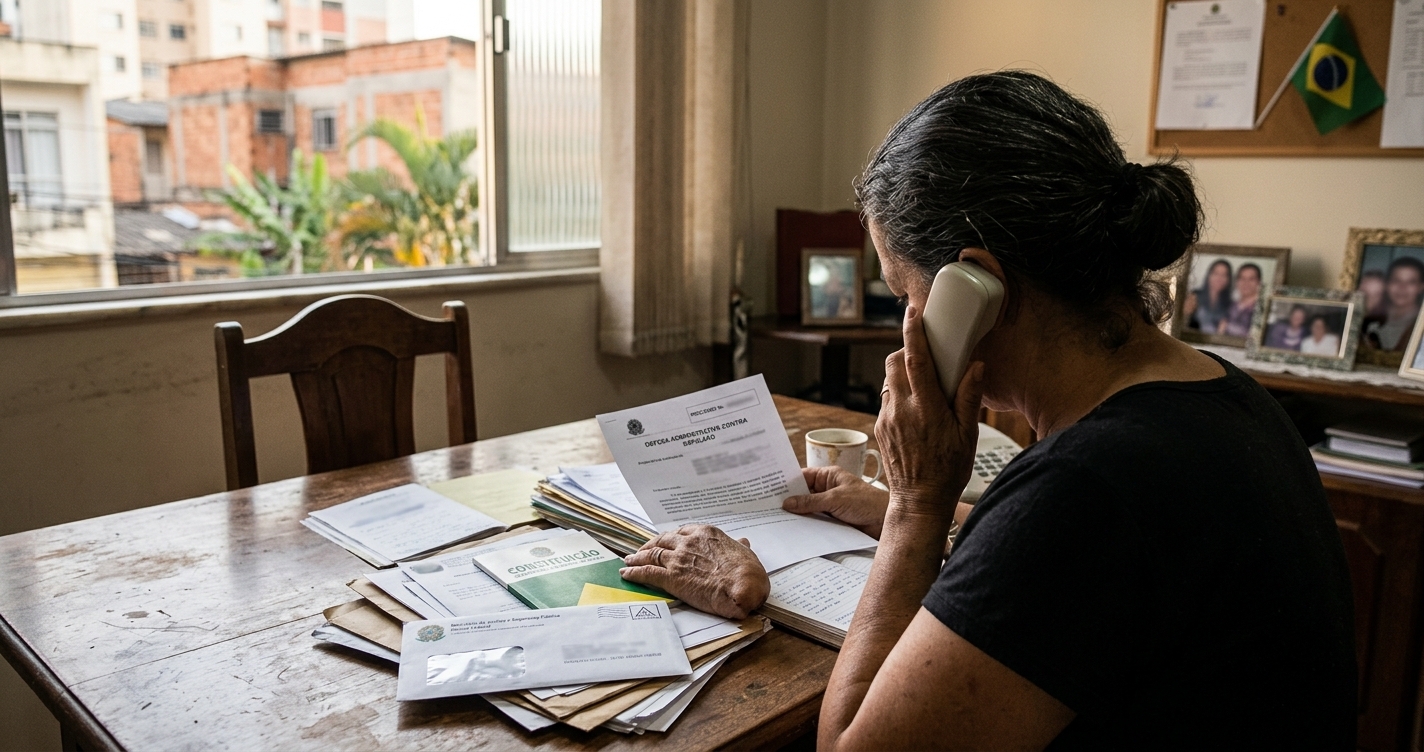
You fled your country. You made it to Brazil. Now you face a new challenge: proving to a government committee that you deserve protection. That committee is CONARE — the Comitê Nacional para os Refugiados (National Committee for Refugees). It is the only body in Brazil with the legal authority to grant or deny refugee status under Law 9.474/1997, Brazil’s Refugee Statute.
CONARE is not a court. It is a multi-agency committee housed within the Ministry of Justice and Public Security. It includes representatives from the Brazilian government, the United Nations High Commissioner for Refugees (UNHCR), and civil society organizations. When you submit a refugee application in Brazil, it is CONARE — not the Federal Police, not the immigration officer at the airport — that ultimately decides your fate.
Understanding how CONARE works, where to file your application, and what realistic timelines look like in 2026 can make the difference between months of anxiety and a clear, actionable path forward. The process is free. It is protected by law. But it is also slow, bureaucratic, and varies depending on how and where you enter the system. This guide walks you through what to expect at each stage — and which entry point into the CONARE process makes the most sense for your situation.
Before diving into the pathways, it helps to understand the legal foundation. Brazil’s approach to refugee protection is built on two pillars: Law 9.474/1997, which defines who qualifies as a refugee and establishes CONARE’s role, and Law 13.445/2017 (the Migration Law), which guarantees that irregular entry into Brazil does not penalize you if you present yourself to authorities and request protection. The principle of non-refoulement — the prohibition on returning you to a country where your life or freedom is at risk — is absolute while your case is pending.
Option A: Applying for Refugee Status at the Point of Entry (Airport or Border)
How It Works: CONARE refugee application Brazil
You present yourself to a Brazilian immigration officer at an international airport or land border crossing and state clearly: “I want to apply for refuge” — “Quero solicitar refúgio.” The officer is legally required to accept your declaration and forward it to the Federal Police. You do not need a visa to say these words. You do not need to prove your identity with a passport. The declaration itself triggers protection under Brazilian law.
Within hours — or sometimes a day or two if you arrive at a busy crossing like Pacaraima (the Venezuela-Brazil border) or Guarulhos International Airport in São Paulo — the Federal Police will register your application in the SISCONARE system (Sistema de Solicitação de Reconhecimento da Condição de Refugiado). You will receive a Protocolo Provisório (Provisional Protocol), a printed document with your photo, a protocol number, and your basic biographical information. This single piece of paper is your legal identity in Brazil for the next 12 to 24 months.
Requirements: CONARE refugee application Brazil
- Be physically present at a Brazilian port of entry (airport, land border, or seaport)
- State your intention to seek refuge — verbally, in any language
- Provide basic biographical information (name, nationality, date of birth)
- Cooperate with Federal Police screening questions
Pros
- Immediate protection: You are legally protected from deportation the moment you declare your intention
- No prior registration needed: You do not need internet access, a CPF, or any Brazilian document to start
- Protocol issued on the spot: You leave the border post or airport screening area with your provisional protocol in hand
- Clear legal pathway: Border officers follow established procedures; there is no ambiguity about your status
Cons
- Detention risk: You may be held in a restricted area for 24 to 72 hours while initial screening is completed
- High-stress environment: Border posts are chaotic, noisy, and you may not have access to a lawyer or interpreter
- Limited documentation: The provisional protocol issued at the border is often basic; you will still need to complete the full SISCONARE registration later
- Geographic constraint: If you enter through a remote land border, you may be far from CONARE support services and legal aid
Option B: Applying at a Federal Police Unit After Entry
How It Works
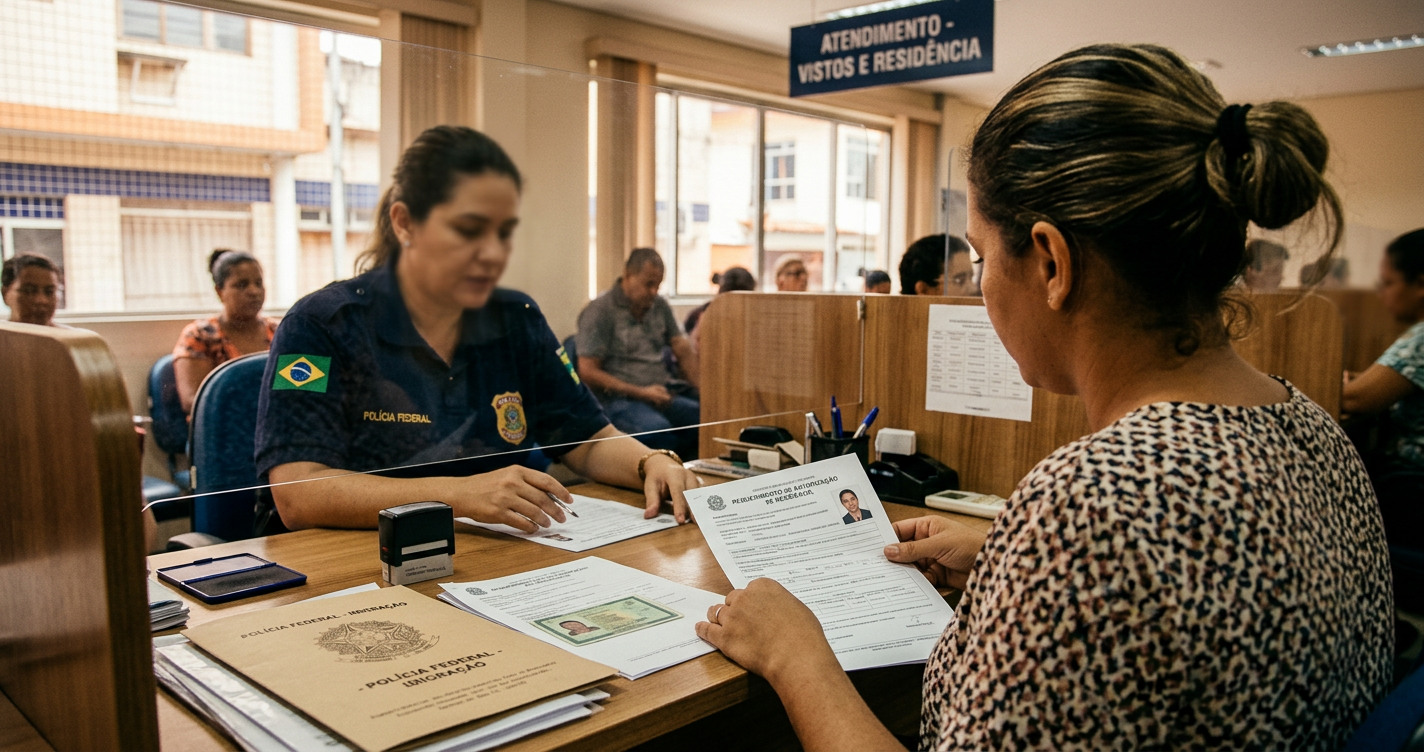
You enter Brazil — legally or irregularly — and then present yourself at a Federal Police (Polícia Federal) unit with immigration services. The key phrase is the same: “I want to apply for refuge.” The Federal Police will open your case in the SISCONARE system, take your photograph and fingerprints, and issue your provisional protocol. This is the most common pathway for people who enter Brazil by land and travel to a major city before regularizing their status.
Federal Police units with immigration processing capacity exist in all state capitals and many mid-sized cities. In São Paulo, the dedicated immigration office at Rua Hugo D’Antola, 95 (Lapa neighborhood) handles thousands of refugee applications each year. In Rio de Janeiro, the Federal Police headquarters on Avenida Rodrigues Alves processes refugee claims. The Federal Police website maintains an updated list of units with immigration services at gov.br/pf.
Requirements
- Be physically present in Brazil
- Go to a Federal Police unit with immigration processing capacity
- State your intention to seek refuge
- Provide any identification documents you have (passport, national ID, birth certificate — but lack of documents does not bar you)
- Complete the SISCONARE registration form (Federal Police staff typically assist with this)
Pros
- Controlled environment: You can choose when and where to apply, ideally in a city where you have support networks
- Access to interpreters: Larger Federal Police units often have access to interpreters or partner with civil society organizations that provide language support
- Complete registration: The Federal Police unit typically completes the full SISCONARE profile — including your detailed narrative — in one session
- Immediate work authorization: Your provisional protocol explicitly states your right to work with a formal contract (carteira assinada)
Cons
- Brief irregular period: Between entering Brazil and presenting yourself to the Federal Police, your stay is technically irregular — though the Migration Law protects you from penalties if you present yourself without delay
- Long queues: Federal Police immigration units in major cities often have lines forming before dawn; in São Paulo, arriving at 4:00 AM is not unusual to secure a same-day slot
- Language barriers: Not all Federal Police officers speak English, French, or Arabic; you may need to bring a Portuguese-speaking friend
- Inconsistent processing: Different Federal Police units have slightly different internal procedures; what works in Belo Horizonte may not work in Manaus
Option C: SISCONARE Online Pre-Registration Before In-Person Validation
How It Works
As of 2026, CONARE has expanded the digital infrastructure of the SISCONARE platform. You can now begin the refugee application process online before visiting a Federal Police unit. You access sisconare.mj.gov.br, create a gov.br account, and fill out the preliminary registration form — including your personal data, nationality, and a summary of the reasons you are seeking refuge. The system generates a digital pre-registration number.
You then take this number to a Federal Police unit, where officers verify your identity, take biometric data, and finalize the application. The pre-registration does not grant immediate protection — you only receive the provisional protocol after the in-person step — but it significantly reduces the time spent at the Federal Police office and ensures your case is already in the system.
Requirements
- Internet access and an email address to create a gov.br account
- Basic computer literacy or assistance from a support organization (Cáritas, UNHCR partner, or legal aid clinic)
- Ability to complete the form in Portuguese — the SISCONARE interface is entirely in Portuguese as of 2026
- Subsequent in-person visit to a Federal Police unit within 30 days of pre-registration
Pros
- Reduced wait time: Pre-registered applicants often spend 60 to 90 minutes at the Federal Police instead of 4 to 6 hours
- Digital record: Your case is timestamped in the SISCONARE system from the moment of pre-registration
- Prepare your narrative: You can draft your reasons for seeking refuge calmly, at home, rather than explaining traumatic events to an officer across a counter
- Civil society support: Organizations like Cáritas Brasileira and the Jesuit Refugee Service can help you complete the online form before you go to the Federal Police
Cons
- No immediate protection: The pre-registration alone does not grant legal status; you remain irregular until the in-person validation is complete
- Portuguese-only interface: The SISCONARE portal has no English, Spanish, or French version, creating a barrier for many applicants
- Technical glitches: The gov.br authentication system occasionally locks out users with foreign IP addresses or incomplete profiles
- 30-day deadline: If you do not complete the in-person step within 30 days, the pre-registration expires and you must start again
Comparison Table: Three Pathways into the CONARE Refugee Process
| Criterion | Option A: At the Border/Airport | Option B: Federal Police Unit | Option C: SISCONARE Online First |
|---|---|---|---|
| Immediate protection from deportation | Yes — from the moment you declare your intention | Yes — from the moment the Federal Police registers your application | No — only after in-person validation |
| Provisional protocol issued | Same day (within hours or 1-2 days) | Same day (typically within 2-6 hours of queuing) | After in-person visit (same day once validated) |
| Cost | Free | Free | Free |
| Documents required | None — verbal declaration suffices | Any ID you have; none required by law | gov.br account, email, basic biographical data |
| Language support | Limited; depends on officer availability | Variable; larger cities have more resources | None online (Portuguese only); support organizations can assist |
| Detention risk | Possible brief detention for screening (24-72 hours) | None — you are free to come and go | None — but you remain irregular until validated |
| Work authorization | Immediate with provisional protocol | Immediate with provisional protocol | Only after in-person validation and protocol issuance |
| Processing time to first protocol | 1-2 days | Same day (if you secure a slot) | Depends on how quickly you schedule the in-person visit |
| Best for | People arriving directly from a country where they face immediate danger, with no Brazilian support network | People already in Brazil who need to regularize their status and want to apply in a controlled environment | People with internet access and support who want to minimize time at the Federal Police |
Which Path Is Right for You?
If you are arriving directly from a persecution situation and have no contacts in Brazil, Option A (applying at the border or airport) is your safest choice. The immediate protection from deportation outweighs the stress of the screening environment. You can always transfer your case to a CONARE office in a major city later.
If you have already entered Brazil — legally or irregularly — and are staying with friends, family, or in a shelter, Option B (going to a Federal Police unit) gives you the most control. You can prepare, bring a Portuguese speaker, and leave with your provisional protocol and work authorization on the same day. This is the most common and practical path for the majority of asylum seekers in Brazil.
If you are tech-savvy, have reliable internet access, and can get help with Portuguese, Option C (SISCONARE online pre-registration) saves you hours at the Federal Police and creates a digital record of your application immediately. This path works well if you are connected to a civil society organization — like Cáritas Brasileira or a university legal clinic — that can guide you through the Portuguese-language portal.
If you are considering other visa pathways entirely — for instance, if you have remote work income and might qualify for a different legal status — it is worth exploring alternatives like the Brazil Digital Nomad Visa. Refugee status is a specific form of protection for people facing persecution. If you qualify for a work or investment visa, those pathways may offer faster processing and more certainty. A consultation with a Brazilian immigration lawyer can clarify which route fits your circumstances best.
What Happens After You Apply: The Full CONARE Timeline
Regardless of which entry point you choose, once your application is registered in SISCONARE, the process follows a predictable path. Here is what you can expect at each stage in 2026.
Stage 1: The Provisional Protocol (Day 1)
You receive your Protocolo Provisório — a single sheet of paper with your photo, protocol number, nationality, and a barcode. Protect this document as if it were your passport. It is your legal identity in Brazil for the next 12 to 24 months. Make copies. Take a photo of it on your phone. Store the original in a waterproof folder.
With your protocol in hand, you can immediately:
- Work legally — apply for a CTPS (Carteira de Trabalho e Previdência Social, the work permit card) at any Ministry of Labor office, free of charge for refugee applicants
- Obtain a CPF (Cadastro de Pessoas Físicas, the individual taxpayer ID) at a Receita Federal (Brazilian IRS) office or at partner institutions like Banco do Brasil and Correios — cost is R$ 7.00 for the issuance, though many refugee applicants receive it free
- Access public healthcare through the SUS (Sistema Único de Saúde) by presenting your protocol at any public hospital or UBS (Basic Health Unit)
- Open a bank account — Caixa Econômica Federal and Banco do Brasil have specific procedures for protocol holders
Stage 2: The Detailed Registration (Weeks 1-4)
If you applied at a border or airport, you likely completed only a basic registration. Within the first month, you must complete the full SISCONARE profile at a Federal Police unit or a CONARE partner organization. This includes your detailed narrative: the reasons you fled your country, the specific persecution or human rights violations you suffered or fear, and any evidence you can provide.
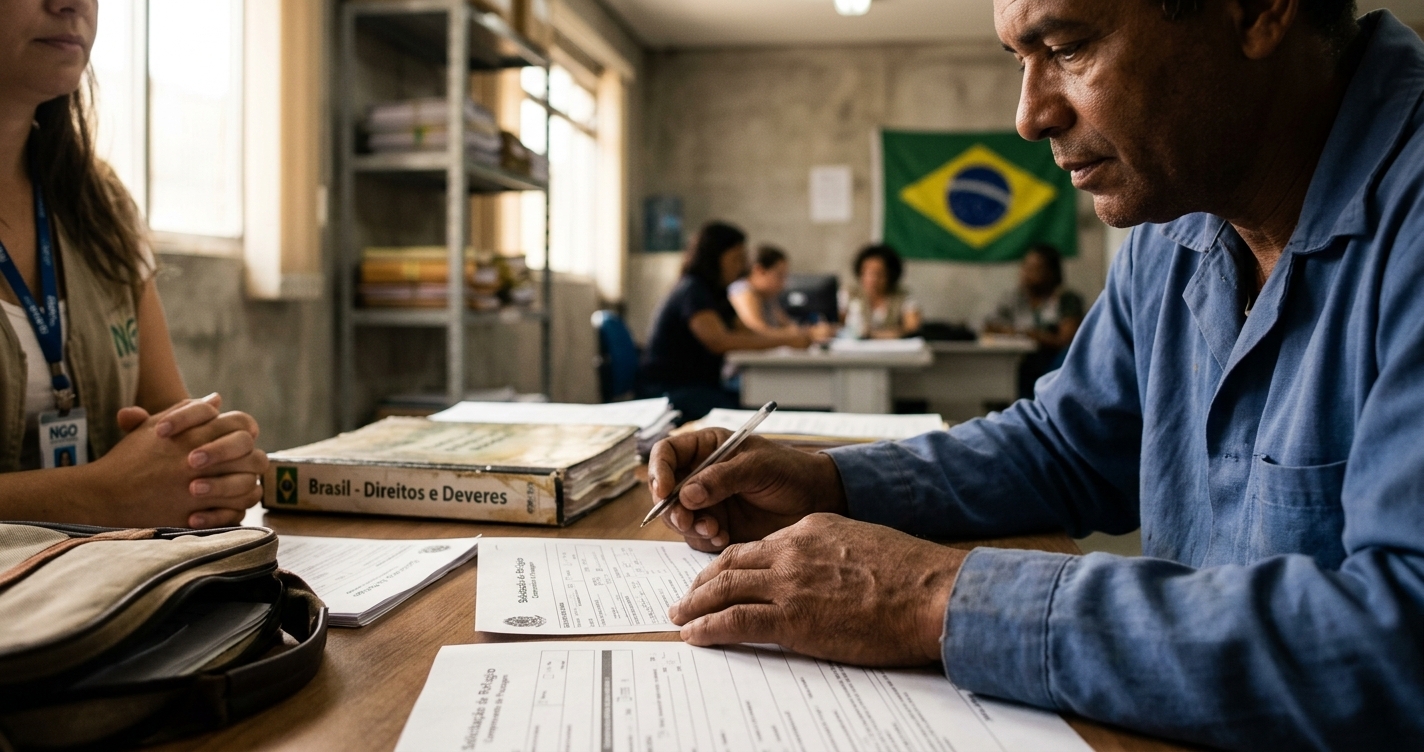
This narrative is the single most important document in your case. CONARE’s decision will be based largely on the credibility and consistency of your account. Write clearly. Be specific about dates, places, and incidents. If you need help drafting it, organizations like Cáritas Brasileira and the Jesuit Refugee Service provide free legal and social assistance to refugee applicants in major Brazilian cities.
Stage 3: The Waiting Period (Months 2-18)
This is the most difficult stage — and the one that surprises most applicants. After your detailed registration is complete, you wait. CONARE’s caseload in 2026 is substantial. The committee meets monthly, but it prioritizes certain nationalities based on humanitarian emergencies and international agreements. Applicants from Venezuela, Syria, Afghanistan, and Haiti have seen relatively faster processing — often 6 to 12 months — while applicants from other countries may wait 18 to 24 months or longer.
During this waiting period, your provisional protocol must be renewed every year. You return to a Federal Police unit before the expiration date printed on your protocol. The renewal is free. The officer updates your registration in SISCONARE and issues a new protocol. You must repeat this process until CONARE issues a final decision.
While you wait, you can and should build your life in Brazil — work, study, learn Portuguese, and integrate into your community. CONARE does not view employment or study as negative factors; on the contrary, demonstrating integration can support your case.
Stage 4: The CONARE Eligibility Interview (Variable Timing)
Eventually, CONARE will schedule your eligibility interview. You will receive a notification through the SISCONARE portal or by mail at the address you registered. The interview is conducted by a CONARE eligibility officer — often a trained civil servant from the Ministry of Justice — and may take place at a Federal Police unit, a CONARE regional office in São Paulo, Rio de Janeiro, or Brasília, or occasionally via videoconference.
The interview is not a trial. It is a structured conversation designed to verify the information in your written narrative and assess your credibility. The officer will ask about:
- Your identity and background: Full name, nationality, ethnicity, religion, political affiliations
- Your departure from your country: When and why you left, the specific threat or persecution you faced
- Your route to Brazil: How you traveled, which countries you transited through, and why you did not seek protection there
- Your fear of return: What would happen to you if you were sent back to your country today
- Any inconsistencies: The officer will probe discrepancies between your written narrative, your interview answers, and any available country-of-origin information
Be honest. If you do not remember a specific date, say so. If you are unsure about a detail, acknowledge the uncertainty. Credibility is not about having a perfect memory — it is about being consistent on the core facts of your persecution. CONARE officers are trained to evaluate testimony within the context of trauma, which can affect memory and narrative coherence.
Stage 5: CONARE’s Decision (After the Interview)
After your interview, the eligibility officer prepares a case summary and recommendation for the CONARE plenary. The committee meets — typically once a month — and a simple majority decides your case. There are three possible outcomes:
- Approval: Refugee status is granted. You receive a formal decision letter and the right to apply for the CRNM (Carteira de Registro Nacional Migratório, the National Immigration Registration Card). The CRNM costs R$ 204.77 in 2026 and is your permanent identity document in Brazil. With refugee status, you can also apply for a Brazilian passport for foreigners (passaporte para estrangeiro) and eventually for Brazilian naturalization. For more details on what the CRNM means for your long-term status, see our guide on Permanent Residency Brazil & CRNM.
- Denial: CONARE determines you do not meet the refugee definition under Law 9.474/1997. You have the right to appeal to the Minister of Justice and Public Security within 15 days of receiving the decision. If the appeal is denied, you may face removal proceedings — though, in practice, Brazil rarely deports rejected asylum seekers if they have established family or work ties in the country.
- Request for additional information: CONARE may issue a diligência — a request for more documents, evidence, or clarification. You will have a deadline to respond. Do not ignore this. Failure to respond can result in your application being dismissed.
What Changed in 2026 for CONARE and Refugee Applications?
Several developments in 2026 affect refugee applicants:
- Expanded SISCONARE digital infrastructure: The online pre-registration system is now fully operational nationwide. CONARE has also launched a mobile-friendly version of the portal, though it remains Portuguese-only. The government has stated that Spanish and English versions are “under development” but has not committed to a timeline.
- Regional CONARE offices: As of 2026, CONARE has physical offices in São Paulo, Rio de Janeiro, and Brasília, reducing the bottleneck at Federal Police units in those cities. More regional offices are planned for Belo Horizonte and Porto Alegre, but no opening dates have been confirmed.
- Faster processing for designated nationalities: CONARE has adopted a triage system that prioritizes applications from nationalities experiencing acute humanitarian crises. This means applicants from some countries receive interview dates within 6 months, while others wait significantly longer. The list of prioritized nationalities is not publicly available and changes based on international developments.
- CRNM fee remains stable: The CRNM issuance fee for approved refugees is R$ 204.77 in 2026, unchanged from previous years. However, discussions are underway to waive this fee entirely for refugee status holders, following recommendations from UNHCR and Brazilian civil society organizations.
- Family reunification improvements: CONARE has streamlined the process for refugee family reunification. If your spouse or minor children are still abroad when your refugee status is approved, you can request family reunification through the Brazilian Ministry of Foreign Affairs and the nearest Brazilian consulate. Processing times for family reunification have improved to approximately 6 to 12 months, down from 18 to 24 months in previous years.
Frequently Asked Questions About CONARE and the Refugee Application Process
Do I need a lawyer to apply for refugee status through CONARE?
No. The refugee application process is free and you can complete it without a lawyer. However, having a qualified Brazilian immigration lawyer can make a significant difference — especially when drafting your narrative, preparing for the eligibility interview, and handling an appeal if your application is denied. A lawyer registered with the OAB (Brazilian Bar Association) can ensure your case file is complete, identify potential weaknesses in your narrative before CONARE does, and advocate on your behalf if procedural problems arise. Many civil society organizations also provide free legal aid to refugee applicants.
Can I work while my CONARE application is pending?
Yes. Your provisional protocol explicitly authorizes you to work with a formal employment contract (carteira assinada) in Brazil. You will need to obtain a CTPS (work permit card) from the Ministry of Labor — this is free for refugee applicants — and a CPF (individual taxpayer ID) from the Receita Federal. Together with your protocol, these documents allow you to access all labor rights that Brazilian workers enjoy, including the FGTS (severance fund), paid vacation, and social security benefits. This is one of the strongest protections in Brazilian refugee law: you do not need to wait for CONARE’s final decision to support yourself and your family.
How long does CONARE take to make a decision after the interview?
After your eligibility interview, the CONARE plenary typically issues a decision within 3 to 6 months — but this is an estimate, not a legal deadline. Some cases are decided within weeks; others take over a year if the committee requests additional information or if your nationality falls outside the prioritized caseload. You can check your case status at any time through the SISCONARE portal. If more than 12 months pass without a decision, a lawyer can file a procedural motion to request expedition, though Brazilian courts are generally deferential to CONARE’s administrative timelines given the complexity of refugee adjudication.
What happens if CONARE denies my refugee application?
You have the right to appeal to the Minister of Justice and Public Security within 15 days of receiving the written denial. The appeal must be filed in Portuguese and should address the specific reasons CONARE gave for the denial. If the Minister upholds the denial, your provisional protocol expires and you may face removal proceedings. However, Brazilian practice is nuanced: if you have established family ties, employment, or long-term residence in Brazil, you may be eligible for other forms of regularization under the Migration Law. Consulting an immigration lawyer immediately upon receiving a denial is essential — alternative pathways may be available, including residency based on family reunification or humanitarian grounds outside the refugee framework.
Can I travel outside Brazil while my refugee application is pending?
This is complicated — and generally not recommended. Your provisional protocol is not a travel document. If you leave Brazil while your application is pending, you may be denied re-entry. In limited circumstances, CONARE can issue an authorization for you to travel abroad and return — for example, for urgent family or medical reasons — but you must request this authorization in advance through the Federal Police, and approvals are rare. Once your refugee status is approved and you have your CRNM, you can apply for a Brazilian passport for foreigners (passaporte para estrangeiro), which allows international travel under the protection of the Brazilian state. For a broader understanding of how legal residency works in Brazil, our article on Brazil Visa Residency Rules 2026 provides useful context.
CONARE Refugee Process in Brazil: Take the Next Step with Confidence
The CONARE refugee application process is free, protected by law, and designed to uphold Brazil’s commitment to human rights. But it is also slow, bureaucratic, and — for someone navigating it in a foreign language while recovering from trauma — deeply overwhelming. You do not need to go through it alone. Whether you are preparing your first application, waiting for an interview date, or responding to a denial, having a bilingual legal team that understands both Brazilian immigration law and the reality of the refugee experience can transform uncertainty into a clear path forward.
Our team at Ribeiro Cavalcante Advocacia provides bilingual legal support to refugee applicants in Brazil — from drafting your narrative and preparing for the CONARE interview to appealing a denial and securing your CRNM after approval. We work in English, Portuguese, and Spanish, and we understand what is at stake for you and your family.
Fale agora com um advogado especialista
Falar com Advogado no WhatsApp