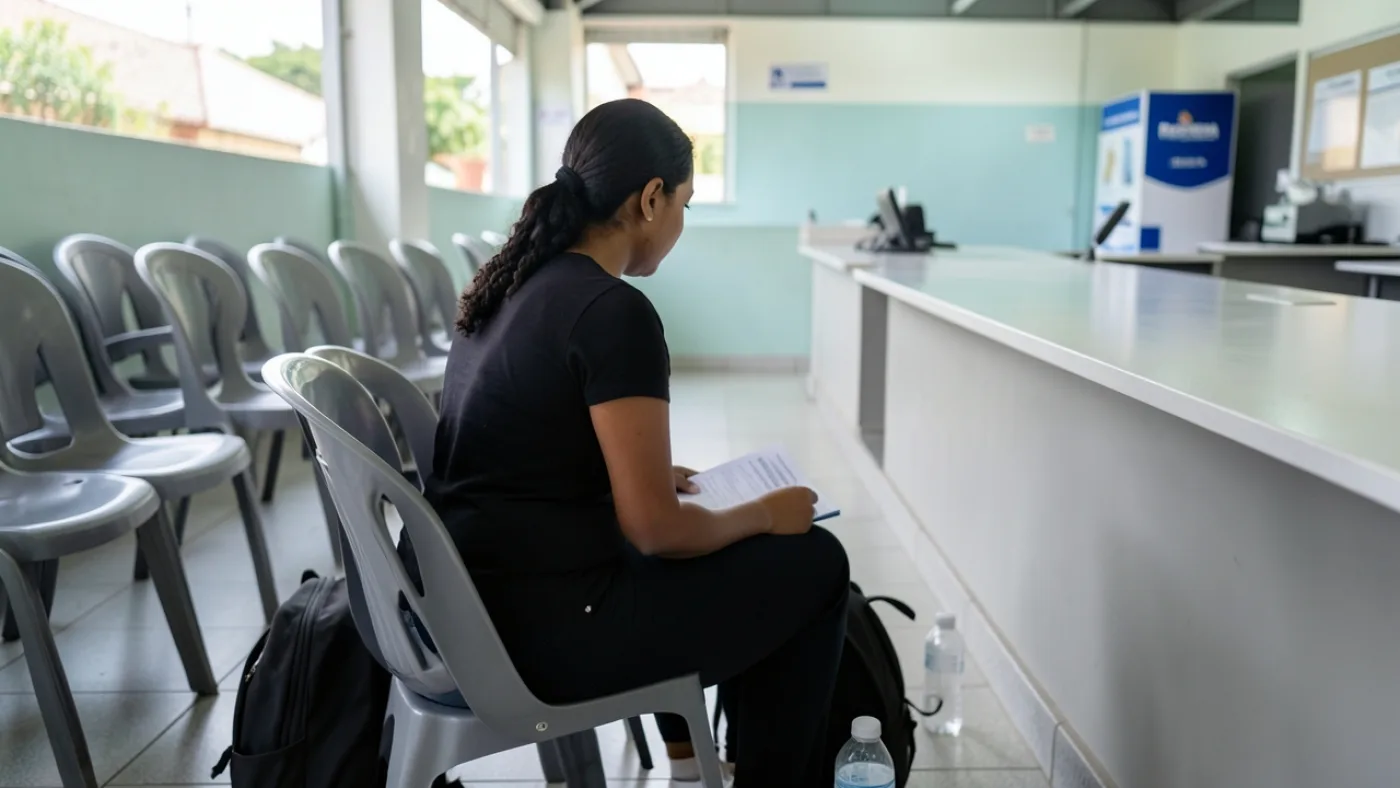

The costliest mistake foreigners make with the CPF is assuming they can sort it out “later.” They land in Brazil, settle into an Airbnb, and try to rent a proper apartment three weeks in. The landlord asks for a CPF. The deal collapses. The apartment goes to someone else. Meanwhile, the salary transfer from a new Brazilian employer bounces because there is no bank account to receive it, and the account cannot be opened without a CPF either.
This is not a rare story. It happens every week. The frustrating part is that the CPF (Cadastro de Pessoas Físicas, “Registry of Physical Persons”) is one of the cheapest and fastest documents in all of Brazilian bureaucracy. It costs R$ 7.00 or nothing at all, and you can often get it in 24 hours.
So why do so many people lose access to basic rights and services without realizing it? Because they misunderstand what the CPF does. This article draws the exact line: what you can genuinely do without a CPF in Brazil, and the long list of things that are simply blocked until you have one.
On this page
What Is the CPF and Why Does It Control Almost Everything?
The CPF is an 11-digit tax identification number issued by the Receita Federal (Brazilian IRS). It is free at Receita Federal offices and costs R$ 7.00 (about US$1.30) at a post office. Under Law 14.534/2023, the CPF is now the single national identification number across all Brazilian databases, from health to banking, which is precisely why life without one grinds to a halt.
Before 2023, Brazil scattered your identity across several numbers: one for tax, one for voting, one for benefits. Law 14.534/2023 consolidated them all into the CPF. That legal change is the real reason a number that sounds like a minor tax registry now gates your entire practical existence in the country.
Crucially, the CPF is not a visa and not a residence permit. Obtaining one grants you zero immigration rights. A tourist can hold a CPF. So can an investor in London who has never boarded a flight to São Paulo. The number is issued for life, never expires, and carries no renewal fee. You can read the official rules on the Receita Federal portal.
Key point: The CPF is a tax and identity number, not permission to stay in Brazil. Getting one does not regularize your immigration status, and holding a visa does not automatically give you a CPF. They are two separate registrations.
What Can You Actually Do Without a CPF in Brazil?
Without a CPF you can enter Brazil as a tourist, pay for goods and services in cash, exchange small amounts of foreign currency, and eat, shop and travel domestically by paying upfront. In short, you can spend money as a visitor. What you cannot do is receive money, hold anything, or sign anything binding.
Here is the honest and short list of what remains open to you:
- Enter Brazil on a valid tourist visa or visa waiver.
- Pay for meals, taxis, and shopping in cash.
- Exchange modest amounts of cash at a currency exchange (casa de câmbio).
- Book most hotels, though a growing number now ask for a CPF at check-in.
- Buy a prepaid tourist SIM in limited cases, though most carriers now require a CPF even for prepaid chips.
Notice the pattern. Everything on this list is transactional and short-term. The moment you try to put down roots, receive an income, hold an account, or own something of value, the door closes. That is the exact frontier where people lose rights without noticing, because they assumed the tourist experience would scale into a resident one. It does not.
Example: A digital nomad from Portugal spent five weeks in Rio paying for everything by card linked to a European bank. It worked fine until she tried to sign a six-month apartment lease under Law 8.245/1991 (the Brazilian Tenancy Law). The immobiliária (real estate agency) refused to draft the contract without her CPF. She lost the apartment and a R$ 3,000 deposit hold.
What Can You Absolutely NOT Do Without a CPF?
Without a CPF you cannot open a bank account, use Pix, get a phone line, sign a lease, buy or sell property, work under a formal contract, register a company, or file taxes. According to Receita Federal rules under Instrução Normativa RFB 2.172/2023, the CPF is mandatory for anyone with an economic or legal interest in Brazil.
This is the heart of the matter. The list below is where foreigners silently lose access, and each item is a wall, not a speed bump.
| Activity | Possible without a CPF? |
|---|---|
| Open a Brazilian bank account | No. Impossible at every bank, including digital ones. |
| Send or receive Pix (instant transfers) | No. Pix keys are tied to a CPF. |
| Get a mobile phone line or SIM chip | No. Carriers require a CPF. |
| Sign a formal rental lease | No. The contract and guarantees require a CPF. |
| Buy or sell property | No. The cartório will not register the deed. |
| Work under a CLT employment contract | No. Payroll and social security need a CPF. |
| Open a company or be a partner | No. Partners must have a CPF to register a CNPJ. |
| File income tax or become a tax resident | No. The tax return is filed under your CPF. |
| Buy a vehicle or get a driver’s license | No. Vehicle registration and the CNH require a CPF. |
Opening a bank account and using Pix
Every Brazilian bank, from traditional giants to app-only fintechs, is legally required to link accounts to a CPF. Without one you cannot open an account, and without an account you cannot use Pix, the instant payment system that now dominates daily life. In practice, no CPF means no ability to receive a salary, split a restaurant bill, or pay rent digitally.
Signing a rental lease
Residential leases are governed by Law 8.245/1991. A landlord or agency will not sign a contrato de locação (rental contract) with someone who lacks a CPF, because the guarantee mechanisms, from a guarantor to rental insurance, all run on CPF verification. This is where most newly arrived foreigners hit their first hard wall.
Buying or selling property
Brazil uses a Civil Law system, which means property ownership only becomes legally real when the deed is registered at the Cartório de Registro de Imóveis (Real Estate Registry Office). The cartório will not register any transfer without the buyer’s and seller’s CPF. If you are considering land, note the additional layers in our guide on foreigners buying rural land in Brazil.

Working, opening a company, and paying tax
A formal CLT (Consolidação das Leis do Trabalho) employment contract cannot process payroll or social security contributions without your CPF. Likewise, to open a company or be listed as a partner in a CNPJ, every individual partner needs a CPF. If you are weighing corporate structures, our comparison of the best company type for foreigners, LTDA vs SAS, walks through the options. Note that opening a CNPJ also requires a registered fiscal address in Brazil, a service Ribeiro Cavalcante provides.
Important: Under Decreto 9.580/2018 (the Income Tax Regulation), income tax obligations are filed under your CPF. Holding a CPF does not, by itself, make you a tax resident. But if you become a tax resident, you cannot meet your filing duties without one.
Why Do So Many Foreigners Lose These Rights Without Realizing It?
Foreigners lose access mainly because of three false assumptions: that a tourist experience predicts a resident one, that the CPF can wait, and that a visa includes a CPF. In reality, the CPF is a separate, independent registration under Instrução Normativa RFB 2.172/2023, and nothing else in Brazil unlocks it automatically.
The first trap is timing. Because the CPF is cheap and fast, people postpone it. Then a deadline arrives, a lease signing, a job start date, a property closing, and the CPF is not ready. The document itself takes hours, but the sworn translation of a birth certificate that some applicants need can take days, and that gap is where deals die.
The second trap is the visa confusion. A residency visa and a CRNM (National Migration Registration Card) do not generate a CPF. You must apply for it separately. Many people arrive believing their visa paperwork covered everything, only to discover their new employer cannot run payroll. Our broader guide to moving to Brazil as a foreigner lays out how these documents fit together.
The third trap is silent exclusion. Under Law 14.534/2023, the CPF replaced other ID numbers across government systems. That means a foreigner without a CPF is increasingly invisible to health, benefit, and financial databases, not because anyone denied them, but because the systems have no field to record them. The right is not taken away; it simply never activates.
Watch out: If a private health insurer (plano de saúde) ever denies a treatment, every step of your appeal references your CPF. Without it, you cannot even be enrolled in the plan, let alone contest a denial. Set up the CPF before you need to lean on any Brazilian institution.
Is There a Case Where the Rule Does Not Apply? (The Non-Resident Exception)
Yes. The strongest argument against getting a CPF is that a pure non-resident who never sets foot in Brazil and only holds a passive investment might seem not to need one. But even here the exception is narrow: under Receita Federal rules, a non-resident who owns Brazilian assets, real estate, shares, or a bank account, is still required to have a CPF.
Let us state the counter-argument in its strongest form, because it deserves a fair hearing. A foreign investor might reasonably say: “I live in Munich. I will never move to Brazil. I want to buy an apartment in Florianópolis purely as an investment and rent it out. The CPF is a Brazilian tax and identity number. Why should I, a person with no Brazilian life, be forced into a Brazilian registry?”
It is a fair instinct. And the answer is precisely why the exception collapses. The moment that investor owns Brazilian property, receives Brazilian rental income, or holds a Brazilian bank account, they have an economic and legal interest in Brazil. Instrução Normativa RFB 2.172/2023 requires exactly those people to register, resident or not. The cartório cannot register their deed, and the tax on their rental income cannot be assessed, without a CPF.
So the genuine exception is tiny: a foreigner with no Brazilian assets, no Brazilian income, no Brazilian account, and no intention of signing anything in Brazil. A one-week tourist. For that person, and only that person, the CPF is optional. For everyone else with any economic footprint, the rule holds firmly. This is the practical meaning of Brazil’s Civil Law system: rights and ownership exist through formal registration, and registration runs on the CPF.
Quick recap: If you touch a single Brazilian asset, account, or contract, you need a CPF, whether or not you live here. Only a passive tourist with zero economic footprint can skip it.
What Documents Do You Need and What Does It Cost?
To register a CPF you need a valid passport and your parents’ full names, which the Receita Federal uses to confirm your identity. The registration itself is free at a Receita Federal office and costs R$ 7.00 (roughly US$1.30 or €1.20) at a post office or authorized bank. There is no renewal fee and no expiry.
The document list is short:
- A valid passport (the primary identity document for foreigners).
- Your parents’ full names. If your passport lists them, that is enough.
- If your passport does not list your parents, bring your birth certificate.
- If the birth certificate is not in Portuguese, a sworn translation (tradução juramentada), costing roughly R$ 100 to R$ 250 per page in 2026.
- A Brazilian address for the form, if applying inside Brazil.
Here is a realistic cost comparison for 2026, drawn from Receita Federal and Correios published fees:
| Where you apply | Cost (BRL) | Approx. USD | Typical time |
|---|---|---|---|
| Online / Receita Federal office (in Brazil) | Free | US$0 | Immediate to 48h |
| Correios post office or authorized bank | R$ 7.00 | US$1.30 | Immediate to 48h |
| Brazilian consulate abroad | R$ 7.00 (or free online) | US$1.30 | 1 to 4 weeks |
| Sworn translation of birth certificate (if needed) | R$ 100 to R$ 250 per page | US$18 to US$45 | 1 to 5 days |
Tip: The single most common delay for foreigners is the sworn translation. If your passport already lists your parents’ names, you skip it entirely. Check your passport first, and only pay for a translation if you truly need it. Our guide on apostille and sworn translation in Brazil explains the process and 2026 costs.
How Do You Apply for a CPF in 2026? A Step-by-Step Guide
Applying for a CPF in 2026 takes minutes if you prepare documents in advance. Foreigners inside Brazil can register at a Correios branch for R$ 7.00 and often receive the number the same day. Foreigners abroad apply through a Brazilian consulate or the Receita Federal online system, which typically takes 1 to 4 weeks.
If you are inside Brazil
- Gather your passport and, if needed, your birth certificate with sworn translation.
- Go to a Correios branch that offers CPF service, or a Receita Federal office (free but slower).
- Fill out the Documento Básico de Entrada no CPF form with your name, date of birth, parents’ names, and a Brazilian address.
- Pay the R$ 7.00 fee at Correios (the CPF number itself is free).
- Receive your CPF number, often on the spot or within 48 hours.
If you are abroad
- Use the Receita Federal online enrollment for people abroad, available through the gov.br services portal, or apply through your nearest Brazilian consulate.
- Upload or present your passport and, if required, your birth certificate and sworn translation.
- Submit the application and wait, usually 1 to 4 weeks for consular processing.
- Receive the CPF number by email, then keep it safe. It is yours for life.
For a deeper walkthrough of the abroad route, see our dedicated guide on how to get a CPF via embassy and online. Brazilian bureaucracy can be slow in person, so the online and Correios routes are usually the fastest for foreigners.

What Changed in 2026 for the CPF?
The biggest shift is not a new law but the full rollout of Law 14.534/2023, which made the CPF the sole national ID number across Brazilian systems. By 2026, the CPF has effectively absorbed the roles of older ID numbers in health, tax, and benefit databases, making it more indispensable than ever for foreigners.
In practical terms, more institutions now request a CPF where they previously accepted a passport alone. Some hotels, gyms, streaming services, and loyalty programs now ask for one. Carriers that once sold prepaid tourist SIMs freely increasingly require a CPF even for prepaid chips. The trend is one direction: fewer and fewer doors open without the number.
There were no fee increases for the CPF itself in 2026. The registration remains free at Receita Federal and R$ 7.00 at Correios. What changed is the reach of the number, not its price. Data handling around the CPF also intersects with privacy rules, which matters for companies, as we explain in our overview of LGPD compliance for foreign companies.
Frequently Asked Questions About the CPF for Foreigners
Can I get a CPF before I travel to Brazil?
Yes. You do not need to be in Brazil or even hold a visa. You can apply through the Receita Federal online enrollment for people abroad or at a Brazilian consulate, presenting your passport. Consular processing usually takes 1 to 4 weeks, so apply well before you travel. Getting the CPF ready in advance means you can open a bank account, sign a lease, or receive payments the moment you arrive, avoiding the most common and costly delays foreigners face.
Does holding a CPF make me a tax resident of Brazil?
No. The CPF is purely a registration number and does not determine tax residency. Under Decreto 9.580/2018, tax residency depends on factors like your visa type and days spent in Brazil, not on holding a CPF. A non-resident investor can have a CPF without owing Brazilian income tax on foreign earnings. However, if you do become a tax resident, you cannot file your return or meet your obligations without a CPF, so the number becomes essential once residency is triggered.
Can I open a bank account or use Pix without a CPF?
No. Every Brazilian bank, including digital and fintech banks, is legally required to tie accounts to a CPF. Pix keys are also registered against a CPF, so without one you cannot send or receive instant payments. This is one of the hardest walls foreigners hit, because so much of Brazilian daily life, from splitting bills to paying rent, runs on Pix. Get your CPF first, then choose a bank. The account cannot exist before the number does.
My visa was approved. Do I already have a CPF?
Not automatically. A visa and the CRNM (National Migration Registration Card) are immigration documents governed by the Migration Law. The CPF is a separate registration with the Receita Federal and is not generated by your visa. You must apply for it separately, even after your residency is granted. Many foreigners discover this only when an employer cannot run payroll or a landlord refuses a lease, so treat the CPF as its own to-do item independent of your visa status.
What if my CPF becomes irregular or suspended?
A CPF can be flagged as pendente or irregular, often because of a missing tax return or outdated data. When this happens, banks may freeze services and you may be unable to sign contracts. The fix usually involves updating your data with the Receita Federal or filing a pending declaration. Because an irregular CPF can silently block everyday transactions, check your status periodically on the Receita Federal portal, and resolve any flag before it interferes with a lease, payment, or property deal.
Get Your CPF Sorted Before It Blocks Your Plans in Brazil
The CPF is cheap, permanent, and fast, yet it quietly controls whether you can bank, rent, work, invest, or own anything in Brazil. The foreigners who struggle are almost never the ones who lacked money or documents. They are the ones who assumed the number could wait, and lost an apartment, a job start date, or a property closing because of it.
If your move, investment, or business in Brazil depends on getting the CPF and the paperwork around it right, our bilingual legal team can prepare and file everything for you, from the consular application to sworn translations and the contracts that follow. The concrete next step is simple: send us your situation, and we will tell you exactly which route and documents apply to you.
Talk to a specialist lawyer now
Talk to a Lawyer on WhatsApp