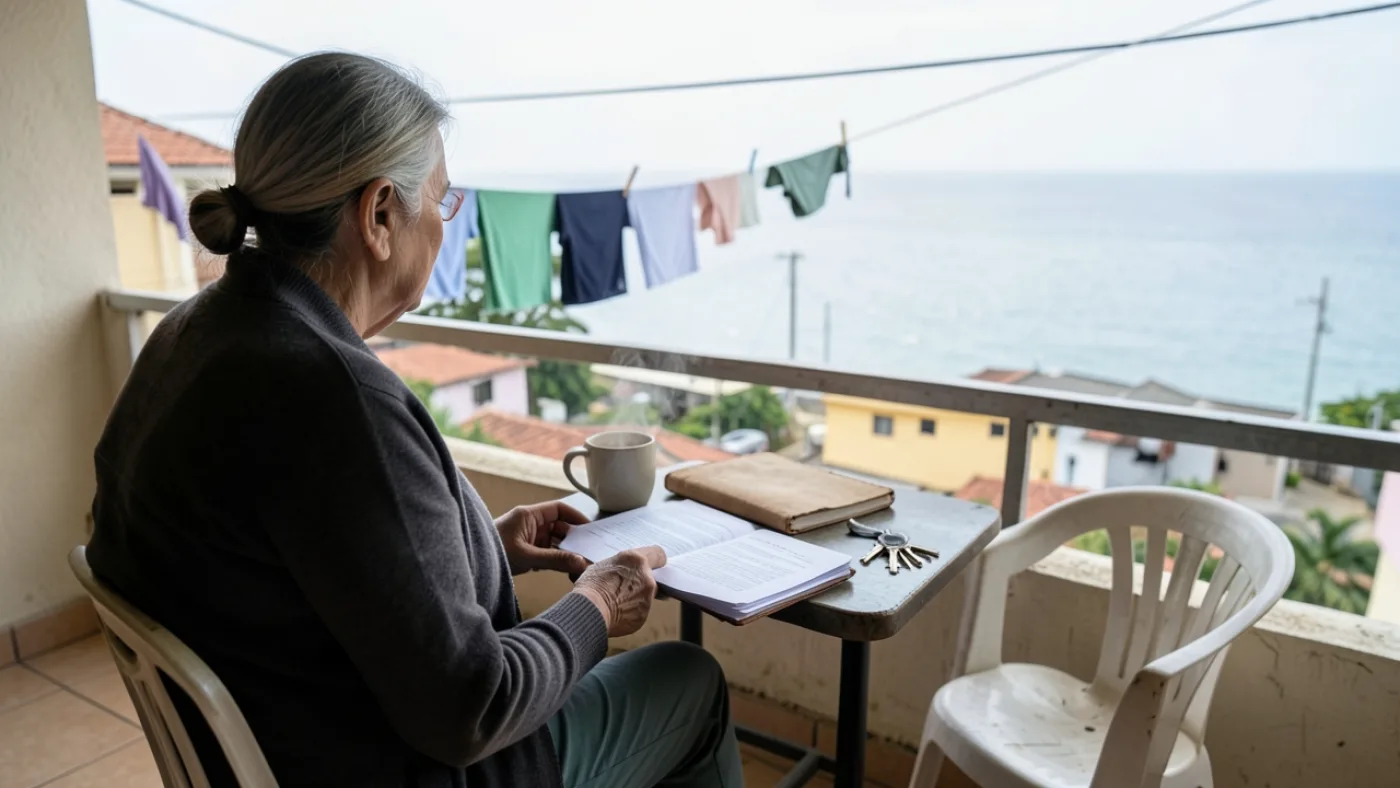

You are a US citizen living in Brazil. Your marriage has broken down irreparably. Perhaps you married a Brazilian spouse, or you both relocated here for work or investment. Now, you face a daunting question: If I get divorced in Brazil, will the United States recognize that divorce? The thought of being legally married in one country and divorced in another can feel overwhelming. You worry about property, remarriage, and your future legal status.
Take a deep breath. The answer is yes, a divorce obtained in Brazil can generally be recognized across the United States. This recognition relies on the principle of comity of nations, where US state courts respect foreign legal judgments that meet fundamental standards of due process and jurisdictional validity. However, this is not automatic. You must navigate a clear, multi-step process to convert your Brazilian divorce decree into a document enforceable and binding under US law.
This article provides a practical, plain-English roadmap. You will learn exactly what US courts require, how to obtain the right Brazilian documents, how to legalize and translate them, and what to file in your home state. We cover the pitfalls—like jurisdictional defects or improper service—that can derail recognition. Whether you plan to remarry, divide international assets, or simply ensure legal peace of mind, you need your divorce to stand in both countries. Let’s walk through how to make that happen.
On this page
Who Can Get a Divorce in Brazil if You’re a US Citizen?
You do not need to be a Brazilian citizen to file for divorce here. Brazil’s legal system, grounded in Civil Law, grants jurisdiction to its courts based on residence or the location of the marital bond. Under Article 21 of the Civil Procedure Code (Código de Processo Civil), as published on Planalto.gov.br, a Brazilian court can process your divorce if you or your spouse have lived in Brazil, even temporarily, or if the marriage was celebrated here. For US citizens, this means that whether you hold a permanent visa or are a digital nomad on a short stay, you can likely access Brazil’s divorce mechanisms.
The key is residence—domicílio in Portuguese. If you maintain a home in Brazil and intend to stay, you have jurisdiction. If your spouse is Brazilian and lives here, that also counts. Even if both of you are US citizens who married in the US but now live in Brazil, you can divorce locally. You will need to provide basic documents: your RG (identity card, if you have a Brazilian one), CPF (taxpayer identification number), a procuração (power of attorney) if using a lawyer, and possibly your CNH (driver’s license) as additional ID. Our complete guide on Divorce in Brazil 2026: Complete Guide for Foreigners details every document you need.
However, jurisdiction is not just about convenience. For your divorce to be recognized in the US, the Brazilian court must have proper legal authority. If you only visited Brazil briefly and have no genuine residential ties, a US court might later deem the Brazilian judgment void for lack of jurisdiction. This is a critical point we’ll explore later. For now, know that establishing a clear residential link—a lease, utility bills, bank accounts—strengthens your case both here and abroad.
What Are the Different Types of Divorce in Brazil, and Which One Works Best for US Recognition?
Brazil offers two main paths: extrajudicial divorce (divórcio extrajudicial) and judicial divorce (divórcio judicial). Your choice affects speed, cost, and sometimes how smoothly the US recognizes the decree. The right path depends on whether you and your spouse agree and whether you have minor children.
Extrajudicial Divorce (Divórcio em Cartório)
This is the simplest and fastest option. You and your spouse go to a cartório (notary office) together. In plain English, a cartório is not just a notary—it is a civil registry with legal powers to formalize acts. For an extrajudicial divorce, you must meet three conditions: (1) mutual consent on all issues, (2) no minor or incapacitated children, and (3) both parties represented by the same lawyer, as required by Brazilian law. The cost is typically around R$ 3,500, including cartório fees and lawyer charges. The process can conclude in as little as 30 days.
For US recognition, an extrajudicial divorce decree is comity-friendly because it reflects a consensual agreement. However, ensure the lawyer drafts the settlement clearly, addressing property division and any support obligations. The cartório will issue a escritura pública de divórcio (public divorce deed), which then must be registered at the cartório where your marriage was originally recorded.
Judicial Divorce (Divórcio Judicial)
If you disagree on any term—custody, asset split, alimony—or if you have minor children, you must go to court. A judicial divorce involves filing a lawsuit before a Vara de Família (Family Court) judge. Attorney fees and court costs range widely. A consensual judicial divorce, where you agree on the divorce but need court approval for child-related matters, might cost around R$ 12,000. A contested divorce, where a judge decides disputed issues, can escalate to R$ 15,000 to R$ 20,000 or more, depending on complexity. Our Family Law Brazil Foreigners 2026 guide explains these phases in detail.
A judicial divorce decree, called a sentença de divórcio, holds the full authority of a Brazilian court. US courts generally respect judicial decrees, provided due process was observed. The key is that the Brazilian judgment is final and not subject to appeal. Ensure your lawyer registers the sentença at the civil registry, adding an averbação (annotation) to your marriage certificate. This annotated certificate is the golden document for US recognition.
Brazil also has a Divórcio Consensual (consensual divorce) and Divórcio Litigioso (contested divorce), but these are subcategories of the judicial path. The primary reference for these processes is Law No. 6,515/1977, updated by Constitutional Amendment No. 66/2010, which simplified divorce. You can read more on the official legislation at Planalto.gov.br.
How Is Property Divided in a Brazilian Divorce, and What Does It Mean for US Assets?
Property division in Brazil depends on the marital regime (regime de bens) chosen at marriage. If you married in Brazil, you selected one of several regimes: comunhão parcial de bens (partial property community, the default), which divides assets acquired after the marriage; comunhão universal de bens (universal community, sharing all assets); or separação de bens (separation of property). If you married abroad, that country’s regime generally applies but may need homologation in Brazil.
For a US citizen, the Brazilian divorce decree will specify how to split property located in Brazil. But what about your US bank accounts, your Texas home, or your 401(k)? The Brazilian court can address these but often defers to the jurisdiction where the asset sits. To ensure your divorce holds up in the US, your decree should clearly delineate worldwide asset division. You might need a separate legal action in the US to enforce property terms, especially if your spouse contests them.
Consider a real example: you inherit a beachfront apartment in Florianópolis worth R$ 2,000,000. Under a universal community regime, your spouse might be entitled to half. In a contested divorce, legal fees could run R$ 50,000 or higher if the case involves expert valuations and appeals. For US recognition, the court will look at whether the Brazilian division aligns with US public policy. Typically, fair and negotiated settlements pass muster.
What Are the Requirements for US Courts to Recognize My Brazilian Divorce?
US recognition of a foreign divorce decree is not governed by federal law but by individual state statutes and common law. However, all states apply the principle of comity of nations, which encourages respecting foreign judgments if they meet certain standards. For your Brazilian divorce to be recognized, a US court will ask three core questions:
- Did the Brazilian court have proper jurisdiction? The court must have had legitimate authority to hear your case. Usually, this means at least one spouse lived in Brazil at the time of filing. A US state court will examine whether the Brazilian court’s jurisdiction aligns with its own jurisdictional rules.
- Was due process respected? The respondent (the non-filing spouse) must have been properly notified and given an opportunity to participate. In Brazil, this is called citação (service of process). A Brazilian court’s compliance with its own service rules is strong evidence, but if a US court finds the notice insufficient (e.g., a publication notice that a spouse never saw), recognition may be denied.
- Is the divorce valid under Brazilian law and not contrary to US public policy? This means the divorce is final, not fraudulent, and doesn’t violate fundamental US notions of fairness. For example, a divorce obtained by coercion or without a legal basis would be rejected.
The Brazilian Superior Court of Justice (STJ) frequently rules on the validity of domestic divorces, but when it comes to foreign recognition, you need to comply with both Brazilian finality and US procedural norms. A 2025 STJ decision reaffirmed that a foreign divorce is only effective in Brazil after homologation—a parallel process to what you face in the US. This underscores the importance of mutual recognition protocols.
What Is the Step-by-Step Process to Get a Brazilian Divorce Recognized in the United States?
Once your Brazilian divorce is final, you must domesticate the foreign judgment in your US state of residence. Here’s a practical, step-by-step guide:

Step 1: Obtain the Annotated Marriage Certificate
Your Brazilian lawyer will ensure the divorce decree is registered at the Cartório de Registro Civil where the marriage was recorded. This results in a Certidão de Casamento com Averbação de Divórcio (Marriage Certificate with Divorce Annotation). This document proves you are divorced under Brazilian law. The registration fee is modest—around R$ 500.
Step 2: Apostille the Document (Apostila de Haia)
Since Brazil joined the Hague Apostille Convention in 2016, you no longer need embassy legalization. Take the annotated marriage certificate to a cartório authorized to issue an Apostila de Haia. This stamp certifies the document’s authenticity for international use. The cost is typically R$ 200 to R$ 500 per document. Check with the Brazilian Ministry of Foreign Affairs for current procedures.
Step 3: Obtain a Sworn Translation
Hire a Tradutor Público Juramentado (Sworn Translator) registered with the Junta Comercial (Commercial Registry) in Brazil to translate the entire document into English. Expect to pay R$ 1,500 to R$ 2,500 depending on length and urgency. The translation must be certificate-complete and sworn.
Step 4: File for Recognition in a US State Court
Retain a US family law attorney in the state where you reside. They will file a petition for registration or domestication of the foreign judgment. You will submit the apostilled, translated decree along with a certified copy of the Brazilian divorce record. Some states treat this as a standalone action; others integrate it into an existing divorce case if one was filed there. Legal fees in the US range from R$ 10,000 to R$ 25,000 equivalent, depending on state complexity.
Step 5: Obtain a US Court Order Recognizing the Divorce
Once the US judge approves, you receive a domestic order that declares the Brazilian divorce recognized. This order becomes proof you can use for remarriage, tax filings, and property transfers in the US.
Comparison: Recognition Processes Across Key US States
The table below outlines how different US states handle the domestication of a Brazilian divorce decree, giving you a snapshot of costs and procedural expectations.
| US State | Recognition Approach | Typical Filing Requirement | Estimated US Legal Fees |
|---|---|---|---|
| California | Straightforward; often uses petition for recognition under CCP 1716 | Exemplified record from Brazil | R$ 12,000 – R$ 20,000 |
| New York | Treats as foreign judgment under CPLR 5302; simpler with consensual decrees | Motion for summary judgment or special proceeding | R$ 10,000 – R$ 18,000 |
| Florida | Allows domestication via registration under Rule 1.650 | Registration of foreign decree | R$ 8,000 – R$ 15,000 |
| Texas | Valid if no fraud and jurisdiction was proper; may require testimonial evidence | Suit to domesticate foreign judgment | R$ 15,000 – R$ 25,000 |
| Illinois | Recognizes comity but scrutinizes due process carefully | Petition for enforcement | R$ 15,000 – R$ 22,000 |
Which US States Have the Most Straightforward Recognition Processes?
While all states recognize foreign divorces under comity, some have more streamlined procedures. Florida, for example, allows you to register a foreign divorce decree directly with the court without a full-blown lawsuit, provided it meets validation standards. California and New York, with large immigrant populations, have well-established case law that simplifies recognition for consensual, extrajudicial divorces. Texas and Illinois tend to require more formal proof, including testimony or extensive documentation of Brazilian proceedings. If you have flexibility in where you re-establish residency, these factors can influence your legal strategy. Our Divorce in Brazil for Expats 2026 guide discusses residency considerations further.
When Might US Recognition of a Brazilian Divorce Be Denied?
Even a well-prepared Brazilian divorce can face challenges. The most common grounds for denial include:
- Jurisdiction defects: If the Brazilian court lacked jurisdiction under its own law or the US state’s view of international norms. For instance, if you filed in Brazil solely because you were on vacation, a US court might rule the judgment void.
- Failure of due process: Improper service of process (citação) is a major red flag. If your spouse was served by publication without diligent attempts to locate them, a US court may refuse to recognize the decree.
- Procurement by fraud: If you misrepresented facts to the Brazilian court—like concealing assets or lying about residence—the divorce may be set aside.
- Violation of US public policy: This is rare in divorce cases but can arise if the Brazilian court’s decision clashes with fundamental American principles, such as in child custody arrangements that ignore child welfare norms.
A 2024 STJ decision emphasized that foreign judgments must not offend Brazilian sovereignty; conversely, US courts apply the same scrutiny. To avoid these pitfalls, ensure your Brazilian attorney meticulously documents every procedural step and that service of process complies with both Brazilian law and the Brazilian consular regulations for international cooperation.
What Changed in 2026 for Recognizing a Brazilian Divorce in the US?
As of 2026, the core framework for recognition remains stable. The Hague Apostille Convention continues to simplify the legalization of divorce certificates, eliminating the need for embassy stamps. However, Brazilian courts are increasingly digitizing processes through the Processo Judicial Eletrônico (PJe) system, which could speed up document issuance. The Brazilian National Council of Justice (CNJ) has proposed rules to standardize civil registration procedures, which may eventually reduce discrepancies between cartórios. In the US, some states like California are considering legislation to codify recognition procedures for Hague Convention documents, which would make the process even smoother. For now, the key change is operational: you can now request many certified records online through Gov.br, reducing the need for in-person visits.
Step-by-Step Practical Guide: Ensuring Your Brazilian Divorce Holds Up in the US
Follow this practical checklist to maximize the likelihood of seamless US recognition. We’ve consolidated the steps for your Brazilian divorce and its subsequent domestication.
Step 1: Gather Essential Documents
- Your ID documents: Passport, CPF, RG (if you have a Brazilian identity card), CNH, and proof of residence in Brazil (utility bills, rental contract).
- Marriage certificate: The original Certidão de Casamento. If you married abroad, it must already be registered or homologated in Brazil—see our Foreign Marriage Recognition Brazil 2026 page.
- Pre-nuptial agreement: If any, to clarify property regime.
- Financial records: Bank statements, property deeds, investment accounts. This is critical for property division negotiations and later US enforcement.
Step 2: Determine Jurisdiction and Choose the Divorce Path
With a Brazilian lawyer, confirm that the Brazilian court has jurisdiction—usually via your domicile. Decide whether you qualify for extrajudicial divorce (consensual, no minor children) or need a judicial divorce. In 2026, an extrajudicial divorce at a cartório typically costs R$ 3,500 to R$ 5,000 total, while judicial cases start at R$ 12,000.
Step 3: Ensure Proper Service of Process
In a judicial divorce, the respondent must be served via citação. If your spouse is in the US, your lawyer will use letters rogatory (carta rogatória) or consular service, which can add R$ 2,000 to R$ 5,000 and several months. Proper service is essential for US recognition—a lawyer can verify this via the Polícia Federal for local service, or international cooperation under the Hague Service Convention.
Step 4: Finalize the Divorce and Annotate the Marriage Certificate
After the judge’s ruling or the cartório’s deed, ensure the divorce is annotated at the civil registry. The Certidão de Casamento com Averbação de Divórcio is your primary evidence. Keep multiple certified copies; they cost about R$ 50 each.

Step 5: Apostille and Translate
Get the apostille (around R$ 300) and hire a sworn translator (around R$ 2,000) for the English version. Some cartórios offer bundled services—ask your lawyer to recommend a reliable professional.
Step 6: Domesticate in the US
Enlist a US attorney to file for recognition. Provide them with the apostilled, translated decree plus the annotated certificate. In some states, you can do this without a full court hearing if uncontested. The process can take 2–6 months and cost R$ 10,000 to R$ 25,000 in legal fees, depending on the state.
Practical Checklist to Guarantee US Recognition:
- [ ] Brazilian court or cartório had jurisdiction based on your residence.
- [ ] Spouse was properly served – verify citação protocol.
- [ ] Divorce decree is final and registered in a cartório.
- [ ] Marriage certificate shows the divorce annotation (averbação).
- [ ] Document received an apostille (Apostila de Haia).
- [ ] Sworn translation into English is complete and accurate.
- [ ] US petition for recognition is filed with all required exhibits.
- [ ] No allegations of fraud or public policy violation exist.
- [ ] Attorney retains proof of service and finality for potential appeals.
Frequently Asked Questions About Brazilian Divorce and US Recognition
Can I get divorced in Brazil if I was married in the United States?
Yes. Brazil allows divorce for any marriage, regardless of where it was celebrated, provided you meet jurisdictional requirements (usually residence). However, your US marriage certificate must be registered in a Brazilian cartório first—a process called registro de casamento. This requires a sworn translation and apostille from the US side, costing roughly R$ 1,500 to R$ 3,000.
How long does a Brazilian divorce take before I can use it in the US?
An extrajudicial divorce can be finished in 30–60 days. A consensual judicial divorce might take 3–6 months. Contested cases can drag on for a year or more. After the decree is final, the US recognition process adds another 2–6 months. Plan for a total timeline of 4 months to 1.5 years from start to U.S. recognition.
Do I need a lawyer in both Brazil and the United States?
Yes. In Brazil, all legal acts before courts or cartórios require an attorney (advogado) registered with the Ordem dos Advogados do Brasil (OAB). In the US, while you can sometimes file for recognition yourself, a state family lawyer ensures compliance with local forms and prevents errors that could void recognition.
What if my spouse refuses to sign or participate in the divorce?
You can file a unilateral judicial divorce. The Brazilian judge will proceed after proper service of process. The court can grant the divorce even if your spouse defaults, as long as jurisdiction is valid. However, a contested or default divorce may face more scrutiny from a U.S. court, so meticulous documentation of service is crucial.
Will a Brazilian divorce affect my US tax status or immigration?
Your US tax filing status will change to single or head of household once the divorce is final. For IRS purposes, you can use the foreign divorce effective from the date of the Brazilian decree, provided it’s recognized. For immigration, if your visa depends on a marriage to a Brazilian spouse, divorce may trigger status changes—consult an immigration attorney immediately.
How much does the entire process cost in 2026?
A basic extrajudicial divorce with US recognition typically totals R$ 6,000 to R$ 10,000. A judicial divorce in Brazil plus recognition may cost R$ 20,000 to R$ 50,000, including legal fees in both countries, apostilles, and translations. These are estimates based on uncomplicated cases; contested asset divisions elevate costs.
Ready to Secure Your Brazilian Divorce for US Recognition? Get Expert Help Now
Navigating a binational divorce is a legal and emotional marathon, but you don’t have to run it alone. At Ribeiro Cavalcante Advocacia, our bilingual OAB-registered lawyers understand both Brazilian Civil Law and the practical demands of US recognition. We handle everything from the initial citação to the apostilled decree, ensuring your divorce will hold up in your home state. Contact us today for a clear, confidential consultation.
Talk to a specialist lawyer now
Talk to a Lawyer on WhatsApp