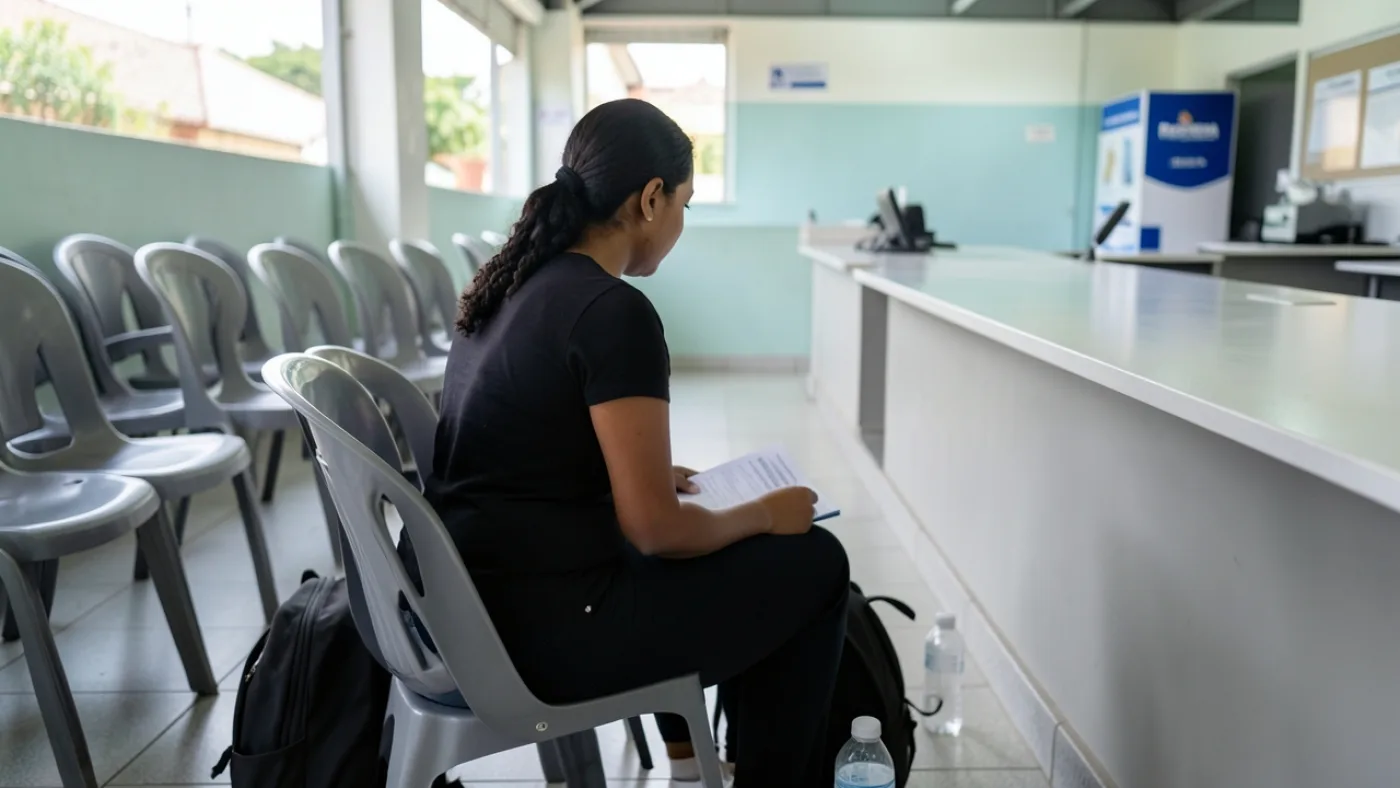

We’ll cover the complete litigation path for foreigners, expats, and international families living in Brazil. If you’ve already exhausted administrative remedies, a lawsuit is often the fastest and most effective way to force your plano de saúde to cover what your doctor prescribed. The success rate for urgent medical needs is exceptionally high — especially when you ask for a tutela antecipada de urgência (emergency injunction).
On this page
When Can You Sue a Health Insurance Company in Brazil?
You can sue when your health plan unlawfully denies coverage for a treatment, surgery, exam, or medication that should be covered under Brazilian law. The key is that you must have exhausted administrative remedies first. This means you’ve already:
- Filed a formal complaint with the health plan’s ouvidoria (ombudsman) and received a final negative answer — or waited past the legal deadline for a response.
- Registered a complaint with the ANS through their online platform or by phone. While the ANS can mediate, it cannot force the insurer to pay.
If you’ve done both and the denial persists, you have the right to go to court. In Brazil, the relationship between a patient and a private health insurance company is treated as a consumer relationship. This triggers the Consumer Defense Code (Código de Defesa do Consumidor — CDC), which gives you powerful protections: contract clauses that are unclear or abusive are interpreted in your favor, and the burden of proof often shifts to the insurance company. For a deeper look at your rights before litigation, see our complete guide on health plan denial rights in Brazil.
Which Court Should You Use? Juizado Especial Cível vs. Vara Cível
Brazil has two main courts for suing a health insurer, and your choice depends on the value of your claim and the complexity of your case.
| Feature | Juizado Especial Cível (Small Claims) | Vara Cível (Common Civil Court) |
|---|---|---|
| Claim limit | Up to 40 minimum wages (R$ 60,480 in 2026) | No limit |
| Lawyer required? | Not required for claims up to 20 min. wages (R$ 30,240); mandatory for claims between 20 and 40 min. wages | Mandatory |
| Court fees | Free (no filing fees, no risk of paying opponent’s legal fees in the first instance) | Usually 1% to 2% of the claim value |
| Procedure | Simpler, faster, less formal | Full procedural rules, longer timeline |
| Expert medical evidence | Limited; often decided without a formal medical expert | Full medical expert examination (perícia médica) available |
| Appeals | Limited; a panel of judges reviews the case quickly | Full appeals to the state court and higher courts |
For most foreigners suing over a denied treatment or medication, the Juizado Especial Cível is the right starting point — especially if your immediate financial loss is under R$ 60,480. The process is free, and you can even file the initial petition yourself if the claim is below R$ 30,240. However, having a lawyer who specializes in health law dramatically increases your chances of getting a quick emergency injunction. The legal arguments that persuade a judge are very specific, and a seasoned attorney knows exactly how to present them.
If your case involves a complex medical condition that requires detailed expert analysis, or if the value of the denied treatment exceeds 40 minimum wages, the Vara Cível is the proper forum. Here, a lawyer is mandatory from the start, and you will pay court fees, but you gain the full arsenal of civil procedure.
How to Get an Emergency Court Order for Treatment (Tutela Antecipada de Urgência)
This is the most powerful tool in Brazilian health litigation. Under Article 300 of the Civil Procedure Code (CPC), a judge can order the health insurance company to provide the treatment immediately, before the lawsuit is fully decided. This is called tutela antecipada de urgência (emergency preliminary injunction).
To get this order, you need to prove two things:
- Probability of the right (fumus boni iuris): Show that the denial is likely illegal. This is usually done with a clear medical prescription, a detailed medical report explaining why the treatment is essential, and the denial letter from the insurer.
- Danger of delay (periculum in mora): Prove that waiting for the full trial would cause serious harm to your health. This is the key argument for cancer treatments, surgeries, or high-cost medications like Signifor Lp or Empliciti.
In urgent cases — for example, a cancer patient who needs to start a drug immediately — judges routinely grant these injunctions within 24 to 72 hours. Once granted, the health plan must comply immediately, usually under penalty of a daily fine (astreintes) that can range from R$ 500 to R$ 5,000 per day of non-compliance. This mechanism is why suing is often faster than waiting for administrative appeals.
What Documents Do You Need to Sue?
Gathering the right documents before you file is critical. Missing paperwork can delay your emergency injunction. Here’s exactly what you need:
- Health insurance policy / contract (contrato do plano de saúde): The full document that shows your coverage, exclusions, and the start date.
- Denial letter (carta de negativa): The written refusal from the insurer, stating the reason for denial. If they refused verbally, demand it in writing — they are legally required to provide it.
- Medical prescription (receita médica): The doctor’s prescription with the exact treatment, medication, or procedure.
- Detailed medical report (relatório médico): A letter from your doctor explaining your diagnosis, why this specific treatment is necessary, the risks of not receiving it, and why alternatives are not suitable. This is the heart of your case.
- Medical records (prontuário médico): Your clinical history, exams, and any evidence of your condition.
- Proof of administrative exhaustion: Copies of your complaints to the ombudsman and the ANS, with protocol numbers and responses.
- Personal identification: For foreigners, a valid passport and your CPF (Cadastro de Pessoas Físicas) are essential. The CPF is your Brazilian tax ID and is required to file any lawsuit. If you don’t have one yet, see our guide on how to get a CPF as a foreigner in Brazil. You’ll also need proof of address (comprovante de residência).
- Receipts of out-of-pocket expenses (if any): If you already paid for the treatment, keep all invoices to claim reimbursement.
What Damages Can You Claim? Moral and Material Compensation
When you sue a health plan, you can ask for two types of compensation:
- Material damages (dano material): Reimbursement of every real you spent out of pocket because of the denial. This includes the cost of the medication, surgery, exams, and even travel expenses if you had to go to another city for treatment. You can also claim the return of premiums paid during the period the insurer refused coverage, with interest of 1% per month and monetary correction.
- Moral damages (dano moral): Compensation for the emotional distress, anxiety, and suffering caused by the unlawful denial. Brazilian courts regularly award moral damages in health insurance cases. The typical range is R$ 3,000 to R$ 10,000, but in severe cases — such as denial of cancer treatment that put the patient’s life at risk — awards can reach R$ 20,000 or more.
These amounts may seem modest compared to U.S. standards, but they are significant in Brazil and serve as a strong deterrent. Judges also consider the insurer’s conduct: repeated refusals or bad faith can increase the award.
How Much Does It Cost to Sue a Health Plan in Brazil?
Suing in Brazil is remarkably affordable compared to many countries. The cost structure breaks down like this:

- Juizado Especial Cível (up to 20 minimum wages): Totally free. You pay no court fees, and even if you lose, you won’t have to pay the insurance company’s legal fees in the first instance. If you hire a lawyer, you’ll negotiate their fee privately — many work on a contingency basis (a percentage of the final award, usually 20% to 30%).
- Juizado Especial Cível (20 to 40 minimum wages): Still free of court fees, but you must have a lawyer. You’ll pay your own attorney.
- Vara Cível: Court fees are typically 1% to 2% of the claim value. For a R$ 100,000 claim, you’d pay around R$ 1,500 to R$ 2,000. Additionally, if you lose, you may be ordered to pay a portion of the other side’s legal fees (honorários de sucumbência), usually 10% to 20% of the claim value. However, in health insurance cases, patients rarely lose when the denial is clearly unlawful.
Overall, the financial risk of suing is low. The real cost is time, but the emergency injunction often solves the immediate health need within days.
What Is the Typical Timeline for a Health Insurance Lawsuit?
Timelines in Brazilian courts vary by state and court congestion, but here’s what you can realistically expect:
- Emergency injunction (tutela antecipada): 24 to 72 hours in truly urgent cases. The judge may ask for additional documents, which can add a few days, but the decision is fast.
- Full trial in Juizado Especial: 6 to 12 months from filing to final judgment. Appeals are rare and decided quickly.
- Full trial in Vara Cível: 12 to 18 months for the first-instance decision. Appeals can add another 1 to 2 years, but the initial injunction remains in effect throughout.
Once the emergency order is granted, the insurance company must comply immediately. If they don’t, the daily fines kick in, and you can even request the court to seize assets. In practice, most insurers comply within days of the order.
What Changed in 2026 for Health Insurance Litigation?
No major new legislation on health plans was passed in 2026, but the legal landscape continues to be shaped by the courts — especially the Superior Tribunal de Justiça (STJ). Here are the key points that matter for your lawsuit:
- Rol da ANS remains taxativo, but with exceptions: The STJ’s landmark decision (Tema 990) established that the ANS list of mandatory procedures is exhaustive. However, courts consistently grant coverage for treatments not on the list when the patient proves medical necessity, the treatment is recommended by the prescribing physician, and there is scientific evidence of its effectiveness. This is exactly the situation with high-cost drugs like Signifor Lp or Empliciti. In 2026, judges continue to apply this exception broadly, protecting patients.
- Consumer protection reinforced: The STJ’s Súmula 608 confirms that the CDC applies to health insurance contracts. This means the insurer bears the burden of proving that the denial was justified. For you, it means a lighter evidentiary burden.
- Faster injunctions: The pandemic-era digitalization of courts is now permanent. Many judges issue emergency orders electronically within hours, especially in the state courts of São Paulo and Rio de Janeiro.
- Higher moral damages: Recent decisions show a trend toward slightly higher moral damage awards in health cases, recognizing the psychological impact of coverage denials. Awards of R$ 10,000 are now common, and some exceed R$ 15,000.
You can read the full text of Lei nº 9.656/1998 (the Health Plans Law) on the official government portal. For the STJ’s consumer protection stance, see Súmula 608. And for the ANS’s own guidance on coverage denials, visit the ANS website.
Step-by-Step Guide: From Denial to Court Order
Here’s the practical roadmap you’ll follow. If you’re a foreigner, note that Brazil operates under civil law, not common law — judges rely heavily on written statutes and codes, not just precedent. Understanding this helps you see why a well-drafted petition is so important. For a broader explanation, read our comparison of civil law vs common law in Brazil.
Step 1: Exhaust Administrative Remedies (If You Haven’t Already)
Before filing a lawsuit, you must show the judge you tried to solve the problem out of court. If you haven’t done this yet, do it now:
- Call your health plan’s ombudsman and open a formal complaint. They have 5 business days to respond. Get the protocol number.
- If the answer is negative or no answer comes within 5 business days, file a complaint with the ANS via their website or app. The ANS has 10 business days to mediate. Again, save the protocol.
If the denial persists after both steps, you’re ready to sue.
Step 2: Gather All Documents
Collect the documents listed in the section above. Make digital copies. The medical report is the most important: ask your doctor to be explicit about the urgency and the consequences of not receiving the treatment.
Step 3: Consult a Lawyer Specialized in Health Law
Even if you’re filing in the Juizado Especial and the claim is under R$ 30,240, a lawyer dramatically improves your chances. A specialist will know exactly how to frame the tutela de urgência, cite the right legal provisions (CDC, Lei 9.656/98, STJ precedents), and anticipate the insurer’s defenses. Many law firms, including ours, offer initial consultations at no cost and work on contingency.
Step 4: File the Lawsuit
Your lawyer will prepare the initial petition (petição inicial). It will include:
- The facts of your case.
- The legal grounds (CDC, health plan law, STJ decisions).
- A request for tutela antecipada de urgência to force immediate coverage.
- A request for moral and material damages.
- All supporting documents.
The petition is filed electronically. In the Juizado Especial, it can be done quickly; in the Vara Cível, the system is the same but may require additional formalities.
Step 5: The Judge Decides the Emergency Injunction
Within 24 to 72 hours (sometimes the same day), the judge will review the petition and either grant or deny the injunction. If granted, the court order is sent to the health plan, and they must comply immediately. If they don’t, the judge can impose daily fines and even order the blocking of funds.
Step 6: The Lawsuit Continues
After the injunction, the case proceeds to the full trial. The health plan will present its defense. There may be a conciliation hearing (audiência de conciliação). Most cases settle before trial because the injunction puts immense pressure on the insurer. If not, the judge will issue a final judgment, which can be appealed.

Frequently Asked Questions About Suing a Health Plan in Brazil
Can a foreigner sue a Brazilian health insurance company?
Yes. Any person, regardless of nationality, can sue in Brazilian courts if they have a legal interest. You will need a CPF (Brazilian tax ID) to file the lawsuit. If you don’t have one, you can obtain it relatively quickly. Check our guide on how to get a CPF as a foreigner. Your residency status does not affect your right to sue a private health insurer.
Do I need a lawyer to sue in the Juizado Especial?
For claims up to 20 minimum wages (R$ 30,240 in 2026), you can represent yourself. However, health insurance cases involve complex legal arguments and the need for a fast emergency injunction. A lawyer who knows the system will present the case in a way that maximizes your chances of getting the injunction within 24 hours. For claims between 20 and 40 minimum wages, a lawyer is mandatory.
How long does it take to get a court order for treatment?
In urgent cases, the tutela antecipada de urgência is typically decided within 24 to 72 hours. Some judges rule the same day. Once the order is issued, the health plan must comply immediately. If they delay, daily fines are applied, and you can request enforcement measures.
What if the insurance company ignores the court order?
This is rare, but if it happens, your lawyer can ask the judge to increase the daily fine (astreintes) or order the seizure of assets (blocking of bank accounts) to compel compliance. In extreme cases, the court can even order the police to enforce the order. The system has teeth, and insurers usually comply quickly.
What is the success rate for health insurance lawsuits in Brazil?
Very high. When the medical need is clear and the treatment is prescribed by a specialist, courts grant emergency injunctions in the vast majority of cases. Studies by consumer protection agencies show that approximately 80% to 90% of health plan lawsuits result in a favorable outcome for the patient, especially when the denial violates the CDC or the Health Plans Law.
Can I sue for a medication that is not on the ANS list?
Yes. Although the ANS list is exhaustive, courts routinely order coverage for off-list medications when the patient proves medical necessity, the drug is registered with ANVISA (Brazil’s health regulatory agency), and there is scientific evidence of its efficacy. This is exactly how courts handle drugs like Signifor Lp for Cushing’s disease or Empliciti for multiple myeloma. The key is a strong medical report.
Will suing affect my immigration status or visa?
No. Filing a consumer lawsuit against a private company has no impact on your visa, residency, or immigration status in Brazil. It is a civil matter completely separate from immigration authorities.
Sue Your Health Insurance Company in Brazil: Take the Next Step with Confidence
Navigating Brazilian law as a foreigner can be daunting, especially when your health is on the line. But you don’t have to face the bureaucracy alone. The legal tools are on your side: emergency injunctions that work in days, consumer protection laws that shift the burden to the insurer, and courts that consistently rule in favor of patients who need urgent care. If you’ve exhausted administrative remedies and still face a denial, litigation is not a last resort — it’s often the fastest path to treatment.
Our bilingual legal team at Ribeiro Cavalcante Advocacia specializes in health insurance litigation for expats, investors, and international families. We know how to build a petition that gets a tutela de urgência granted quickly, we handle all communication with the courts, and we fight to recover every real you spent out of pocket. Don’t let a denial put your health at risk. Reach out today for a no-obligation consultation.
Talk to a specialist lawyer now
Talk to a Lawyer on WhatsApp