
On this page
Option A: Buying Property in São Paulo Capital (High-Cost Scenario)
São Paulo is Brazil’s largest real estate market, but it also carries some of the highest transaction costs. If you’re buying an apartment in neighborhoods like Pinheiros, Vila Madalena, or Itaim Bibi, here’s what you’ll pay on top of the negotiated price.
- ITBI (Property Transfer Tax): São Paulo city charges a flat 3% on the property’s market value or the municipal assessment value (valor venal), whichever is higher. For a R$ 500,000 apartment, that’s R$ 15,000. There is no standard discount for first-time buyers in the capital, though some specific affordable housing programs may offer reductions.
- Cartório de Notas (Notary Office – Escritura Pública): You’ll need a public deed if you’re paying cash or using a mortgage. The fee follows a state-regulated table. For a R$ 500,000 property in São Paulo state, the notary fee is around R$ 3,750 to R$ 4,500, depending on the complexity of the deed.
- Cartório de Registro de Imóveis (Real Estate Registry): This is where your ownership becomes official. The registry fee in the capital is roughly 1.5% of the property value, so about R$ 7,500 for the same apartment. Some registry offices charge extra for expedited service (urgência), which can add 50% to 100% more.
- Certidões obrigatórias (Mandatory Certificates): Before closing, you must pull several certificates to ensure the property is free of debts and lawsuits. These cost between R$ 400 and R$ 800 total, depending on the number of certificates and the issuing entities (federal, state, labor courts).
- Sworn Translation: As a foreigner, any document not in Portuguese — your passport, proof of address abroad, or marriage certificate — must be translated by a tradutor juramentado. Budget around R$ 80 to R$ 150 per page.
Total additional costs: For a R$ 500,000 property in São Paulo capital, expect to pay roughly R$ 27,000 to R$ 30,000 — that’s 5.4% to 6% of the purchase price. If you need urgent registration, add another R$ 3,000 to R$ 7,000.
Option B: Buying Property in Interior Cities (Lower-Cost Scenario)
Not all of Brazil is São Paulo. Many mid-sized and smaller cities offer significantly lower transaction costs, which can make a real difference in your budget. Cities like Campinas, Ribeirão Preto, São José dos Campos, and Curitiba have competitive real estate markets but lighter tax and fee burdens.
- ITBI: While São Paulo capital sticks to 3%, many interior municipalities charge 2% or even 2.5%. For example, Campinas (SP) has a 2.7% rate, and Curitiba (PR) charges 2.5%. On a R$ 500,000 property, the difference between 3% and 2.5% saves you R$ 2,500 immediately.
- Cartório fees: Notary and registry fees are also set by state tables, but the base values are lower in less expensive regions. In the interior of São Paulo state, the notary fee for a R$ 500,000 deed might be R$ 3,000 to R$ 3,500, and the registry fee around 1.2% to 1.4%, or R$ 6,000 to R$ 7,000.
- Certidões: The cost of certificates is similar nationwide, but some local registries offer bundled digital certificates at lower prices. Still, budget R$ 400 to R$ 600.
- Additional savings: Some prefeituras (city halls) run seasonal programs where they waive or reduce ITBI for first-time buyers or for properties under a certain value. These “Refis” or incentive programs are more common in smaller cities trying to attract residents.
Total additional costs: For the same R$ 500,000 property in a typical interior city, your total transaction costs would range from R$ 21,000 to R$ 25,000 — about 4.2% to 5% of the price. That’s a saving of up to R$ 9,000 compared to São Paulo capital.
Option C: Buying Rural Land (Special Rules and Hidden Costs)
If you’re dreaming of a farm or a large plot of land in the countryside, the cost structure changes — and not always for the better. Rural property is subject to the same ITBI and cartório fees, but additional legal restrictions under Law 5,709/1971 can add time and money.
- ITBI: Rural ITBI rates are usually the same as urban rates in the same municipality (2% to 3%). However, the tax base may be the valor venal (assessed value for rural land), which is often lower than the market price. That can reduce your ITBI bill, but it also means the property might be undervalued for other purposes.
- Cartório fees: Rural registry fees are calculated on the same state table, but the process can be more complex if the land includes multiple matrículas (registry entries) or if the boundaries need georeferencing. Georeferencing certification (required for rural properties) costs an extra R$ 3,000 to R$ 8,000, depending on the size.
- INCRA and foreign ownership limits: Foreigners cannot freely buy rural land. You’ll need approval from INCRA (National Institute for Colonization and Agrarian Reform) if the total area exceeds a certain number of “módulos rurais” (rural modules). This process takes 60 to 90 days and requires additional certificates. If you’re buying through a Brazilian company with foreign shareholders, the restrictions still apply.
- Certidões: In addition to the usual certificates, you’ll need a Certidão de Inteiro Teor da Matrícula (full property history) and possibly environmental licenses, which can cost R$ 500 to R$ 2,000.
Total additional costs: For a R$ 500,000 rural property, expect to pay R$ 20,000 to R$ 30,000 in taxes and fees, plus the georeferencing and INCRA bureaucracy costs. The timeline also stretches to 3–6 months. If you’re considering rural land, it’s essential to understand the full legal framework for foreigners buying rural land in Brazil.
Comparison Table: Costs by Property Type and Location
| Cost Item | São Paulo Capital (Urban) | Interior City (Urban) | Rural Land |
|---|---|---|---|
| ITBI rate | 3% | 2% – 2.7% | 2% – 3% (on valor venal) |
| Notary deed (escritura) | R$ 3,750 – R$ 4,500 | R$ 3,000 – R$ 3,500 | R$ 3,000 – R$ 4,000 |
| Registry fee | ~1.5% (R$ 7,500) | ~1.2% – 1.4% (R$ 6,000 – R$ 7,000) | ~1.2% – 1.5% |
| Certificates (certidões) | R$ 400 – R$ 800 | R$ 400 – R$ 600 | R$ 600 – R$ 2,000+ |
| Georeferencing | Not required | Not required | R$ 3,000 – R$ 8,000 |
| Total for R$ 500k property | R$ 27,000 – R$ 30,000 | R$ 21,000 – R$ 25,000 | R$ 20,000 – R$ 30,000+ |
| Timeline (without urgency) | 30 – 45 days | 25 – 40 days | 60 – 180 days |
| Foreign restrictions | None (urban) | None (urban) | Yes (Law 5,709/1971) |
Which One Should You Choose? Matching Your Profile to the Costs
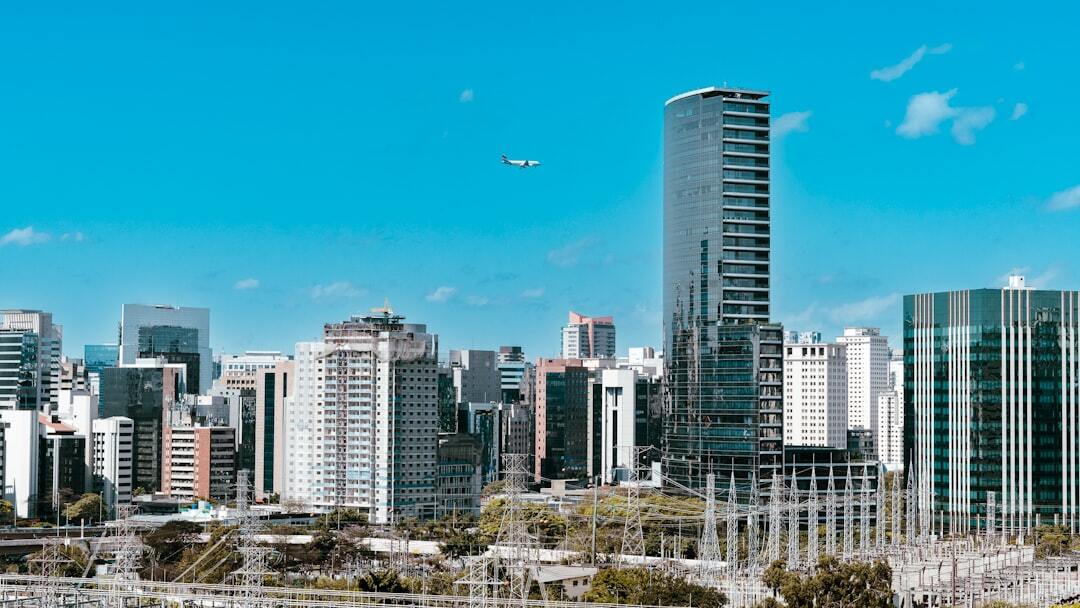
If you’re an investor looking for high liquidity and rental income in a global city, São Paulo capital’s higher transaction costs may be justified by the appreciation potential and ease of resale. The 3% ITBI is steep, but you’re buying into a market with strong demand.
If you’re a digital nomad or a family seeking a quieter, more affordable lifestyle, an interior city gives you the same legal security at a lower upfront cost. The savings of R$ 5,000 to R$ 9,000 can cover your move or furniture. Plus, many interior cities offer better quality of life and still have excellent infrastructure, as we’ve explored in our guide to the best neighborhoods for expats in Brazil.
If your dream is a farm or a large rural estate, be prepared for a longer, more complex process. The costs are not drastically lower, and the legal hurdles under Law 5,709/1971 require specialized legal help. But for the right buyer, the reward is a unique piece of Brazil.
What Changed in 2026 for Property Taxes and Costs
No sweeping federal legislation changed ITBI or cartório fees in 2026, but three practical updates matter for foreign buyers:
- Digital cartórios: Many registry offices now accept electronic signatures and digital certificates, reducing the need for in-person visits. This can shave a few days off the timeline and lower courier costs.
- ITBI base recalculation: Some municipalities, including São Paulo, have become more aggressive in reassessing the “valor venal” to match market prices. That means the 3% tax is now applied to a higher base, increasing the absolute amount you pay. Always check the latest municipal decree.
- CPF requirement tightened: The Receita Federal now requires a digital CPF for all property transactions. You can no longer use a temporary paper CPF. The process is still free online, but you must have it ready before signing any contract. Learn more about the CPF at the Receita Federal portal.
Step-by-Step Guide: Calculating and Paying Your Transaction Costs
Here’s how to plan your budget and avoid surprises when buying property in Brazil as a foreigner.
1. Obtain Your CPF First: Property taxes brazil foreigner
Without a CPF, you cannot pay ITBI or register the deed. Apply online at the Receita Federal website. If you’re abroad, do it at a Brazilian consulate. The process is free, but you’ll need a valid passport and proof of address.
2. Identify the ITBI Rate in Your Target City
Every municipality sets its own rate. Check the city hall website (prefeitura) for the “alíquota do ITBI.” In São Paulo, the rate is fixed at 3% for most transactions. In other cities, it may be 2% or 2.5%. Use the property’s market value or the municipal assessment value — whichever is higher — as the tax base.
3. Estimate Cartório Fees Using the Official State Table
Each state publishes a “tabela de emolumentos” (fee schedule) for notary and registry offices. For São Paulo state, you can consult the TJSP emolumentos page. Enter the property value to get an exact quote. For other states, search for “tabela de emolumentos [state] 2026.”
4. Order the Mandatory Certificates: Property taxes brazil foreigner
Your lawyer or a specialized despachante will pull these for you, but you should budget for them. The essential ones are:
- Certidão de Ônus Reais (from the Real Estate Registry)
- Certidão de Ações Cíveis e Criminais (state and federal courts)
- Certidão de Débitos Trabalhistas (labor court)
- Certidão de Débitos Municipais (city hall tax debts)
- Certidão de Débitos Federais (federal tax debts)
5. Pay ITBI and Collect the Guia
After signing the purchase agreement, you or the seller must obtain the ITBI payment slip (guia) from the city hall. Payment is made at any bank. Keep the receipt — you’ll need it to register the deed.
6. Sign the Escritura Pública at the Notary
With the ITBI paid, you and the seller sign the public deed at a Cartório de Notas of your choice. You can shop around different notaries in Brazil for lower fees, but the deed must be registered at the specific Cartório de Registro de Imóveis where the property is located.
7. Register the Deed at the Real Estate Registry
Submit the signed deed, ITBI receipt, and certificates to the local registry. The registration process takes 7 to 15 days without urgency. With urgent service (50%–100% extra), it can be done in 3–5 days. Once registered, you are the legal owner.

Frequently Asked Questions About Property Taxes and Costs in Brazil
Who pays the ITBI and cartório fees — buyer or seller?
There is no law in Brazil that dictates who pays these costs. It’s entirely negotiable. The market practice is that the buyer pays ITBI, notary fees, and registry fees. However, you can negotiate for the seller to cover some or all of these costs, especially in a buyer’s market. Make sure the purchase agreement clearly states who pays what.
Can I get a discount on ITBI as a first-time homebuyer?
Some cities offer ITBI exemptions or reductions for first-time buyers, but this is not universal. São Paulo capital, for example, has limited programs tied to social housing (Minha Casa Minha Vida) where ITBI may be waived for properties under R$ 100,000. In interior cities, you’re more likely to find seasonal amnesty programs. Always check with the local prefeitura.
What’s the difference between the Cartório de Notas and the Cartório de Registro de Imóveis?
The Cartório de Notas (Notary Office) drafts and authenticates the public deed (escritura pública). The Cartório de Registro de Imóveis (Real Estate Registry) records the transfer of ownership and issues the new matrícula. You pay fees to both. The notary fee covers the deed; the registry fee covers the registration and issuance of the certificate of ownership.
How much do cartório fees cost for a property in Brazil in 2026?
Cartório fees vary by state and property value. As a rule of thumb, total cartório costs (notary + registry) run between 1.5% and 2.5% of the property’s value. For a R$ 500,000 property, expect to pay between R$ 7,500 and R$ 12,500. Use the official state fee table to get an exact quote before closing.
Do I need a lawyer to handle the tax and cost calculations when buying property in Brazil?
While not legally required, a Brazilian real estate lawyer (advogado imobiliário) is strongly recommended for foreign buyers. A lawyer can verify the correct ITBI base, check for any applicable exemptions, review the cartório fee calculations, and ensure all certificates are in order. This small investment can save you from costly mistakes. For a full overview of the buying process, see our step-by-step guide for foreigners buying property in Brazil.
Ready to Buy Property in Brazil? Let’s Make Sure Your Costs Are Under Control
Transaction costs in Brazil can feel like a maze of percentages, state tables, and municipal rules. But with the right guidance, you can budget accurately and avoid last-minute surprises. Whether you’re eyeing an apartment in São Paulo, a house in the interior, or a rural retreat, our bilingual team at Ribeiro Cavalcante Advocacia is here to help you navigate every tax, fee, and legal requirement. Reach out today and take the next step with confidence.
Talk to a specialist lawyer now
Talk to a Lawyer on WhatsApp