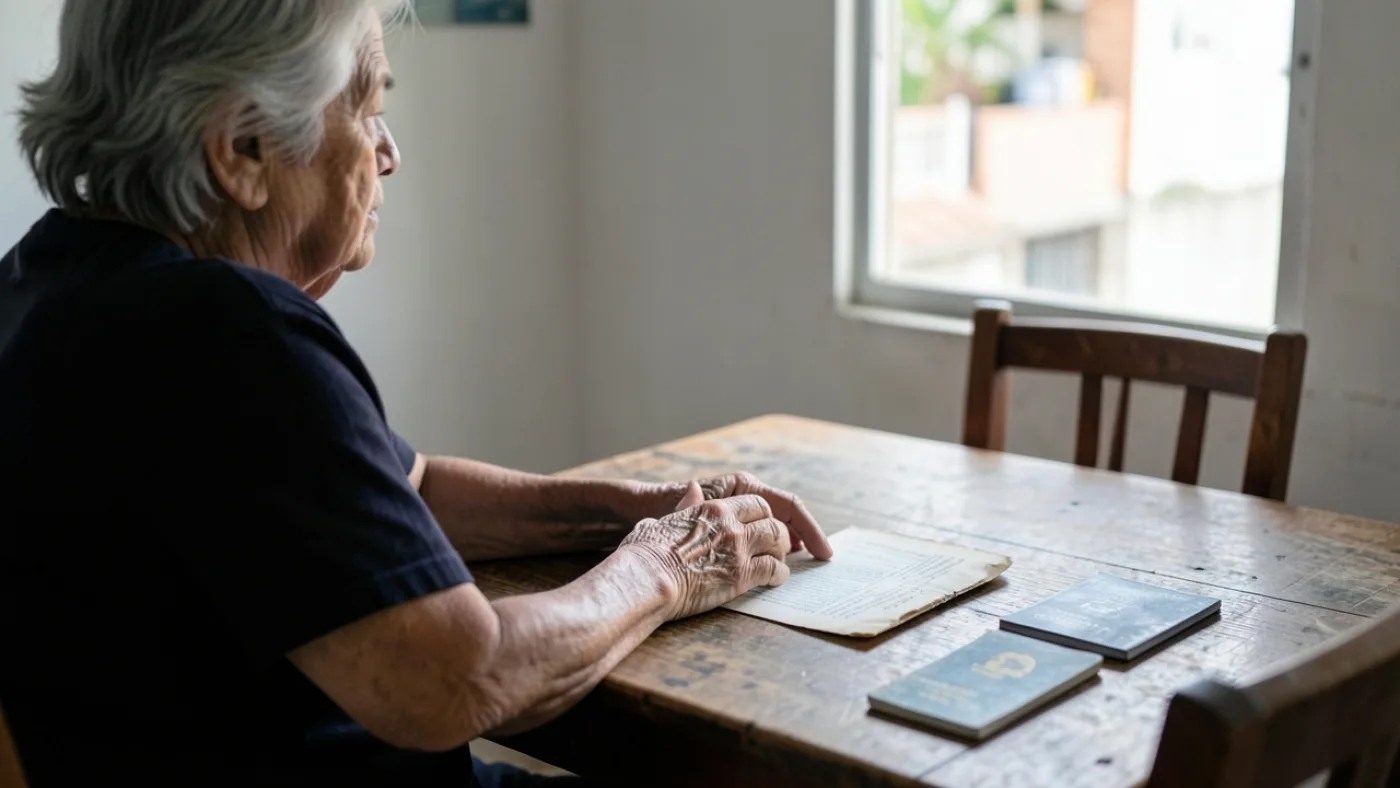
You are worried that when the time comes, the wrong person will inherit, or worse, that you will inherit nothing at all because you live abroad and hold a foreign passport. That fear is understandable, and here is the good news: your foreign nationality does not strip you of your inheritance rights in Brazil. The problem is that thousands of foreign heirs lose part of what is legally theirs every year, not because the law excludes them, but because they never learned how the Brazilian succession order works.
Brazil follows the Civil Law tradition, not Common Law. Inheritance here is not a matter of personal choice written into a will. A large slice of every estate is reserved by law for a fixed list of heirs, ranked in a strict order. That order does not care whether you were born in Ohio, Lisbon or Lagos. It cares about your relationship to the person who died.
This article answers one question directly: who inherits in Brazil, in what order, and where does a foreign heir stand in that line? We will start with the rule that applies almost every time, then spend the second half on the situations where that rule bends, breaks, or produces a result you never expected.
On this page
Who Inherits First in Brazil? The Succession Order Explained
In Brazil, when there is no valid will, the estate passes in a mandatory order set by the Civil Code (Lei 10.406/2002): first descendants together with the surviving spouse, then ascendants with the spouse, then the spouse alone, then collateral relatives up to the fourth degree, and finally the State. Nationality does not change this ranking.
This ranking is called the ordem de vocação hereditária (order of hereditary calling), and it is set out in Article 1.829 of the Civil Code. The logic is simple: the closer your family bond to the deceased, the higher you stand in line. Each tier only inherits if the tier above it is empty.
- 1st: Descendants + surviving spouse. Children and grandchildren share with the spouse. How much the spouse gets depends on the marriage property regime.
- 2nd: Ascendants + surviving spouse. If there are no children, the parents (or grandparents) inherit alongside the spouse.
- 3rd: Surviving spouse alone. If there are no descendants and no ascendants.
- 4th: Collateral relatives up to the fourth degree. Siblings, nephews, uncles, cousins.
- 5th: The State. Only if no heirs exist at all (herança jacente, or vacant estate).
Some of these heirs are what Brazilian law calls herdeiros necessários (forced heirs): descendants, ascendants and the surviving spouse. They are protected in a way no other heir is. You can read a broader overview in our guide on inheritance in Brazil for foreigners and who inherits first.
Worth knowing: Under Article 1.784 of the Civil Code, ownership transfers to the heirs at the exact moment of death (the saisine principle). You legally own your share the instant the person dies, even before any court process begins. The inventário just formalizes what already happened.
What Is the Legítima and Why Can’t a Will Override It?
The legítima is the portion of an estate that Brazilian law reserves for forced heirs and that no will can take away. Under Article 1.846 of the Civil Code, this reserved portion equals 50% of the estate. The deceased may freely dispose of only the other 50% (the parte disponível) through a will.
This is the single biggest culture shock for heirs coming from the United States, the United Kingdom, Canada or Australia. In those systems, a person can usually leave everything to a charity, a new partner, or a single child. In Brazil, that is legally impossible when forced heirs exist.
In practice: Suppose a British investor lives in São Paulo with two children and an estate of R$ 1,500,000. Even with a will leaving everything to a new spouse, only R$ 750,000 (the free 50%) can go to that spouse. The remaining R$ 750,000 must, by law, be split among the two children as their legítima.
Forced heirs cannot be disinherited except in narrow, serious situations listed in Articles 1.962 and 1.963 of the Civil Code, such as an heir who attempted to kill the deceased. General disappointment or estrangement is not enough. This is why so many families discover, too late, that a foreign will drafted abroad simply does not do what they thought it would in Brazil.
You can read the full statute on the official government portal at planalto.gov.br (in Portuguese; we explain the key parts here in English).
Do Foreign Heirs Have the Same Rights as Brazilian Heirs?
Yes. Foreign heirs have exactly the same succession rights as Brazilians over assets located in Brazil. This equality is guaranteed by Article 5, item XXXI of the Federal Constitution, which protects foreigners resident in the country, and by the principle that Brazilian property law applies to Brazilian-situated assets regardless of the heir’s nationality.
Here is the crucial rule that answers our driving question. Why do so many foreigners lose this right? Because they assume the law of their home country, or the will they signed there, controls their Brazilian assets. It does not. Article 10 of the Introductory Law to the Civil Code (LINDB) says succession is governed by the law of the country where the deceased was domiciled, but Brazilian courts apply Brazilian law to real estate and assets physically located in Brazil.
There is one powerful exception in favor of the foreign heir. Article 5, XXXI of the Constitution states that when a foreigner dies and leaves assets in Brazil, succession is decided by the law most favorable to the Brazilian heir or spouse, whether that is Brazilian law or the deceased’s national law. The Supreme Federal Court examined the reach of this rule, and the principle behind it protects the Brazilian-side heir, not the estate as a whole.
Heads up: A single family can end up with two parallel succession processes. If a German national dies owning an apartment in Rio and a brokerage account in Frankfurt, the Rio apartment follows Brazilian law and courts, while the German account follows German law. Neither judge can rule on the other’s asset. Coordination between two legal teams is essential.
When Does the Standard Succession Order NOT Apply?
The standard order bends in several important situations: when there is a stable union instead of marriage, when the marriage property regime changes who shares with the children, when a valid will disposes of the free 50%, and when the deceased was domiciled abroad. These exceptions are where foreign heirs most often lose out.
Stable Unions (União Estável)
Many foreigners live with a Brazilian partner without ever marrying. Brazil recognizes this as união estável (stable union), and it creates real succession rights. In the landmark decision RE 878.694 the Supreme Federal Court equalized the inheritance rights of stable-union partners with those of married spouses, striking down the old rule that treated partners as inferior heirs.

The catch: you must be able to prove the union existed. Without a registered declaration or solid evidence, a surviving partner can spend years in court while blood relatives inherit first. If your relationship is not formalized, read our detailed guide on união estável in Brazil: rights, visa and proof before it becomes an inheritance problem.
The Marriage Property Regime Changes Everything
The spouse’s share of the estate depends heavily on the property regime chosen at marriage. Under the default comunhão parcial (partial community of property), the surviving spouse first receives their own half of the shared assets (the meação), which is not inheritance at all, and only then may share the deceased’s half with the children. Under other regimes the outcome differs sharply.
Common mistake: Confusing the meação (the spouse’s own half of joint property) with the inheritance. The meação already belongs to the spouse and is not part of the estate. Only the deceased’s half enters the succession process. Foreign heirs often overestimate what remains to be divided.
When the Deceased Was Domiciled Abroad
If your relative died domiciled outside Brazil but left assets here, only the Brazilian assets go through a Brazilian inventário. A foreign probate order or grant of representation does not automatically transfer a São Paulo apartment. You still need a Brazilian process, and often the recognition of foreign documents, before any title changes hands.
The Counter-Argument: “Your Foreign Will Should Control Everything”
The strongest argument the other side makes runs like this: the deceased was a US citizen, domiciled in Miami, who signed a valid Florida will leaving all assets to one child. Article 10 of the LINDB itself says succession follows the law of the deceased’s domicile. Therefore, the argument goes, Florida law and the Florida will should govern the São Paulo apartment too, cutting the other children out entirely.
It is a serious argument, and it is half right. Article 10 does point to the domicile’s law. But it is not the whole picture, and Brazilian courts do not follow it to that conclusion for local real estate.
Here is the answer. Brazilian jurisdiction over immovable property located in Brazil is exclusive. A Brazilian judge must open the inventário for the apartment, and once that judge is applying Brazilian procedure, the constitutional rule in Article 5, XXXI kicks in: the law more favorable to the Brazilian spouse or child prevails. If Brazilian forced-heirship gives the other children more than the Florida will does, the more favorable Brazilian rule wins for those heirs. The foreign will can dispose only of the free portion, not the legítima.
Important: A will signed abroad is not worthless in Brazil, but it does not override forced heirship over Brazilian assets. Treat a foreign will as one piece of a puzzle that still needs a Brazilian process, not as a finished solution.
How Does a Foreign Heir Claim an Inheritance in Brazil?
A foreign heir claims a Brazilian inheritance through the inventário (probate), which can be done either at a notary office (extrajudicial) or in court (judicial). The extrajudicial route can close in a few weeks when all heirs agree and are adults; the judicial route commonly takes one to three years. A CPF (Brazilian taxpayer number) is mandatory for every heir.
Step 1: Get Your Brazilian Documents
- CPF (Cadastro de Pessoa Física): every heir needs one, even if living abroad. It can be requested through a Brazilian consulate.
- Legalized personal documents: passport, birth or marriage certificates, apostilled under the Hague Apostille Convention and sworn-translated into Portuguese.
- Death certificate of the deceased, apostilled and translated if issued abroad.
Step 2: Grant a Power of Attorney
Most foreign heirs never set foot in the notary office. You sign a procuração (power of attorney) before a Brazilian consulate or a local notary (then apostille it), authorizing a Brazilian lawyer registered with the OAB (Brazilian Bar Association) to act for you. The entire inventário can proceed while you remain abroad.
Step 3: Choose the Probate Pathway
If all heirs are adults, in agreement, and there is no disputed will, the inventário can be done at a cartório (notary office) by public deed, which is far faster. If there is a minor heir, a dispute, or a contested will, the process must go to court.
Tip: Start the CPF and apostille steps immediately. Foreign heirs routinely lose months waiting on consular appointments and sworn translations, and Brazilian law expects the inventário to be opened within 60 days of death or a tax penalty may apply.
What Taxes and Costs Will a Foreign Heir Pay?
The main inheritance tax in Brazil is the ITCMD, a state tax on transfers by death or gift, with rates set by each state and generally ranging from 2% to 8% of the asset value. On top of that come notary fees, court costs where applicable, and lawyer fees. There is no federal estate tax in Brazil.
Because ITCMD is a state tax, the rate depends on where the asset is located. São Paulo, for example, applies a flat 4%. Some states use progressive rates up to the constitutional ceiling of 8%.
In practice: On a São Paulo apartment worth R$ 500,000 at a 4% ITCMD rate, the tax is R$ 20,000. Add roughly R$ 10,202.36 in notary and registration fees for an extrajudicial deed of this size, plus lawyer fees, and you can estimate total costs before deciding your pathway.
| Cost item | Typical range (2026) | Notes |
|---|---|---|
| ITCMD (state tax) | 2% to 8% of asset value | Rate depends on the state; São Paulo is 4% |
| Notary / registration fees | Scaled by asset value | Apply to extrajudicial (cartório) inventário |
| Court costs | Varies by state | Only for judicial inventário |
| Lawyer fees | Negotiated (often a % of the estate) | Mandatory: an OAB lawyer must sign the process |
Reporting requirements do not stop at Brazil’s border. If you later transfer inherited funds abroad, be aware of foreign-exchange and reporting rules, and if you or the deceased were leaving Brazil for tax purposes, review our guide on the Brazilian exit tax declaration and its rules. Central Bank foreign-capital registration information is available at bcb.gov.br.
What Are the Common Mistakes That Make Foreign Heirs Lose Their Rights?
The most common mistakes are missing the 60-day deadline to open the inventário, relying on a foreign will over Brazilian assets, failing to get a CPF, and ignoring a stable-union claim. Each of these can shrink or delay what you receive, and most are avoidable with early advice.

- Assuming your home-country will controls Brazilian real estate. It does not override forced heirship here.
- Missing the 60-day filing window. Several states impose an ITCMD surcharge for late inventário.
- Never requesting a CPF. No heir can be registered or receive assets without one.
- Not apostilling and sworn-translating documents. Untranslated foreign documents are simply rejected.
- Ignoring a partner’s stable-union rights. A surviving partner is now equal to a spouse in the succession order.
Warning: Do not sign any Brazilian document renouncing or ceding your share (cessão de direitos hereditários) before an independent lawyer explains it in your language. Foreign heirs are sometimes asked to sign away rights they do not fully understand, and renunciation of an inheritance in Brazil is generally irrevocable.
What Changed for Foreign Heirs in 2026?
As of 2026, the core forced-heirship rules of the Civil Code remain unchanged: the 50% legítima and the Article 1.829 succession order still stand. The real movement is in case law, especially the Superior Court of Justice (STJ) refining how stable-union partners and international families are treated within that order.
The Supreme Court’s equalization of stable-union partners continues to shape lower-court decisions, meaning an unmarried foreign partner of a Brazilian is now treated on par with a spouse for succession purposes. There is also ongoing discussion about succession agreements and more flexible estate planning, though the mandatory reserve for forced heirs has not been loosened.
For a deeper dive into the succession ladder and how it applies across different family scenarios, see our companion article on inheritance for foreigners in Brazil in 2026. You can follow STJ developments directly at the court’s official site, stj.jus.br.
Remember: Case law shifts faster than statutes. A precedent decided this year can change how your share is calculated even though the Civil Code text looks identical to last year’s. Timing your inventário with current guidance matters.
Frequently Asked Questions
Can a foreigner inherit property in Brazil?
Yes. A foreign national, whether resident or living abroad, can inherit any type of Brazilian asset, including urban real estate, on equal terms with Brazilian heirs. This equality is protected by Article 5 of the Federal Constitution. You will need a CPF (Brazilian taxpayer number) and apostilled, sworn-translated documents, but nationality alone never disqualifies you. Certain rural and border-zone properties have specific restrictions, so those cases deserve individual legal review before the inventário is filed.
Does my American or European will work in Brazil?
Partly. A valid foreign will can be recognized, but it cannot override Brazilian forced heirship over assets located in Brazil. Under the Civil Code, 50% of the estate (the legítima) is reserved for forced heirs no matter what the will says. A foreign will can only direct the free 50%. You will still need a Brazilian inventário to transfer local assets, and the foreign will must usually be apostilled and translated to be used in that process.
Do I have to travel to Brazil to claim my inheritance?
No. Most foreign heirs never travel. You sign a procuração (power of attorney) before a Brazilian consulate or a local notary with an apostille, authorizing an OAB-registered lawyer to handle the entire inventário for you. The lawyer files documents, pays the ITCMD, and registers the transferred assets in your name. Your physical presence is only needed in rare situations, such as certain contested court hearings, which your lawyer will flag in advance.
How long does an inheritance process take in Brazil?
It depends on the pathway. An extrajudicial inventário at a notary office, where all heirs are adults and in agreement, can be completed in a matter of weeks once documents are ready. A judicial inventário, needed when there is a minor heir, a dispute, or a contested will, commonly takes one to three years. Delays for foreign heirs usually come from gathering apostilled documents and obtaining CPFs, so starting those steps early is the single best time-saver.
What happens if my Brazilian partner and I were not married?
If you lived together in a stable union (união estável), Brazilian law now treats you like a spouse for inheritance, following the Supreme Court’s equalization of these rights. The challenge is proof. If the union was never registered, you may need to prove it in court through shared bills, a joint lease, photos and witnesses. A registered declaration of stable union made during the relationship makes this dramatically easier and protects your succession position.
Secure Your Inheritance Rights in Brazil With Bilingual Legal Help
Losing an inheritance you were legally entitled to is heartbreaking, and it almost always comes down to a missed deadline, a misunderstood will, or a document that was never translated. You do not have to guess your way through the Brazilian succession order alone, from another country, in a language that is not yours.
The concrete next step is simple: gather the death certificate, your ID and proof of your relationship to the deceased, and send them to a Brazilian lawyer who can tell you within days where you stand in the succession order and which probate pathway fits your case. Our bilingual team handles the CPF, the power of attorney, the apostilles and the entire inventário while you stay abroad.
Talk to a specialist lawyer now
Talk to a Lawyer on WhatsApp